Introduction
Guided cylinders and slide table cylinders are used when a standard pneumatic cylinder cannot provide enough load stability by itself. A plain cylinder rod is designed to push and pull, not to carry strong side load or prevent rotation. When the moving part must stay aligned, a guided actuator is often the better choice.
In precision automation, small misalignment can cause product jams, uneven clamping, sensor errors, or premature wear. A guided cylinder combines linear motion with guide rods, bearings, or slide mechanisms. This makes the movement more stable and repeatable.
HOMIPNEU offers several products for guided movement, including MGPM compact guide cylinders, MGPL compact guide cylinders, MXS slide table pneumatic cylinders, MXQ precision slide table cylinders, CXSM, CXSW, STMB, and TCB guided cylinder products.
Why Plain Cylinders Are Not Always Enough
A standard cylinder can generate linear force, but it does not control load rotation well. If the attached plate or gripper twists, the rod can be forced sideways. Over time, this can damage seals, bushings, and the rod surface.
In many machines, the issue is not force but stability. The cylinder may be strong enough to push the load, yet the load may tilt, shake, or bind. Adding an external guide can solve this, but a guided cylinder packages the guide and actuator into one compact unit.
This is especially useful in compact equipment where adding separate rails would take too much design time or space.
Guided Cylinders for Anti-Rotation
Guided cylinders use guide rods or integrated guide mechanisms to keep the moving plate aligned. They resist rotation and help carry side load that a normal piston rod should not handle.
The MGPM compact guide cylinder is suitable for automation stations where compact size and anti-rotation support are needed. The MGPL compact guide cylinder is often used where a longer guide structure or higher stability is required.
Guided cylinders are common in pick-and-place devices, press fixtures, positioning stations, inspection equipment, part transfer units, and loading mechanisms.
Slide Table Cylinders for Precision Positioning
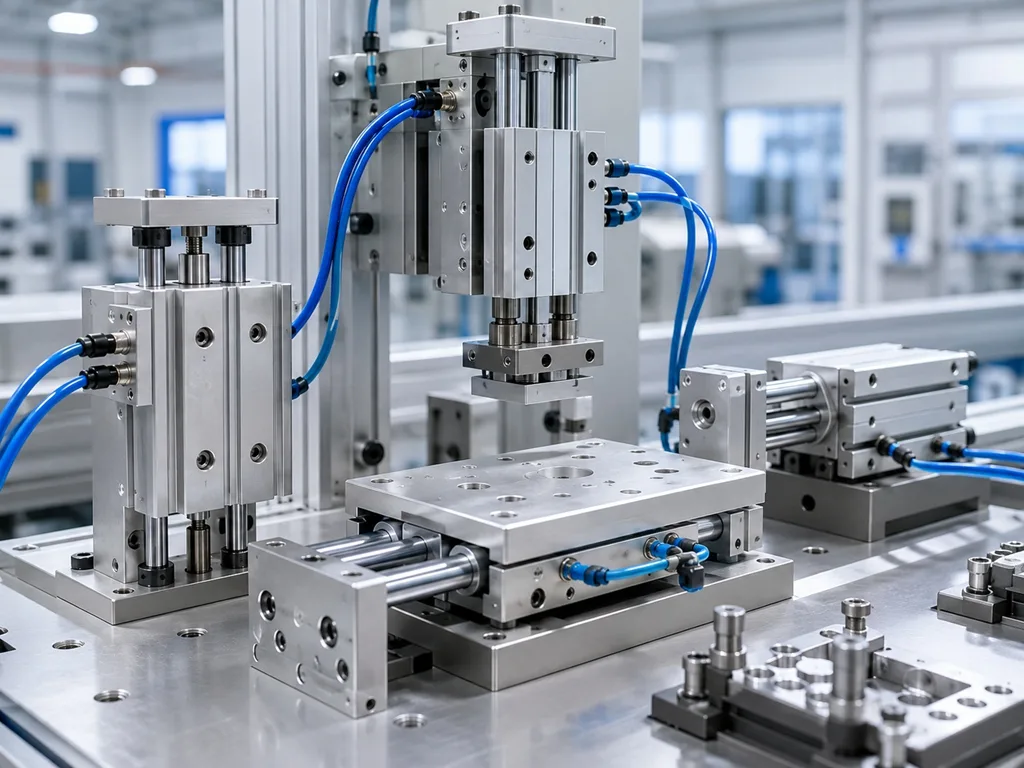
Slide table cylinders provide a guided moving table that can carry a small tool, gripper, stop, or fixture. They are often used where accurate movement and stable load support are required.
The MXS slide table pneumatic cylinder and MXQ precision slide table cylinder are examples of actuators designed for compact precision movement. They are useful in assembly machines, electronics handling, small part positioning, and inspection stations.
A slide table cylinder can reduce engineering work because the guide and actuator are already integrated. This helps machine builders create repeatable modules faster.
Dual Rod and Guided Slide Options
Dual rod guided cylinders such as CXSM dual rod guided pneumatic cylinders and CXSW dual rod guided cylinders provide extra stability compared with single-rod cylinders. The twin rod layout helps prevent rotation and supports guided movement.
Guided slide cylinders such as STMB guided slide pneumatic cylinders are useful for applications that need a compact sliding motion with a guided carriage.
The choice depends on load, stroke, precision, space, and mounting direction. A light positioning task may only need a compact guide cylinder. A more demanding slide application may need a slide table cylinder.
Side Load and Moment Load
Guided cylinders are better at handling side load than plain cylinders, but they still have limits. Moment load depends on how far the load is from the guide centerline. A heavy tool mounted far away from the slide creates more moment than the same tool mounted close to the table.
When selecting a guided actuator, consider not only weight but also load position. A long bracket or offset gripper can overload the guide even if the total mass looks small.
For high-speed movement, dynamic load is also important. Sudden acceleration and deceleration increase stress on guides and bearings.
Stroke, Speed, and End Impact
Guided cylinders often operate in short to medium strokes. Stroke should match the required movement without unnecessary extra travel. Too much stroke can make the actuator larger and may reduce rigidity.
Speed should be controlled carefully. A guided slide moving too fast can create end impact and vibration. Flow controls and cushioning help protect the guide mechanism. In precision applications, smooth movement is often more valuable than maximum speed.
During testing, check whether the moving table stops consistently with the real tool installed. A slide that looks smooth with no load may behave differently under the final machine condition.
Installation Tips
Mount the actuator on a flat, rigid surface. If the base plate is uneven, the guide can twist and bind. Avoid forcing the guided cylinder into alignment with other mechanisms. The actuator and driven part should share a clean motion path.
Leave space for fittings, sensors, and adjustment. Many guided cylinders are installed inside compact machine modules, but maintenance access still matters.
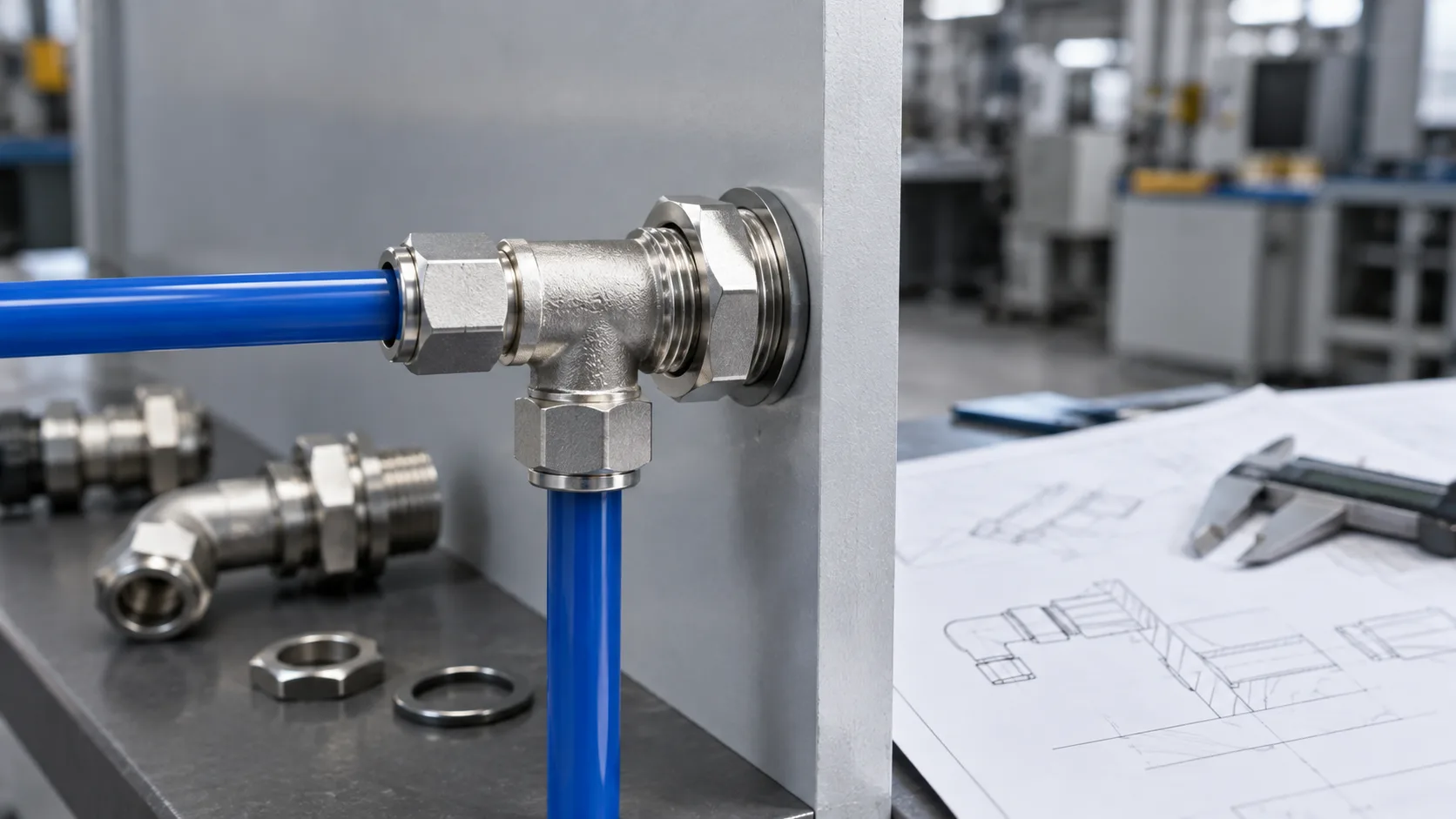
Use suitable fittings and tube routing so the air lines do not pull on the moving part. A good pneumatic layout protects both the actuator and the air connections.
Practical Selection Checks
When comparing guided actuators, check more than the stroke and body size. Review allowable load, allowable moment, mounting direction, table deflection, speed range, sensor options, and port position. These details decide whether the actuator will stay accurate after many cycles.
If the actuator carries a tool, gripper, camera, or inspection head, estimate the load as it is actually mounted. A tool that is mounted far from the table center creates extra moment. If the machine accelerates quickly, dynamic force can be higher than the static weight suggests.
For precision stations, repeatability should be tested with the final load installed. A guided cylinder may repeat well in free motion but lose accuracy if the tooling is too heavy, the base plate is weak, or the air speed is tuned too aggressively.
Where Guided Actuators Add the Most Value
Guided actuators add the most value in stations where motion quality affects product quality. In a simple reject pusher, a small amount of movement variation may not matter. In an inspection station, assembly fixture, electronic component handler, or small press unit, tilt and side play can create real defects.
They are also valuable when machine builders want to reduce separate mechanical parts. Instead of designing a cylinder, two guide rails, a moving plate, and several brackets, a guided cylinder or slide table can provide a ready-made motion module. This can shorten design time and make repeated machine builds more consistent.
Related Pneumatic Products
Guided cylinders and slide table cylinders usually work with solenoid valves, flow controls, speed controllers, sensors, PU tubing, and pneumatic fittings. For broader actuator options, review HOMIPNEU’s pneumatic cylinder category.
If the application only needs simple force and the load is already guided by the machine, a standard cylinder may be enough. If the actuator must support the load directly, guided options are safer.
FAQ
What is a guided pneumatic cylinder?
It is a pneumatic cylinder with built-in guide rods or guide mechanisms to improve stability, resist rotation, and support side load.
When should I use a slide table cylinder?
Use a slide table cylinder when a small tool or workpiece needs stable, precise, guided linear movement.
Can guided cylinders handle all side load?
No. They handle side load better than plain cylinders, but each model has load and moment limits.
What causes a guided cylinder to bind?
Common causes include uneven mounting surfaces, misalignment, excessive moment load, contamination, or forced assembly.
Are guided cylinders good for pick-and-place systems?
Yes, they are often used for pick-and-place, part transfer, inspection, and positioning modules where stability matters.
Conclusion
Guided cylinders and slide table cylinders are useful when precision, anti-rotation support, and load stability matter. They protect the actuator from side load and make machine modules more repeatable. For automation equipment where a plain cylinder would twist or wear, a guided solution is often the smarter long-term choice.