



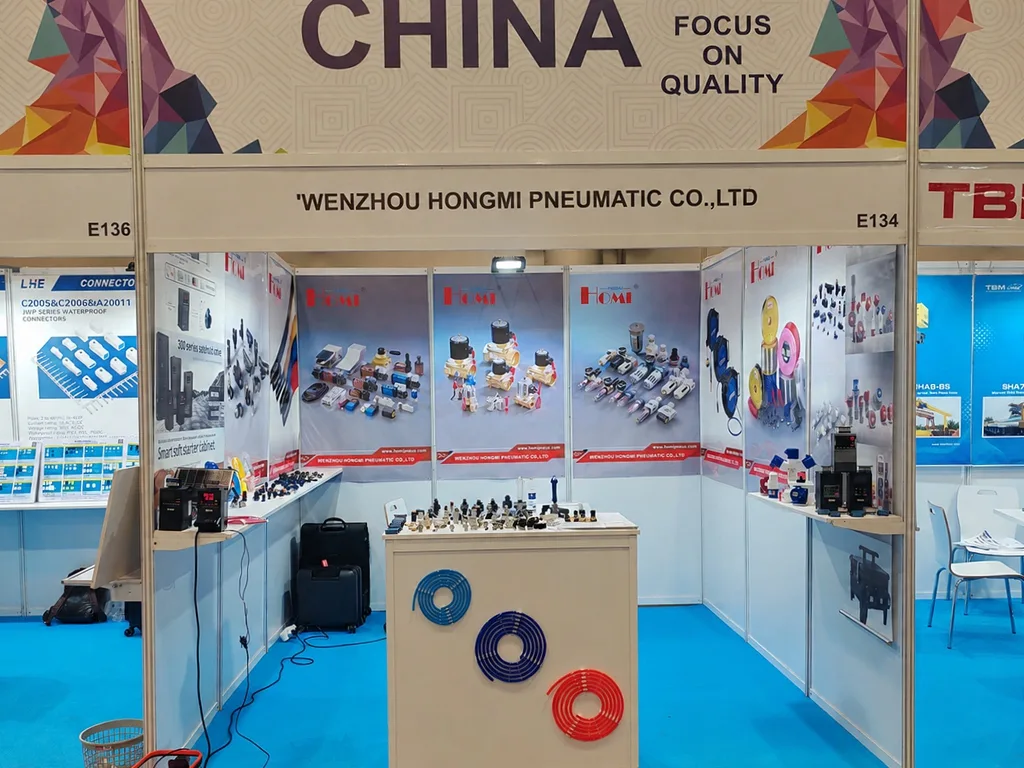
Wenzhou Hongmi Pneumatic Co., Ltd. Participated in WIN EURASIA 2026 in Türkiye
Wenzhou Hongmi Pneumatic Co., Ltd. successfully participated in WIN EURASIA 2026, also known as Hannover Messe Turkey, held at the...
Expert guidance, product knowledge, and industry updates for pneumatic systems and industrial automation.
Get a Quote
Wenzhou Hongmi Pneumatic Co., Ltd. successfully participated in WIN EURASIA 2026, also known as Hannover Messe Turkey, held at the...
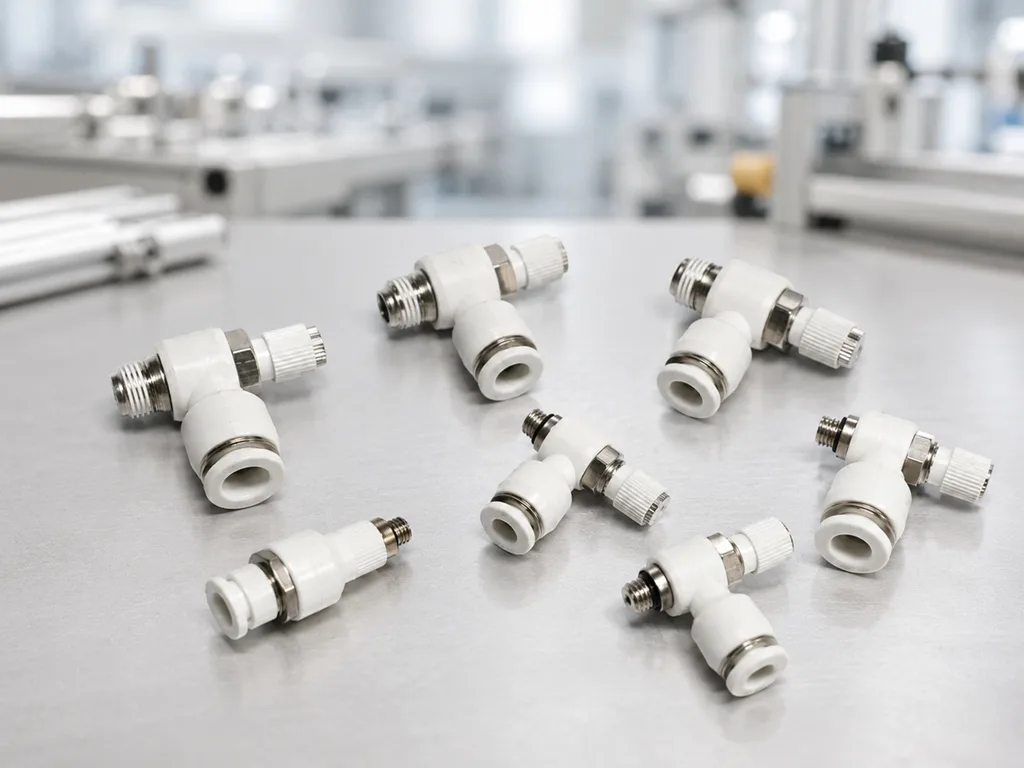
In pneumatic automation systems, throttle valves and speed control valves are small components, but they play an important role in...
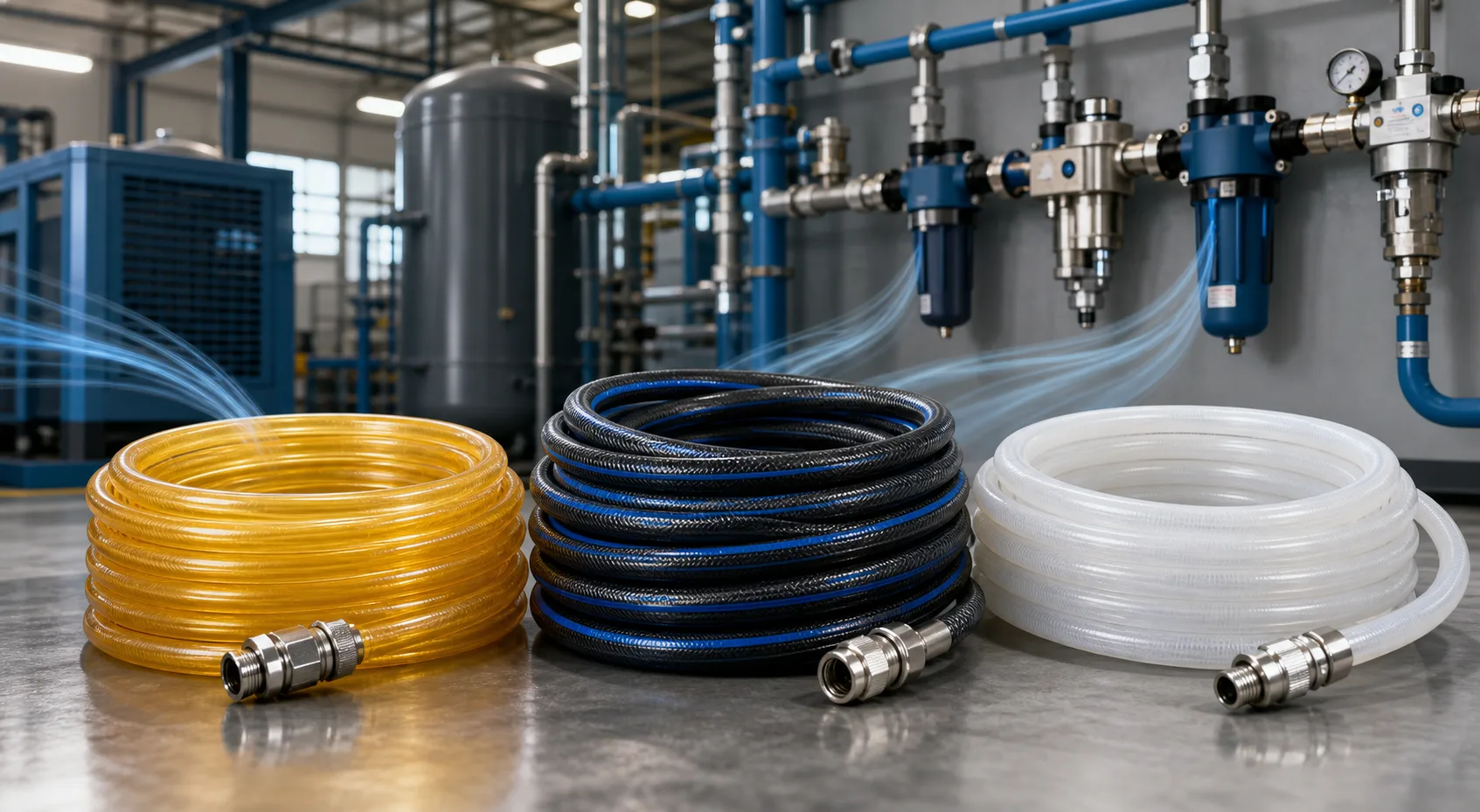
Compare PU, PA, and PE air hose types for factory air lines. Learn how flexibility, pressure rating, bend radius, and...
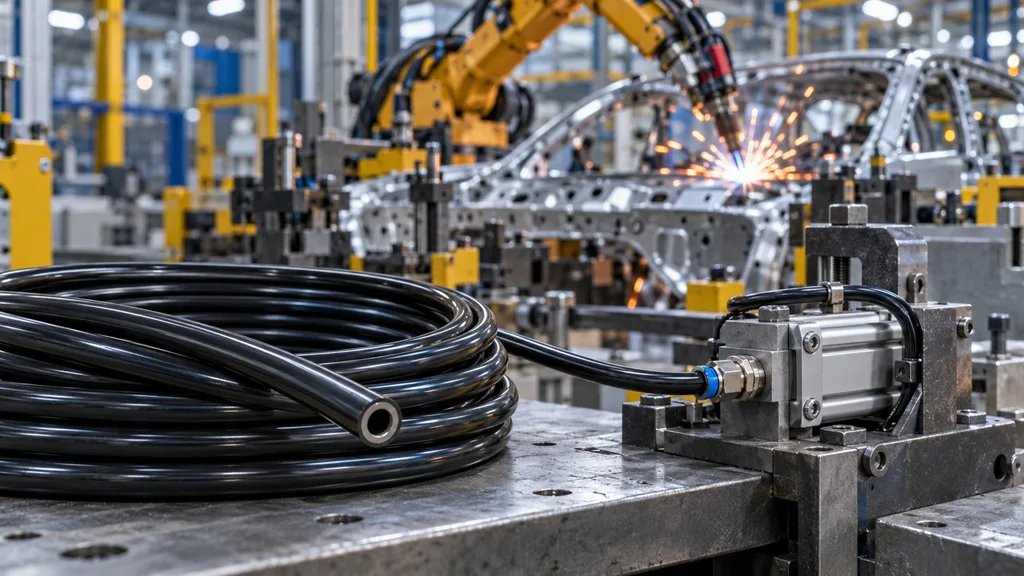
A pneumatic tube near a welding fixture faces a different environment from an air line inside a clean control cabinet. Hot particles can land...
Read More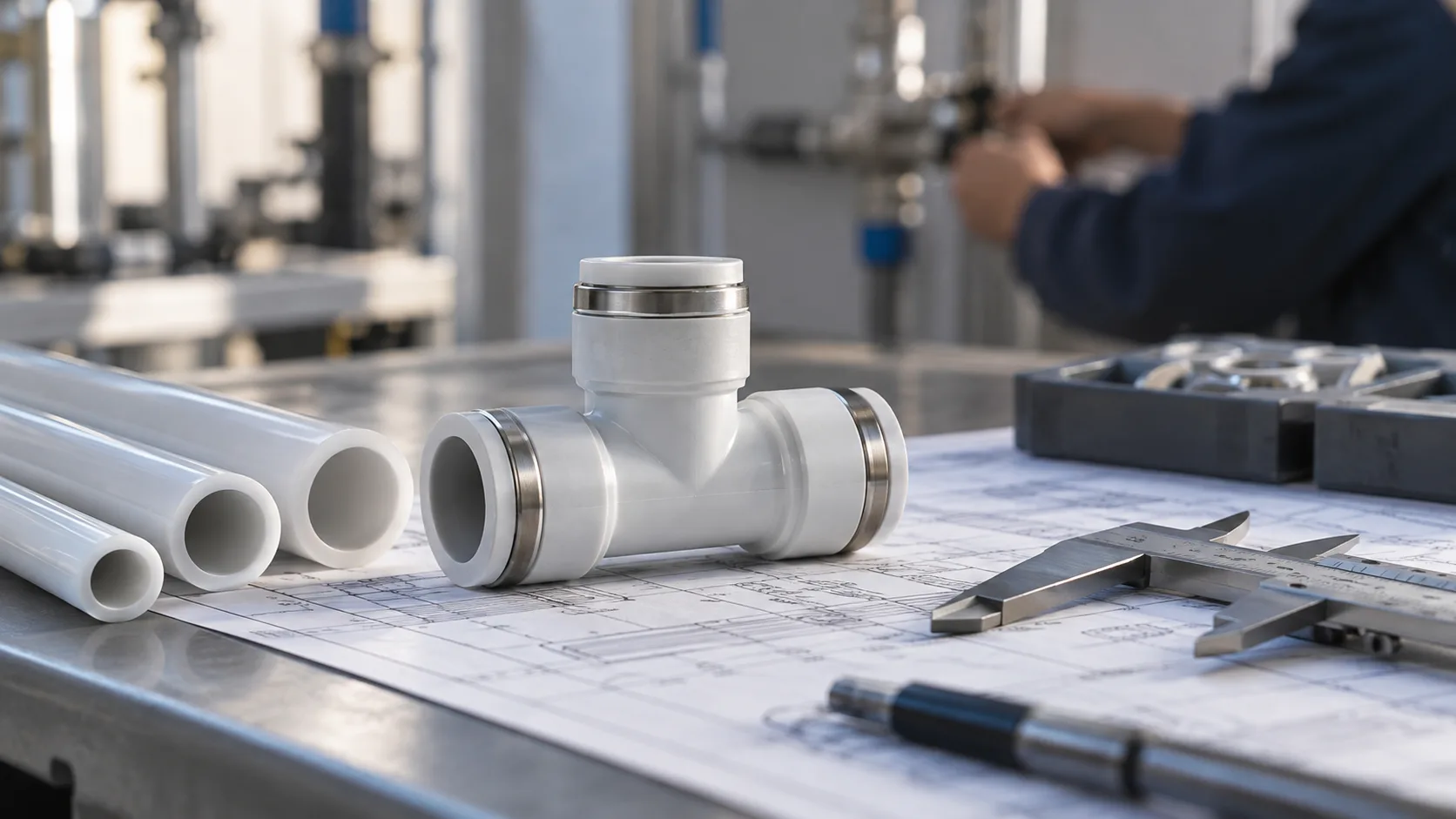
A machine air line often needs to continue in one tube size while supplying a smaller branch to a nearby device. Using an equal...
Read More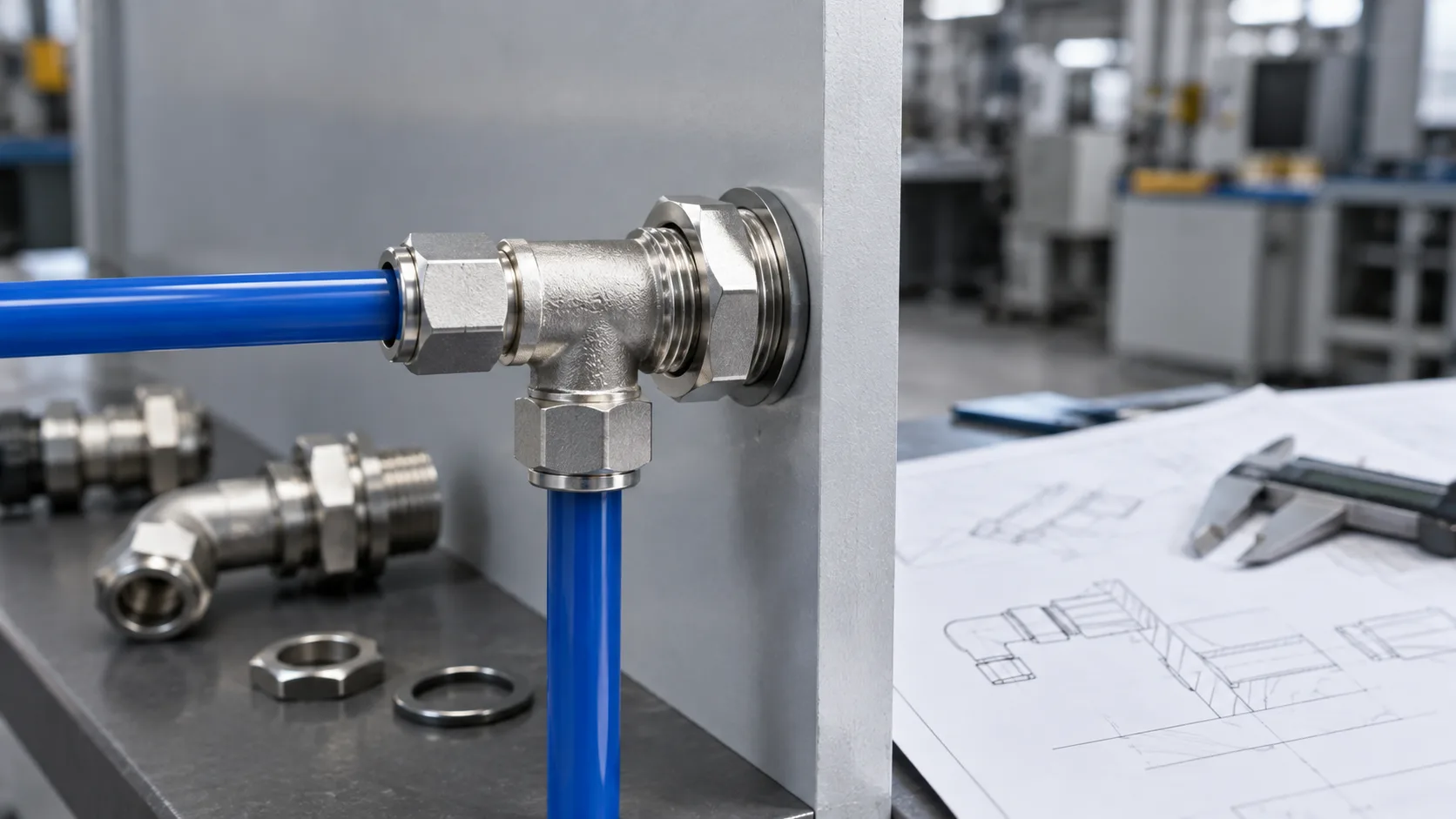
Routing an air line through a machine panel can become awkward when the tube must turn immediately after it crosses the wall. A straight...
Read More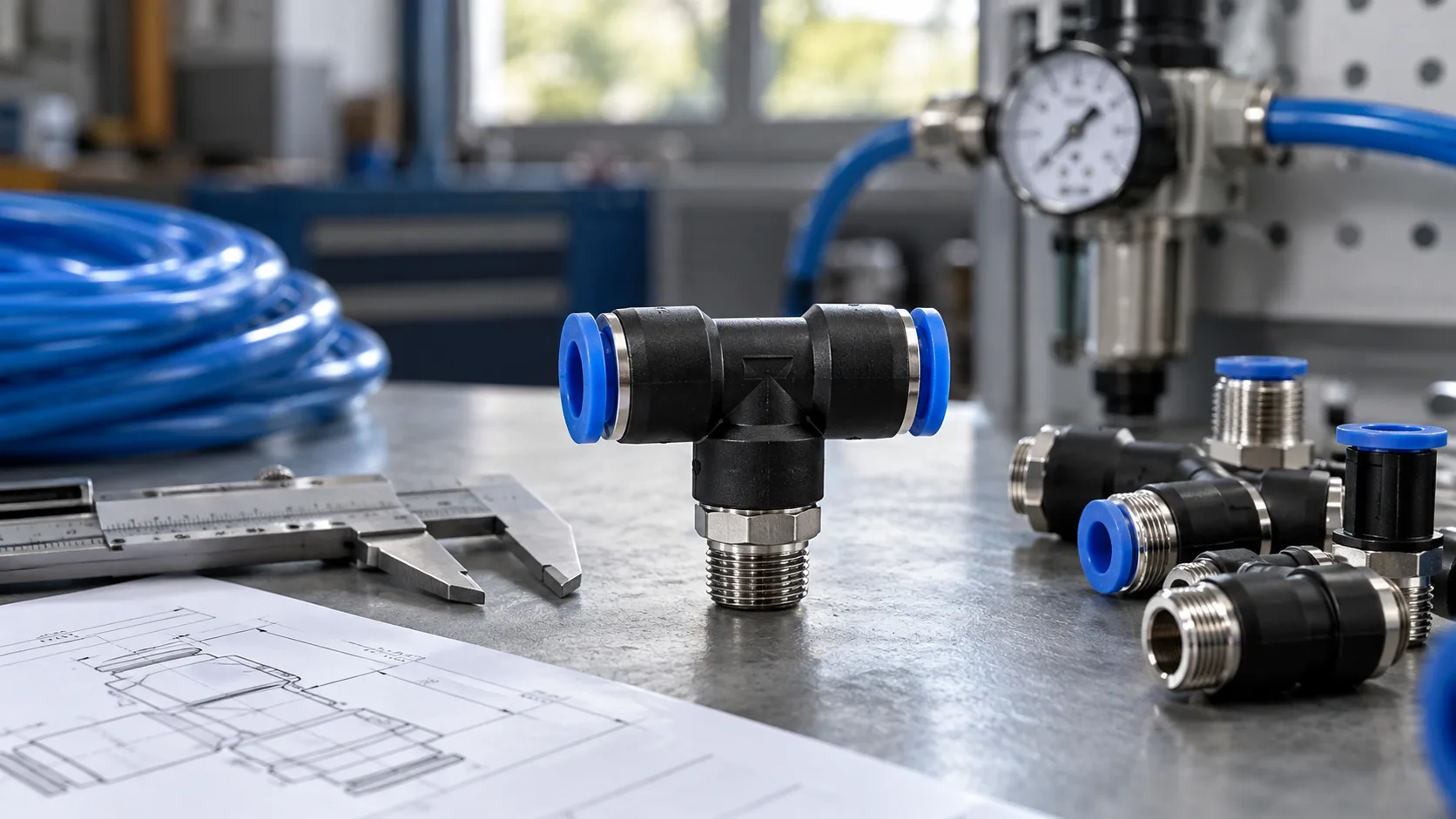
Need to connect two air tubes directly to one threaded equipment port? A PB pneumatic tee fitting provides that connection in a compact body....
Read More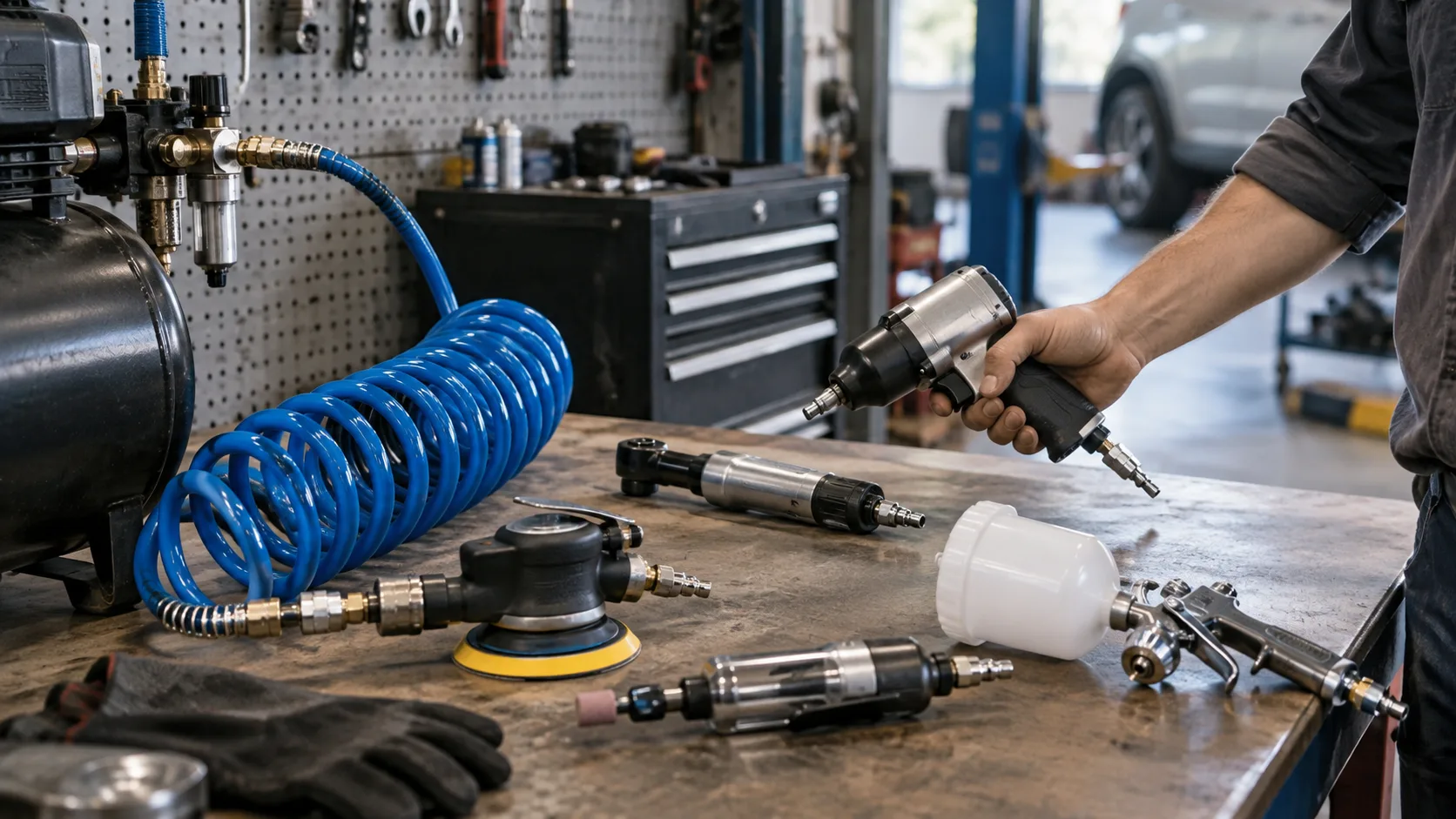
A handheld pneumatic tool needs more than a compressor and a fitting. The hose must deliver enough air, reach the work area without pulling...
Read More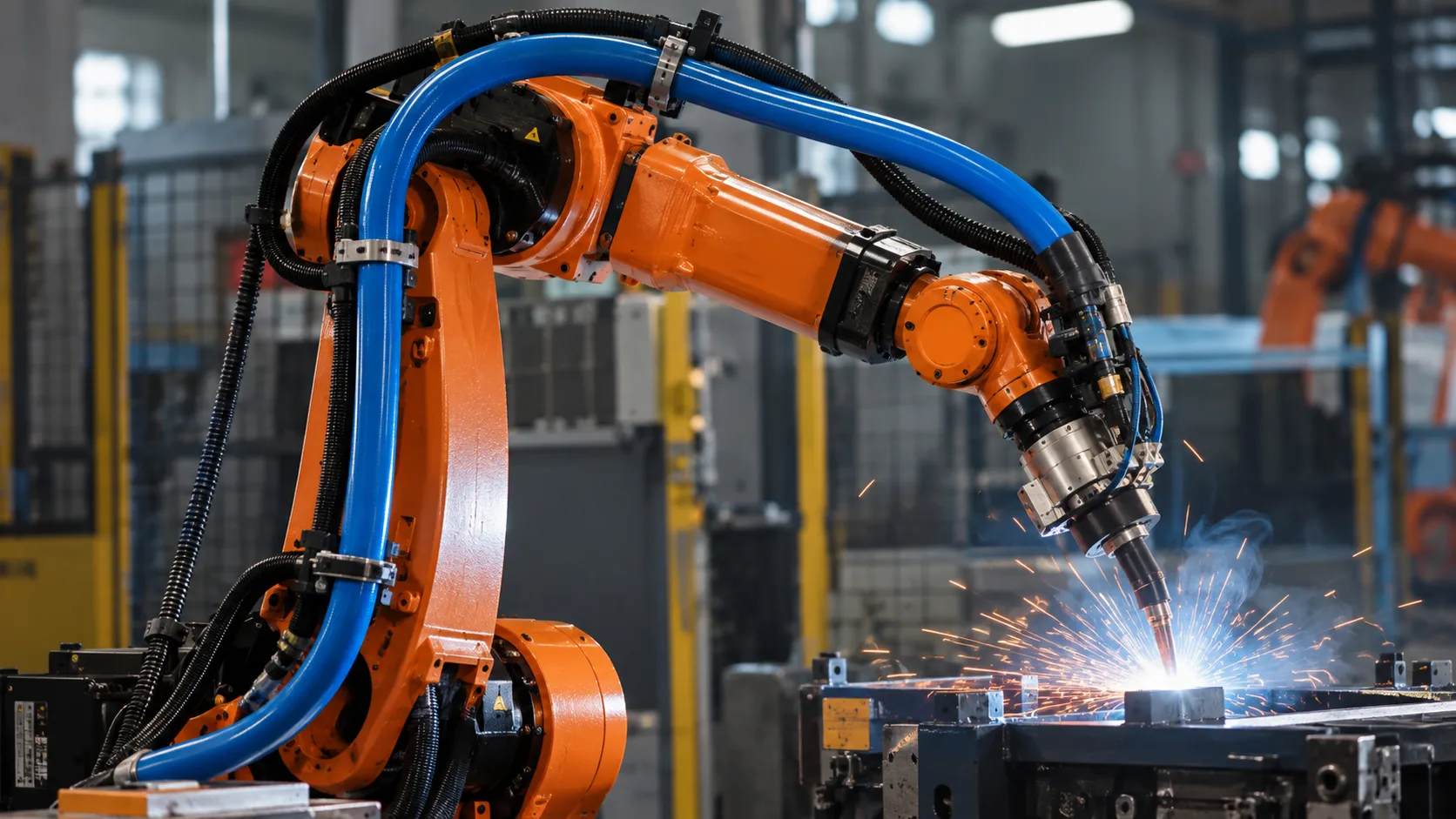
Welding automation places unusual demands on a pneumatic air line. A tube may need to feed a robot gripper, clamp, positioning cylinder or welding-gun...
Read More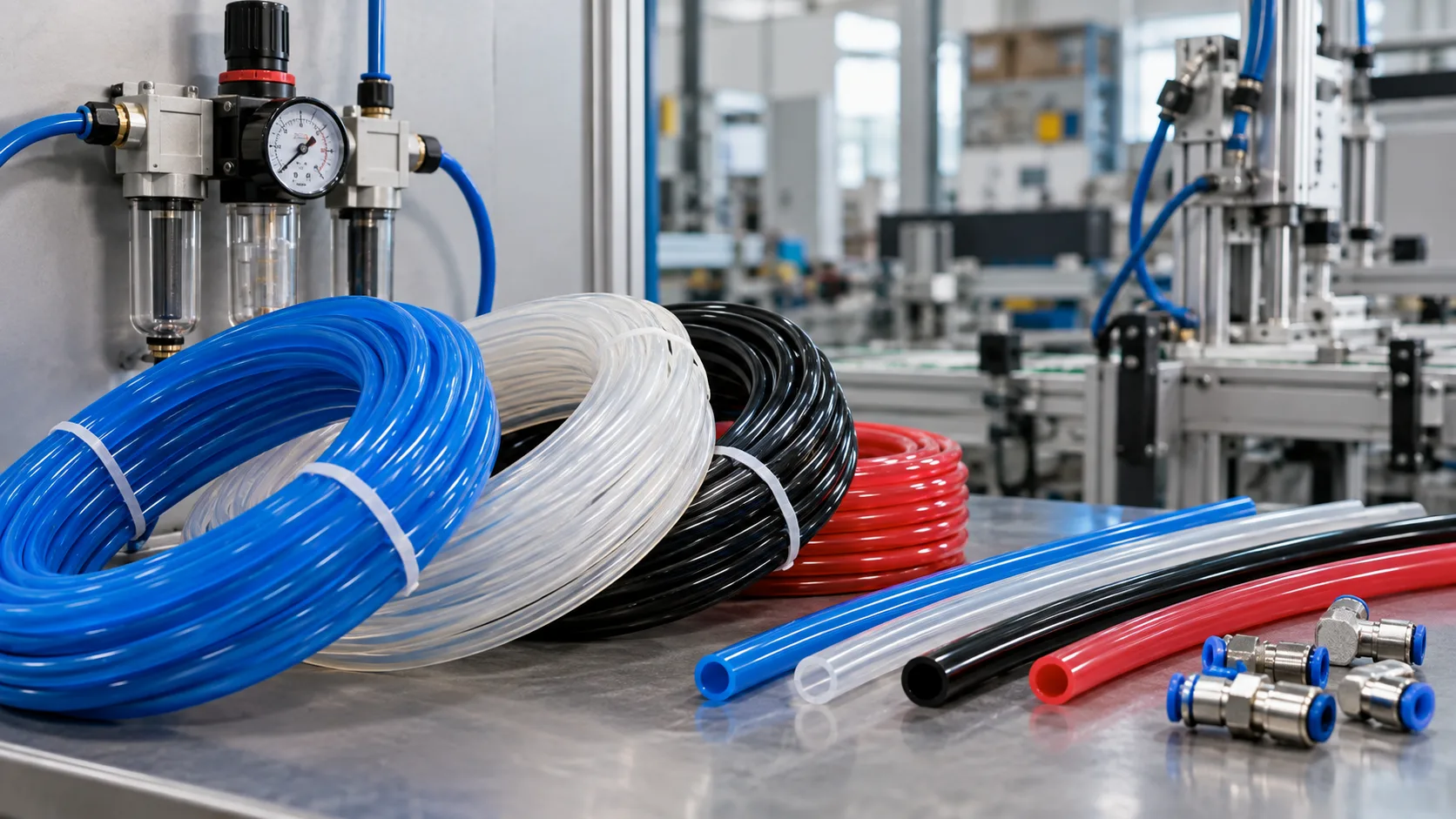
A pneumatic tube can fit the port and still be wrong for the job. If its inside diameter is too small, an air tool...
Read More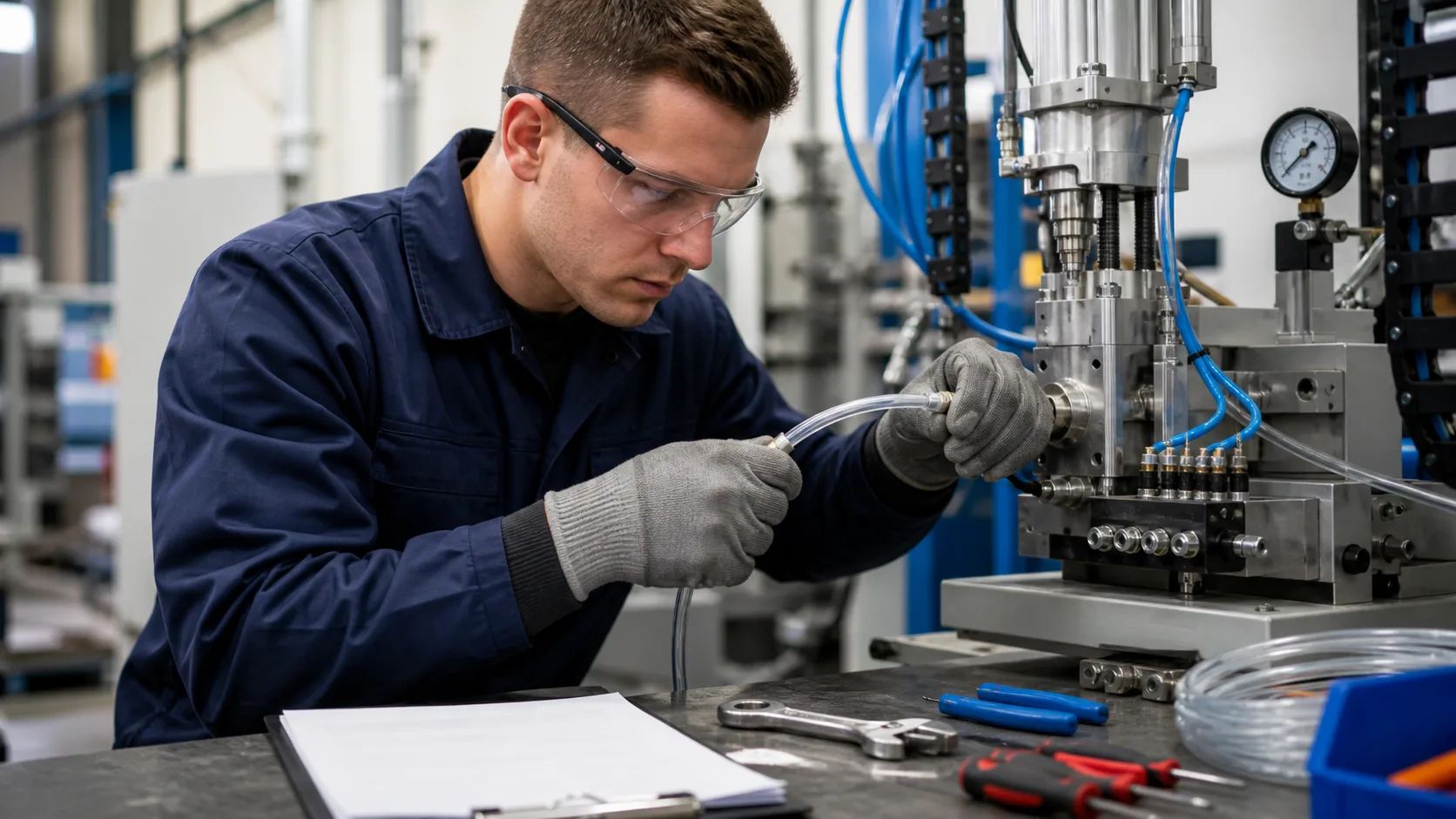
Correct PU pneumatic tubing installation helps prevent air leaks, tube pull-out, pressure loss, and premature hose failure. Although connecting a pneumatic tube to a...
Read More
Cold weather changes how a pneumatic line behaves. Tubing that bends easily at room temperature can become stiff near open loading doors, inside unheated...
Read More