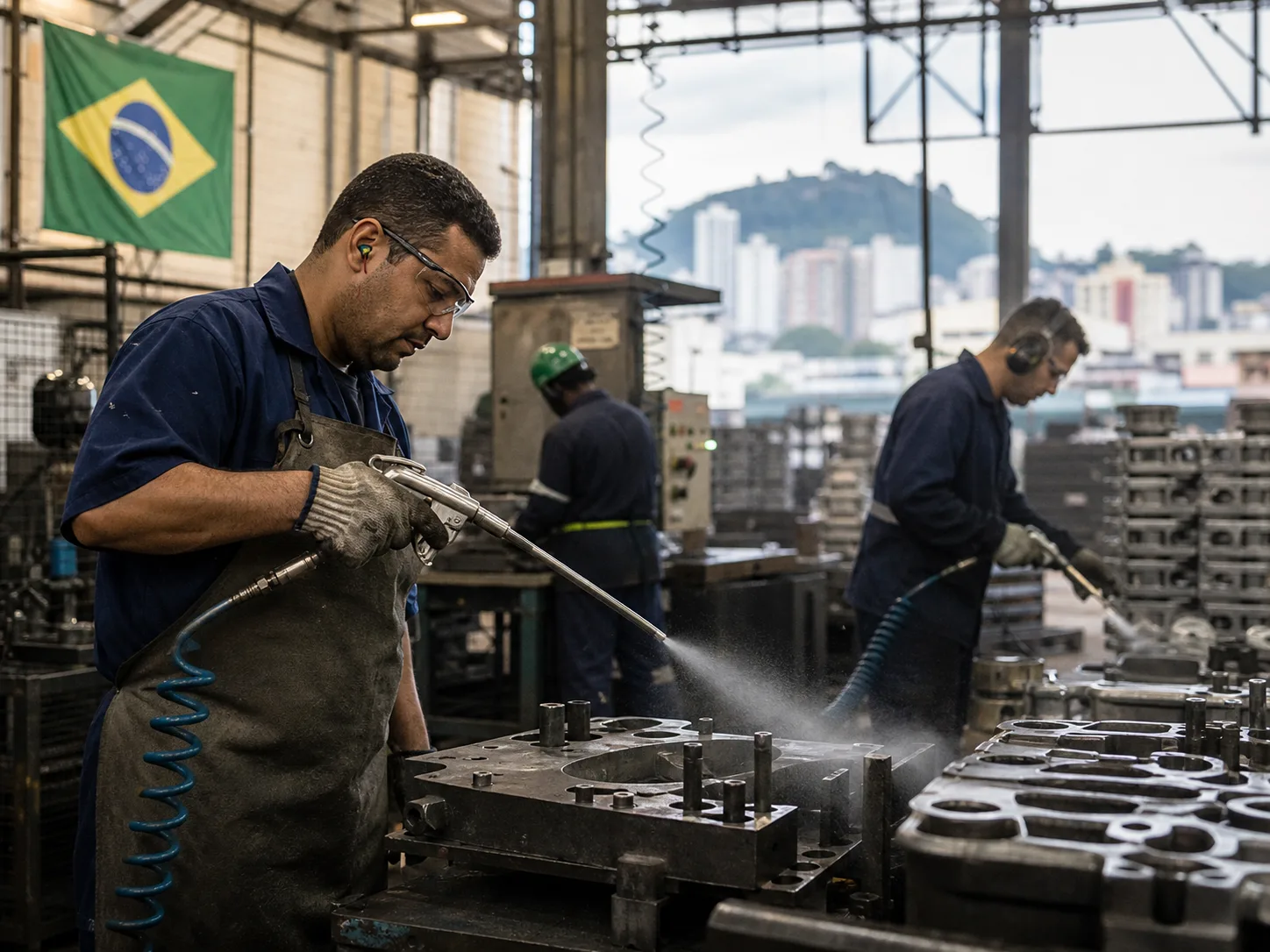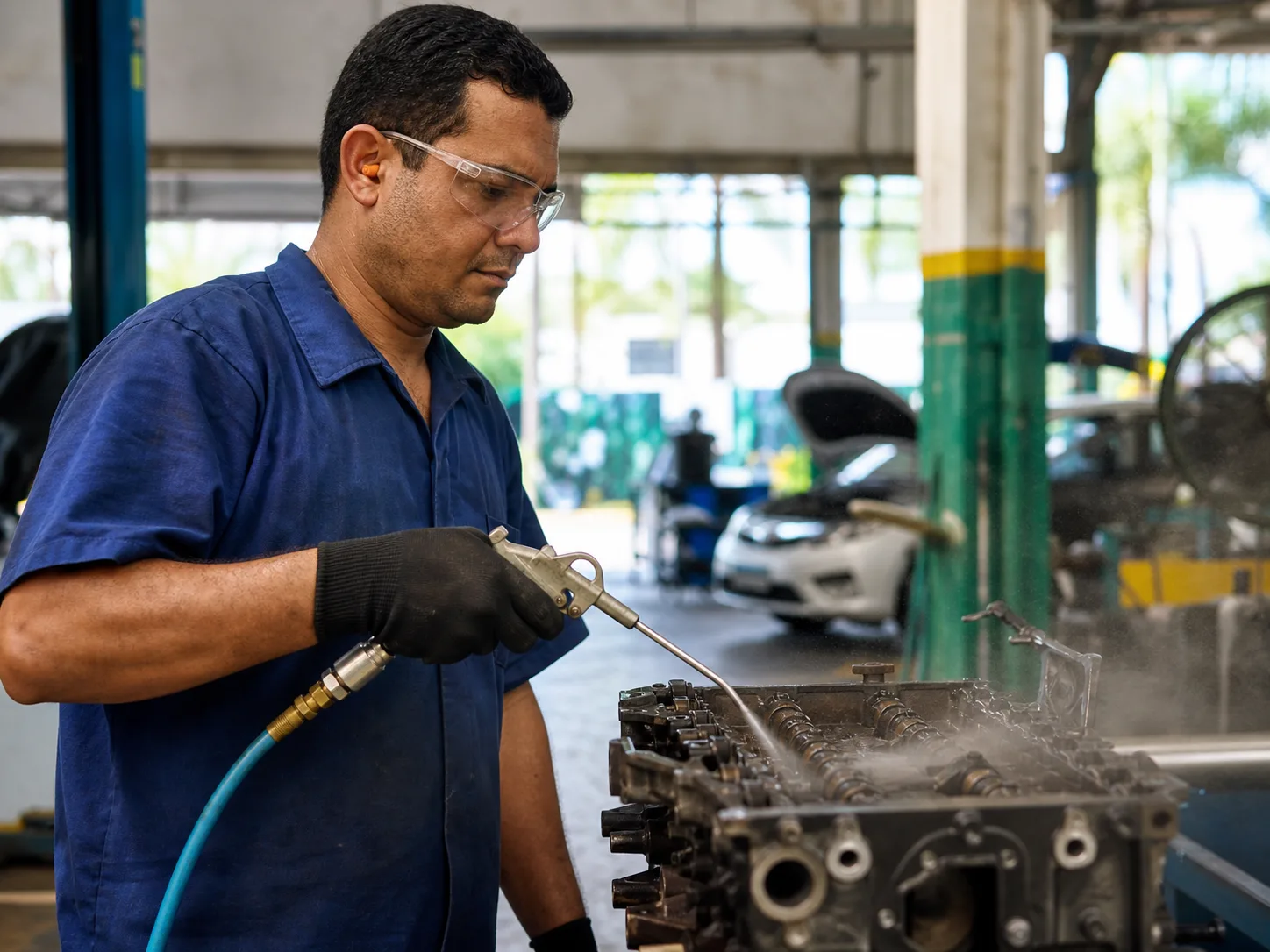
Automotive production and repair create many small cleaning jobs that are easy to underestimate. Metal chips remain around fixtures, dust collects in assembly areas, moisture stays on components after washing, and narrow machine spaces are difficult to reach with brushes or cloths. In Brazil, air blow guns are used across vehicle plants, component factories, machine maintenance departments, tire and service workshops, and body repair operations because they provide a fast way to direct compressed air at a specific point.
The automotive environment is relevant to pneumatic tool demand in 2026. IBGE’s May 2026 industrial release reported that motor vehicles, trailers, and bodies advanced 4.1% from April and 7.3% from May 2025. Monthly results can change, but active vehicle and parts production supports continuing demand for maintenance consumables, air line accessories, and practical cleaning tools.
Different Automotive Areas Need Different Air Guns
An automotive plant is not one uniform application. Stamping, machining, welding fixtures, parts assembly, maintenance, and final inspection each create different debris and access conditions. The same is true outside the factory. A truck workshop may prioritize durable metal tools, while a light vehicle service bay may value low weight and quick connection to a retractable hose.
| Work Area | Typical Cleaning Job | Useful Configuration |
|---|---|---|
| Machining and component production | Remove loose chips around fixtures and work surfaces | Metal body with focused or long nozzle |
| Assembly stations | Clear dust and particles between cycles | Lightweight plastic gun with standard nozzle |
| Molds, jigs, and clamps | Reach recesses and enclosed areas | Long-nozzle gun |
| Maintenance workshop | General equipment and bench cleaning | Durable metal gun with quick connector |
| Repair and service bay | Dry parts and clean accessible components | Compact adjustable or standard gun |
Metal Air Guns for Repeated Workshop Handling
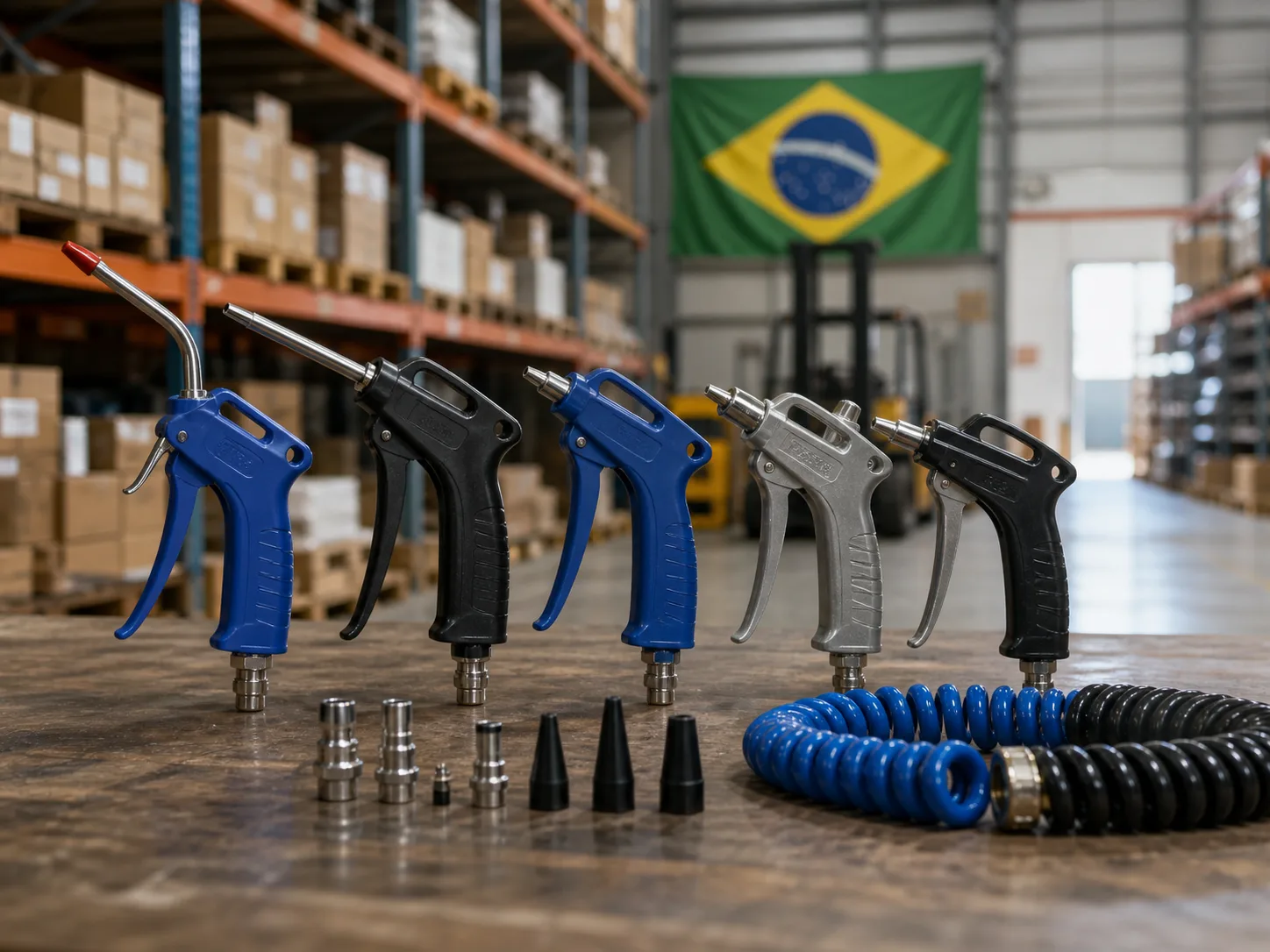
Shared tools in automotive maintenance areas are frequently connected, placed on benches, carried in tool carts, and used around metal equipment. The A018 Metal Air Gun Series uses an aluminum alloy body and provides four nozzle directions: standard, 300 mm long, speed, and large diameter. This allows a buyer to keep the same basic body family while assigning different versions to fixture cleaning, deep machine access, focused blow-off, or wider surface work.
The A010 Metal Air Blow Gun is a more compact choice with 16 mm short and 100 mm long nozzle options. It suits service benches and maintenance carts where a simple product is preferred. Its quick connector option is useful when the shop already has a defined hose and coupling system, but the exact connector profile and hose size still need confirmation.
For jobs where the operator needs to adjust the output, the A098 Metal Air Gun Series supports adjustable air blowing and includes small, speed, large-diameter, and long-nozzle versions. Adjustable output can help when one station handles delicate surfaces as well as heavier debris, provided the tool is used within the specified pressure range and local operating procedure.
Lightweight Guns for Assembly and Service Stations
A metal body is not required at every point. Repetitive short cleaning cycles can make weight more important than impact resistance. The A001 Plastic Air Blow Gun combines a lightweight plastic body with a stainless steel barrel and standard or long versions. Its protective barrel cover is useful where the nozzle may approach tools, fixtures, or finished parts and accidental contact is a concern.
For a broader nozzle choice, the A009 Plastic Air Blow Gun includes standard, 130 mm, 300 mm, speed, and large-diameter configurations. This can simplify purchasing for automotive component suppliers that want a lightweight family for open benches, deep fixtures, and different blowing patterns.
Long Nozzles Help, but Access Must Be Planned
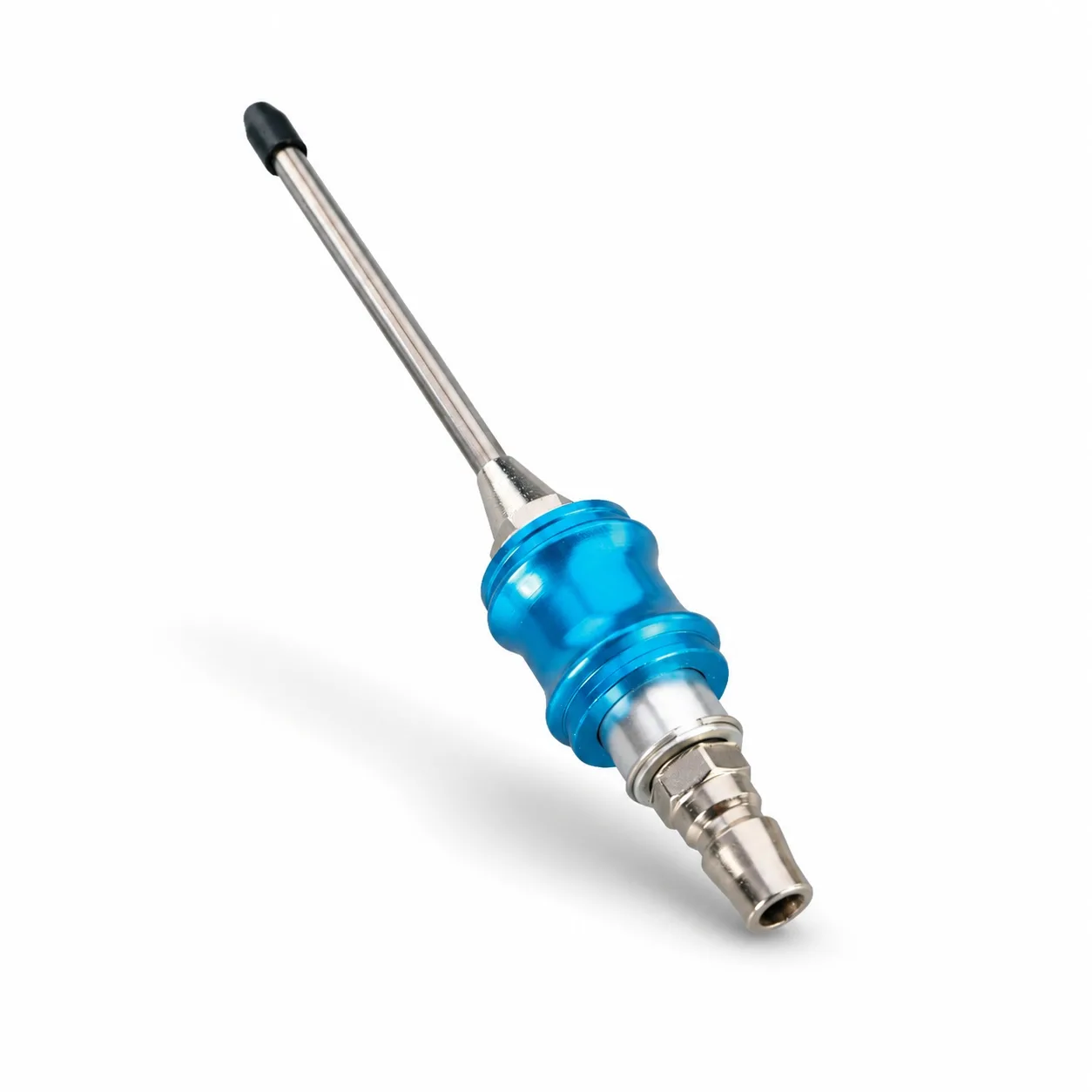
Long nozzles are commonly requested for dies, molds, engine component fixtures, guarded machine areas, and spaces between frame members. They improve reach, but they should not be used as a substitute for a safe maintenance procedure. Equipment isolation, guarding rules, and the factory’s risk assessment still apply. A long barrel should allow the operator to stay in the intended working position, not encourage reaching into moving equipment.
Measure the distance from the normal hand position to the cleaning point. A 100 mm nozzle may be enough for a service bench, while a 270 or 300 mm version may suit a deeper enclosure. Excessive length can make the tool awkward in narrow aisles or crowded assembly stations. Buyers should also check whether the barrel needs a protective cover to reduce the chance of scratching parts.
Compressed Air Quality Affects Automotive Results
Air quality becomes particularly important when a cleaned component will be painted, sealed, inspected, or assembled. Water, oil, rust, and particles carried by the air line can replace one contamination problem with another. Filtered compressed air is specified for the air guns in the HOMIPNEU pneumatic tools range. A filter-regulator should be selected and maintained according to the plant’s air quality and pressure requirements.
Pressure should be stable and appropriate for the job. Higher pressure can increase air consumption, noise, and particle movement without improving the final result. A maintenance team should establish the lowest effective regulated setting for each application and check for hose leakage, blocked nozzles, damaged triggers, and worn quick connectors during routine inspections.
Selection Questions for Brazilian Automotive Buyers
- Will the tool be used in a production cell, machine shop, maintenance room, or vehicle service bay?
- Is the material loose dust, metal chips, water droplets, or residue that should be removed by another method?
- How far is the cleaning point from the operator’s normal hand position?
- Does the station favor a lightweight plastic body or a durable aluminum alloy body?
- Which inlet thread, quick coupling profile, and hose size are already used at the site?
- Does the process need focused, adjustable, wide-area, or standard airflow?
- What filtered air quality and regulated pressure are available?
- Are custom barrel lengths, private labels, or mixed models needed for the order?
Common Mistakes in Automotive Applications
Using compressed air on every type of residue is a mistake. Adhered oil, hazardous dust, and material that can be driven into bearings or electrical components may require vacuum extraction, wiping, washing, or another controlled method. The tool should be assigned only after the plant understands where the debris will go.
Another mistake is standardizing the gun while ignoring the hose system. A good air gun connected through a leaking adapter or undersized hose will deliver inconsistent results. Thread, coupling, hose length, internal diameter, regulator capacity, and pressure drop should be reviewed as one circuit.
Finally, buyers sometimes select only by purchase price. In a shared automotive workshop, durability and easy replacement may matter most. At a high-frequency assembly station, lower weight may deliver more value. The best choice is the one that fits the actual cycle and is easy for the local maintenance team to support.
FAQ
Which air blow gun body is better for an automotive workshop?
Metal bodies are practical for shared maintenance areas and heavier handling. Plastic bodies reduce weight and work well at assembly or service stations with frequent short cycles. Both can be suitable when pressure, connection, and nozzle type match the job.
What nozzle length is suitable for cleaning fixtures?
Use the shortest nozzle that reaches the fixture from a stable working position. Short nozzles suit open clamps and benches. Long versions around 100 to 300 mm are useful for deeper jigs, machine gaps, and guarded areas after the equipment is placed in the required safe state.
Can air blow guns dry washed automotive parts?
They can remove loose water from suitable surfaces, but the air supply must be clean enough for the next process. Parts prepared for painting, sealing, or precision assembly may require defined air quality and a controlled drying procedure.
What should distributors confirm for Brazilian automotive customers?
Confirm application, body material, nozzle type, length, thread, quick coupling, hose size, operating pressure, expected order mix, and packaging. Automotive groups may have different connector standards at different plants, so a sample or drawing is valuable.
A Better Way to Specify the Tool
Automotive buyers should begin with the cleaning point, not the product catalog. Define the debris, surface, distance, frequency, and existing air connection. Then choose between a lightweight A001 or A009 configuration, a compact A010 metal gun, an adjustable A098 model, or the multi-nozzle A018 family.
This application-based approach gives Brazilian plants and workshops a smaller, more useful tool set. It also helps distributors build repeat orders around models that solve clear jobs rather than stocking many nearly identical guns without a selection plan.
Sources Consulted