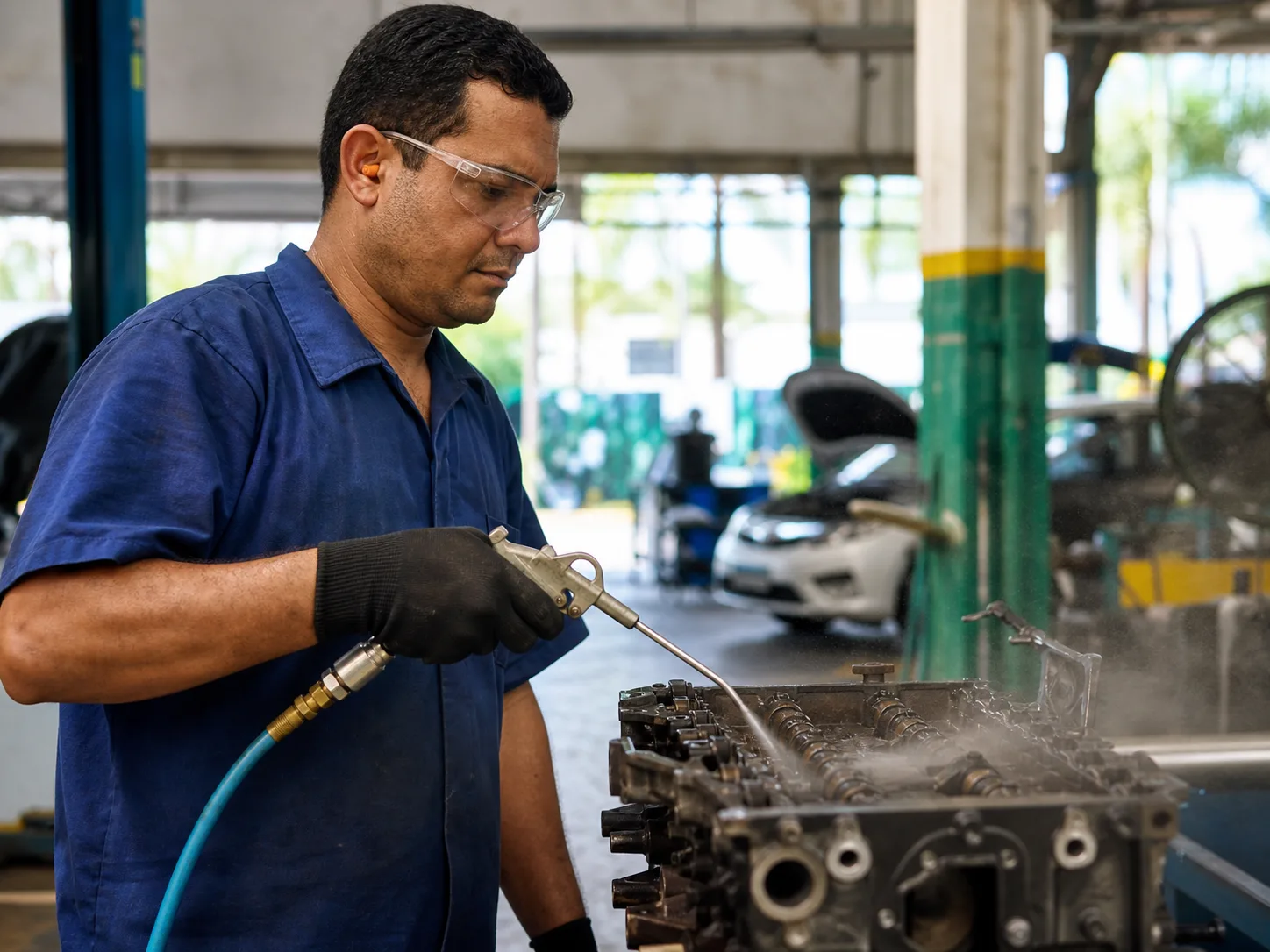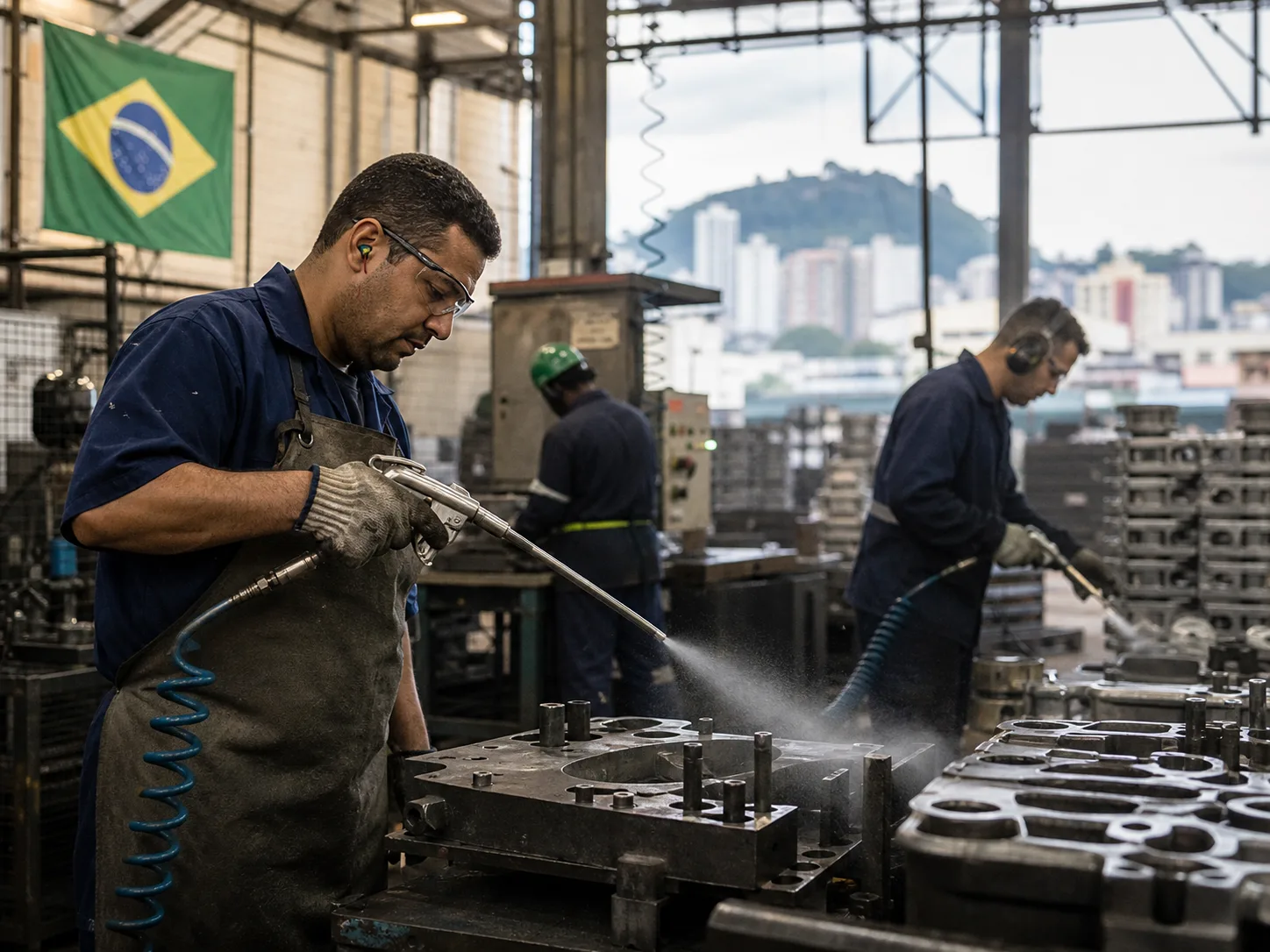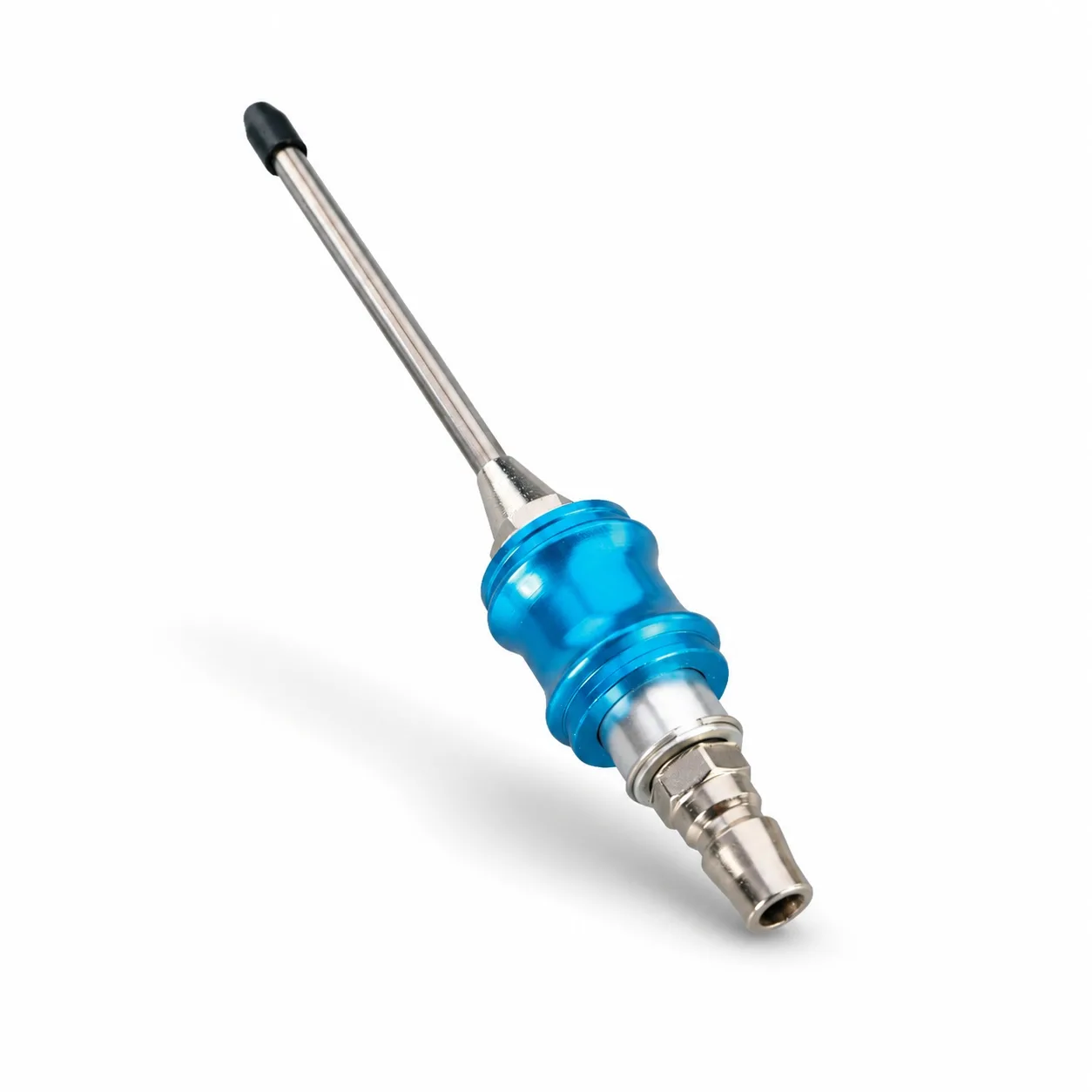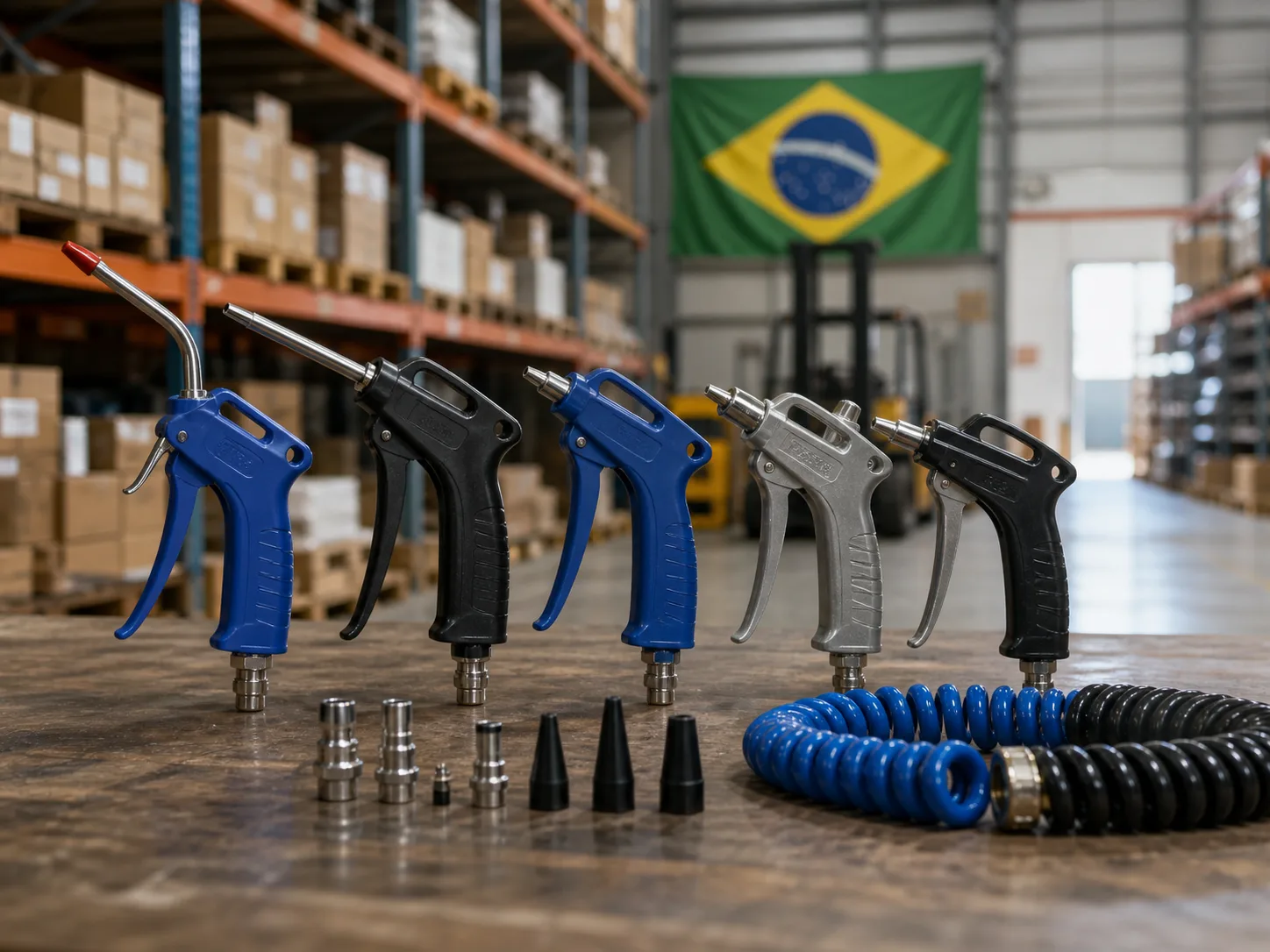
An air blow gun catalog can become confusing quickly. Several products may look similar in a photograph while differing in body material, inlet thread, connector, barrel length, and airflow pattern. For Brazilian distributors, the right inventory strategy is not to stock every version in equal quantity. It is to build a core range for daily demand, then add specialized models for long reach, adjustable airflow, and heavier industrial handling.
Regional demand also varies. IBGE’s May 2026 regional industry release showed different monthly results across Brazil’s surveyed industrial locations, with increases in states including Santa Catarina, Parana, Goias, Pernambuco, Ceara, and Amazonas while other areas declined. A distributor serving automotive clusters, food and packaging plants, agricultural machinery, or general maintenance customers may therefore need a different model mix from a seller focused on small repair shops.
Start with Customer Jobs, Not Model Numbers
Most repeat demand can be organized around five jobs: general bench cleaning, narrow-area cleaning, focused blow-off, wider surface cleaning, and shared maintenance use. Once these jobs are defined, product families become easier to compare. The Other Pneumatic Tools category includes enough plastic and metal options to create a tiered stock plan without making every model a high-volume item.
| Stock Group | Customer Need | Inventory Role |
|---|---|---|
| Lightweight standard gun | Daily bench and workstation cleaning | Core high-turnover item |
| Long-nozzle plastic gun | Machine gaps, molds, and hard-to-reach areas | Regular secondary item |
| Compact metal gun | Repair shops and maintenance departments | Core industrial item |
| Adjustable or multi-nozzle metal series | Factories with several cleaning tasks | Technical and project stock |
| Large-diameter or special nozzle | Wide blow-off and defined OEM applications | Lower-volume specialist item |
Core Plastic Models for Daily Demand
Plastic guns are a practical starting point for customers who value low weight, simple operation, and economical replacement. The A006 Plastic Air Blow Gun uses a 1/4-inch PT connection and comes in standard and long versions. Its clear two-model structure is suitable for distributors serving general workshops and machinery maintenance customers.
The A015 Plastic Air Blow Gun also offers standard and long barrels, with a copper 1/4 PT internal-thread inlet. It is useful where customers want a lightweight body with a reinforced metal inlet connection. A distributor can position the standard model for everyday cleaning and the long model for machine gaps, molds, and elevated or recessed areas.
For a wider selection from one family, the A009 Plastic Air Blow Gun Series provides standard, 130 mm and 300 mm long, speed, and large-diameter nozzle choices. This is useful for larger industrial accounts that prefer to standardize the handle while selecting different nozzle functions across departments.
Metal Models for Industrial and Workshop Accounts
Metal guns should form a separate inventory group rather than being treated as a premium version of the same product. The customer may need a metal body because the tool is shared, stored with mechanics’ equipment, or used in a demanding maintenance environment. The A012 Metal Air Gun is compact and simple, making it relevant to distributors who want a basic all-metal cleaning gun with a quick connector option.
For customers needing more configurations, the A018 Metal Air Gun Series covers standard, long, speed, and large-diameter nozzles. The A018-L reaches 300 mm, while the A018-D is intended for wider blowing coverage. These specialized versions do not need the same stock depth as the standard gun, but they help a distributor answer technical inquiries without sourcing a new family for every application.
The adjustable A098 Metal Air Gun Series can be reserved for factory accounts that want more control over airflow or a choice among small, speed, large-diameter, and long nozzles. It is a project-oriented line that benefits from sales staff who can ask about pressure, debris, distance, and air consumption.
Stock by Function and Connection
A useful warehouse layout separates guns by function first, then by connection. Standard and long nozzles should be easy to identify without opening each carton. Thread type must be visible because the range includes NPT and PT connections. Quick connector options should be linked to compatible hoses and couplings in the distributor’s system.
Brazilian customers may operate imported machines and locally assembled air lines with different thread and coupling practices. Distributors should avoid assuming that one connection covers every region or industry. A simple specification sheet should record inlet thread, recommended connector, compatible hose size, working pressure, barrel length, body material, and replacement model.
A Three-Level Inventory Plan
Level 1: Fast-Moving Core
Keep the greatest stock depth in one or two lightweight standard guns, one long-nozzle plastic version, and one compact metal gun. These products cover the majority of general cleaning, repair, and maintenance requests. Their packaging should clearly state connection and nozzle length to reduce returns.
Level 2: Industrial Support
Maintain moderate quantities of long metal guns, adjustable models, and multi-nozzle families for machine shops, OEM builders, automotive suppliers, packaging plants, and maintenance contractors. Sales teams should know which versions provide focused or wider blowing rather than presenting them as cosmetic differences.
Level 3: Project and OEM Supply
Special barrel lengths, mixed model cartons, private label packaging, logos, and uncommon connectors can be handled against confirmed orders. Keeping samples or a small demonstration set is often more effective than carrying deep stock in every customized configuration.
Bundle the Gun with the Air Supply Components
An air blow gun rarely works alone. The customer may also need a hose, retractable reel, quick connector, fitting, filter, or regulator. A distributor that checks the complete path from compressor line to hand tool can prevent common complaints about low airflow and leakage. Cross-selling should be technical and specific: match thread, coupling, hose diameter, pressure, and expected movement at the workstation.
Filtered air is important for tool life and for the cleanliness of the workpiece. Where the customer reports water or particles at the nozzle, selling another gun will not solve the underlying problem. The air preparation and drainage system should be inspected. This diagnostic approach builds stronger repeat business than treating every performance issue as a product defect.
Common Distributor Mistakes
- Stocking many colors or similar bodies while missing long, focused, or wide-nozzle functions.
- Listing only maximum pressure and omitting normal application, thread, and connector information.
- Mixing NPT and PT items under one product code.
- Keeping large quantities of specialized models without confirmed regional demand.
- Selling a gun without checking hose diameter, quick coupling, filtration, and regulator capacity.
- Using vague names such as air gun without a consistent model, barrel length, and replacement reference.
- Failing to keep samples for OEM and private label discussions.
Questions to Ask Before a Bulk Order
Before placing a mixed order, identify the main customer groups and estimate which functions they buy repeatedly. Confirm whether cartons need Portuguese labels, distributor branding, barcode information, or individual packaging. Ask whether the supplier can keep model coding stable for future replenishment and whether custom barrel length or connector assembly will change minimum quantities.
A sample order should test trigger feel, connection fit, nozzle reach, carton labeling, and the sales team’s ability to explain differences. Feedback from two or three real customers is more useful than choosing inventory only from photographs. Once the core models are validated, reorder levels can be based on actual movement rather than equal quantities across the range.
FAQ
How many air blow gun models should a new distributor stock?
A practical starting range can be five to eight configurations: standard and long plastic guns, a compact metal gun, a long metal gun, and one focused, adjustable, or wide-nozzle option. The exact mix depends on customer industries and connector standards.
Which models should have the deepest inventory?
Standard lightweight guns and simple compact metal guns normally serve the broadest daily demand. Long and specialized nozzle models should be stocked at lower levels until local sales data shows repeat volume.
Should NPT and PT air guns share one SKU?
No. The connection should be explicit in the SKU and product description. Combining different threads under one code increases the risk of incorrect shipments, adapters, leakage, and customer returns.
What information helps obtain an accurate supplier quotation?
Provide model mix, quantity per version, thread and connector, barrel length, working pressure, packaging, label language, logo files, barcode needs, carton requirements, and target delivery schedule. Include the intended customer applications when asking for model recommendations.
Turn a Large Catalog into a Clear Offer
The strongest air blow gun range for Brazil is not the one with the most nearly identical products. It is the one customers can understand and reorder. Build the offer around core plastic models, durable metal models, long-reach options, and a small number of specialized nozzles. Keep connection data visible and link each gun to compatible air supply components.
HOMIPNEU’s air blow gun and pneumatic tool category gives Brazilian distributors several ways to create that structure, from simple A006 and A012 models to the broader A009, A018, and A098 series. A staged inventory plan can cover daily sales while leaving customization and specialist versions for confirmed projects.
Sources Consulted