Introduction
Solenoid valves are small control components, but they decide how air moves through a pneumatic system. When the valve is selected correctly, cylinders extend smoothly, grippers respond on time, and the machine keeps a stable rhythm. When the valve is wrong, the same system may suffer from slow movement, air leakage, coil overheating, weak actuator force, or repeated maintenance calls.
For buyers and equipment builders, choosing a pneumatic solenoid valve is not only about matching a model number. The valve must match the working medium, circuit function, voltage, port size, flow demand, pressure range, duty cycle, and installation environment. A valve that works well on a small test bench may not perform the same way inside a production machine with fast cycles and long working hours.
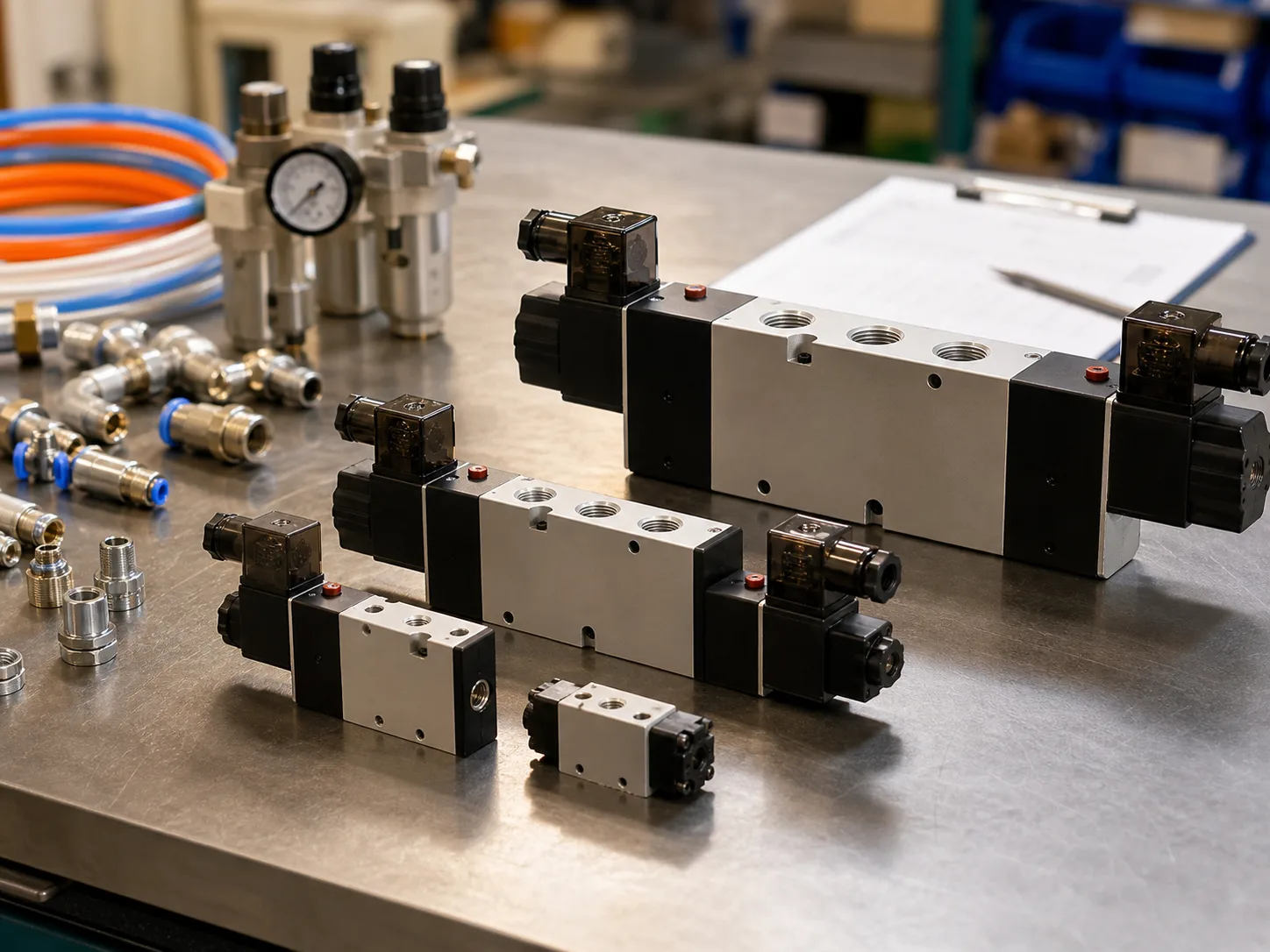
HOMIPNEU’s solenoid valve category includes compact 2/2 way valves, 3/2 way normally closed valves, 5/2 directional control valves, 5/3 pneumatic valves, water valves, steam valves, stainless steel valves, explosion-proof NAMUR valves, and manual pneumatic valves. This guide explains how to choose between these options in a practical way.
Start with the Valve Function
The first question is simple: what should the valve control? A valve used to switch compressed air to a cylinder is not always the same as a valve used to open a water line, release pressure, or control steam. The function decides the basic valve structure.
A 2/2 way valve has two ports and two positions. It is usually used to open or close a media path. Models such as the 2V025 2/2 way normally closed solenoid valve are common when a compact valve is needed for compressed air control or simple on/off switching. A normally closed design keeps the flow shut off when the coil is not powered, which is useful for many safety-conscious pneumatic circuits.
A 3/2 way valve has three ports and two positions. It can supply air to a single-acting cylinder and exhaust air when the signal changes. The 3V1 3/2 way normally closed solenoid valve is a good example of this kind of compact pneumatic valve.
For double-acting cylinders, a 5/2 way valve is usually more suitable. It switches air between two cylinder ports, allowing the actuator to extend and retract. Larger or more complex systems may use 5/3 valves when a center position is needed for pressure holding, exhaust, or blocked port control.
Check the Working Medium
Many buyers call every electrically operated valve a solenoid valve, but the working medium matters. A valve designed for clean compressed air may not be suitable for water, oil, steam, or corrosive fluid. The seal material, body material, internal structure, and orifice design all depend on the media.
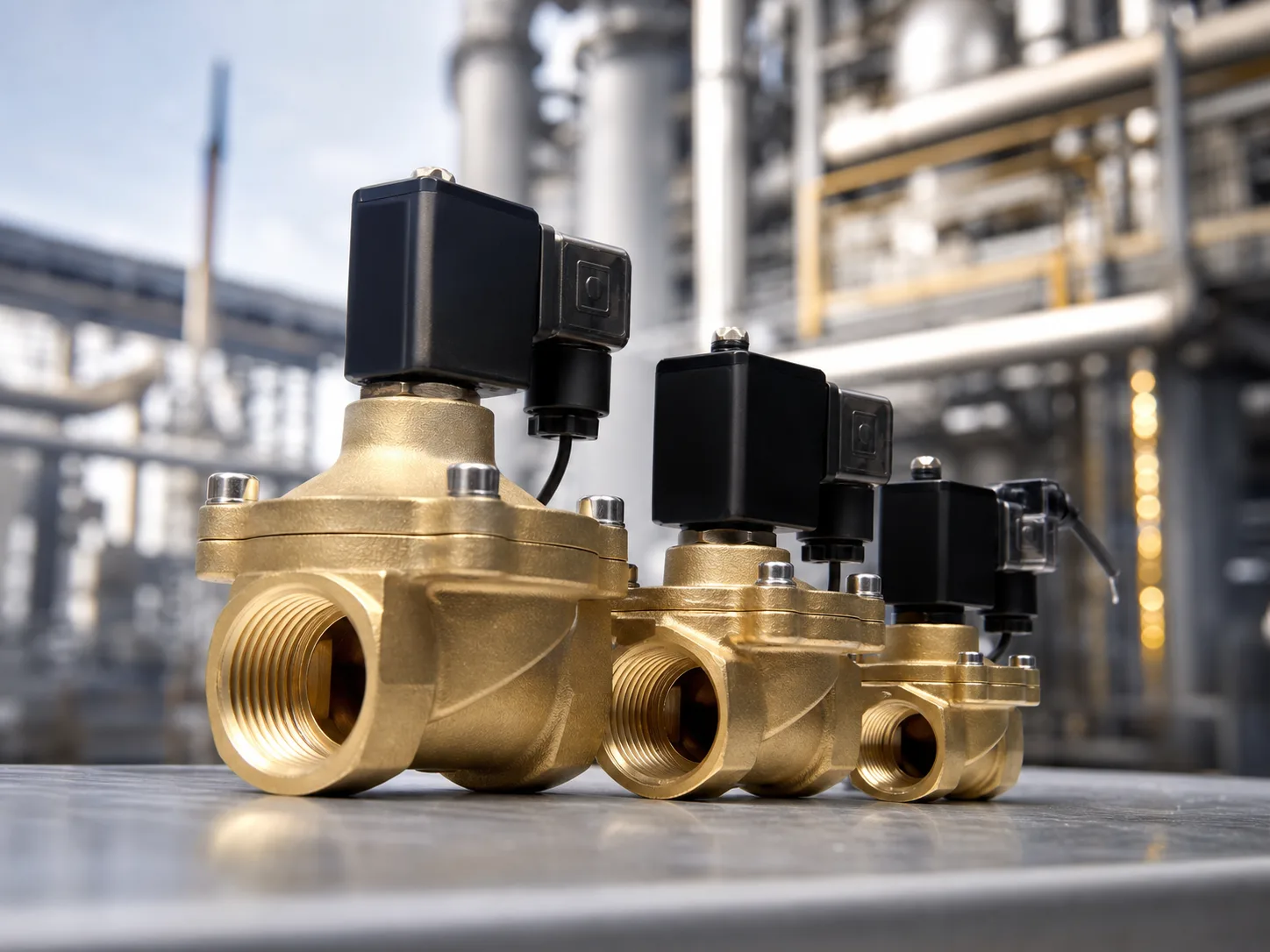
For factory compressed air, aluminum alloy pneumatic valves are common. They are lightweight, responsive, and suitable for directional control in automation equipment. For water or low-viscosity liquids, brass or stainless steel valves may be more appropriate. The 2W160-15 normally closed solenoid valve is used for water and general fluid control, while stainless steel 2S series valves are often selected where corrosion resistance is more important.
Steam applications need extra care. A standard pneumatic air valve should not be used for high-temperature steam. For this kind of work, a high-temperature model such as the 2L series high temperature steam solenoid valve is a better direction because the design is made for heat and steam service.
Match Port Size and Flow Demand
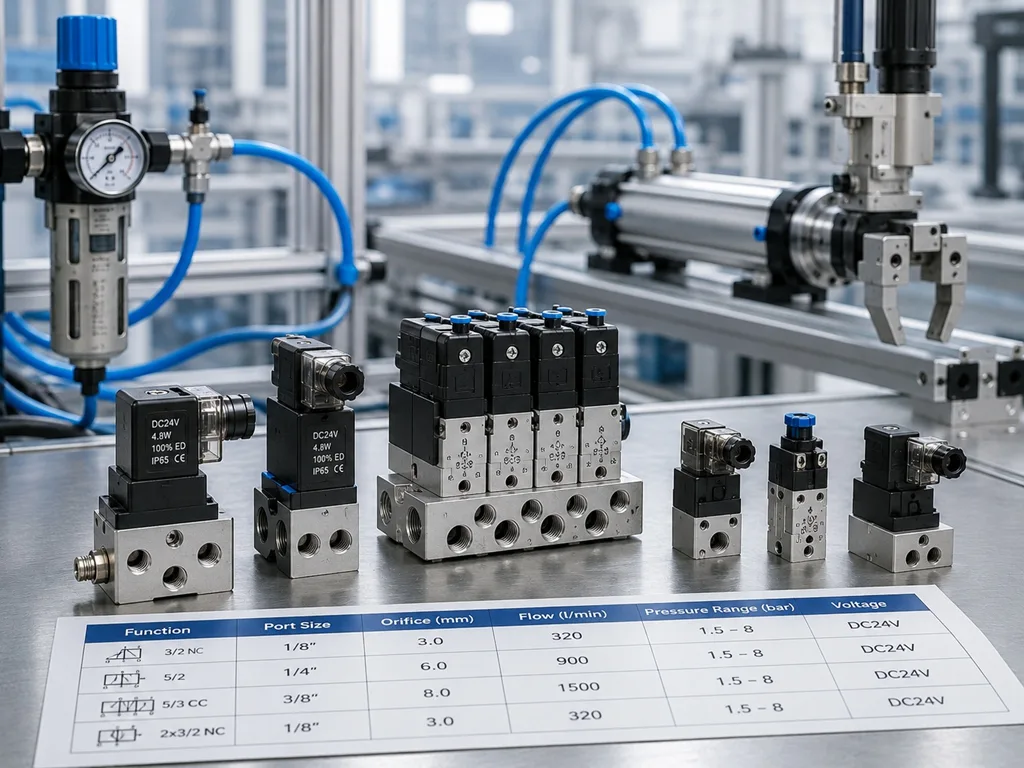
Port size affects flow. If the valve is too small, the actuator may move slowly or inconsistently. If the valve is oversized, the machine may cost more than necessary and become harder to package into a compact layout. Common pneumatic valve port sizes include M5, G1/8, G1/4, G3/8, and G1/2, depending on the valve series and flow requirement.
Small valves such as the SY3120 series are often used for compact cylinders, grippers, and control cabinets where space is limited. Medium valves such as SY5120 or SY7120 are better for larger cylinders or applications needing more air volume. The SY9120-5DZD-03 pneumatic directional valve is suitable when a larger flow path is required.
Flow should be checked together with tube size, fitting size, cylinder bore, stroke length, and cycle speed. A larger valve cannot solve a system where the tubing is too small or the air supply pressure is unstable. Good pneumatic design looks at the whole circuit, not only the valve body.
Confirm Voltage and Coil Type
Voltage is one of the most common ordering details, but it is also one of the easiest to get wrong. Many solenoid valves are available in DC12V, DC24V, AC110V, and AC220V, with other voltages available depending on the series. The control system must match the coil voltage.
DC24V is common in industrial automation because many PLC and control cabinet systems use 24VDC. AC110V and AC220V may appear in older machines, standalone equipment, or regional electrical systems. If the voltage is wrong, the valve may fail to switch, overheat, burn the coil, or become unsafe.
Connector style also matters. Some machines use lead wire coils, some use DIN connectors, and some need indicator lights or surge suppression. For OEM projects, confirm the connector early so the electrical design and valve purchase match each other.
Understand Normally Closed and Normally Open
Normally closed and normally open describe the valve state when power is off. A normally closed valve blocks flow without power and opens when energized. A normally open valve allows flow without power and closes when energized.
Most pneumatic safety and control circuits use normally closed valves because they shut off flow when the signal is lost. However, normally open valves are useful in certain drain, relief, cooling, or fail-open applications. The correct choice depends on what the machine should do during power loss.
When selecting a valve, do not only ask whether it is 2-way or 3-way. Ask what the safe default condition should be. This one detail can affect machine behavior during emergency stops, power failure, and maintenance.
Consider Direct Acting and Pilot Operated Designs
Direct acting solenoid valves switch directly by the force of the coil. They are useful for small orifices, low-pressure conditions, and compact systems where pilot pressure may not be available. The 2V025 and 3V1 series are typical examples of compact direct acting pneumatic valves.
Pilot operated valves use air pressure to help shift the valve spool. They are common in 5/2 and 5/3 directional control valves because they can handle larger flow with reasonable coil power. Series such as SY5120, SY7120, and 4V valves are widely used for cylinder control in automation equipment.
The tradeoff is that pilot operated valves usually need a minimum operating pressure. If the system pressure is too low, the valve may not shift reliably. Always check the pressure range before using a pilot operated valve in low-pressure equipment.
Think About Environment and Safety
Environment affects valve life. Dust, water splash, oil mist, heat, vibration, and outdoor exposure can all reduce reliability. For normal factory air control, a standard pneumatic solenoid valve may be enough. For wet, corrosive, high-temperature, or hazardous areas, a more specialized valve is needed.
Explosion-proof applications require special attention. The PL5310 explosion-proof NAMUR solenoid valve is designed for actuator and process control environments where flameproof protection is required. In these applications, valve selection should also follow local safety rules and project specifications.
For outdoor or washdown areas, check coil protection, cable entry, body material, and seal compatibility. A valve that works indoors may fail early if exposed to moisture or chemicals.
Practical Buying Tips
Before ordering, prepare a simple specification sheet. Include valve function, port size, voltage, working medium, pressure range, body material, seal material, connector type, quantity, and whether OEM labeling or packaging is needed. This helps avoid vague orders such as “send a 24V air valve,” which can mean many different products.
For replacement work, take photos of the existing valve label, port layout, coil voltage, and piping direction. Model numbers are helpful, but many old machines use equivalent valves from different brands. A supplier can recommend a suitable replacement only when the function and connection details are clear.
For batch purchases, test samples under real working pressure and cycle conditions. A valve should not only switch once on the bench; it should perform consistently in the equipment where it will be used.
Related Pneumatic Products
Solenoid valves often work together with pneumatic fittings, PU tubes, air source treatment units, cylinders, silencers, and manifolds. A clean air supply, correct fitting size, and stable tube layout help the valve perform more reliably.
For cylinder control, HOMIPNEU offers 5/2 way valves such as SY series and 4V series directional valves. For simple on/off air control, compact 2V and 3V valves may be more suitable. For water, steam, or special media, choose a valve series designed for that medium instead of using a standard compressed air valve.
FAQ
What is the best solenoid valve for pneumatic cylinders?
For double-acting cylinders, a 5/2 way pneumatic solenoid valve is usually used. For single-acting cylinders, a 3/2 way valve is often enough. The final choice depends on cylinder size, flow demand, pressure, voltage, and machine function.
Can one solenoid valve control air, water, and steam?
Not usually. Air valves, water valves, and steam valves use different structures and seal materials. Always choose a valve designed for the working medium and temperature.
Is DC24V better than AC220V for pneumatic automation?
DC24V is common in modern PLC control systems and is often preferred for automation cabinets. AC220V may still be used in some machines. The correct voltage depends on the control system.
Why does a pilot operated solenoid valve fail to switch?
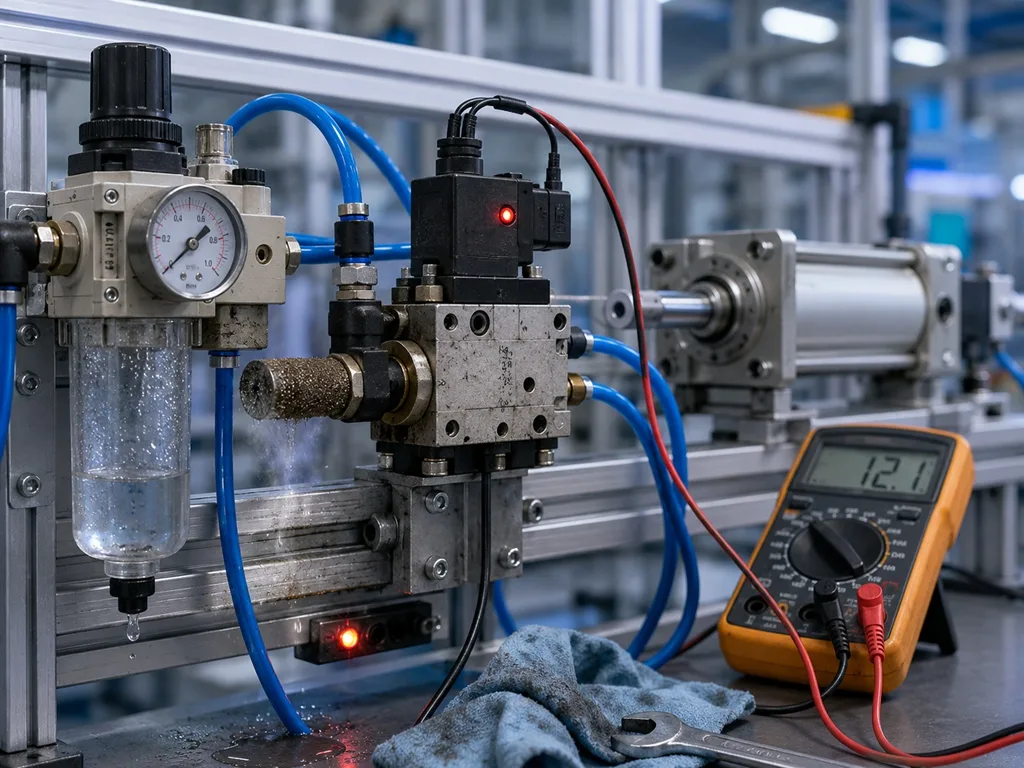
One common reason is low pilot pressure. Pilot operated valves need enough air pressure to shift the spool. Dirt, moisture, coil problems, and wrong wiring can also cause failure.
How should I choose between 2/2, 3/2, and 5/2 valves?
Use 2/2 valves for simple on/off flow control, 3/2 valves for single-acting cylinder or exhaust control, and 5/2 valves for double-acting cylinder direction control.
Conclusion
Choosing solenoid valves is about matching the valve to the real pneumatic circuit. Function, media, port size, voltage, pressure, response speed, environment, and maintenance needs all affect long-term performance. For factory automation and OEM equipment, a correctly selected valve helps cylinders move reliably, reduces downtime, and makes the whole air system easier to maintain.