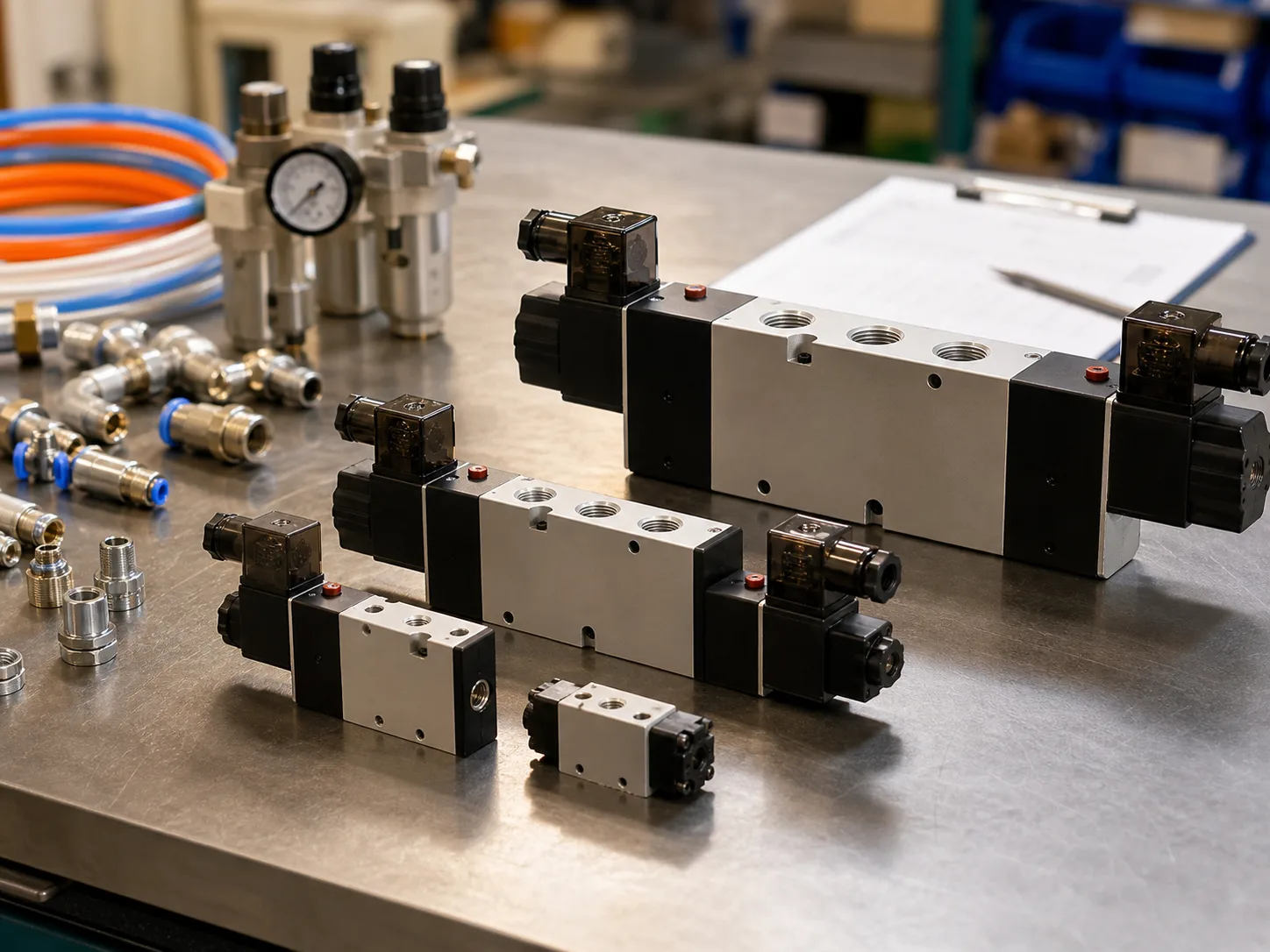
For many pneumatic machines, the model number on a valve looks simple, but the function behind it decides how the actuator moves. The 3V110, 3V210, 3V310 and 3V410 valves are normally used as 3/2 way air solenoid valves, while 4V110, 4V210, 4V310 and 4V410 valves are normally used as 5/2 way directional control valves. Both groups belong in the solenoid valve category, but they solve different circuit problems.
The practical difference is the actuator type. A 3V valve is usually selected for a single-acting cylinder, air blow control, signal air, or a small pneumatic device that needs supply and exhaust through one working port. A 4V valve is usually selected for a double-acting cylinder that needs two cylinder ports to switch between extension and retraction.
Port Function Is the First Difference
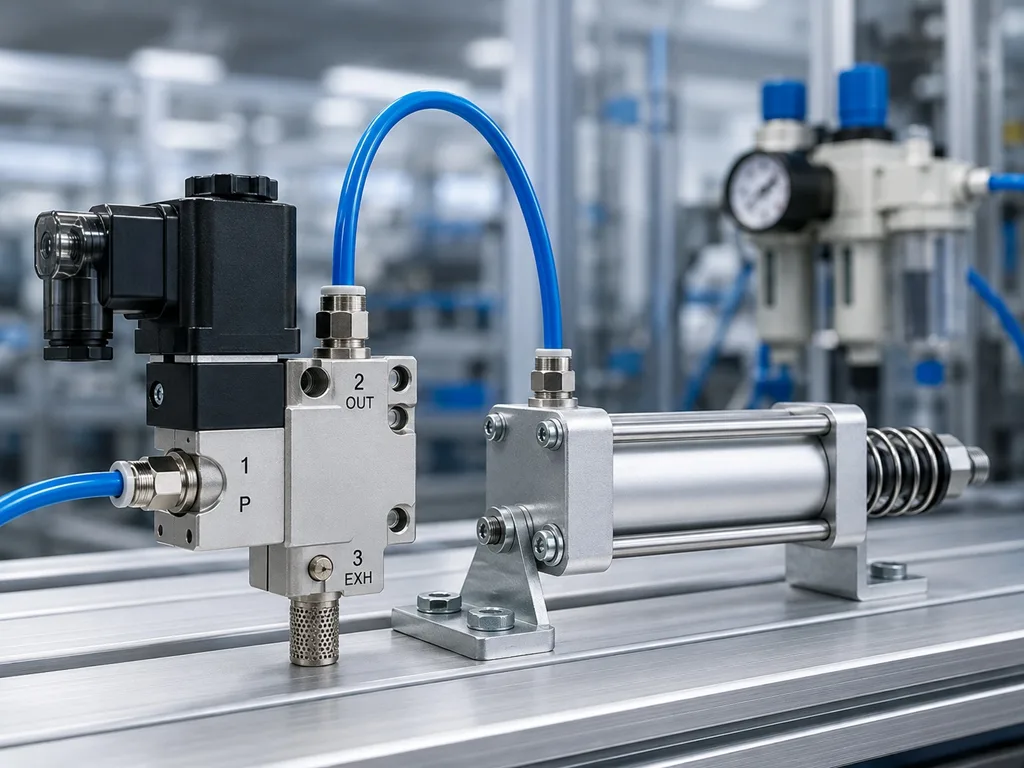
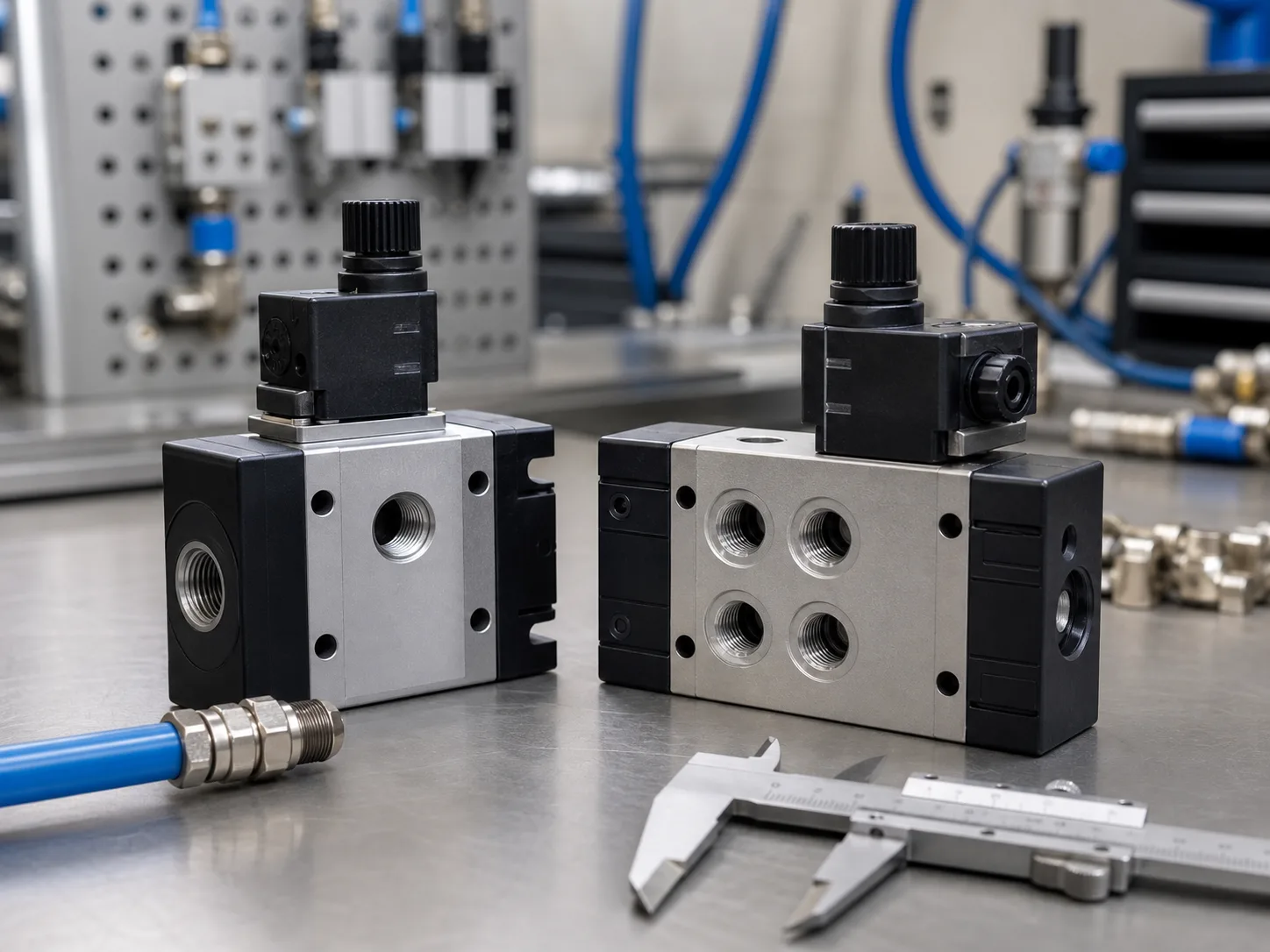
A 3V series valve has three ports and two positions. One port receives supply air, one port connects to the actuator or output line, and one port exhausts air when the valve switches back. This layout makes the valve suitable for single-acting cylinders because the spring inside the cylinder handles the return stroke after air is released.
Models such as 3V110-06, 3V210-08, 3V310-10 and 3V410-15 follow this kind of control logic. The larger the series number, the larger the port size and flow capacity usually become.
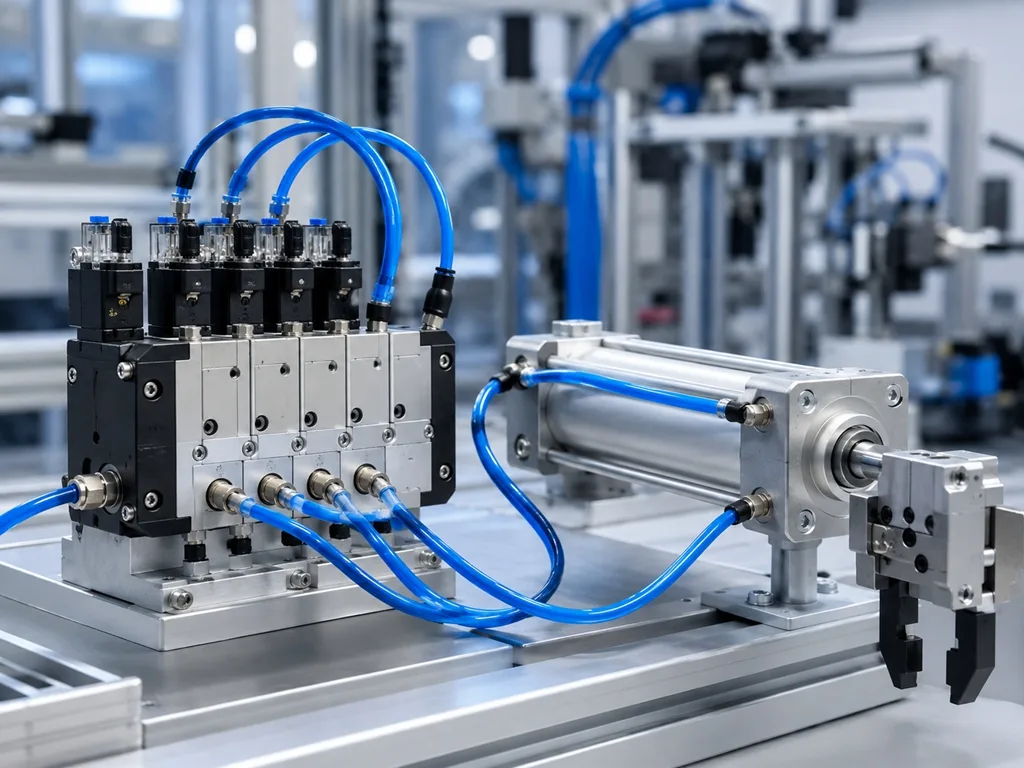
A 4V series valve has five ports and two positions. It has a pressure port, two cylinder ports and two exhaust ports. This lets the valve alternately supply air to each side of a double-acting cylinder while exhausting the opposite side. The cylinder can extend and retract by air power instead of relying on a mechanical spring.
Actuator Matching Changes the Selection
If the machine uses a single-acting clamp, small stopper, ejector, air pin, or spring-return mini cylinder, the 3V series is often the cleaner choice. The circuit is simple, the tubing is easier to read, and troubleshooting is faster because there is only one controlled output line.
If the machine uses a double-acting cylinder for pushing, lifting, indexing, opening, closing, or transfer motion, the 4V series becomes more suitable. The 4V110-06 and 4V210-08 are common for compact cylinders and medium cylinders. Larger air demand can move toward 4V310-10 or 4V410-15.
A common mistake is choosing a 3/2 way valve for a double-acting cylinder just because the coil voltage and thread look correct. The valve may switch air, but the cylinder will not have the proper directional circuit. Another mistake is using a 5/2 valve for a simple air blow or single-acting cylinder when a smaller 3/2 valve would be easier and more economical.
Flow Size Follows Cylinder Bore and Speed
The 110, 210, 310 and 410 sizes should be considered together with tube diameter, cylinder bore, stroke length and cycle speed. A small cylinder moving slowly does not need the same valve flow as a larger cylinder moving quickly. Oversizing the valve can waste space and cost, while undersizing it can make the actuator slow or unstable.
In many factory layouts, 110 series valves are used for compact tooling, signal air and small cylinders. 210 series valves are common in general automation machines. 310 and 410 series valves fit larger cylinders, longer strokes, or equipment where the actuator must move with stronger air volume. The same size logic applies across both 3V and 4V families, but the circuit function remains different.
Electrical Control and Reset Behavior
Most single-solenoid 3V and 4V valves use an electrical signal to shift the spool and a spring or pilot return to reset it when power is removed. This behavior is useful when the machine should return to a default state after the signal stops. The correct coil voltage, such as DC24V, AC110V or AC220V, must match the control cabinet.
For a 3V valve, removing power usually exhausts the output line. For a single-solenoid 4V valve, removing power usually returns the cylinder direction to the default side. This default behavior should be checked during machine design because it affects emergency stops, power loss, maintenance safety and fixture position.
Practical Buying Notes
Before ordering, confirm whether the actuator is single-acting or double-acting. Then check port size, coil voltage, working pressure, tube size, connector type and installation space. If replacing an old valve, take a photo of the model label and the port markings before removing the tubes.
For OEM buyers, it is useful to standardize around a few sizes. For example, small single-acting functions can use 3V110 or 3V210, while common double-acting cylinders can use 4V210. Larger machines can reserve 3V310, 3V410, 4V310 and 4V410 for higher flow positions. This makes purchasing and spare-parts management easier.
FAQ
Can a 3V valve control a double-acting cylinder?
It is usually not the right choice. A double-acting cylinder normally needs a 5/2 way valve such as a 4V series valve so both cylinder ports can be controlled correctly.
When should I choose a 3V valve?
Choose a 3V valve for single-acting cylinders, air blow, signal air, spring-return actuators or simple supply-and-exhaust control.
When should I choose a 4V valve?
Choose a 4V valve for double-acting cylinders that need powered extension and powered retraction through two air ports.
Conclusion
The easiest way to separate 3V and 4V directional control valves is to look at the actuator. Single-acting circuits usually point toward 3V valves, while double-acting cylinder circuits usually need 4V valves. After that, select the 110, 210, 310 or 410 size according to flow demand, port size and installation space.