Introduction
3/2 way solenoid valves are often used when a single-acting pneumatic cylinder, air signal, blow-off nozzle, or small actuator needs controlled air supply and exhaust. They have a simple job, but that job is important: send compressed air when the machine needs movement, then release air so the actuator can return.
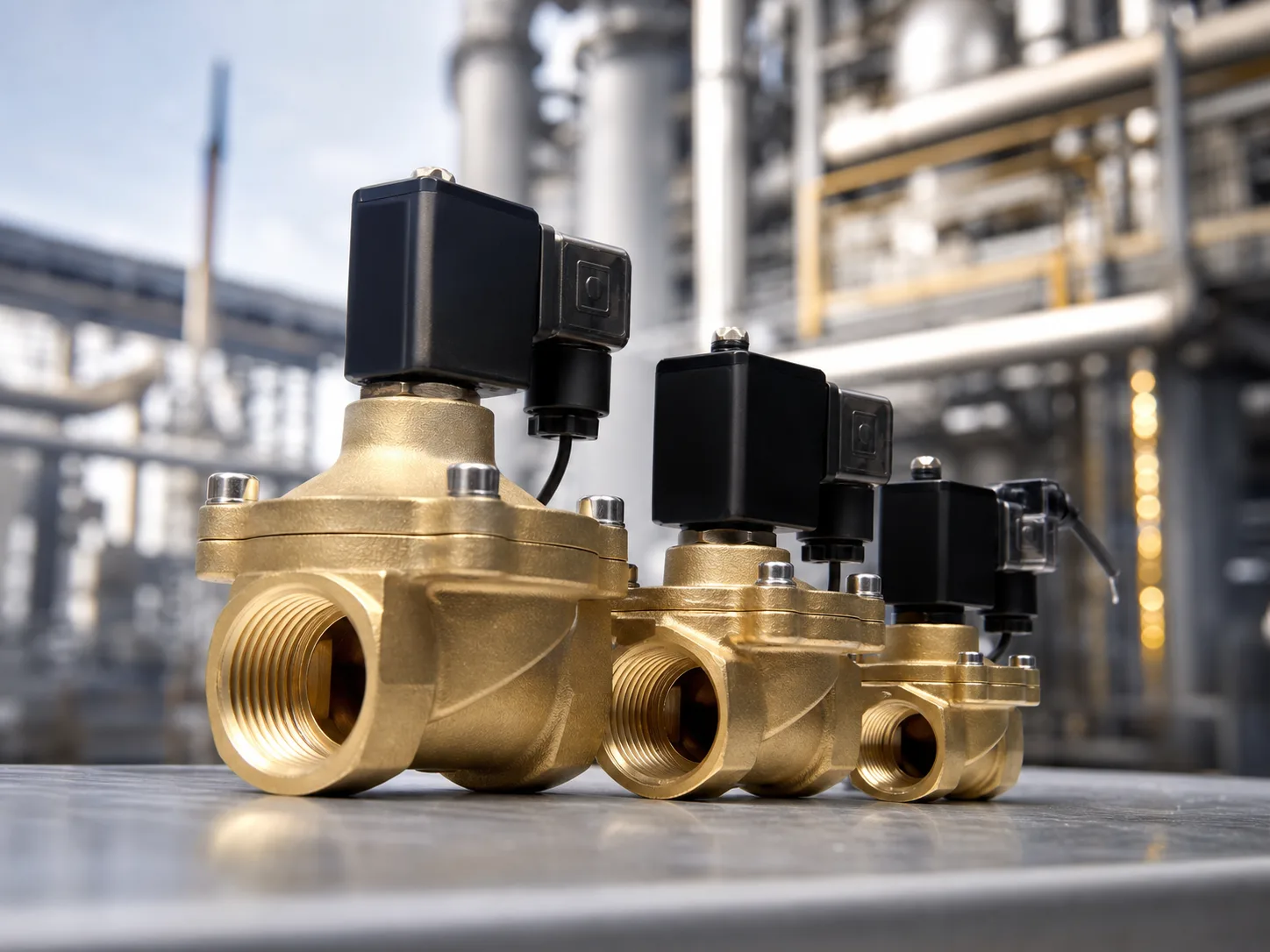
Compared with 5/2 way valves, 3/2 valves are smaller and simpler. They are commonly used in compact machines, pneumatic fixtures, textile equipment, packaging machinery, light automation stations, and control circuits. A model such as the 3V1 3/2 way normally closed solenoid valve is designed for this kind of compressed air control.
Choosing the correct 3/2 way valve means checking more than the port size. The buyer should confirm the default state, flow path, exhaust capacity, pressure range, voltage, response speed, and air quality. A small mismatch can make the actuator slow, noisy, weak, or unreliable.
What Does 3/2 Way Mean?
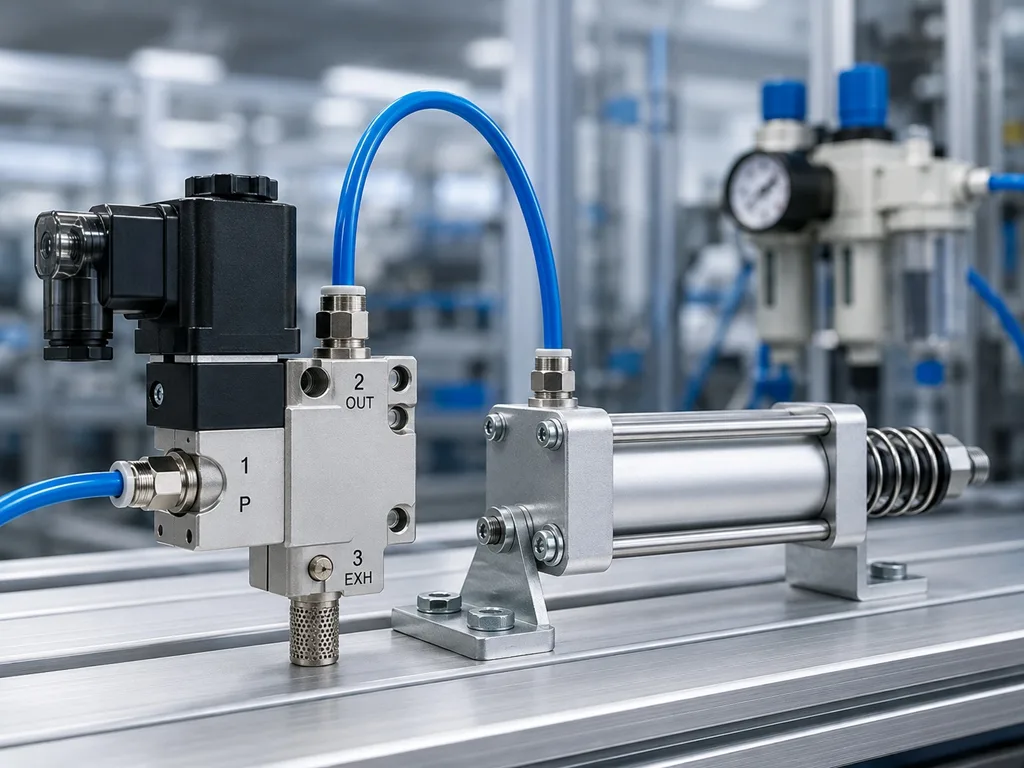
A 3/2 way valve has three ports and two positions. One port supplies compressed air, one port connects to the actuator or output line, and one port exhausts air. The two positions switch the output between supply and exhaust.
In a normally closed design, the supply is blocked when the coil is not powered. The output side is usually connected to exhaust, allowing downstream air to release. When the coil is energized, the valve opens the supply path and sends air to the actuator.
This function is ideal for a single-acting cylinder. Air pressure extends or moves the cylinder in one direction, and an internal spring or external force returns it when air is exhausted. The valve does not need to reverse air between two cylinder ports because the cylinder only has one active air chamber.
Normally Closed vs Normally Open
Normally closed 3/2 valves are widely used because they keep the air supply off during power loss. This is useful when a machine should not activate unexpectedly. In many fixtures, clamps, and small actuators, the safe condition is no air signal unless the controller energizes the valve.
Normally open 3/2 valves are used when the system should supply air by default and remove air only when powered. This may be useful for certain release, purge, or fail-open functions. The correct default state depends on the machine’s safety logic and process requirement.
Before ordering, describe what the actuator should do when power is off. This one question usually makes the normally closed or normally open choice clear.
Why Exhaust Flow Matters
A 3/2 valve does not only supply air. It must also exhaust air. If the exhaust port is too small, blocked, or fitted with a restrictive silencer, the actuator may return slowly. For a single-acting cylinder, slow exhaust can look like a weak spring or sticky cylinder, even when the real problem is restricted airflow.
In dirty environments, silencers can become clogged by dust or oil mist. When troubleshooting slow return, check the exhaust path before replacing the valve. A clean exhaust port allows the actuator to reset faster and more consistently.
Noise reduction should also be balanced with performance. A silencer is useful, but it should not restrict the valve so much that the machine cycle becomes unstable.
Direct Acting Design for Compact Control
Many small 3/2 way valves are direct acting. The solenoid coil directly shifts the internal sealing element, which makes the valve responsive and suitable for compact control circuits. Direct acting valves can often operate at low pressure, depending on the design.
The 3V1 series is commonly used where compact size and fast switching are required. It can control air signals, small cylinders, pneumatic grippers, light fixtures, and other low-to-medium flow applications.
For larger cylinders or faster motion, a 3/2 valve may need a larger orifice or port size. If the actuator extends too slowly, check whether the valve flow is sufficient before increasing pressure.
Port Size and Tube Layout
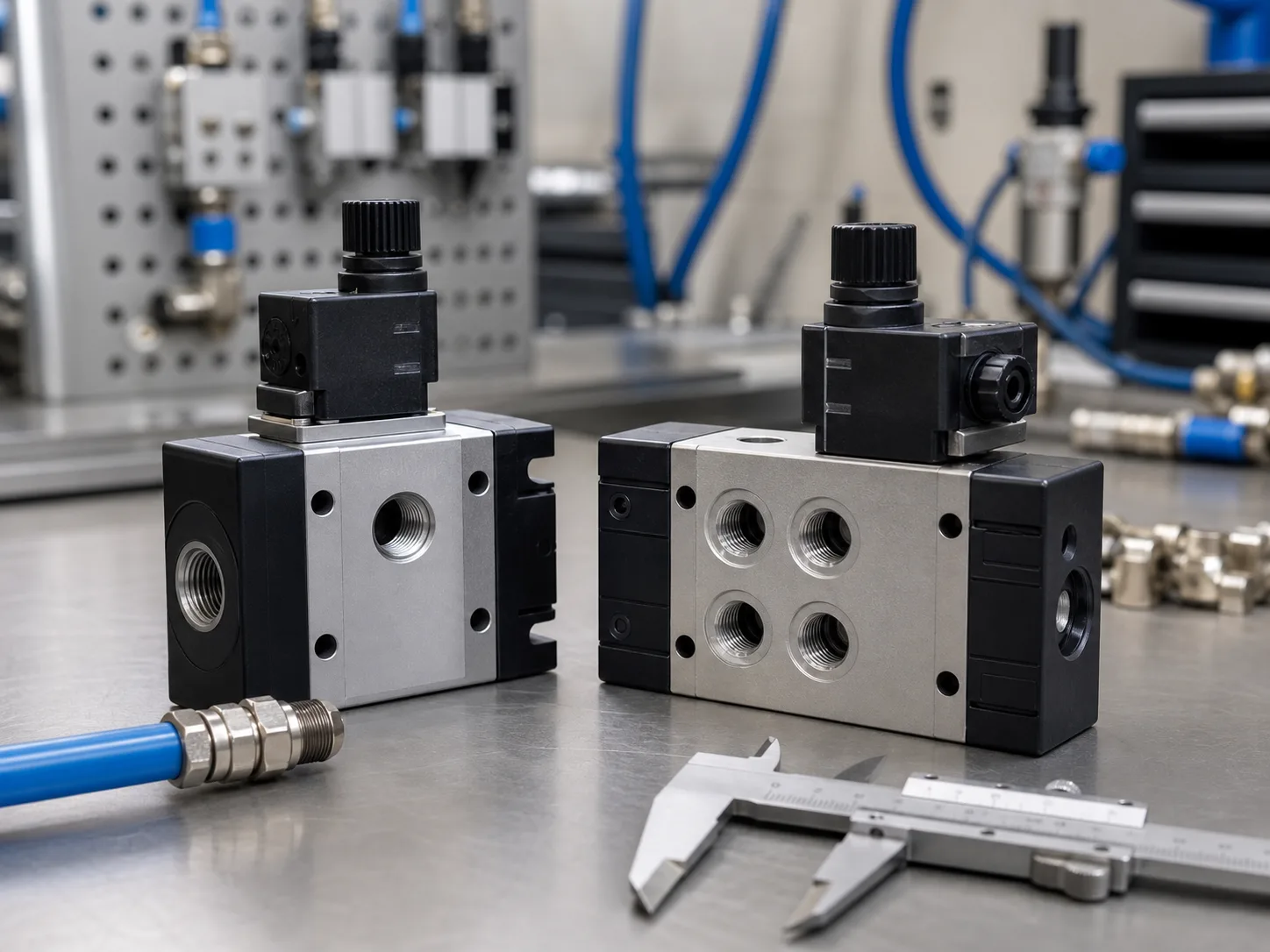
Port size should match the flow needed by the actuator. Small M5 or G1/8 ports are common for compact valves, but larger applications may need more flow. The tube and fitting size should also match the valve. A valve with enough flow can still perform poorly if connected with undersized tubing.
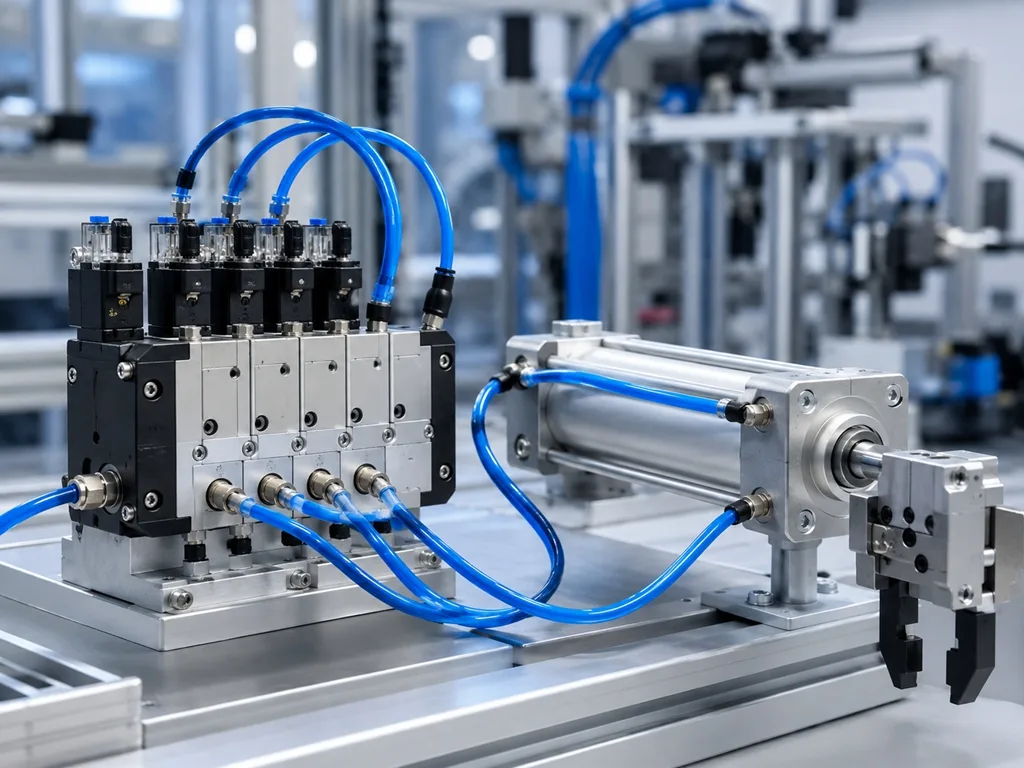
Tube routing affects reliability. If the tube is bent too sharply near the valve, the flow path may be restricted and the fitting seal may be stressed. Use suitable elbows or swivel fittings when space is tight. HOMIPNEU’s pneumatic fittings can help keep compact air lines cleaner and easier to service.
In multi-valve cabinets, label the supply, output, and exhaust ports clearly. Small 3/2 valves are easy to pipe incorrectly when many lines are close together.
Voltage and Response Time
Common coil voltages include DC12V, DC24V, AC110V, and AC220V. In automation systems, DC24V is frequently used because it matches PLC output modules and control cabinet power supplies. For replacement valves, always check the old coil marking before ordering.
Response time matters in fast machines. A valve controlling a reject cylinder on a packaging line may need quick switching. A valve used for occasional clamping may not need the same speed. The response of the full circuit also depends on tube length, actuator volume, pressure, and exhaust flow.
If response becomes inconsistent, check voltage stability. A weak power supply or long cable run can reduce coil performance, especially in systems with many valves switching at the same time.
Common Applications
3/2 way valves are used in single-acting cylinders, spring-return clamps, small ejectors, pneumatic signals, air blow-off nozzles, and pilot control circuits. In packaging equipment, they may control small pushers, stoppers, product guides, or reject mechanisms.
In maintenance stations and test fixtures, they provide simple air control without the extra ports of a 5/2 valve. In textile or assembly machines, compact 3/2 valves help keep pneumatic layouts smaller.
They are also useful as pilot valves for larger pneumatic components. A small electrical signal can control a pilot air path, which then operates a larger valve or actuator.
Common Mistakes
One common mistake is using a 2/2 way valve where a 3/2 way valve is needed. A 2/2 valve can open and close supply, but it does not provide an exhaust path. If the actuator needs to release air to return, a 3/2 valve is usually required.
Another mistake is ignoring the exhaust port. Blocking the exhaust or using a very restrictive silencer can slow the actuator. In some cases, the cylinder may not return fully.
Incorrect port connection is also common. If supply and output ports are reversed, the valve may leak or behave strangely. Always follow the port marking and datasheet.
Practical Selection Tips
For a single-acting cylinder, choose a 3/2 way valve with the correct default state, port size, voltage, and pressure range. Check whether the valve flow is enough for the cylinder volume and required cycle time. For fast return, make sure the exhaust path is not restricted.
For compact machines, choose a valve body that fits the available space but still allows easy wiring and tube access. A valve that is too difficult to service can increase downtime later.
For OEM orders, confirm coil voltage, connector style, thread type, labeling, packaging, and whether spare coils are available. Small details are easier to standardize before production starts.
Related Pneumatic Products
3/2 way solenoid valves often work with single-acting cylinders, air fittings, PU tubes, silencers, and air source treatment units. They may also be used with 5/2 way valves from the solenoid valve category in larger pneumatic systems.
For equipment using both single-acting and double-acting cylinders, use 3/2 valves where exhaust control is simple and 5/2 valves where direction control is needed on both sides of the actuator.
FAQ
What is a 3/2 way solenoid valve used for?
It is used to supply and exhaust air in single-acting cylinders, pneumatic signals, small actuators, and pilot control circuits.
Why not use a 2/2 way valve for a single-acting cylinder?
A 2/2 valve can shut off or supply air, but it usually does not provide an exhaust path. A single-acting cylinder often needs exhaust to return properly.
What does normally closed mean on a 3/2 valve?
It means the supply port is closed when the coil is not powered. The valve only sends air to the output when energized.
Why is my single-acting cylinder slow to return?
Common causes include restricted exhaust, clogged silencer, weak spring, dirty cylinder, low pressure, or incorrect valve selection.
Can a 3/2 valve control a double-acting cylinder?
It is not the standard choice. Double-acting cylinders usually require a 5/2 way or 5/3 way directional control valve.
Conclusion
3/2 way solenoid valves are practical and efficient for single-acting cylinders and compact pneumatic control. The key is to check the default state, exhaust path, flow, pressure, voltage, and installation layout. When selected correctly, a small 3/2 valve can make simple pneumatic movements reliable, fast, and easy to maintain.