Introduction
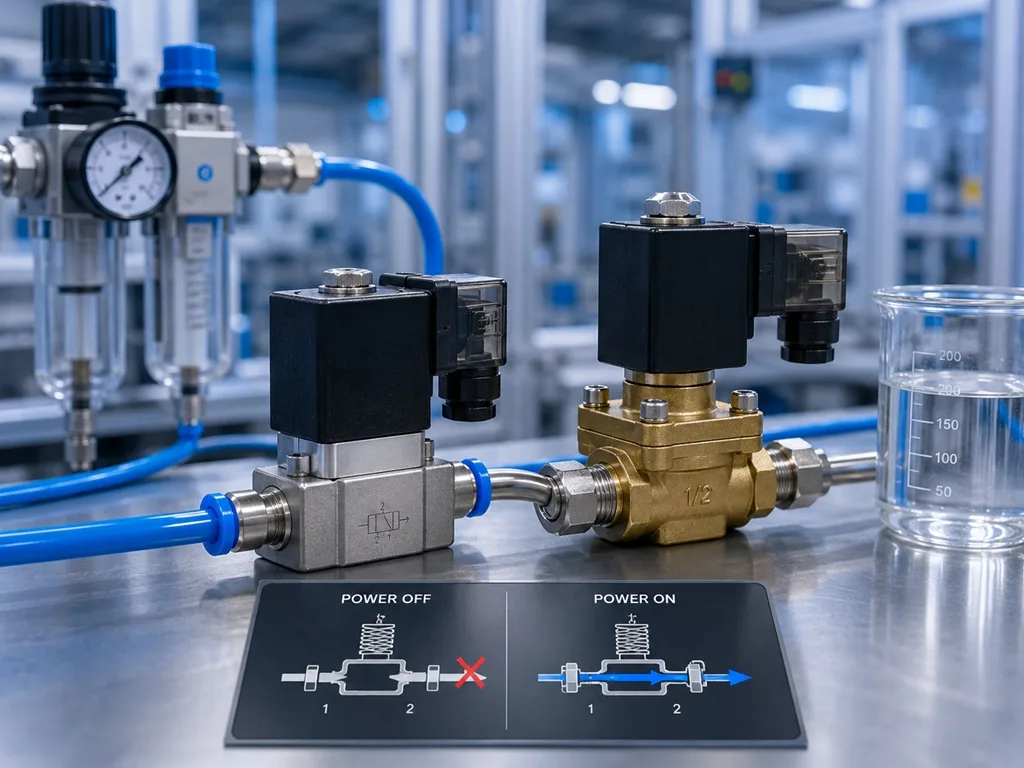
2/2 way normally closed solenoid valves are used when a system needs simple electrical on/off control of a media path. Without power, the valve stays closed and blocks flow. When the coil is energized, the valve opens and allows air, water, oil, or another compatible medium to pass. This default closed position makes the valve useful in many pneumatic, fluid, and machine safety applications.
Although the function sounds simple, choosing the correct valve still requires attention. Port size, orifice size, pressure range, media compatibility, seal material, voltage, body material, temperature, and mounting position all affect performance. A valve that works well for compressed air may not be suitable for water. A water valve may not survive steam. A compact valve may switch quickly but restrict flow in a larger line.
HOMIPNEU offers several 2/2 way valve types, including compact pneumatic valves such as the 2V025 2/2 way normally closed solenoid valve, air and fluid valves such as the 2V025-06 air solenoid valve, and brass water valves such as the 2W160-15 normally closed solenoid valve.
What Does 2/2 Way Normally Closed Mean?
The term 2/2 way means the valve has two ports and two positions. One port is the inlet and the other is the outlet. In one position, the valve blocks the flow path. In the other position, it opens the path. This makes it suitable for simple shut-off and release functions.
Normally closed means the valve is closed when the coil is not energized. This is important because it defines the valve’s behavior during power loss. In many systems, stopping flow when power is removed is safer and easier to control. For example, a machine may need to stop compressed air supply to a small actuator, shut off water flow, or prevent media from entering a line until an electrical signal is given.
Normally open valves do the opposite. They allow flow without power and close when energized. They are useful in some drain, cooling, or fail-open applications, but normally closed valves are more common for controlled supply lines.
Direct Acting vs Pilot Operated 2/2 Valves
Many compact 2/2 way normally closed solenoid valves are direct acting. In a direct acting valve, the solenoid coil directly lifts the sealing element from the orifice. This design can work at zero or low pressure, which is useful when the system cannot provide pilot pressure.
Direct acting valves are often compact and responsive, but the orifice size is limited by coil force. If a larger flow path is needed, a pilot operated or diaphragm assisted valve may be used. These valves use pressure difference to help open the valve, allowing larger port sizes and higher flow with manageable coil power.
The tradeoff is that pilot operated valves may require a minimum pressure difference to work reliably. Before choosing a valve, check whether the system has enough pressure and whether the media flow direction matches the valve design.
Choosing a Valve for Compressed Air
For compressed air, the valve should be selected based on pressure range, flow demand, port size, response speed, and air quality. Compact valves such as the 2V025 series are often used for small air control tasks, blow-off lines, pneumatic signals, light actuators, and automation fixtures.
Clean air matters. Dust, moisture, and oil contamination can affect the plunger, seal, or orifice. If the valve is installed in a factory air line, use suitable air preparation upstream. A filter regulator can help stabilize pressure and protect the valve from particles.
Tube size and fittings should also match the valve. A valve with G1/8 ports may not deliver enough flow if the downstream tube is too small or the line has many restrictions. For reliable operation, look at the valve, fitting, tube, and actuator as one air path.
Choosing a Valve for Water
Water solenoid valves need suitable body and seal materials. Brass valves are common for general water control, while stainless steel may be preferred for corrosion resistance or cleaner applications. Plastic valves may be suitable for some light-duty or water treatment systems, depending on pressure and media compatibility.
The 2W160-15 normally closed valve is an example of a brass valve used for water and general fluid control. For water systems, check pressure, temperature, pipe size, media cleanliness, and whether the valve can handle the required flow.
Water hammer is another practical issue. If a valve closes very quickly in a long water line, pressure shock may occur. In sensitive systems, piping design and valve selection should consider this effect.
Choosing a Valve for Oil or Other Fluids
Some 2/2 way valves can handle oil, but not every valve is suitable. Oil viscosity matters. A valve designed for low-viscosity fluids may not open or close correctly if the oil is too thick. Seal material must also be compatible with the fluid.
For oil, check viscosity limits, temperature, pressure, and seal material. If the media includes additives or chemicals, ask for compatibility guidance. Using an air valve for oil simply because the port size matches is risky.
In industrial equipment, fluid lines often operate for long periods without attention. A small compatibility mistake can cause swelling seals, sticking plungers, leakage, or coil overheating.
Voltage and Coil Selection
Common coil voltages include DC12V, DC24V, AC110V, and AC220V. DC24V is common in automation control cabinets, while AC voltages appear in many standalone machines and regional systems. The voltage must match the control circuit.
Coil duty cycle should also be considered. Some valves remain energized for long periods, while others switch briefly. If the valve must stay powered continuously, coil heat and insulation class matter. High ambient temperature can make coil temperature rise worse.
Connector style should match the installation. DIN connectors are easy to replace and service. Lead wire coils may fit better in compact spaces. For wet environments, check cable sealing and protection level.
Common Mistakes
One common mistake is choosing a valve by port size only. Two valves with the same port size may have different orifice sizes and flow capacity. Orifice size is especially important in direct acting valves because it affects flow and pressure performance.
Another mistake is using a valve with the wrong media. A pneumatic air valve may not be safe for water or steam. A standard water valve may not handle high temperature. Always match the valve to the media and temperature.
Installation direction can also matter. Many valves have an arrow on the body showing flow direction. Installing the valve backward may cause leakage, failure to open, or poor sealing.
Practical Selection Tips
For a simple air shut-off line, choose a compact 2/2 way normally closed valve with the correct voltage, pressure range, and port size. For a water line, confirm body material, seal material, pressure, and temperature. For steam or high-temperature media, choose a dedicated high-temperature valve rather than a standard model.
If the valve will be used in bulk production, request samples and test them under real working conditions. Check switching reliability, coil temperature, leakage, and flow. For OEM orders, confirm labeling, packaging, voltage marking, thread type, and spare coil availability.
For replacement work, photograph the existing valve, nameplate, wiring, and flow direction before removing it. This makes it easier to choose a suitable replacement and avoid installation errors.
Related Pneumatic Products
2/2 way normally closed solenoid valves are often used with pneumatic fittings, PU tubes, silencers, filters, regulators, and manifolds. In compressed air systems, they may work alongside 3/2 and 5/2 way directional valves from the solenoid valve category.
For machines that use both compressed air and water, do not use one valve type for every media. Select air valves, water valves, steam valves, or stainless steel valves according to the actual working conditions.
FAQ
What is a 2/2 way normally closed solenoid valve?
It is a two-port, two-position valve that stays closed when power is off and opens when the coil is energized. It is used for simple on/off control of compatible media.
Can a 2/2 way valve control a pneumatic cylinder?
It can control air supply or release, but double-acting cylinder direction control normally requires a 5/2 way valve. Single-acting cylinders often use 3/2 way valves.
Can I use an air solenoid valve for water?
Only if the valve is rated for water. Air valves and water valves may use different seals, body materials, and internal structures.
Why does my normally closed valve leak when powered off?
Possible causes include dirt on the sealing surface, worn seals, wrong flow direction, pressure outside the rated range, or media incompatibility.
Does port size equal flow capacity?
Not always. Orifice size, internal structure, pressure difference, and valve type also affect flow. Check the valve specifications, not only the thread size.
Conclusion
2/2 way normally closed solenoid valves are practical components for on/off control, but the correct choice depends on media, pressure, temperature, voltage, flow, and installation details. When selected properly, they provide simple, reliable control for compressed air, water, oil, and many industrial automation systems.