Introduction
Manual pneumatic valves vs solenoid valves is a common comparison when designing or repairing an air control system. Both can direct compressed air, but they are used in different situations. A manual valve is operated by a person through a lever, knob, push-pull handle, or pedal. A solenoid valve is operated electrically by a coil and control signal.
The choice affects machine function, safety, automation level, maintenance, wiring, and cost. A manual valve is simple and independent from electrical control. A solenoid valve can connect to a PLC, sensor, timer, or control panel. Neither option is always better. The correct valve depends on how the machine is used and who needs to control the movement.
HOMIPNEU supplies both manual control pneumatic valves and electrically operated solenoid valves. Examples include the 4H series manual control pneumatic valve, 3R210-08 push pull pneumatic hand valve, and automatic valves such as the SY7120-5LZD-02 solenoid valve.
How Manual Pneumatic Valves Work
Manual pneumatic valves use human force to change the valve position. A lever valve may shift a spool when the operator moves the handle. A push-pull valve changes position when the knob is pushed or pulled. A foot valve allows hands-free operation in workstations.
Because they do not need electrical power, manual valves are useful in simple pneumatic stations, maintenance equipment, test fixtures, and machines where direct operator control is preferred. They are also useful for setup, local override, and emergency manual operation in some systems.
The 4H series manual control pneumatic valve is a typical hand lever directional valve used for direct air flow control. It can control pneumatic actuators without PLC wiring or coil voltage.
How Solenoid Valves Work
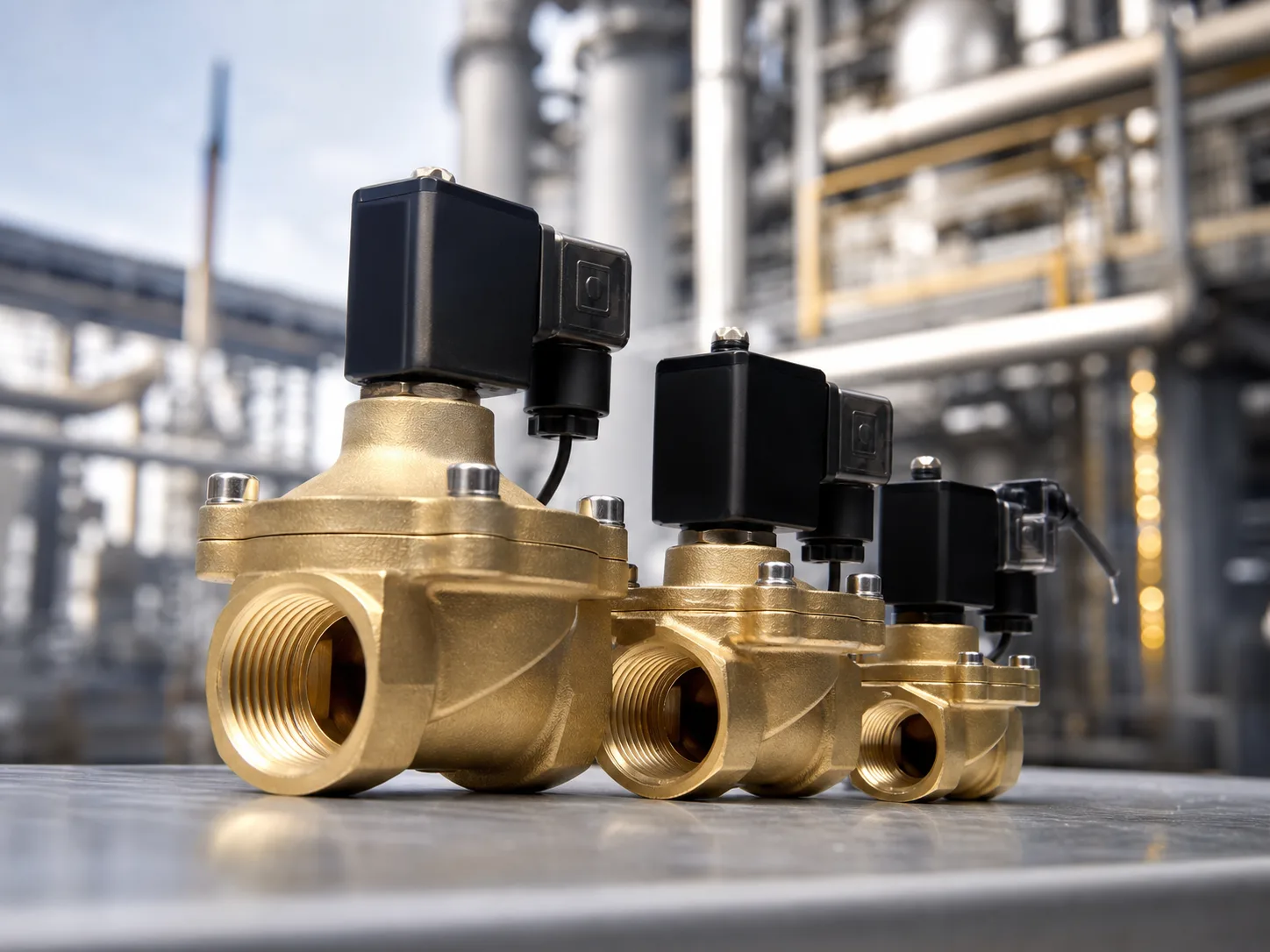
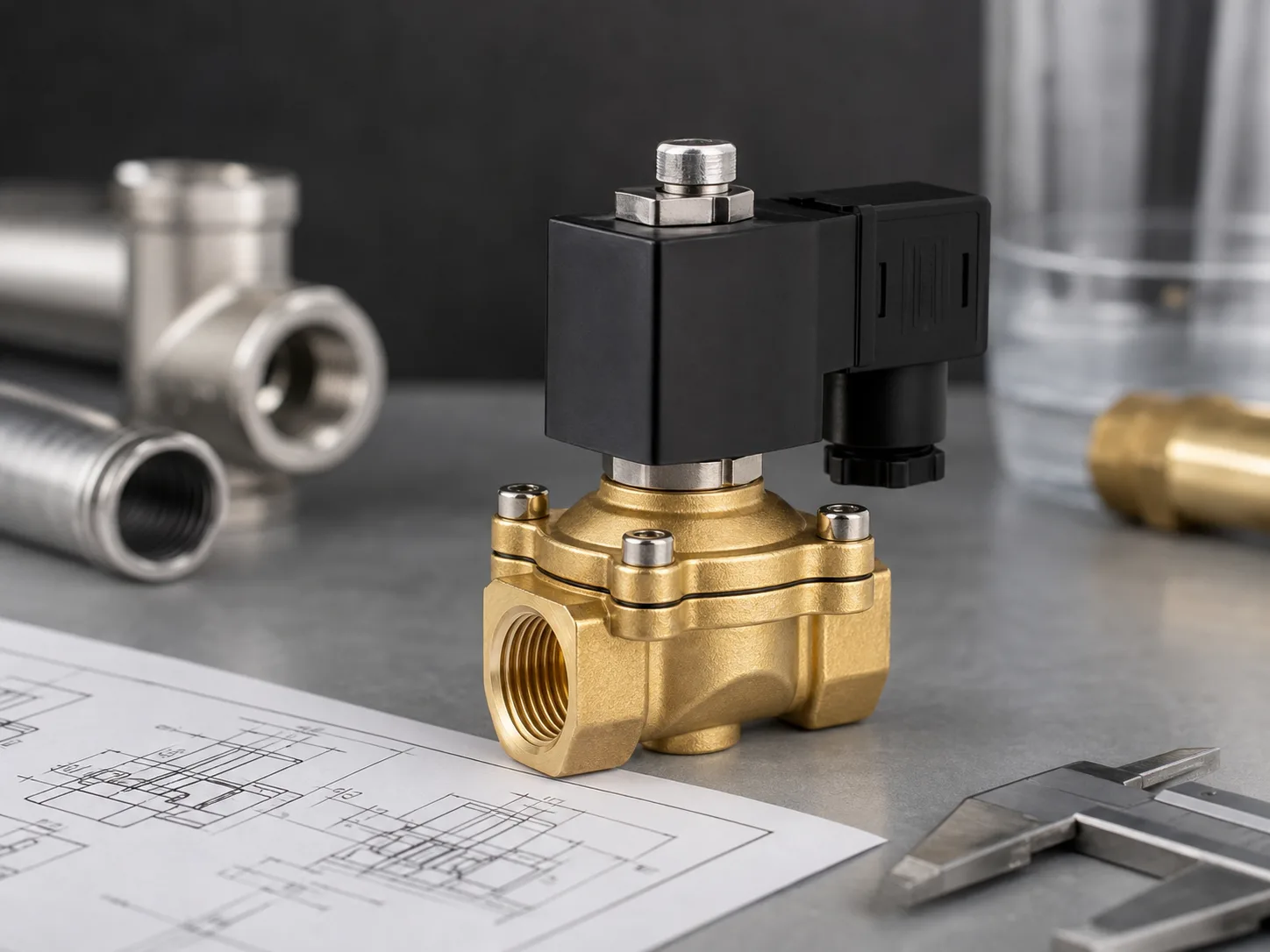
Solenoid valves use an electromagnetic coil to shift the valve. When the controller sends voltage to the coil, the valve changes position and redirects air. When the signal changes or power is removed, the valve returns or shifts again depending on its design.
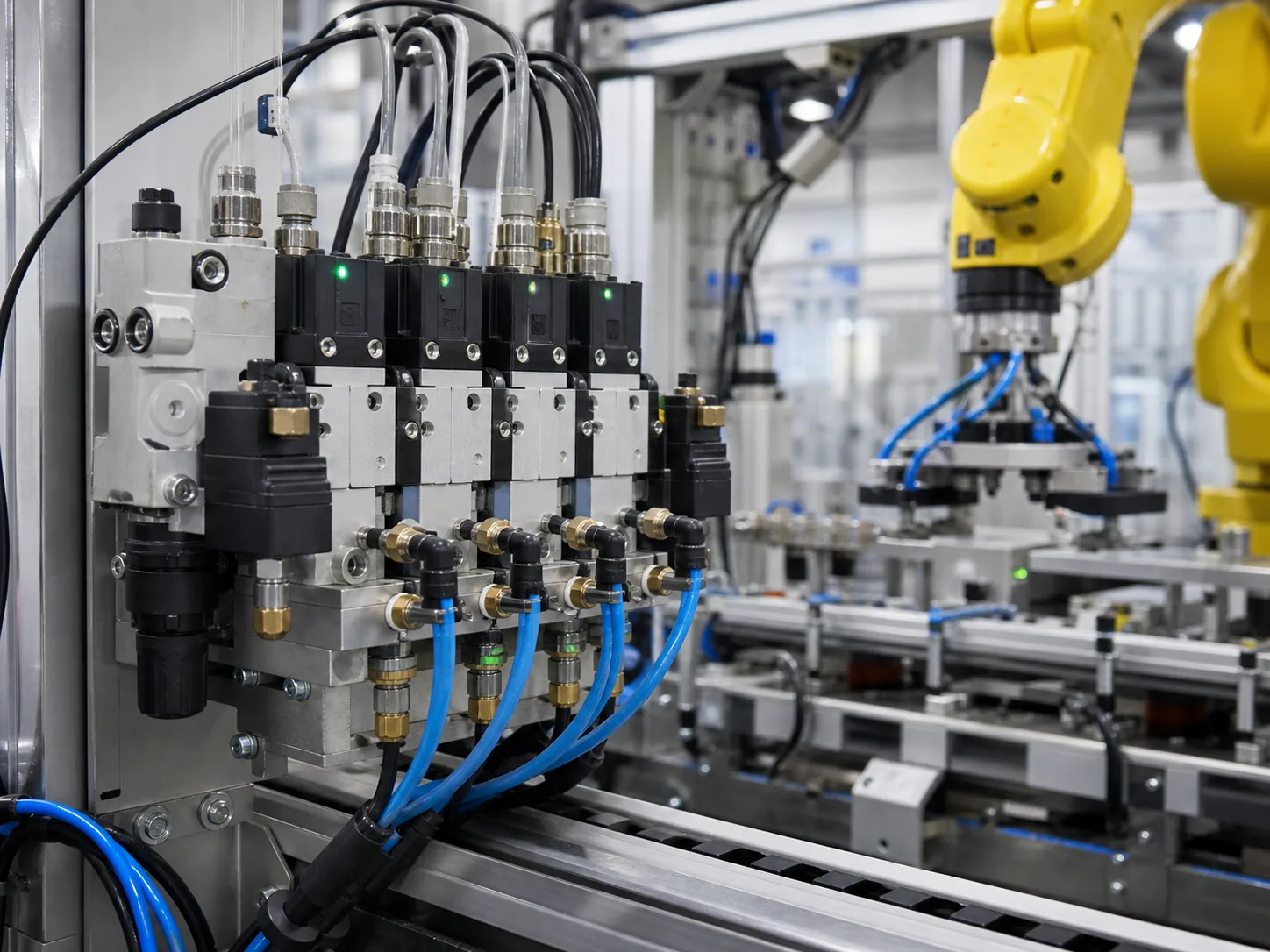
Solenoid valves are common in automatic machines because they can respond to sensors, PLC outputs, timers, and sequence controls. A packaging machine, assembly line, or labeling machine may use many solenoid valves to control cylinders and air signals in a timed process.
Products such as SY5120-5LZD piloted solenoid valves and 4V series pneumatic air valves are commonly used where automatic electrical control is required.
Automation Level
The biggest difference is automation. Manual valves require an operator. They are suitable when a human should decide each movement, such as clamping a part in a bench fixture or testing a cylinder during maintenance. The operation is visible and direct.
Solenoid valves are better when movement must be automatic, repeated, timed, or linked to sensors. A reject arm on a packaging line cannot wait for manual operation. A PLC-controlled cylinder must receive signals according to machine logic. In these cases, solenoid valves are the natural choice.
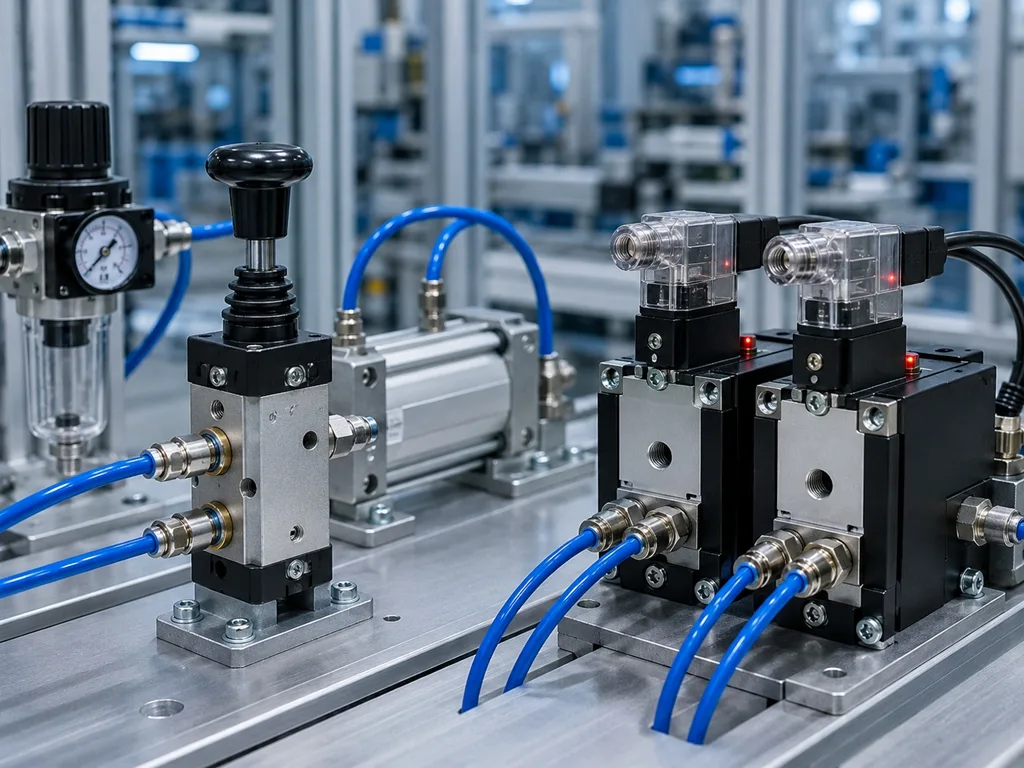
For semi-automatic equipment, both valve types may be used. A manual valve may isolate air supply or provide setup control, while solenoid valves handle the normal machine cycle.
Safety and Default Position
Safety behavior should be reviewed before choosing either valve type. With a solenoid valve, normally closed, spring return, double solenoid, and center position options all affect what happens during power loss or emergency stop. The valve should match the machine’s safe condition.
Manual valves depend on operator action and valve position. Some manual valves stay in the selected position until changed. Others return by spring. If a manual valve is left open, the downstream actuator may stay pressurized. This can be useful or risky depending on the application.
For equipment where unexpected movement is dangerous, consider lockout, pressure release, guarded controls, and clear operating procedures. Valve selection is only one part of safe pneumatic design.
Installation and Wiring
Manual valves are easier to install electrically because they need no coil wiring. This can reduce cost and simplify small systems. They still require proper air piping, fittings, mounting, and labeling.
Solenoid valves need wiring, voltage matching, connectors, and control outputs. In a large machine, this adds complexity but enables automatic control. DC24V coils are common in modern control cabinets, while AC voltages may be used in other systems.
For OEM machines, wiring consistency matters. If the machine uses many solenoid valves, choose a standard connector type and voltage. This makes assembly and maintenance easier.
Maintenance Differences
Manual valves are mechanically simple, but they can wear from repeated hand operation. Handles, detents, seals, and spools should be checked if the valve becomes loose, hard to operate, or leaky. Dust and poor air quality can still affect manual valves.
Solenoid valves add electrical parts. Coils, connectors, wiring, and control signals must be checked during troubleshooting. A valve may fail mechanically or electrically. It may click but not shift because of low pilot pressure, or it may not click because voltage is missing.
Both valve types benefit from clean compressed air and proper filtration. Dirty air can make any pneumatic valve stick or leak.
Cost and System Value
Manual valves usually cost less in simple systems because they need no electrical control. They are a good choice for straightforward operator-controlled movement. However, they cannot replace automation where timing and repeatability are required.
Solenoid valves may cost more when wiring, connectors, and PLC outputs are included, but they provide much higher automation value. They allow machines to run repeatable cycles, react to sensors, and integrate with production controls.
The best choice is not the lowest valve price. It is the control method that fits the machine’s workflow. A manual valve in an automatic line creates labor and timing problems. A solenoid valve in a simple maintenance fixture may add unnecessary complexity.
Common Applications for Manual Valves
Manual valves are common in pneumatic workstations, test benches, maintenance tools, clamping fixtures, training equipment, and simple machines. They are useful when an operator needs direct control or when electrical control is not available.
The 3R210-08 push pull valve is a practical option for direct hand control in two-position five-way pneumatic circuits. Lever valves such as 4H series are also used for directional air control in industrial stations.
Manual valves are also useful as local control or setup devices, but they should be integrated carefully if the main machine is automatic.
Common Applications for Solenoid Valves
Solenoid valves are common in automatic packaging machinery, assembly machines, conveyors, pneumatic cylinder control, robotic fixtures, labeling systems, sorting equipment, and process control. They are selected when a control signal must operate the valve.
For double-acting cylinders, 5/2 way solenoid valves are widely used. For single-acting cylinders, 3/2 way valves are common. For simple media shut-off, 2/2 way valves may be used. The function should match the actuator or media path.
In machines with many actuators, manifold-mounted solenoid valves can reduce piping and make the system cleaner.
Practical Selection Tips
Choose a manual pneumatic valve when the operation should be human-controlled, local, simple, and independent from electricity. Choose a solenoid valve when the operation must be automatic, timed, sensor-driven, or controlled by a PLC.
Check valve function, port size, pressure range, flow, mounting style, default position, and safety behavior. For solenoid valves, also check voltage, connector type, duty cycle, and wiring. For manual valves, check handle style, return method, mounting position, and operator access.
For mixed systems, use manual valves for isolation, setup, or direct control, and solenoid valves for the automatic cycle. This combination is common in practical pneumatic equipment.
Related Pneumatic Products
HOMIPNEU offers manual control pneumatic valves, 3/2 and 5/2 way solenoid valves, 2/2 way air valves, pneumatic fittings, air tubes, and air source treatment units. The solenoid valve category includes options for automated air control, while manual valves support direct operator control and setup needs.
For OEM buyers, selecting both manual and solenoid valve types from a consistent supplier can simplify spare parts, labeling, and technical support.
FAQ
What is the main difference between manual pneumatic valves and solenoid valves?
Manual pneumatic valves are operated by a person, while solenoid valves are operated electrically by a control signal.
When should I use a manual pneumatic valve?
Use a manual valve when direct operator control is needed, such as workstations, test fixtures, maintenance tools, and simple pneumatic circuits.
When should I use a solenoid valve?
Use a solenoid valve when the movement must be automatic, timed, sensor-controlled, or connected to a PLC.
Are manual valves safer than solenoid valves?
Not automatically. Safety depends on the valve function, default position, machine design, lockout method, and how operators interact with the equipment.
Can manual valves and solenoid valves be used together?
Yes. Many systems use manual valves for isolation or setup and solenoid valves for normal automatic operation.
Conclusion
Manual pneumatic valves and solenoid valves both control compressed air, but they serve different needs. Manual valves are simple and direct. Solenoid valves support automation, timing, and PLC control. The right choice depends on the machine workflow, safety behavior, maintenance needs, and control method. For many industrial systems, using both types in the right places creates the most practical pneumatic layout.