Introduction
Solenoid valves fail for many reasons, and the valve itself is not always the original problem. In pneumatic systems, a valve may stop switching because of dirty air, low pressure, wrong voltage, damaged wiring, blocked exhaust, worn seals, poor tube routing, or a coil that has been overheated for too long. Replacing the valve without finding the cause may solve the machine for a few days, then the same problem returns.
In factory automation, valve failure usually appears as slow cylinder movement, no movement, air leakage, coil heating, unstable response, or a valve that clicks but does not shift. These symptoms can stop a packaging line, assembly fixture, clamping station, or actuator group. A practical troubleshooting method saves time and prevents unnecessary replacement.
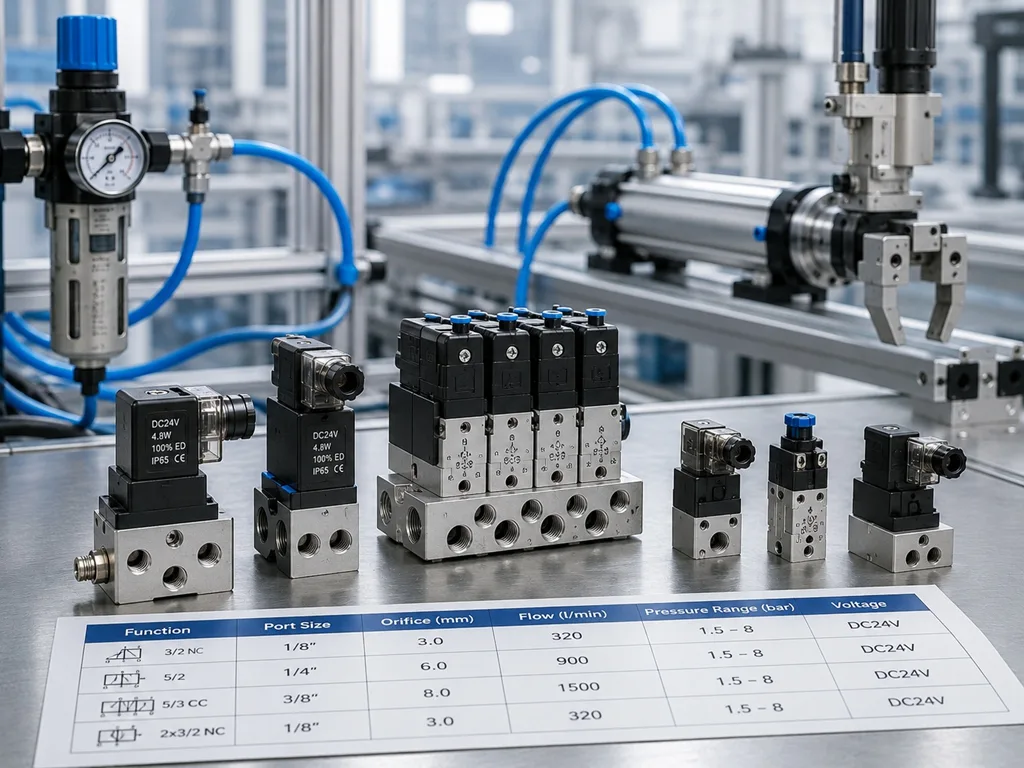
This guide explains common reasons pneumatic solenoid valves fail and how maintenance teams can prevent repeat problems. It applies to compact 2V and 3V valves, SY series directional valves, 4V series air valves, and many other compressed air control valves in the solenoid valve category.
Dirty or Wet Compressed Air
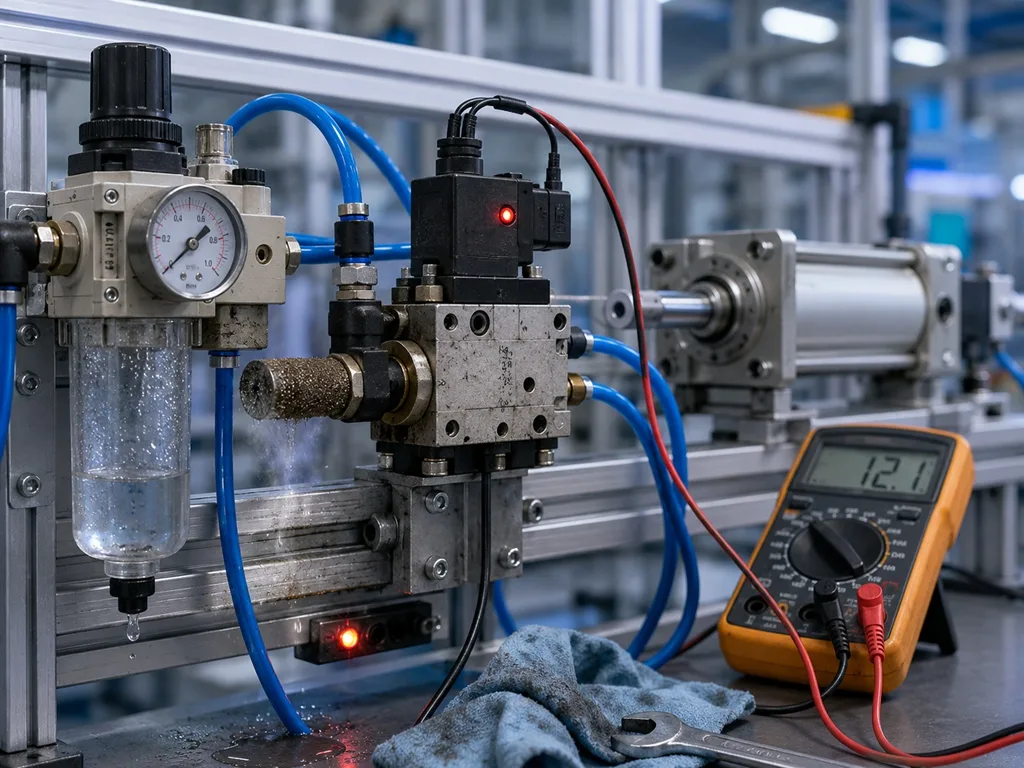
Contaminated air is one of the most common causes of pneumatic valve problems. Dust, pipe scale, moisture, and oil sludge can enter the valve body and affect the spool, plunger, or sealing surface. A valve may become sticky, leak internally, or fail to return fully.
Moisture is especially troublesome in systems where air lines cool down after compression. Water can collect in pipes and reach the valve group. Over time, this causes corrosion, seal swelling, or sluggish movement. In cold conditions, moisture may also create freezing problems.
The prevention method is straightforward: install proper air preparation upstream. Filters remove particles and water droplets. Regulators stabilize pressure. Drain bowls should be checked regularly. If multiple valves fail in the same area, inspect the air source before replacing one valve after another.
Wrong Voltage or Unstable Power
A solenoid coil is designed for a specific voltage. If a DC24V coil is connected to AC220V, it can burn quickly. If an AC coil receives the wrong voltage, it may buzz, overheat, or fail to shift the valve. Even when the voltage is correct on paper, unstable power can cause problems.
Long cable runs, overloaded power supplies, loose terminals, and weak PLC outputs can reduce voltage at the coil. The valve may click but not shift strongly enough. In systems where many valves energize at the same time, voltage drop can become more noticeable.
Before replacing a valve, measure voltage at the coil while the machine is operating. Do not rely only on the control cabinet label. For replacement orders, always check the coil marking on the existing valve and match DC or AC correctly.
Low Pilot Pressure
Pilot operated solenoid valves need enough air pressure to shift the main spool. If system pressure is below the required range, the coil may energize and click, but the valve may not switch airflow. This problem is common during startup, low-pressure testing, or systems with undersized air supply.
Directional valves such as SY series and 4V series often rely on pilot pressure. If a cylinder does not move, check whether the valve receives adequate pressure at the inlet. Also check whether the regulator is set correctly and whether upstream filters are blocked.
Low pressure can also happen during fast machine cycles when air consumption is high. A compressor may show enough pressure, but the local branch line may drop during operation. Measure pressure near the valve group, not only at the compressor.
Blocked Exhaust or Silencers
A pneumatic cylinder needs air to leave one side while air enters the other. If the valve exhaust is blocked or a silencer is clogged, the cylinder may move slowly or fail to complete its stroke. This can look like a valve or cylinder failure, but the real issue is restricted exhaust.
Silencers collect dust, oil mist, and debris over time. In packaging or dusty production areas, they may clog faster than expected. Removing or replacing a silencer during troubleshooting can quickly show whether exhaust restriction is the problem.
Do not leave exhaust ports open in dirty environments as a permanent solution. Use suitable silencers and maintain them regularly. For high-speed systems, choose silencers that reduce noise without limiting flow too much.
Coil Overheating
Solenoid coils generate heat during operation. Some warmth is normal, but excessive heat shortens coil life and can damage surrounding parts. Coil overheating may come from wrong voltage, long energizing time, high ambient temperature, poor ventilation, or a coil not designed for continuous duty.
In many machines, valves remain energized for long periods. If the coil specification is not suitable for continuous operation, it may fail early. Heat also increases when coils are installed close together in a compact cabinet with little airflow.
If a coil fails repeatedly, check the voltage, duty cycle, ambient temperature, and mounting arrangement. For OEM designs, leave enough space for heat dissipation and choose coils suitable for the control pattern.
Internal Leakage
Internal leakage means air passes through the valve when it should be blocked or crosses between ports inside the valve. Causes include worn seals, dirt on the sealing surface, damaged spool, incorrect pressure, or media incompatibility.
Small leakage may be hard to notice at first. It may appear as a cylinder slowly drifting, pressure loss in a branch line, or a compressor cycling more often. In production, internal leakage can reduce actuator force and make machine behavior inconsistent.
If leakage appears after maintenance, check whether the valve was installed in the correct flow direction and whether the ports were connected correctly. For 2/2 valves, reverse installation can cause poor sealing.
Poor Installation and Tube Stress
A valve can be damaged by poor piping. If tubes are too short, bent sharply, or pulled sideways, valve ports and fittings are stressed. Vibration from moving machinery can loosen threaded connections or fatigue tubing near the valve.
Good installation leaves enough space for tube insertion, wire connection, and maintenance. Use proper pneumatic fittings, clamps, and routing paths. Do not let the valve body carry the weight of long unsupported tubes or moving cable chains.
Thread installation also matters. Over-tightening can crack ports or damage threads. Under-tightening can leak. Use the correct thread type and sealing method.
Wrong Valve for the Media
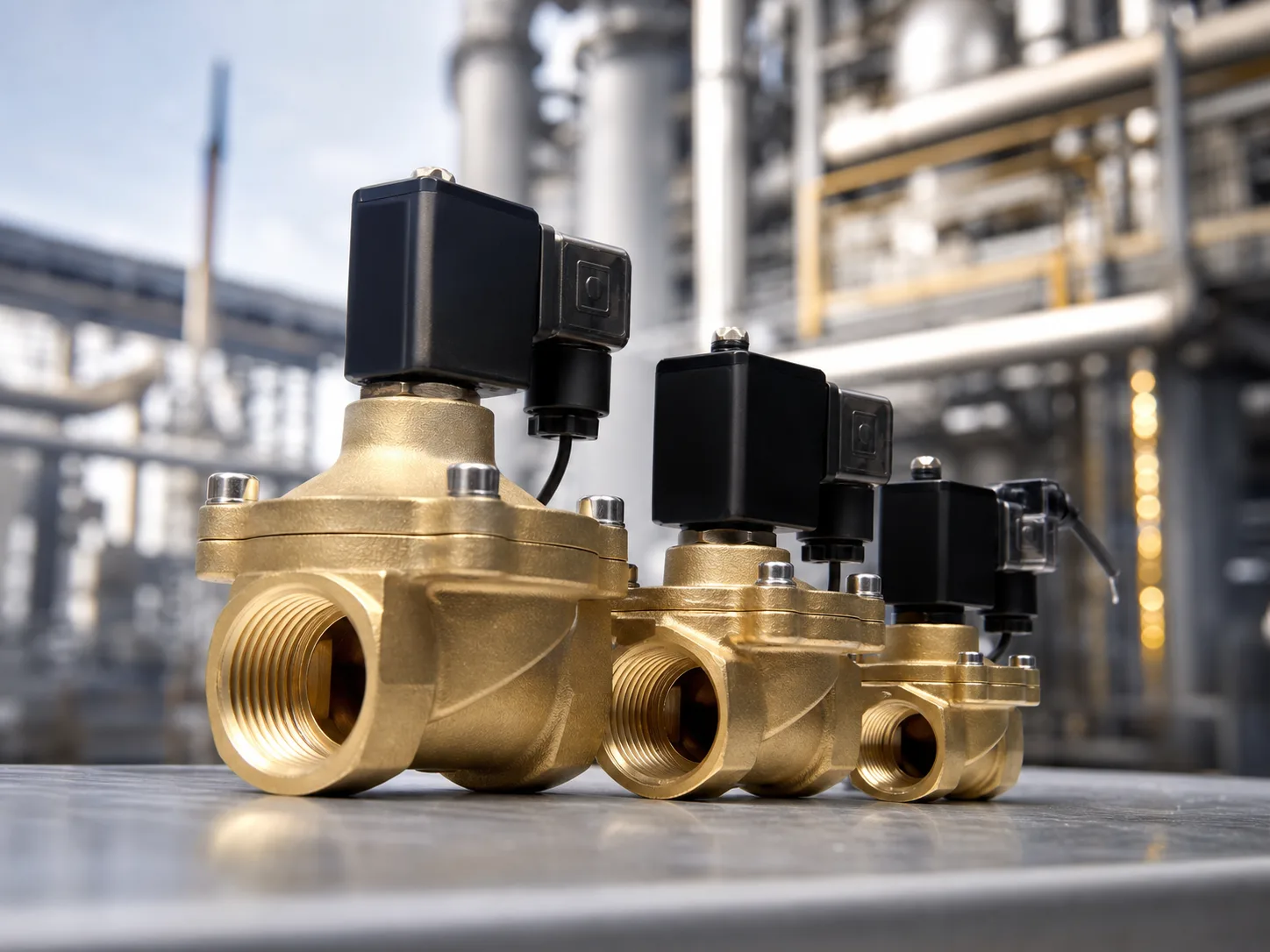
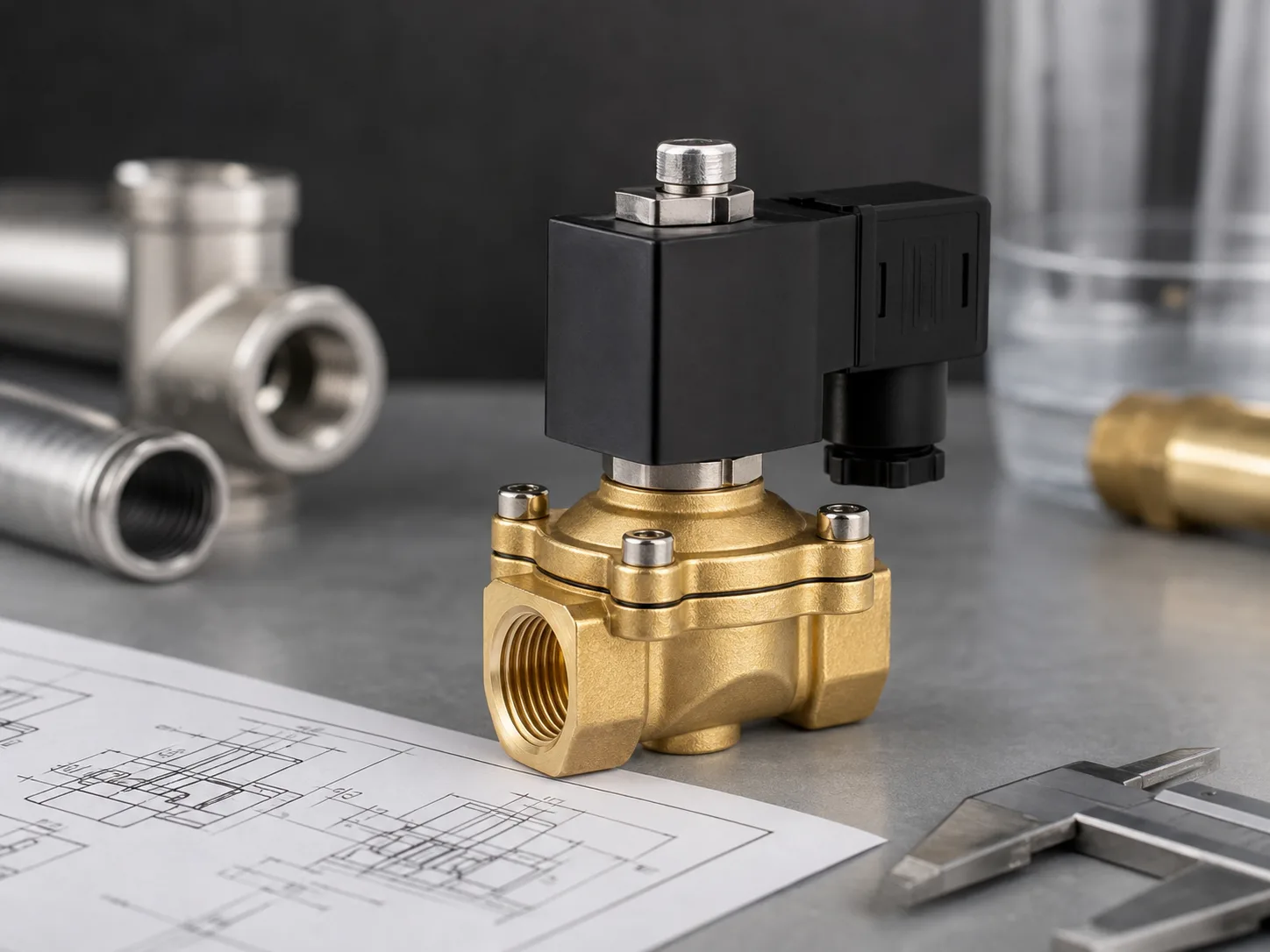
A valve designed for compressed air may fail quickly if used with water, oil, steam, or chemicals. Seal materials and internal parts must match the medium. Steam needs high-temperature design. Corrosive fluids may need stainless steel or compatible seals.
For example, a general pneumatic air valve should not replace a dedicated steam valve such as the 2L series high temperature steam solenoid valve. A water application may require a brass or stainless steel fluid valve rather than a directional air valve.
When a valve fails unusually fast, check media compatibility before ordering the same model again.
Practical Troubleshooting Steps
Start with the basics. Confirm air pressure at the valve inlet, coil voltage at the valve, correct wiring, and correct port connection. Listen for coil actuation, but remember that a click does not prove the valve has shifted airflow.
Next, check the air quality and exhaust path. Inspect filters, drains, silencers, and tube restrictions. If the cylinder moves slowly, test whether exhaust is blocked. If the valve sticks, check for contamination.
Finally, inspect the valve application. Confirm whether the valve type matches the actuator, media, pressure, and duty cycle. If the same failure repeats, the system condition is likely causing the valve problem.
Related Pneumatic Products
Reliable valve operation depends on the whole air circuit. HOMIPNEU offers solenoid valves, air fittings, PU tubes, air source treatment units, silencers, manual valves, and directional control valves for pneumatic automation. Products such as the SY7120-5LZD-02 solenoid valve, 2V025-06 air solenoid valve, and 3V1 3/2 way valve support different control needs.
Choosing the right valve is important, but clean air, stable pressure, correct wiring, and good installation are just as important for long service life.
FAQ
Why does a solenoid valve click but not work?
The coil may be energized, but the valve may not shift because of low pilot pressure, stuck spool, blocked air path, wrong voltage, or internal contamination.
Why does a solenoid valve coil get hot?
Coils heat during normal operation, but excessive heat may come from wrong voltage, continuous duty beyond design, high ambient temperature, or poor ventilation.
Can dirty air damage pneumatic solenoid valves?
Yes. Dirt, moisture, and oil sludge can make valves stick, leak, or fail to return. Proper filtration and drainage are important.
Why does a cylinder move slowly after valve replacement?
Possible causes include undersized valve, small tubing, clogged silencer, restricted exhaust, low pressure, or incorrect port connection.
How often should solenoid valves be replaced?
There is no fixed replacement interval for every system. Valve life depends on cycle frequency, air quality, pressure, environment, coil duty, and maintenance.
Conclusion
When solenoid valves fail, the cause is often somewhere in the system: air quality, pressure, voltage, exhaust, media, or installation. A careful troubleshooting process helps avoid repeat failures and unnecessary part changes. For pneumatic equipment, the best maintenance approach is to protect the valve with clean air, stable power, proper sizing, and a layout that does not stress the connections.