Introduction
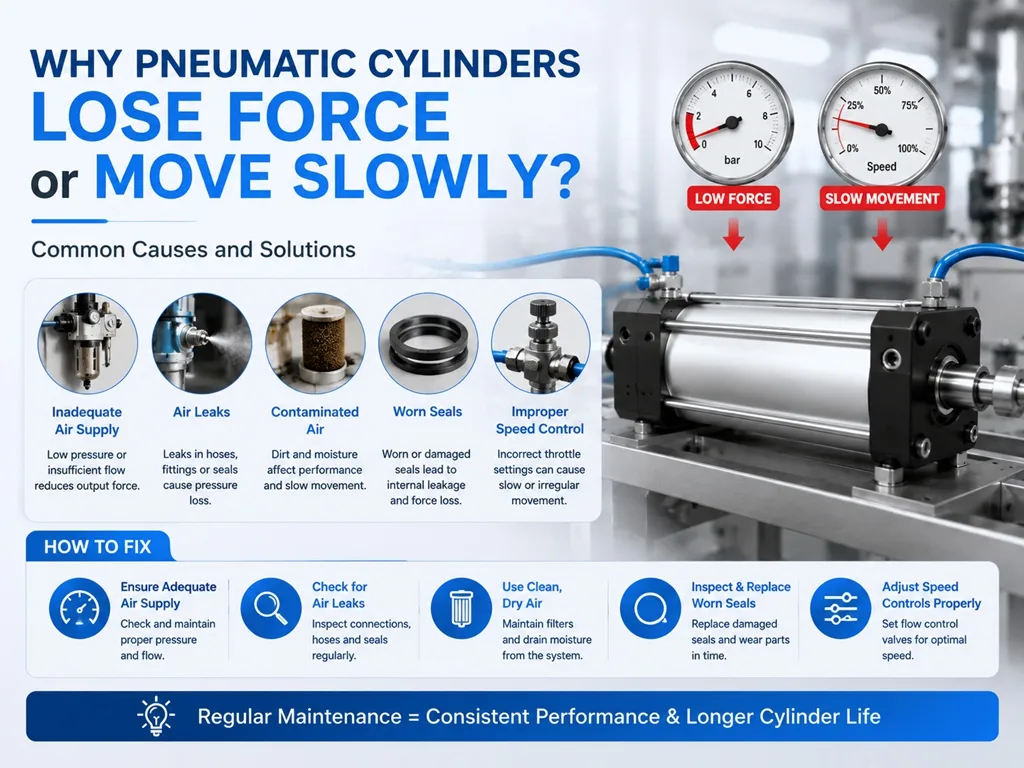
When pneumatic cylinders lose force or move slowly, the cylinder is often blamed first. Sometimes the cylinder is worn, but many problems come from the surrounding system. Low air pressure, leaks, undersized valves, small tubing, blocked exhaust, dirty air, poor alignment, and side load can all make a good cylinder behave badly.
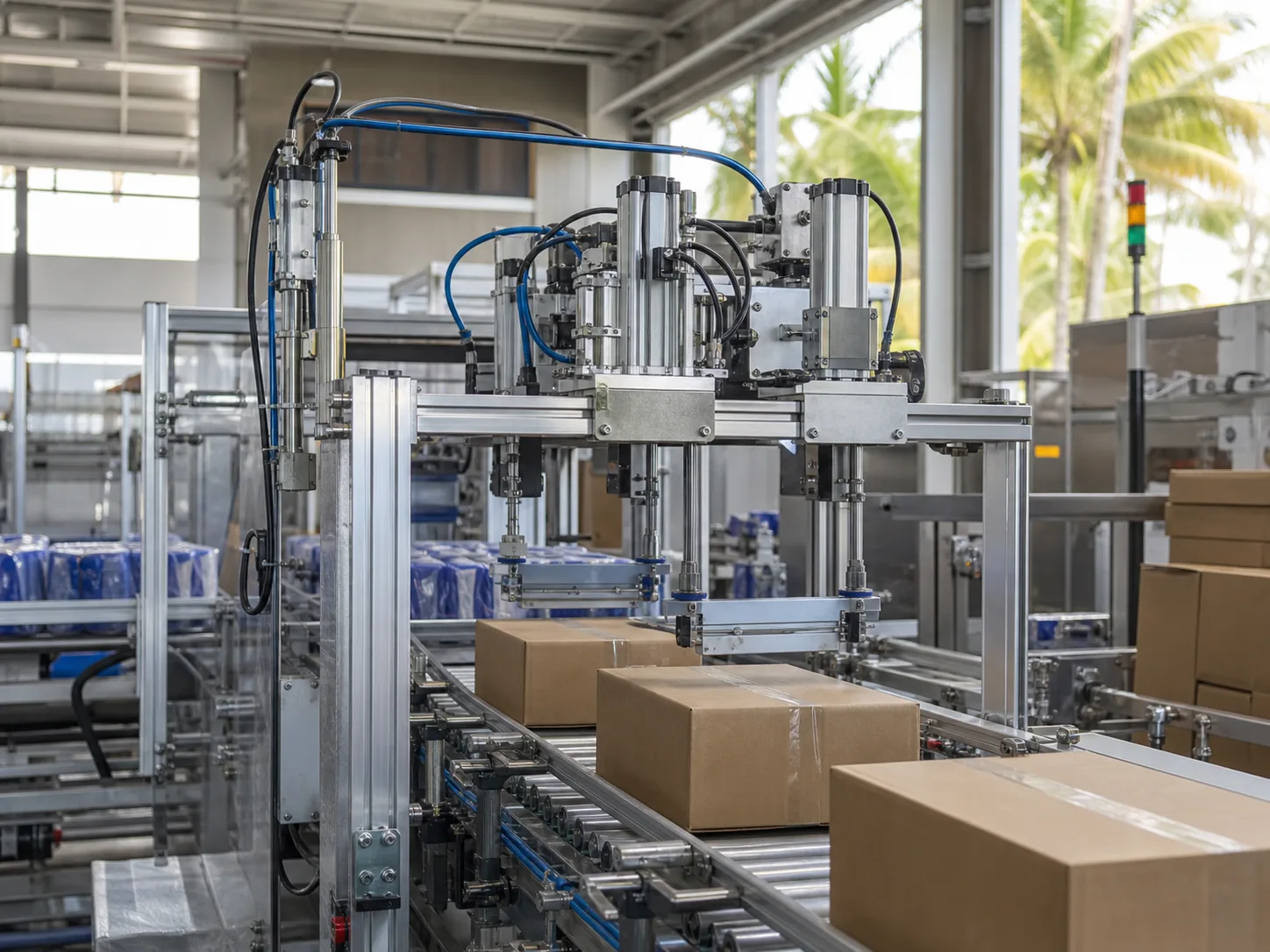
Slow or weak cylinder movement affects production. A clamp may not hold the part. A pusher may fail to reach the end position. A stopper may react too late. A gripper may drop the workpiece. Troubleshooting should look at the full air circuit, not only the actuator body.
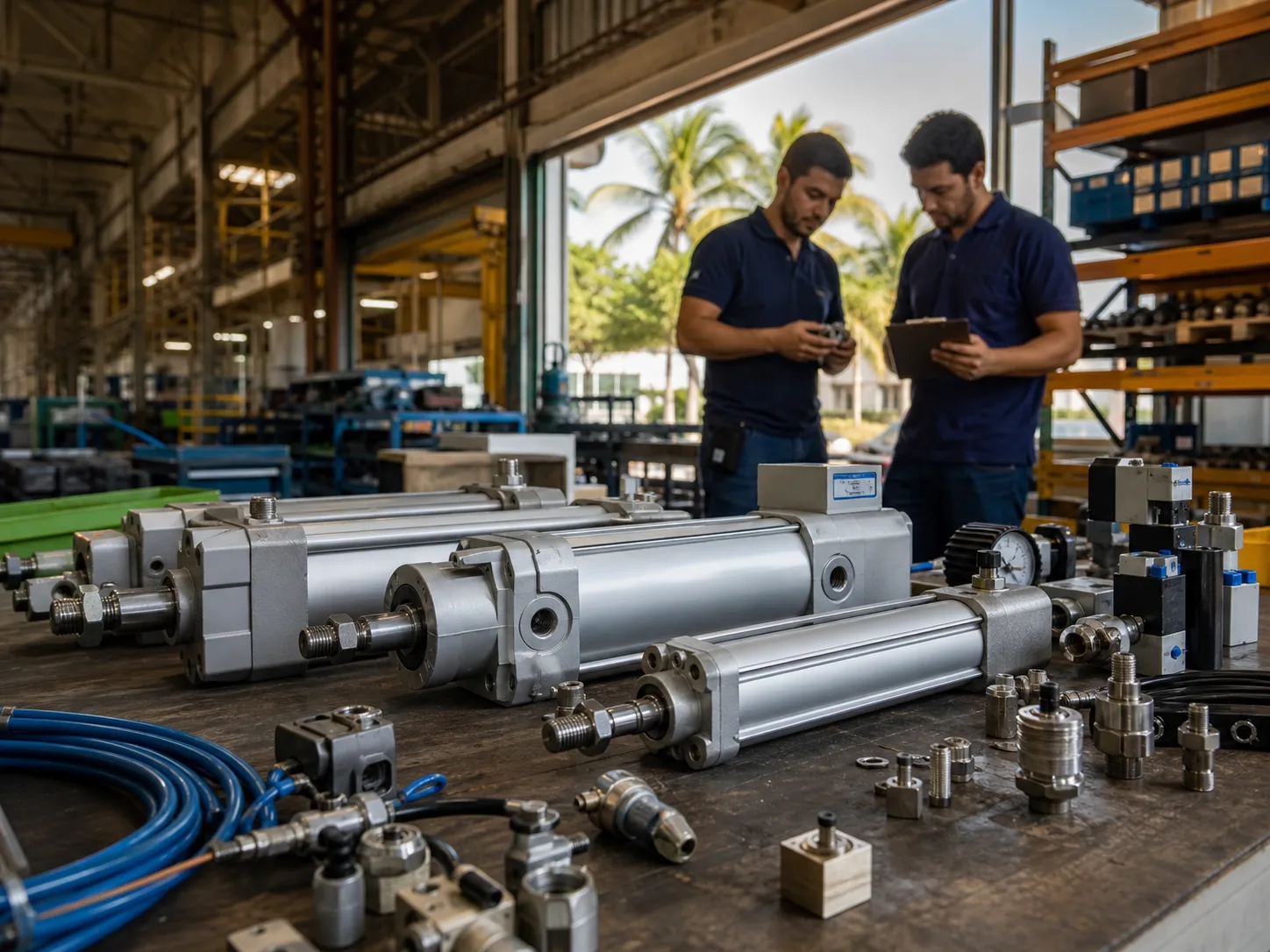
This guide explains practical causes and checks for standard cylinders, compact cylinders, guided cylinders, rodless cylinders, rotary actuators, grippers, and clamp cylinders in the HOMIPNEU pneumatic cylinder range.
Low Supply Pressure
Cylinder force depends on air pressure and bore size. If pressure drops, force drops. A cylinder that worked during testing may become weak when other machines share the same air line or when the compressor cannot keep up with demand.
Check pressure near the cylinder or valve group while the machine is running. The regulator gauge may look normal when the system is idle, but pressure can fall during fast cycles. Long air lines, small pipes, and clogged filters can also reduce local pressure.
If several cylinders on the same machine become weak at the same time, the air supply is a likely cause.
Air Leaks in the Circuit
Leaks reduce available pressure and waste compressed air. A leak may come from fittings, tubes, valves, cylinder seals, speed controllers, or threaded ports. Some leaks are easy to hear, while small leaks may require soap solution or ultrasonic inspection.
A leaking fitting near the valve can affect cylinder speed and force. A leaking piston seal can allow air to bypass inside the cylinder. A rod seal leak may be visible or audible near the front cover.
Fix the cause of the leak instead of only increasing pressure. Higher pressure may hide the problem temporarily and increase wear.
Undersized Valves, Tubes, or Fittings
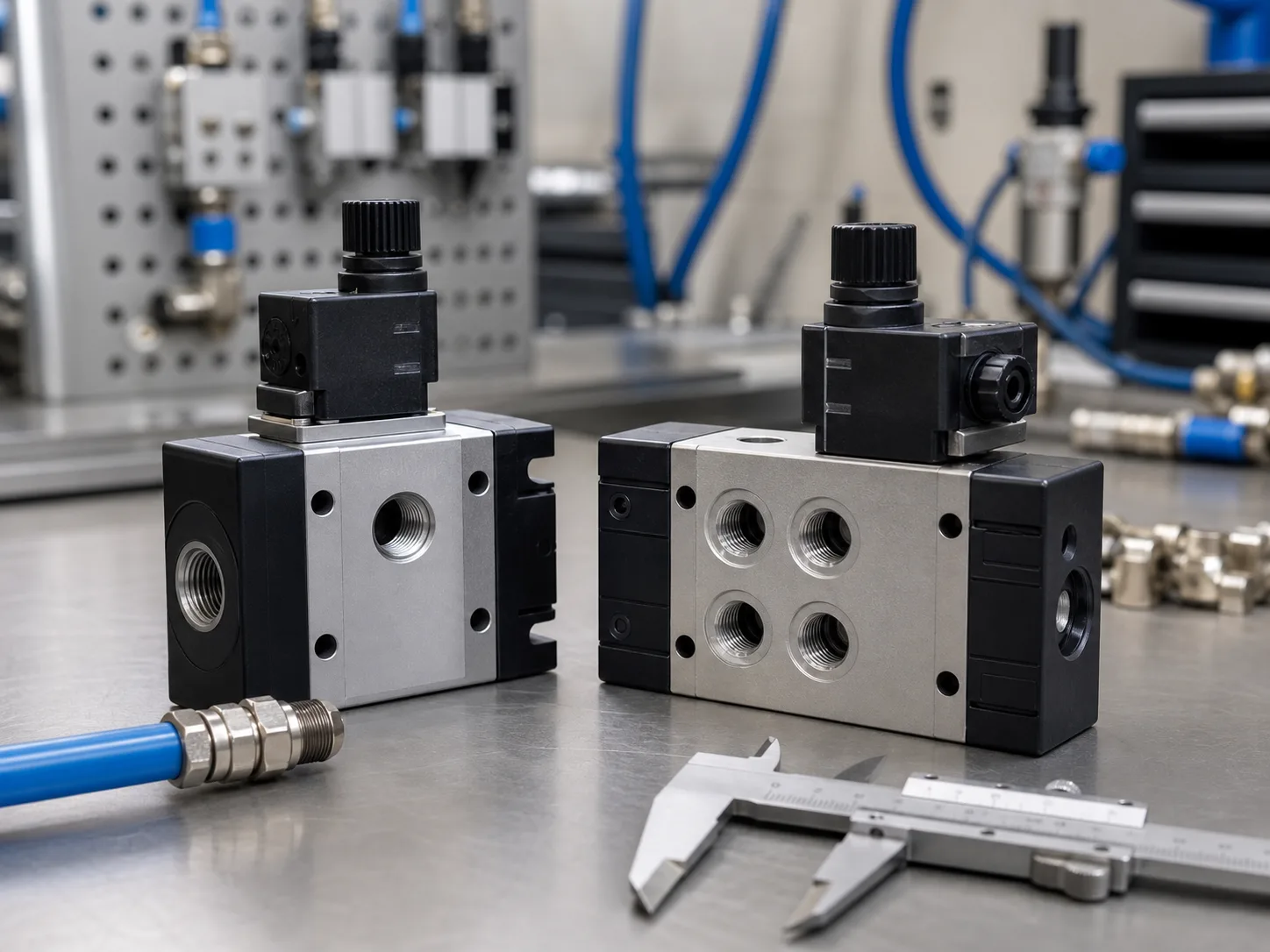
A cylinder needs enough airflow to fill and exhaust its chambers. If the solenoid valve is too small, the tube diameter is too small, or the exhaust is restricted, the cylinder may move slowly even when pressure is correct.
Large bore cylinders need more air volume. A small valve that works for a compact cylinder may not be enough for an SC standard tie rod pneumatic cylinder or a DNC cylinder with a larger bore.
Check the whole path: filter, regulator, valve, fittings, tube, speed controller, cylinder port, and exhaust silencer. The smallest restriction often controls the final speed.
Blocked Exhaust
Air must leave one side of the cylinder while air enters the other. If exhaust is blocked, the cylinder cannot move freely. Clogged silencers are a common cause in dusty or oily environments.
A cylinder that extends normally but retracts slowly may have a restricted exhaust path on one side. Removing or replacing a silencer during troubleshooting can quickly reveal this issue.
Do not leave exhaust ports open permanently in dirty environments. Use suitable silencers and maintain them.
Worn Seals and Internal Bypass
Cylinder seals wear over time. When the piston seal wears, air can bypass from one side of the piston to the other. The cylinder may lose force, drift under load, or fail to hold position.
Rod seals can also wear, especially if the rod is scratched or dirty. A damaged rod surface can quickly destroy a new seal. If the rod has visible scratches, replacing only the seal may not solve the problem.
Seal wear is more likely when air quality is poor, lubrication is wrong, side load is high, or the cylinder hits hard at the end of stroke.
Side Load and Misalignment
Pneumatic cylinders are strongest in straight-line force. Side load creates friction and wear. If the piston rod is forced sideways, the cylinder may move slowly, stick, leak, or wear unevenly.
Misalignment can happen when the cylinder is mounted slightly off-axis or when the driven part does not move in a straight guide. A floating joint can help with small misalignment, but heavy side load should be handled by external guides or a guided cylinder.
If a standard cylinder fails repeatedly in the same position, inspect the mechanical alignment before replacing it again.
Dirty or Wet Air
Compressed air can carry water, oil, rust, and dust. Contamination affects cylinder seals, valves, and speed controls. Moisture can wash away lubrication, cause corrosion, and make movement inconsistent.
Use proper air source treatment. Filters remove particles and moisture. Regulators keep pressure stable. Lubrication depends on the cylinder and system design; many modern pneumatic systems do not require added lubrication, and too much oil can attract dirt.
If valves and cylinders across the machine are failing early, air quality should be checked immediately.
Wrong Cylinder Size
Sometimes the cylinder is simply too small for the job. If the bore size cannot produce enough force at real operating pressure, the cylinder will move weakly or stop under load. Increasing pressure may not be safe or efficient.
Check load, friction, direction, required force, and safety factor. For vertical lifting, include gravity and possible pressure loss. For clamping, consider the force needed at the workpiece, not only at the rod.
If the application changed after the machine was built, the original cylinder may no longer be suitable.
Speed Control Problems
Flow controls can be adjusted too tightly. A cylinder may appear weak when the actual issue is restricted flow. Speed controllers should be set with the real load and cycle requirement.
Meter-out control is often used for smoother pneumatic cylinder movement because it controls exhaust flow. However, incorrect adjustment can slow the cylinder too much.
If speed changes after maintenance, check whether someone adjusted the flow controls or replaced them with a different type.
Practical Troubleshooting Order
Start with pressure at the machine and near the valve. Then check for leaks, tube damage, and fitting problems. Inspect exhaust silencers and speed control settings. Confirm valve size and operation. Finally, inspect the cylinder for seal wear, rod damage, and mechanical alignment.
This order avoids unnecessary cylinder replacement. Many slow movement problems are solved by fixing air supply, leaks, exhaust, or alignment.
Document repeated failures. If the same cylinder location fails again and again, the system design likely needs adjustment.
Preventive Maintenance Tips
Preventive maintenance is usually cheaper than emergency cylinder replacement. Keep filter bowls drained, replace clogged filter elements, and check regulators for stable output pressure. A clean and stable air supply protects cylinders, valves, fittings, and sensors at the same time.
Inspect piston rods during routine service. A rod with scratches, rust, or adhesive residue can damage seals every time it moves. Wipe exposed rods where the environment is dirty, and protect cylinders from chips, dust, and water spray when possible.
Check mounting bolts and alignment after long operation. Vibration can loosen brackets, and a slightly shifted bracket can create side load. If a cylinder starts wearing seals faster than before, the mechanical installation may have changed even if the cylinder model is the same.
Related Pneumatic Products
Reliable cylinder operation depends on the complete pneumatic circuit. HOMIPNEU supplies pneumatic cylinders, solenoid valves, air source treatment units, pneumatic fittings, PU tubes, silencers, and speed controllers for automation systems.
For side-load applications, consider guided cylinders such as MGPM, MGPL, MXS, or MXQ series. For long strokes, rodless cylinders may be more suitable than extending rod cylinders.
FAQ
Why does my pneumatic cylinder lose force?
Common causes include low pressure, air leaks, worn seals, undersized valves, excessive load, or incorrect bore size.
Why does a pneumatic cylinder move slowly?
Slow movement can come from restricted airflow, small tubing, blocked exhaust, tight flow controls, low pressure, contamination, or mechanical friction.
How do I know if cylinder seals are worn?
Signs include air leakage, drifting, weak force, inconsistent movement, or air bypass inside the cylinder.
Can dirty air damage pneumatic cylinders?
Yes. Moisture and particles can damage seals, cause corrosion, and make movement unstable.
Should I replace the cylinder first?
Not always. Check pressure, leaks, valves, exhaust, speed controls, and alignment before replacing the actuator.
Conclusion
Pneumatic cylinders lose force or move slowly for many reasons, and the cylinder body is only one possible cause. A practical troubleshooting process checks air supply, leakage, airflow, exhaust, seals, sizing, and alignment. Fixing the real cause improves reliability and prevents the same problem from returning.