Introduction
Choosing the right air hose is not only about matching the outside diameter. For factory air lines, the hose material, stiffness, working pressure, bend behavior, and wear resistance all affect installation quality and long-term maintenance. A hose that is easy to route in one machine may be a poor fit in another.
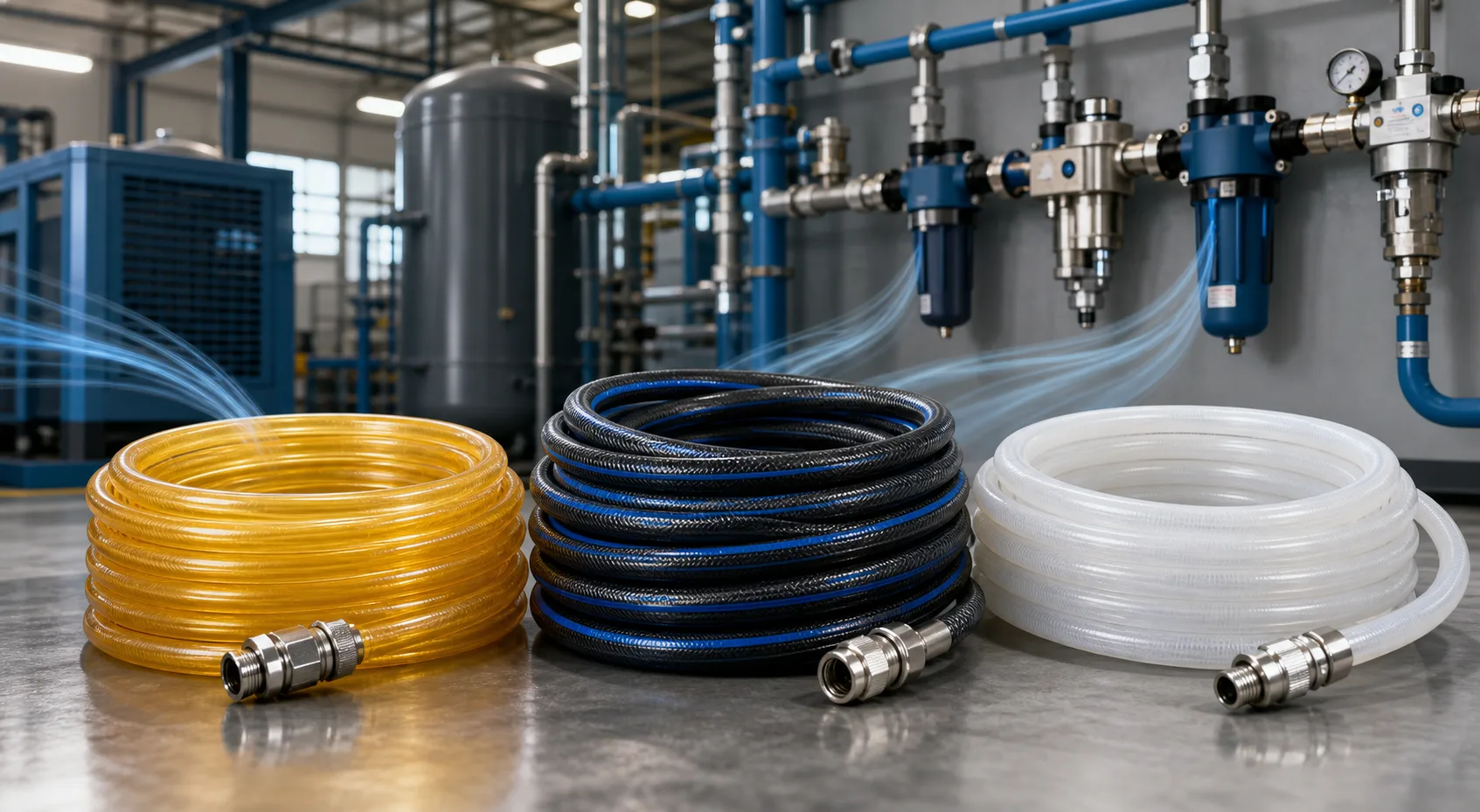
PU, PA, and PE are three common choices in pneumatic systems. Each one has a different balance of flexibility, strength, and cost. The right option depends on whether the line is fixed, moving, exposed to abrasion, or installed in a tight space.
HOMIPNEU’s air hose category includes PU and PA tube options that suit different machine layouts and compressed air applications.
Quick Comparison
| Material | Main Strength | Best Use | Typical Tradeoff |
|---|---|---|---|
| PU | Flexible and easy to route | Compact machines, moving parts, general automation | Lower rigidity than PA |
| PA | Stronger and more pressure stable | Longer fixed runs, tougher environments | Less flexible than PU |
| PE | Lightweight and economical | Simple air lines, low-demand applications | Less durable in harsh use |
The table above is a practical starting point, not a final rule. A machine with a lot of movement may still need PA in one section and PU in another. A short station may use PE if the application is light and the environment is controlled.
PU Air Hose
PU air hose is popular because it bends easily and fits compact routing paths. It is useful where technicians need to install tubing around valves, cylinders, manifolds, and moving machine parts. PU also makes maintenance simpler because it can be cut and connected quickly with push-in fittings.
PU is often selected for:
- Robot cells
- Small automation machines
- Compact valve boxes
- Tool stations
- Systems with frequent tube adjustment
The downside is that PU is not always the best choice when the environment is rough or when the hose is exposed to heavy abrasion. In those cases, a tougher material may last longer.
PA Air Hose
PA air hose is generally stiffer and more durable than PU. That makes it useful where the line needs better shape retention or stronger pressure performance. It is often used in fixed installations, longer runs, or environments where the hose should not sag or deform easily.
PA is often a good fit for:
- Fixed factory air lines
- Tool supply lines
- Longer machine branches
- Areas with more mechanical wear
The tradeoff is reduced flexibility. If the machine has tight bends or frequent movement, PA can be harder to install than PU.
PE Air Hose
PE air hose is usually chosen when cost and light-duty performance matter more than long-term durability. It can work in simple compressed air layouts where the line does not move much and the pressure demand is modest.
PE may be suitable for:
- Simple air distribution
- Light-duty workshop lines
- Low-pressure auxiliary use
PE is not usually the first choice for demanding automation or motion-heavy systems. It is better viewed as an economical option for simpler layouts.
Selection Notes
When choosing between PU, PA, and PE, check these points:
- Required pressure
- How much the tube bends during use
- Whether the line moves with a machine axis
- Abrasion risk
- Tube replacement frequency
- Space available for routing
- Matching fitting size and port size
If the line is compact and dynamic, PU is often the easiest choice. If the line is fixed and needs more strength, PA is usually better. If the application is simple and low-cost, PE may be enough.
Related Pneumatic Products
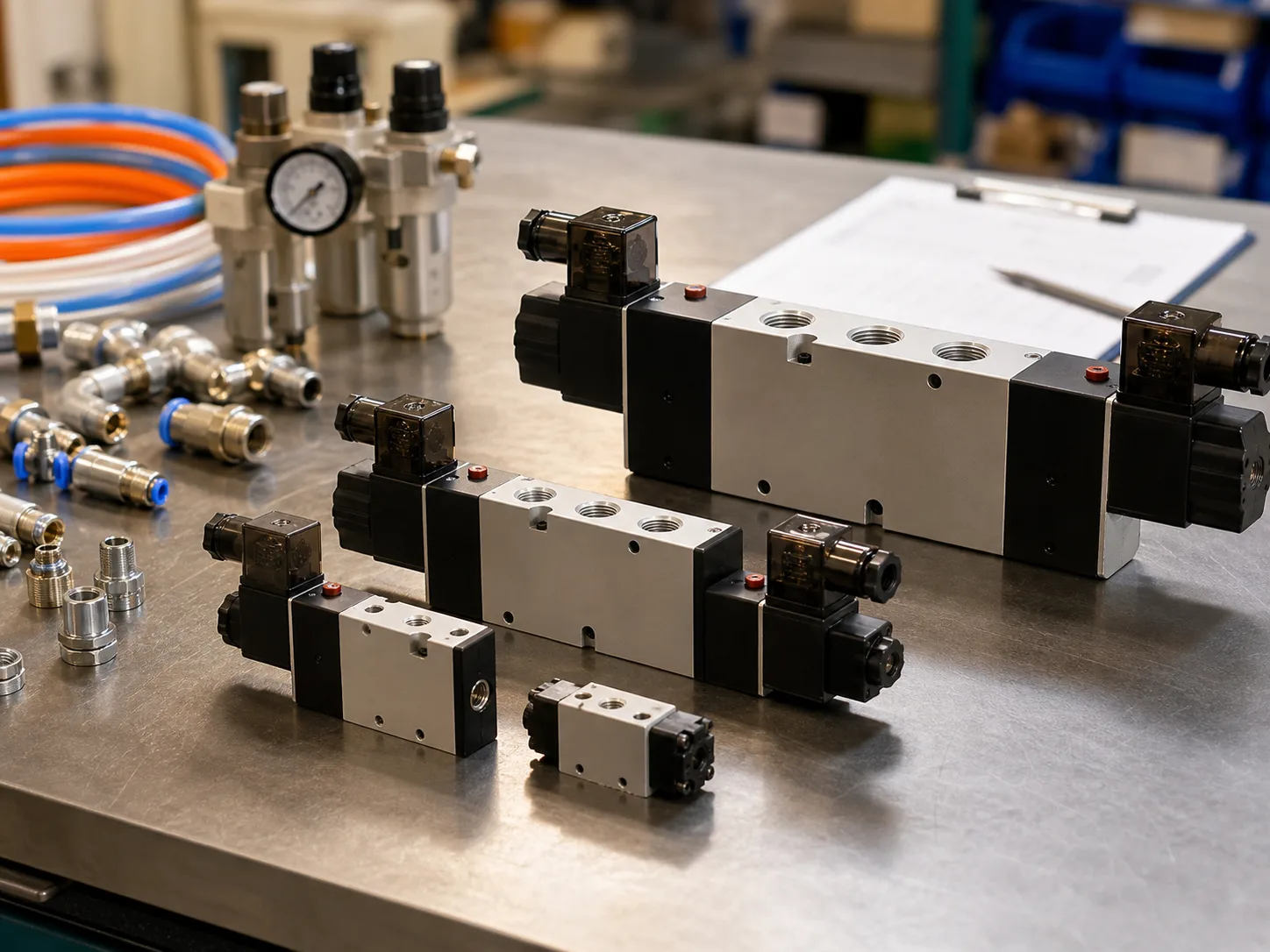
HOMIPNEU also supplies pneumatic fittings, solenoid valves, pneumatic cylinders, and air source treatment units for complete compressed air line setups.