Introduction
Air hose size has a direct effect on machine performance. A hose that is too small can restrict flow, slow cylinders, and create pressure drop. A hose that is too large may be harder to route in compact equipment and may not be necessary for the required flow.
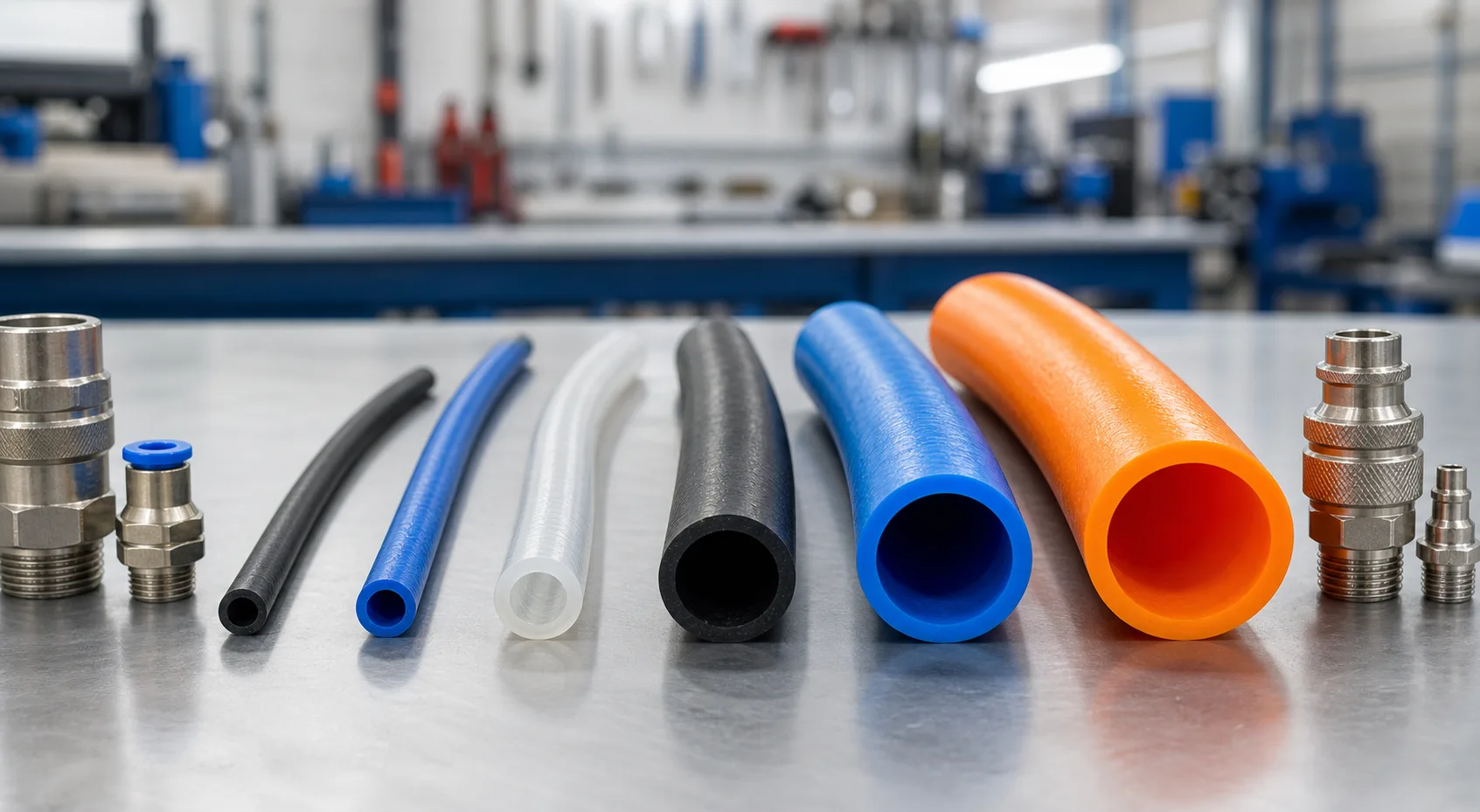
For many pneumatic systems, common sizes such as 4mm, 6mm, 8mm, 10mm, and 12mm cover most practical layouts. The best choice depends on air demand, tube length, machine speed, and available space.
Common Sizes at a Glance
| Tube Size | Typical Use | Main Advantage | Main Caution |
|---|---|---|---|
| 4mm | Small valves, sensors, light control lines | Very compact routing | Limited flow |
| 6mm | General small automation circuits | Balanced size and flexibility | May be small for fast cycles |
| 8mm | Medium flow lines, common machine branches | Good compromise for many machines | Needs more space |
| 10mm | Higher flow branches, larger actuators | Better flow capacity | Less flexible in tight areas |
| 12mm | Larger supply lines and demanding flow | Lower restriction for bigger systems | Takes more room |
This table is a practical guide, not a fixed engineering rule. The real answer depends on the valve flow, cylinder size, and total tube length.
How Size Affects Performance
Air flow is affected by the inside diameter of the hose, not only the printed size. A hose with a small inside diameter can create resistance even if the outside looks acceptable. That resistance shows up as pressure loss, slower movement, or inconsistent actuator force.
For short control lines, 4mm or 6mm tubing may be fine. For longer lines or faster actuators, 8mm or larger may be better. If a cylinder keeps losing speed near the end of the stroke, the hose size may be part of the problem.
Choosing by Application
Use smaller sizes when the circuit is:
- Short
- Low flow
- Compact
- Used for signal or control
Use larger sizes when the circuit is:
- Long
- Fast cycle
- High flow
- Supplying a cylinder or tool with stronger demand
For example, a compact automation machine may use 4mm or 6mm tubing near valves, while the main branch line may use 8mm or 10mm tubing. A larger actuator may need 12mm supply sections to avoid restriction.
Practical Check Points
Before choosing a tube size, check:
- Valve port size
- Cylinder bore and stroke
- Number of actuators on the same line
- Tube length from source to load
- Required cycle speed
- Available routing space
The goal is not to choose the largest size possible. The goal is to choose the size that gives stable performance without making installation difficult.
Related Pneumatic Products
HOMIPNEU’s air hose range includes PU and PA tube sizes used in factory air lines, automation equipment, and pneumatic tool systems. Matching hose with proper pneumatic fittings helps keep the installation stable.