PU, PA and PE pneumatic tubing may look similar in photos, but they behave differently in real compressed air systems. Choosing the wrong material can lead to slow actuator response, leakage, difficult routing, early cracking or unnecessary cost. Choosing the right one helps the system run cleaner and last longer.
This guide compares PU, PA nylon and PE tubing from a practical engineering and purchasing point of view. Instead of asking which material is always best, the better question is: which material fits this location, pressure, movement and environment?
Quick Answer
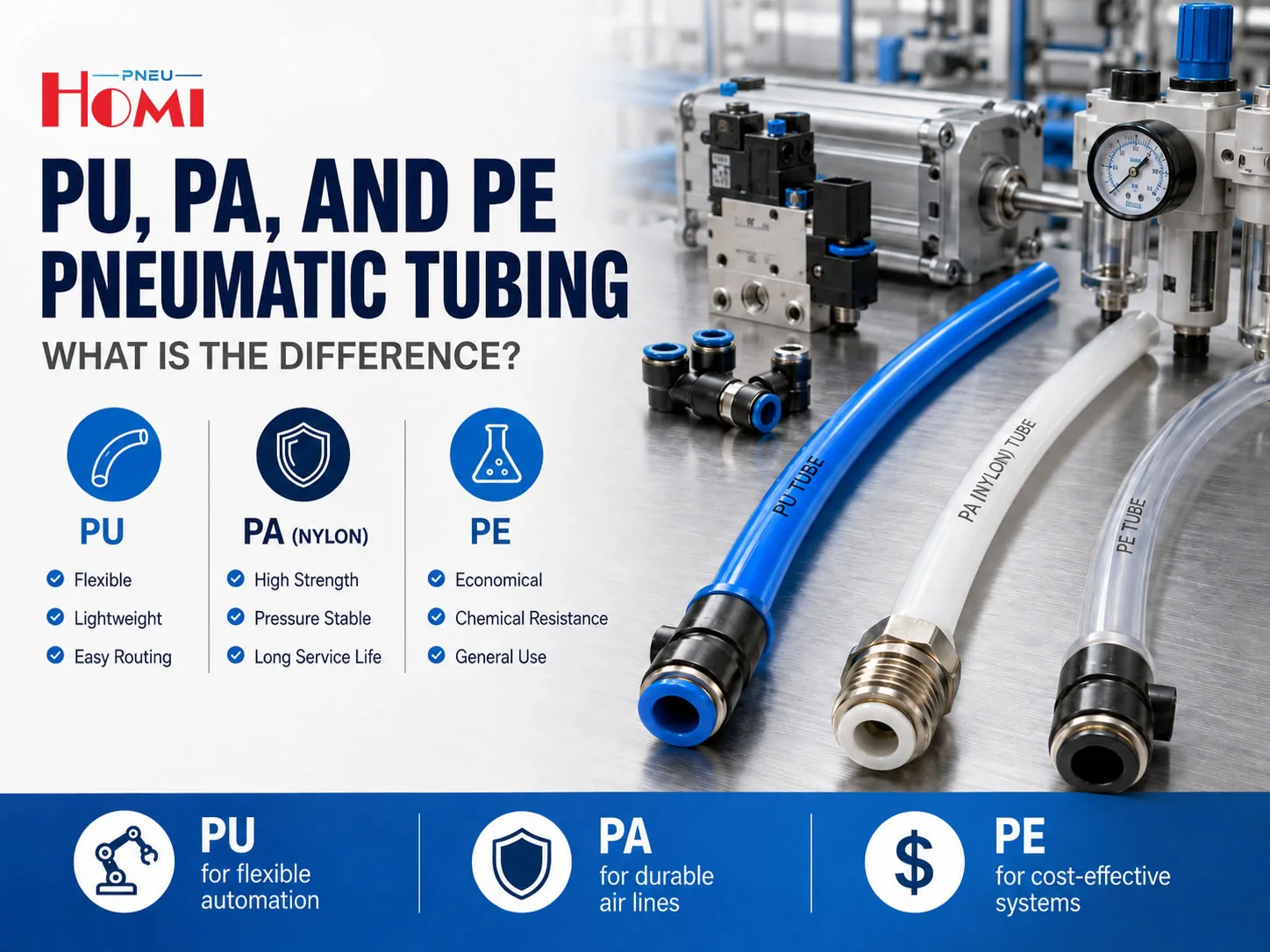
PU tubing is usually the best choice for flexible automation layouts and moving lines. PA nylon tubing is better for stronger fixed runs and applications where dimensional stability matters. PE tubing is often selected for economical, moderate-duty air lines where the environment and pressure demands are not severe.
| Material | Best Feature | Typical Use | Main Limitation |
|---|---|---|---|
| PU | High flexibility | Compact automation, moving parts, control circuits | Not ideal for sparks or high heat unless special grade |
| PA nylon | Strength and stability | Fixed air lines, industrial machinery, longer routes | Less flexible than PU |
| PE | Cost-effective general use | Lower-pressure lines and simple pneumatic circuits | Not the first choice for demanding motion or high stress |
PU Pneumatic Tubing
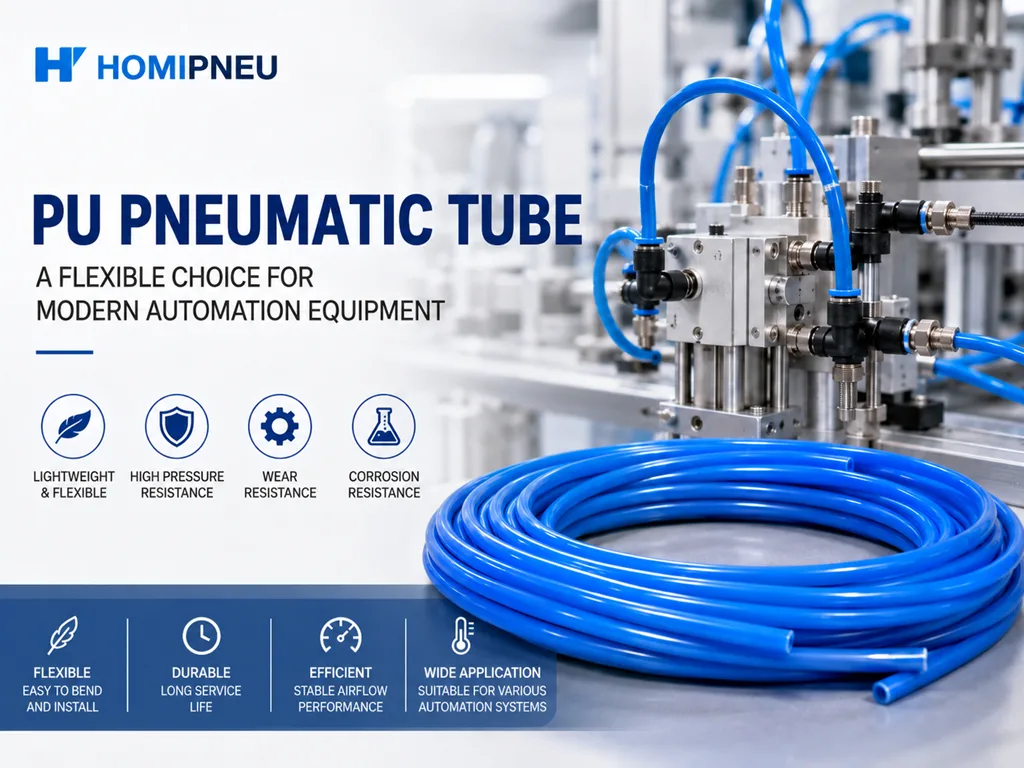
PU pneumatic tubing is valued for flexibility, light weight and easy installation. It bends well around compact machines, valve islands, grippers and tight control cabinets. It is also commonly used for spiral air hose because it can stretch and return neatly.
PU is a strong option for automation equipment, packaging machines, small cylinders, solenoid valves, vacuum lines and handheld pneumatic tools. It works especially well where the tube moves or needs to pass through narrow spaces.
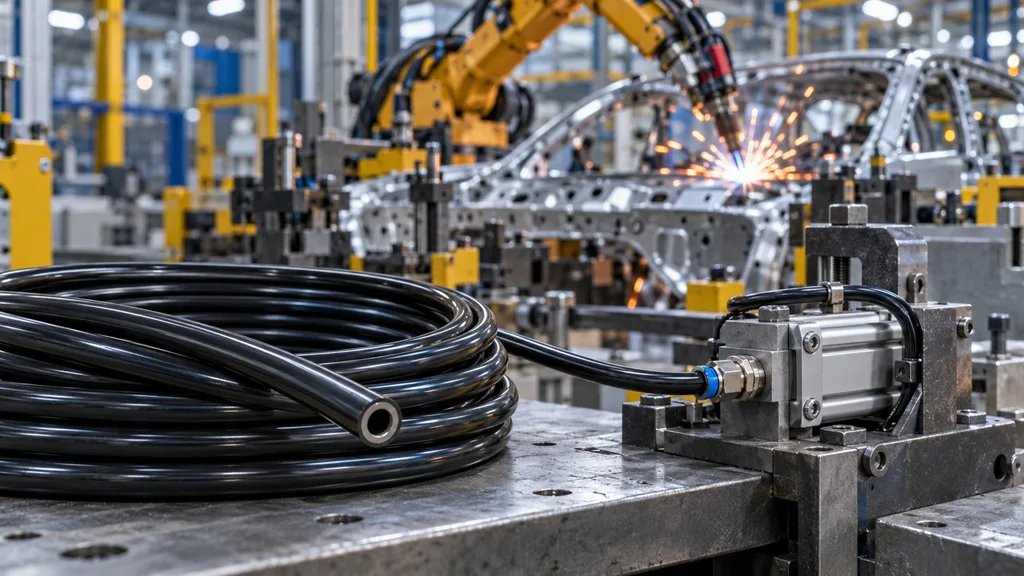
The main limitation is environment. Standard PU tubing should not be used directly near welding sparks, high heat or sharp metal edges unless a protective or anti-spark version is selected.
PA Nylon Tubing
PA nylon tubing is stronger and more rigid than PU. It offers better dimensional stability, which means it can hold its shape well along machine frames and fixed routes. It is often selected for industrial machinery, compressed air distribution inside equipment and applications that need higher stability under pressure.
Because it is less flexible, PA nylon may not be the easiest choice for very tight or frequently moving paths. But for long fixed runs, organized panel routing and more demanding air circuits, it can provide better service life than softer tubing.
PE Pneumatic Tubing
PE tubing is often used where cost efficiency and simple handling are important. It can be suitable for moderate-pressure air lines, general routing and some applications where chemical resistance is useful. It is usually not selected first for high-cycle moving parts or harsh mechanical stress.
PE can be a practical choice in simple pneumatic circuits, but the exact rating and material grade should be checked. Not every PE tube is suitable for every compressed air system.
Flexibility Comparison
Flexibility affects installation and long-term reliability. A tube that is too stiff may pull sideways on fittings in a compact machine. A tube that is too soft may kink or deform. PU is usually the most flexible of the three, PA nylon is the most rigid and PE sits between them depending on grade.
If the tube is connected to a moving cylinder, gripper or tool, PU is often the better starting point. If the tube is fixed along a frame and should keep a straight route, PA nylon is often better.
Pressure and Stability
Material strength is important, but pressure rating also depends on tube size, wall thickness, temperature and manufacturer quality. PA nylon often performs well where stability under pressure is important. PU can also handle many standard pneumatic systems, especially in automation equipment. PE is often used for lighter or moderate-duty circuits.
Never choose only by material name. Always check the rated working pressure and actual application conditions.
Environment and Application
The working environment should strongly influence material choice. For clean indoor machines, PU and PA are both common. For fixed industrial routes, PA nylon may be better. For simple lines and cost-sensitive systems, PE may be enough.
For welding or metalworking environments, standard PU, PA and PE may all need additional protection. In those cases, anti-spark pneumatic air hose is usually a better solution.
Fitting Compatibility
Most push-in pneumatic fittings seal on the outside surface of the tube. That makes outside diameter accuracy, roundness and surface smoothness very important. A low-quality tube can leak even if the material type is correct.
When matching tubing with pneumatic fittings, confirm the outside diameter, hardness and cutting quality. The tube end should be square and clean before insertion.
How to Choose Between PU, PA and PE
- Choose PU when flexibility, compact routing and moving lines are important.
- Choose PA nylon when strength, stability and fixed routing are important.
- Choose PE when the application is moderate-duty and cost efficiency matters.
- Choose anti-spark hose for welding or spark-heavy environments.
- Choose a larger inside diameter when airflow demand or line length increases.
FAQ: PU, PA and PE Pneumatic Tubing
Which tubing is best for automation equipment?
PU is often best for compact and flexible automation layouts. PA nylon may be better for fixed air lines inside larger machines.
Which material is strongest?
PA nylon is usually chosen when strength and dimensional stability are priorities. The actual pressure rating still depends on size, wall thickness and product grade.
Can one machine use different tubing materials?
Yes. Many machines use PU for moving sections, PA nylon for fixed routes and special hose for harsh areas.
Final Thoughts
PU, PA and PE tubing each have a useful place in pneumatic systems. The best choice depends on movement, pressure, environment, routing and cost. A good pneumatic design matches the material to the actual part of the machine instead of using one tube type everywhere.
HOMIPNEU supplies PU pneumatic tube, PA nylon tube, PE hose, spiral PU hose and anti-spark air hose for compressed air systems. For machine builders and distributors, choosing the correct material helps improve reliability and reduce after-sales problems.