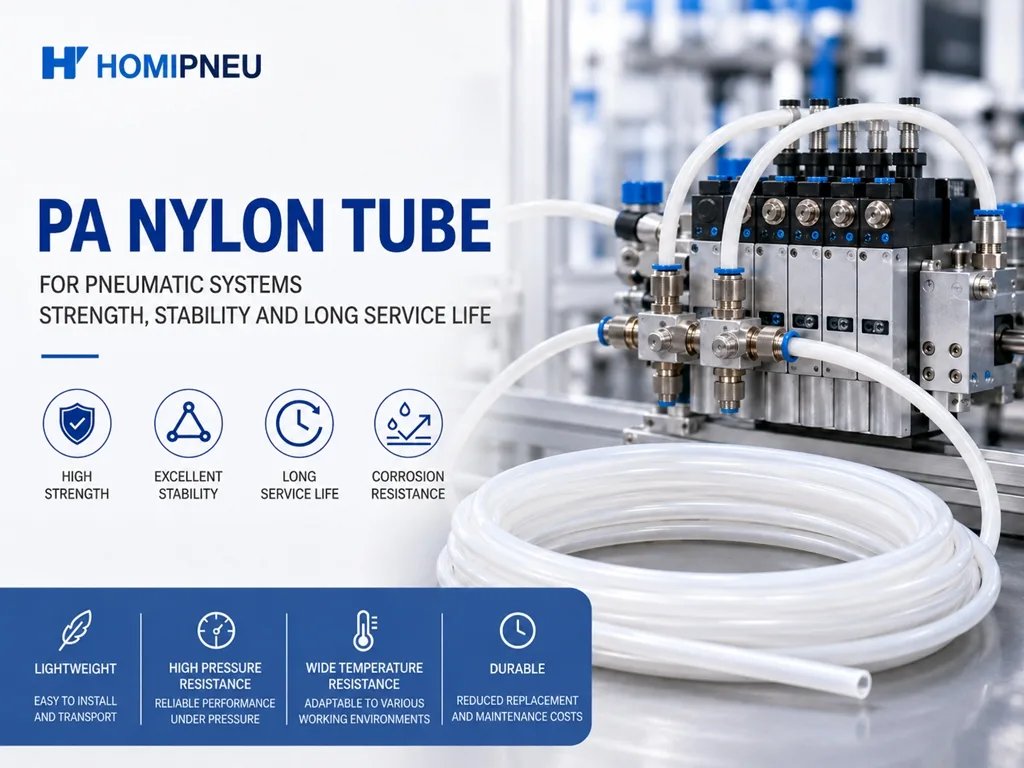
PA nylon tube is widely used in pneumatic systems where strength, pressure stability and long service life matter more than maximum softness. In many industrial machines, the tube is not only a path for compressed air. It also affects actuator response, leakage risk, machine layout and the amount of maintenance required after the equipment is delivered.
Compared with softer tubing, PA nylon tube has higher rigidity and better dimensional stability. This makes it useful for fixed air lines, machine frames, vehicle pneumatic systems, control panels and longer routes where the tube should stay organized without sagging or deforming. For OEM machine builders and maintenance teams, that stability can make a pneumatic system cleaner and easier to service.
What Is PA Nylon Tube?
PA nylon tube is a plastic pneumatic tube made from polyamide material. It is used to carry compressed air between components such as air preparation units, solenoid valves, pneumatic cylinders, manifolds, air tools and other automation devices.
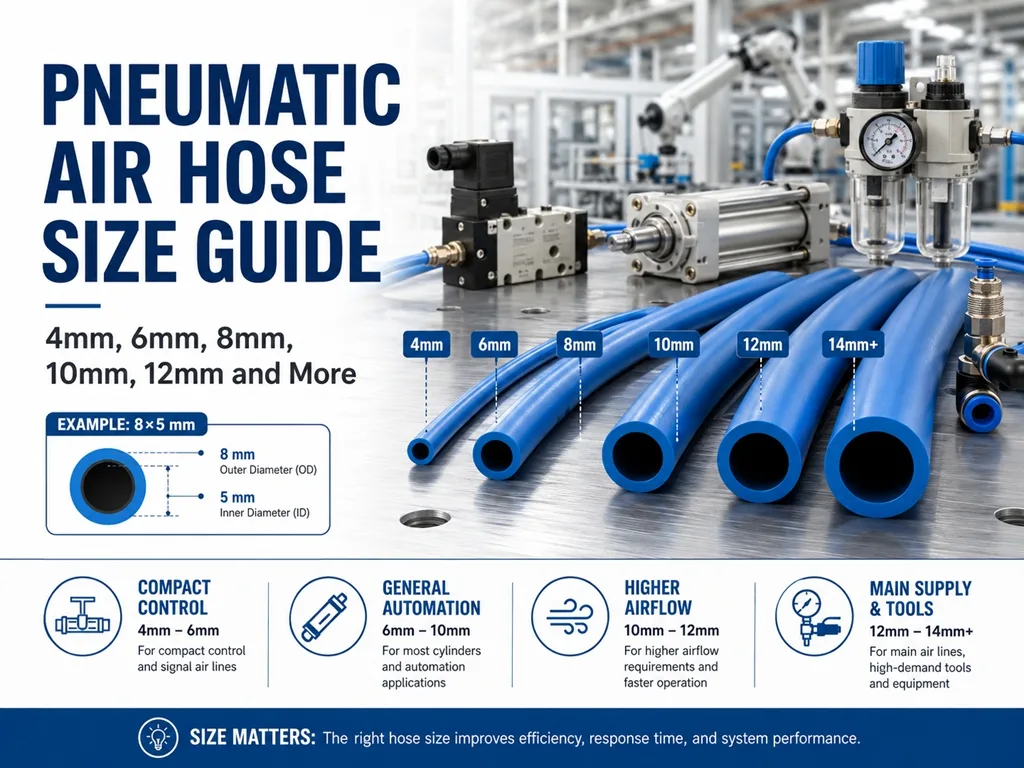
The tube is normally selected by outside diameter and inside diameter. The outside diameter must match the push-in fitting or connector. The inside diameter determines how much air can flow through the line. Common pneumatic sizes include 4 mm, 6 mm, 8 mm, 10 mm, 12 mm and larger sizes for higher-flow systems.
Why Strength Matters in Pneumatic Lines
A pneumatic tube is exposed to repeated pressure cycles. Every valve shift, cylinder movement and air tool operation changes the pressure inside the line. A weak tube may expand, soften, crack or pull out of a fitting over time. PA nylon tube is often chosen because it can maintain shape under pressure better than many softer materials.
This is especially important in equipment that runs for long shifts or in systems where downtime is expensive. A small leak in a pneumatic line can reduce actuator force, waste compressed air and make troubleshooting harder. Stronger tubing helps reduce those risks when it is selected and installed correctly.
Dimensional Stability for Clean Machine Layouts
PA nylon tubing is useful when the air line should remain fixed along a frame, inside a cabinet or across a machine structure. Because it is more rigid than PU tubing, it can hold a clean route and reduce loose loops around equipment.
Clean routing is not only about appearance. It helps technicians identify circuits faster, reduces the chance of accidental pulling and makes replacement work easier. In larger machines, a stable tube route can also reduce side load on fittings and improve long-term sealing.
Common PA Nylon Tube Applications
- Industrial automation equipment
- Machine tools and production lines
- Vehicle and trailer pneumatic systems
- Compressed air distribution inside machines
- Air brake and control systems where suitable ratings apply
- Packaging, printing and assembly equipment
- Fixed pneumatic routes on panels and frames
PA nylon tube is often selected when the customer wants a more durable tube than standard soft tubing. It is also useful where the tube may touch machine frames, guards or metal surfaces and needs better abrasion resistance.
PA Nylon Tube Size Selection
Correct sizing is essential. A tube that is too small can restrict airflow and slow cylinder movement. A tube that is too large may waste space, increase cost and make the installation less flexible.
| Tube OD | Typical Use | Selection Note |
|---|---|---|
| 4 mm | Signal lines, compact control circuits | Good for short, low-flow routes |
| 6 mm | General pneumatic control and small cylinders | Common size for automation panels |
| 8 mm | Medium cylinders and machine air lines | Better airflow with manageable size |
| 10 mm and above | Main supply, longer runs, larger actuators | Check fitting size and available space |
When a cylinder moves slowly, the cause is not always the cylinder or valve. The inner diameter of the tube, the line length and the number of fittings can all affect airflow.
PA Nylon vs PU Tube
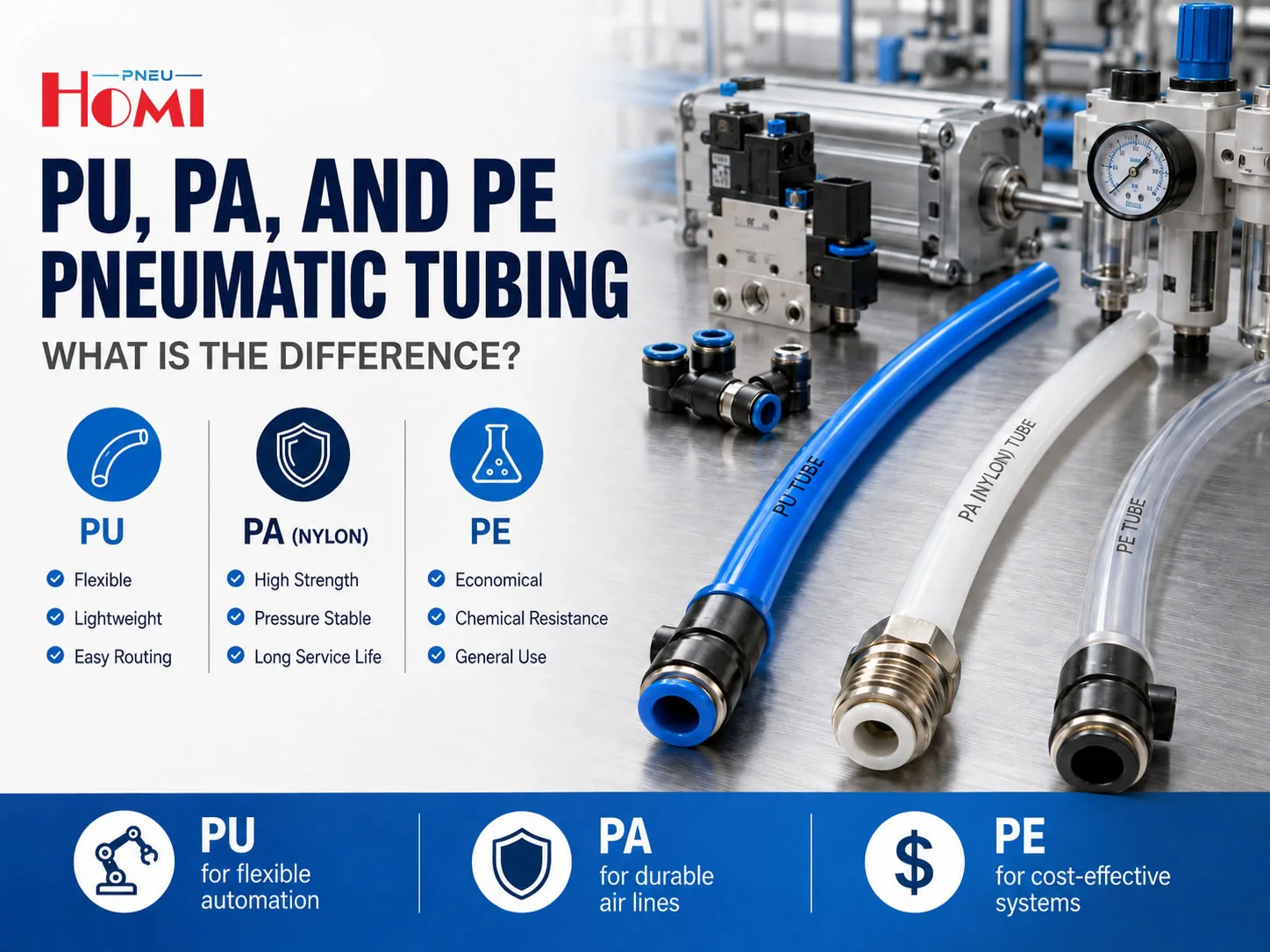
PA nylon and PU tubing are both common in pneumatic systems, but they solve different problems. PU tube is more flexible and easier to route through tight spaces or moving sections. PA nylon tube is stronger and more stable, making it better for fixed lines and more demanding industrial routes.
| Material | Main Advantage | Best Use |
|---|---|---|
| PA nylon | Strength and dimensional stability | Fixed air lines, higher-pressure circuits, industrial machinery |
| PU | Flexibility and easy bending | Compact layouts, moving parts, short flexible routes |
Many machines use both materials. PU may be used around moving grippers or tight valve areas, while PA nylon is used for straighter runs along the machine body.
Installation Tips for PA Nylon Tube
Even a high-quality tube can leak if it is installed poorly. The tube end should be cut flat and clean before insertion into a fitting. A slanted cut, surface scratch or crushed end can prevent the fitting seal from working correctly.
- Use a proper tube cutter.
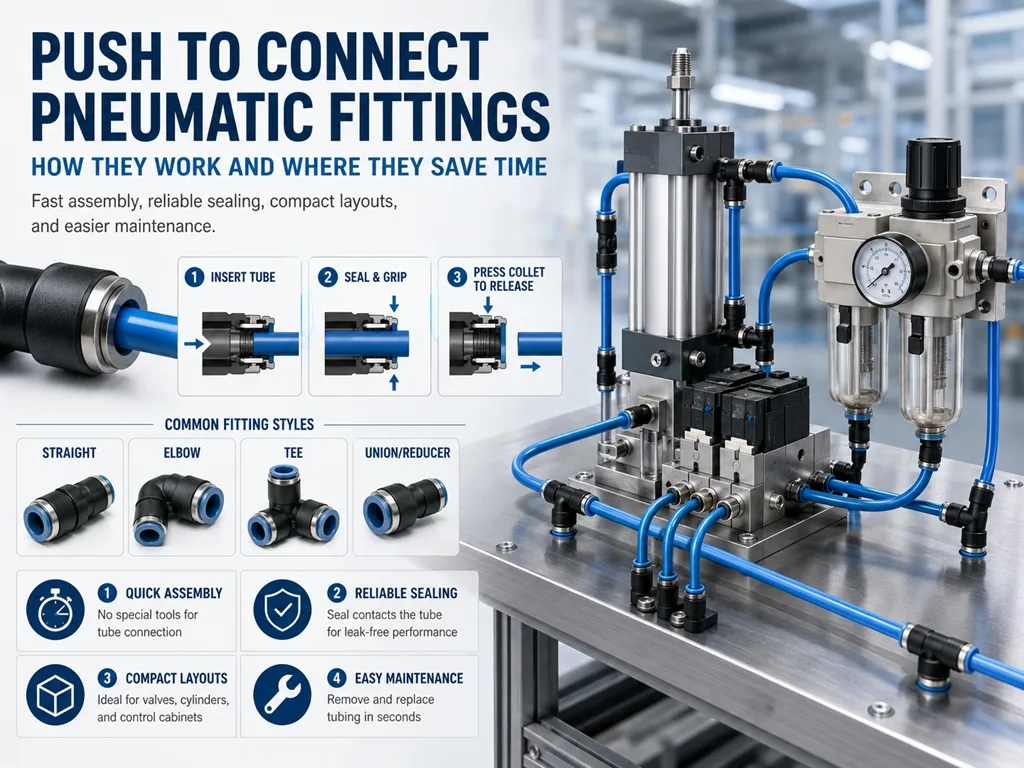
- Match the tube outside diameter with the fitting size.
- Push the tube fully into the fitting until it reaches the stop.
- Avoid sharp bending near the fitting.
- Route the tube away from hot surfaces and sharp edges.
- Check bending radius before fixing the line in place.
Because nylon tube is more rigid than PU, forced tight bends should be avoided. If the route needs a sharp change in direction, an elbow fitting or better path is usually more reliable.
When PA Nylon Tube May Not Be the Best Choice
PA nylon tube is strong, but it is not always the correct choice. If the air line must move frequently or bend in a very compact space, PU tubing may be easier to use. If the environment includes welding sparks or hot metal particles, an anti-spark pneumatic hose may be safer than standard nylon tubing.
The working pressure, temperature, medium and environment should always be checked against the tube rating. Nylon tube should not be treated as a universal replacement for every pneumatic hose.
OEM Purchasing Checklist
For OEMs and distributors, the most important purchasing issue is consistency. A sample may work well, but repeat orders must have the same size, hardness, color, surface quality and packaging.
- Confirm OD tolerance and wall thickness.
- Check surface smoothness and roundness.
- Ask for working pressure and burst pressure information.
- Confirm roll length, color options and labeling.
- Test sealing with the actual pneumatic fittings used in your machines.
FAQ: PA Nylon Tube
Is PA nylon tube suitable for compressed air?
Yes. PA nylon tube is commonly used for compressed air when the pressure, temperature and installation conditions are within the product rating.
Is nylon tube stronger than PU tube?
In general, PA nylon tube offers higher rigidity and better dimensional stability. PU tube is usually more flexible and easier to use in moving or compact routes.
Can PA nylon tube be used with push-in fittings?
Yes, if the tube outside diameter matches the fitting size and the tube end is cut cleanly. Accurate tube dimensions are important for reliable sealing.
Final Thoughts
PA nylon tube is a strong choice for pneumatic systems that need stable air delivery, clean routing and long service life. It is especially useful in fixed air lines, industrial machinery and OEM equipment where repeatable quality matters.
HOMIPNEU supplies PA nylon tube, PU tube, PE hose, spiral hose and anti-spark air hose for industrial compressed air systems. If you are selecting tubing for machine production or bulk purchasing, match the tube material, size and fittings to the real working conditions before placing the order.