Push to connect pneumatic fittings have become standard in many automation machines because they solve a very practical problem: compressed air lines need to be assembled quickly, sealed reliably, and serviced without special tools. In older pneumatic layouts, tube connections often required nuts, sleeves, clamps, or more time-consuming threaded assemblies. Push-in fittings made the process faster and cleaner.
For a machine builder, that time saving is not a small detail. A cabinet with dozens or hundreds of pneumatic connections can take a long time to assemble. If each connection is faster and easier to inspect, the whole production process becomes more efficient. For maintenance teams, the benefit is just as clear. A damaged tube can be removed and replaced quickly, often without dismantling the surrounding parts.
What Is a Push to Connect Fitting?
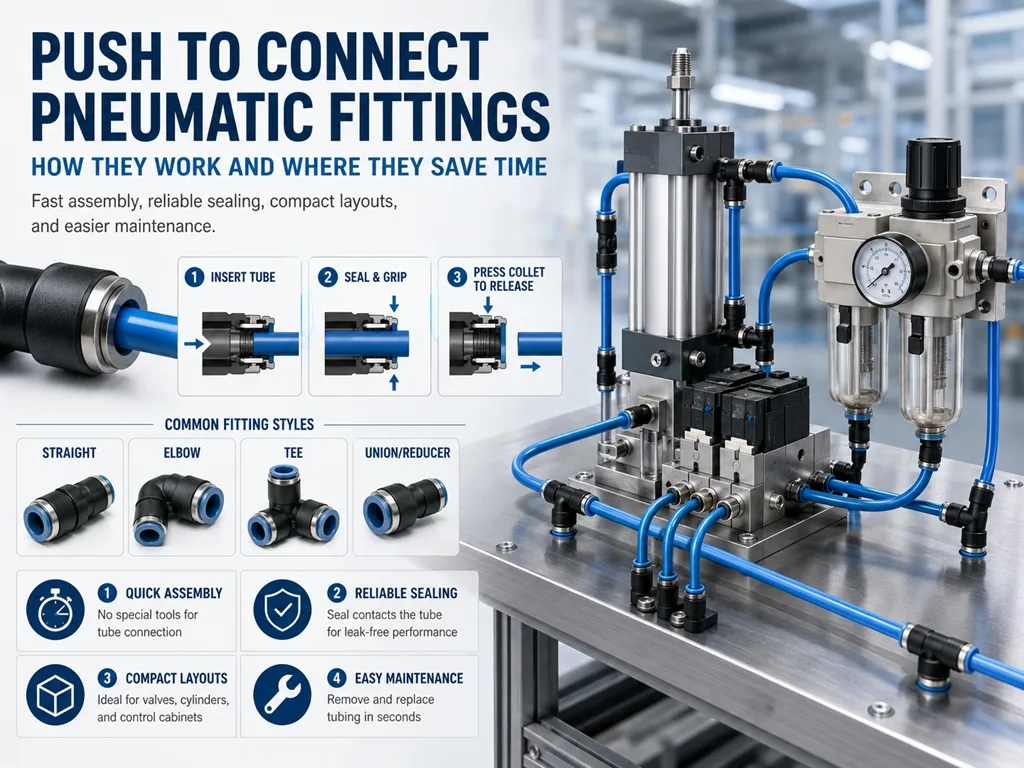
A push to connect fitting is a pneumatic connector designed to lock a tube when it is inserted into the fitting body. The operator cuts the tube square, pushes it into the fitting until it reaches the internal stop, and the fitting grips the tube automatically. To release the tube, the operator presses the collet and pulls the tube out.
The design is simple from the outside, but the internal structure does the real work. Most fittings include a release collet, gripping teeth, a seal, and a body that guides the tube into position. When the tube is inserted correctly, the seal contacts the tube surface and prevents air from escaping. The gripping mechanism resists pull-out under normal working pressure.
This is why installation technique matters. If the tube is not fully inserted, the seal may not contact correctly. If the tube end is slanted or scratched, air can leak along the surface. The fitting is quick to use, but it still depends on clean tube preparation.
Why Push-In Fittings Are Popular in Automation
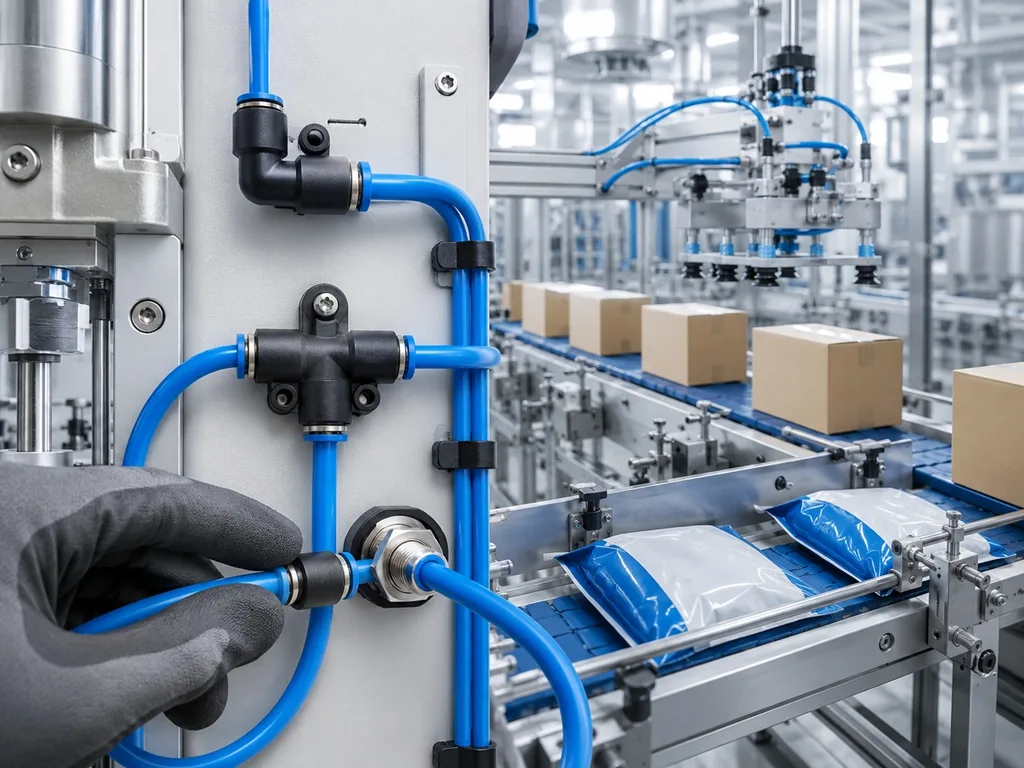
Modern automation equipment often has compact layouts. Pneumatic cylinders, grippers, solenoid valves, sensors, and vacuum components may be installed close together. Push-in fittings help keep these layouts manageable because they are compact and available in many shapes.
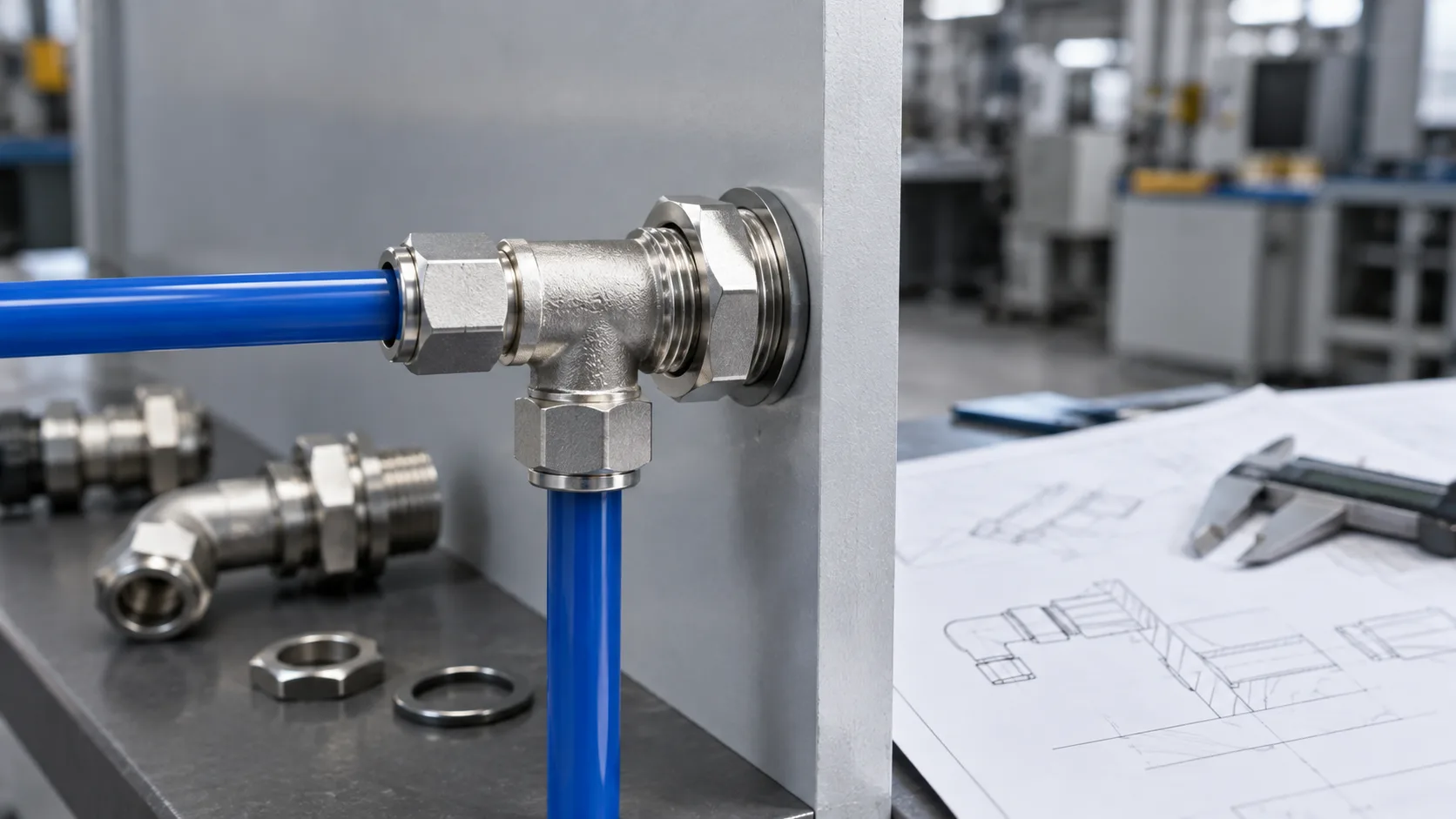
A straight connector can link a tube to a valve port. A 90 degree elbow can turn the tube immediately in a tight space. A tee fitting can branch air to two lines. A reducer can connect different tube sizes. A bulkhead union can carry air through a panel. This variety allows engineers to design cleaner pneumatic circuits without forcing tubing into awkward bends.
The speed of installation is another reason they are widely used. On repetitive OEM machines, even a few seconds saved per connection adds up. Push-in fittings also make pressure testing easier because a leaking tube can often be reseated or replaced without removing the whole connector from the port.
How the Seal Works
The seal inside a push to connect fitting normally sits around the tube. When compressed air enters the fitting, pressure pushes against the seal and the tube surface. A good seal depends on accurate tube outer diameter, smooth tube surface, and stable fitting tolerances.
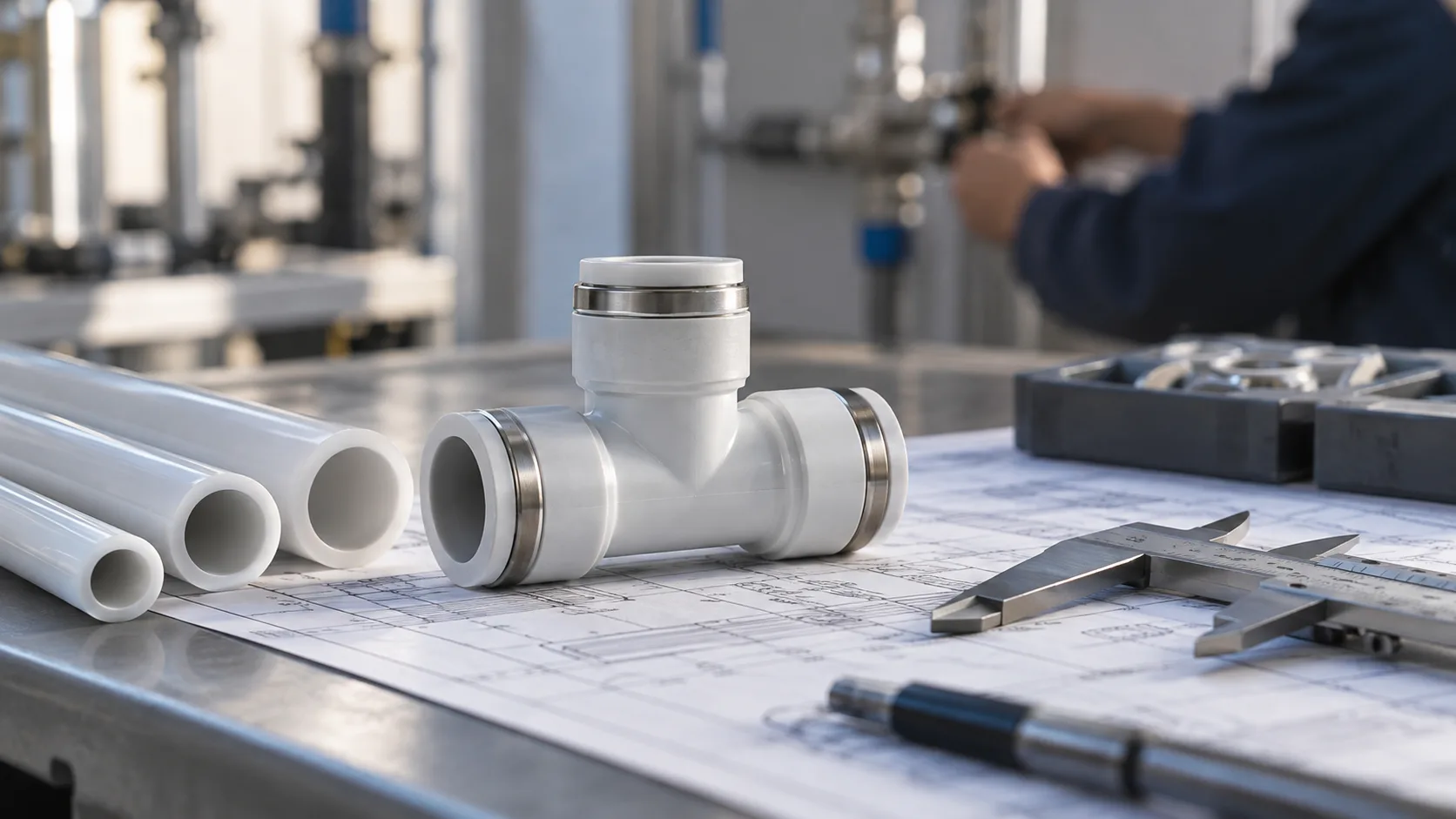
For this reason, tube quality should not be treated as separate from fitting quality. If the tube is too hard, too soft, oval, or deeply scratched, it may not seal even in a good fitting. If the fitting seal is inconsistent, a good tube may still leak. Reliable pneumatic systems are built from compatible parts.
During assembly, the tube should be pushed in firmly until it stops. A light pull test is useful after insertion. If the tube comes out easily, it was not locked correctly or the size is wrong. This simple check can prevent many startup leaks.
Common Styles and Their Uses
Push to connect fittings come in many styles. A male straight fitting is one of the most common types, used for direct connection to cylinders, valves, and manifolds. Male elbow fittings are used when the tube must turn away from a port. Female fittings connect to male-threaded components. Union fittings connect tube to tube. Reducers change from one tube diameter to another.
Branch fittings such as tees, Y fittings, and cross fittings distribute air to multiple points. Inline valves and hand valves add manual control to a pneumatic line. Tube plugs close unused ports or temporary lines. These products may look similar in a catalog, but each one solves a different layout problem.
When browsing a pneumatic fittings selection, it is useful to think in terms of airflow path. Ask whether the line needs to go straight, turn, split, reduce, pass through a panel, or shut off. The correct fitting style usually follows from that question.
Where They Save the Most Time
The biggest time savings appear in systems with many repeated connections. Packaging machinery, labeling machines, automatic assembly lines, testing fixtures, and pneumatic control cabinets often use many air lines in a small space. Push-in fittings allow workers to build these systems with fewer tools and less manual tightening.
They also save time during troubleshooting. If a line must be checked, the tube can be released, inspected, trimmed, and reinserted. In many cases, the fitting itself does not need to be removed from the threaded port. This reduces the risk of damaging the port or disturbing thread sealant.
For machine builders, faster maintenance improves customer experience. A small fitting that allows a technician to fix a line in minutes instead of half an hour has real value in production environments.
Installation Mistakes to Avoid
The most common mistake is cutting the tube poorly. A slanted cut creates an uneven sealing surface. A crushed tube end may not pass through the seal correctly. A simple tube cutter is inexpensive and can prevent many leaks.
Another mistake is failing to insert the tube completely. The tube may feel like it has entered the fitting, but it may not have reached the final stop. Marking the insertion depth on the tube can help during training or batch assembly.
Side load is also a problem. If the tube is pulled strongly to one side, the fitting seal may be stressed. A better fitting angle, a swivel elbow, or improved tube routing can reduce this load.
When Not to Use a Standard Push-In Fitting
Standard push-in fittings are excellent for many compressed air systems, but not every environment is standard. High temperature, aggressive chemicals, heavy vibration, welding sparks, or outdoor exposure may require special materials or protective routing. If the system handles fluids other than compressed air, compatibility must be checked carefully.
For critical safety applications, the fitting should be selected based on the machine design standard and supplier data, not only appearance. Pressure, temperature, media, tube material, and movement all matter.
Final Thoughts
Push to connect pneumatic fittings save time because they make air line assembly simple, repeatable, and service-friendly. Their value is not only in quick installation, but also in cleaner layouts, faster troubleshooting, and easier spare part management. When selected correctly and installed with clean tubing, they are one of the most useful small components in a pneumatic automation system.