Thread type is one of the easiest details to overlook when buying pneumatic fittings. A connector may look correct in a photo, the tube size may be right, and the general shape may match the machine layout. But if the thread is wrong, the fitting may leak, damage the port, or fail during assembly. In compressed air systems, a thread mismatch can turn a simple installation into a costly rework problem.
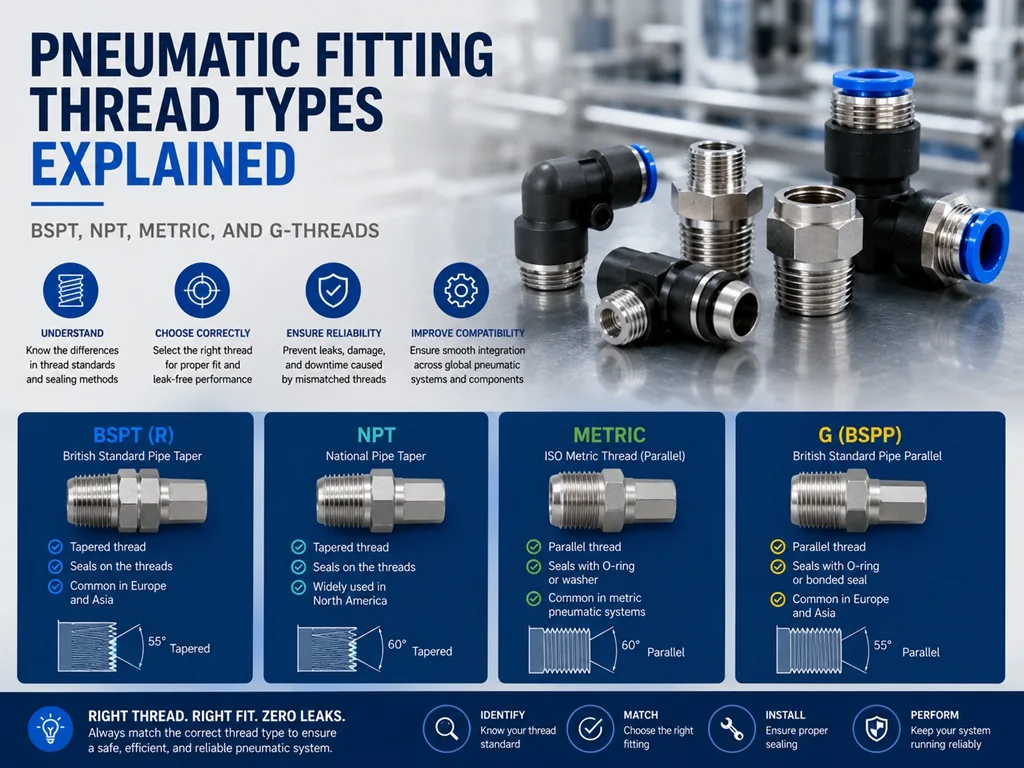
Pneumatic fittings are used across many markets, so different thread standards appear in different machines. BSPT, BSPP, NPT, metric threads, and G threads are all common depending on the equipment origin and application. Understanding the difference helps engineers and buyers choose the correct fitting before production begins.
Why Thread Type Matters
The threaded side of a pneumatic fitting connects the fitting to a valve, cylinder, manifold, regulator, filter, or machine port. This connection must do two things: hold mechanically and seal the air path. Some threads seal through the thread shape itself. Others need an O-ring, gasket, or sealing washer. If the wrong thread is used, the connection may feel tight but still leak.
Thread damage is another concern. A steel or brass fitting forced into the wrong port can damage the female thread. Once the port is damaged, changing the fitting may not solve the problem. The valve or cylinder body may need repair or replacement. This is why thread confirmation is important during the design and purchasing stage.
BSPT Threads
BSPT is a British Standard Pipe Taper thread. The male thread is tapered, which means it becomes slightly wider along its length. As the fitting is tightened into the port, the thread interference helps create a seal. In many pneumatic fittings, BSPT male threads are supplied with thread sealant or require sealing tape or paste during installation.
BSPT is widely used in many Asian and European pneumatic components. It is often marked with R sizes, such as R1/8, R1/4, R3/8, and R1/2. These markings refer to pipe thread sizes, not the outside diameter of the tube.
When installing BSPT fittings, the goal is firm sealing, not maximum force. Over-tightening can crack small ports, especially on compact plastic or zinc alloy components. If a fitting does not seal after proper tightening, remove it and inspect the thread and sealant instead of simply applying more force.
NPT Threads
NPT stands for National Pipe Thread and is common in North American equipment. Like BSPT, NPT is a tapered pipe thread, but the thread angle and form are different. Because BSPT and NPT can look similar in some sizes, they are sometimes confused. They should not be treated as interchangeable.
A BSPT male fitting may start into an NPT port, or an NPT fitting may appear to fit a BSPT port, but the sealing contact will not be correct. The result may be leakage, thread damage, or poor engagement. For export machines, it is especially important to confirm whether the customer requires NPT or BSPT ports.
If equipment is being built for multiple markets, it may be useful to standardize the pneumatic circuit internally and provide regional thread options only at customer connection points. This simplifies inventory while still supporting local requirements.
BSPP and G Threads
BSPP is a British Standard Pipe Parallel thread. G thread is commonly used as another name for the parallel BSP thread form. Unlike tapered threads, parallel threads do not seal by wedging the thread surfaces together. They normally seal with an O-ring, gasket, bonded washer, or sealing face.
This design can be very reliable when the port surface is clean and the seal is correctly compressed. It is also useful when the final orientation of an elbow fitting matters, because some designs allow the fitting to be positioned without relying only on thread tightness.
However, parallel threads can leak if the sealing washer is missing, damaged, or used against a rough surface. When replacing a fitting, always check whether the original design used a seal under the hex. Do not assume sealing tape alone will solve the problem.
Metric Threads
Metric threads are common on some compact pneumatic components, sensors, and equipment designed around metric standards. They may be marked as M5, M6, M8, M10, or other sizes. Small pneumatic valves and miniature cylinders often use M5 threads.
Metric threads are not pipe threads. A metric fitting must match the exact thread diameter and pitch of the port. If the pitch is wrong, the fitting will not engage correctly. For small ports, forcing the fitting can strip the thread quickly.
When sourcing fittings for compact components, check both tube size and thread. A fitting might be listed as 4-M5, meaning it accepts 4 mm tube and has an M5 thread. The first number and the thread number describe different parts of the fitting.
How to Identify the Correct Thread
The safest method is to check the equipment drawing or datasheet. If that is not available, use a thread gauge and caliper. Measuring only the outside diameter is not enough because pipe thread sizes do not directly equal measured diameter. Thread pitch and form must also be checked.
For maintenance teams, keeping labeled samples of common fittings can help. A known R1/8 fitting, a known NPT1/8 fitting, and a known M5 fitting can make visual comparison easier, but final confirmation should still use measurement when possible.
In purchasing, avoid descriptions that say only “1/8 fitting” without specifying the thread standard. A clear purchase order should list tube size, fitting style, thread type, material, and quantity. This reduces mistakes when ordering from different suppliers.
Sealing Methods
Taper threads often use sealing tape, liquid sealant, or pre-applied thread coating. Parallel threads often rely on O-rings or washers. Some fittings include factory-applied sealant, which saves assembly time and improves consistency.
Too much sealing tape can create problems. Loose tape pieces may enter the pneumatic circuit and affect valves or small orifices. Excess tape can also make the fitting harder to tighten correctly. Apply sealant carefully and keep it away from the first thread if possible.
For high-volume assembly, pre-coated threads are often preferred because they reduce labor and make sealing more consistent. OEM buyers should ask whether pre-applied sealant is available for bulk fitting orders.
Thread Selection in OEM Projects
For OEM machines, thread standardization is a quiet but important design decision. If one machine uses BSPT, NPT, metric, and G threads without a clear reason, assembly becomes slower and spare part support becomes more complicated. Standardization reduces the number of part numbers and lowers the chance of mistakes.
When reviewing pneumatic fittings, buyers should check whether the supplier can provide the same fitting body style with different thread options. This is useful for export equipment because the machine builder can keep a familiar layout while adapting to regional thread requirements.
Final Thoughts
Thread type is not a small detail. It controls how the fitting seals, how it installs, and whether the port remains undamaged. Before ordering pneumatic fittings, confirm the tube size, fitting shape, thread standard, and sealing method. A few minutes spent checking threads can prevent leaks, cracked ports, and costly production delays.