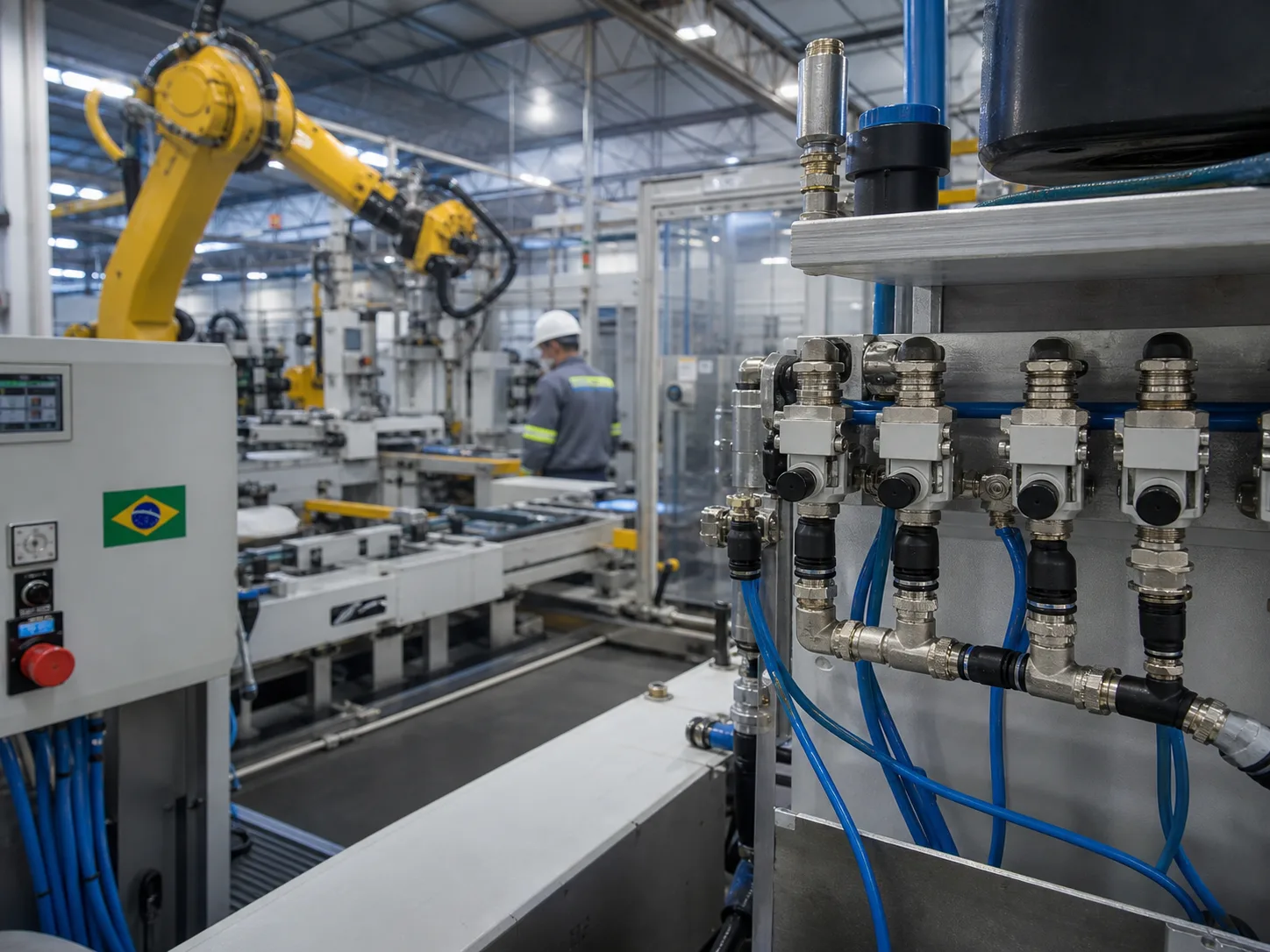
Brazilian buyers who source pneumatic fittings for OEM machinery or factory maintenance need to balance price, availability, quality, and technical fit. A fitting is a small part, but it can affect air leakage, actuator speed, tube routing, and maintenance time. For factories that run long shifts, a weak connector can become a production problem.
Brazil’s industrial base includes machinery, automotive parts, packaging, food processing, plastics, textiles, mining support, and general manufacturing. IBGE regional industry data shows that industrial performance varies by location and sector, which means distributors and maintenance teams need a flexible product mix rather than a single fitting model.
Start with Tube Size
The first step is to confirm the tube outer diameter. Common pneumatic tube sizes include 4mm, 6mm, 8mm, 10mm, and 12mm, although actual demand depends on the machine design. If the tube size does not match the fitting, the connection may leak or fail to hold securely.
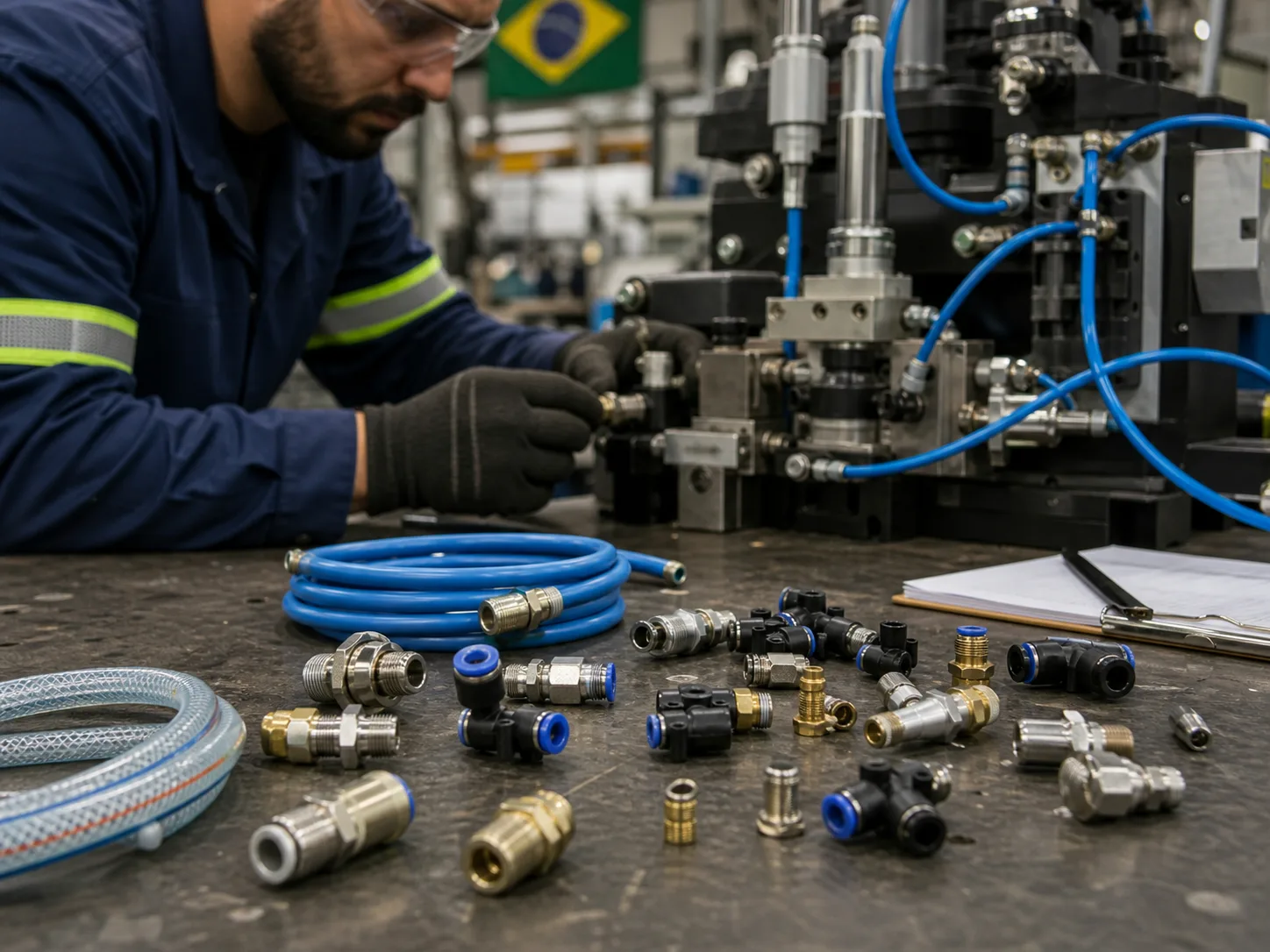
For standard air line connections, PC straight push-in fittings are widely used. For tight spaces around cylinders and valves, PL elbow fittings allow cleaner tube direction. For branch lines, PE tee fittings and PY Y-type fittings help distribute air to multiple points.
Check Thread Type and Machine Origin
Brazilian factories may use machines from local builders, Europe, North America, and Asia. This creates mixed thread requirements. Buyers should confirm whether the machine needs BSPT, BSPP, NPT, or metric thread before ordering.
For OEM builders, standardizing thread options across a machine series can reduce assembly errors. For distributors, carrying several thread sizes helps serve customers with different equipment backgrounds.
| Selection Question | Why It Matters |
|---|---|
| What is the tube outer diameter? | Determines whether the fitting can seal and hold the tube |
| What thread type is required? | Prevents mismatch with cylinders, valves, and manifolds |
| Is space limited? | Elbow and rotary fittings improve tube layout |
| Does the air line pass through a panel? | Bulkhead unions provide a cleaner fixed connection |
| Is the system frequently maintained? | Push-to-connect fittings reduce tube replacement time |
Focus on Leakage and Maintenance
Compressed air leakage is a direct cost. It also affects actuator response and pressure stability. Buyers should check sealing structure, tube holding force, release sleeve quality, and thread accuracy before comparing only unit price.
Maintenance teams also value fittings that are easy to remove and reinstall. If a tube must be replaced quickly, a reliable push-to-connect design can save time during machine stoppage.
Supplier Selection for Brazil
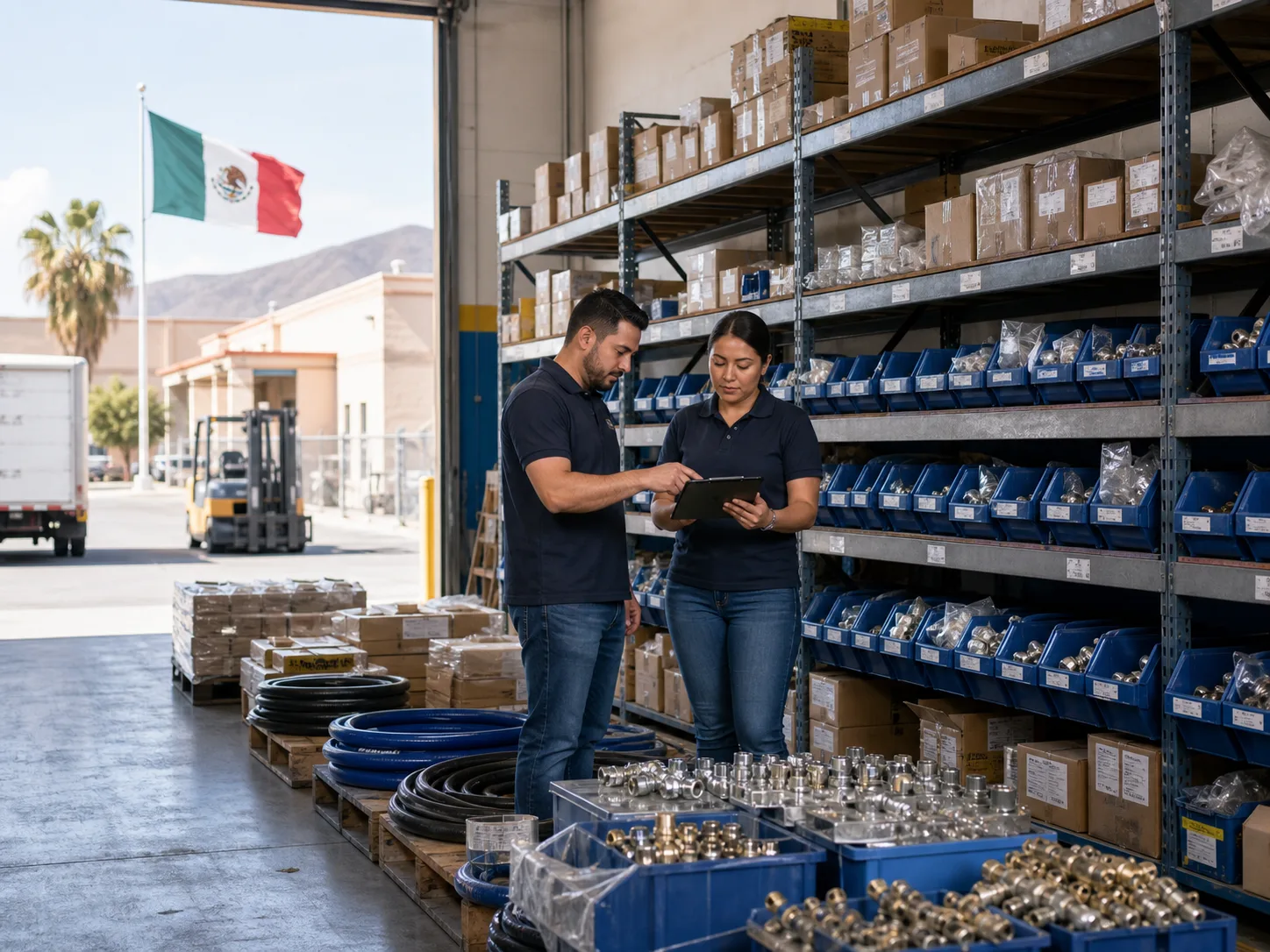
For Brazilian distributors, a useful supplier should offer a complete range of standard models, stable model codes, regular packaging, and consistent availability. OEM customers may additionally require private label packing, custom assortment, and reliable repeat supply.
The International Trade Administration notes Brazil’s opportunity in advanced manufacturing, and the IBGE regional industry release shows that industrial production remains active across several regions. For pneumatic fittings, this points to demand from both new machine projects and existing factory maintenance.
Recommended Product Mix
- PC male thread straight fittings for general cylinder and valve connections.
- PL and PV elbow fittings for compact tube routing.
- PE tee fittings and PY Y-type fittings for branching air lines.
- PG reducers for mixed tube sizes.
- PM and PMF bulkhead fittings for panels and machine frames.
- PP tube plugs for temporary line closure and maintenance.
Related category: Pneumatic Fittings.
Sources Consulted