Air leaks are common in pneumatic systems, but they should never be treated as normal. A small leak at a fitting may not stop the machine immediately, yet it wastes compressed air, lowers system efficiency, increases compressor load, and can hide bigger reliability problems. In a factory with many machines, hundreds of small leaks can become a serious operating cost.
Pneumatic fittings are often blamed first when air is escaping, but the fitting is only one part of the connection. The tube, thread, port, installation method, vibration, and working environment all affect sealing. To prevent leaks, it helps to understand where they actually come from.
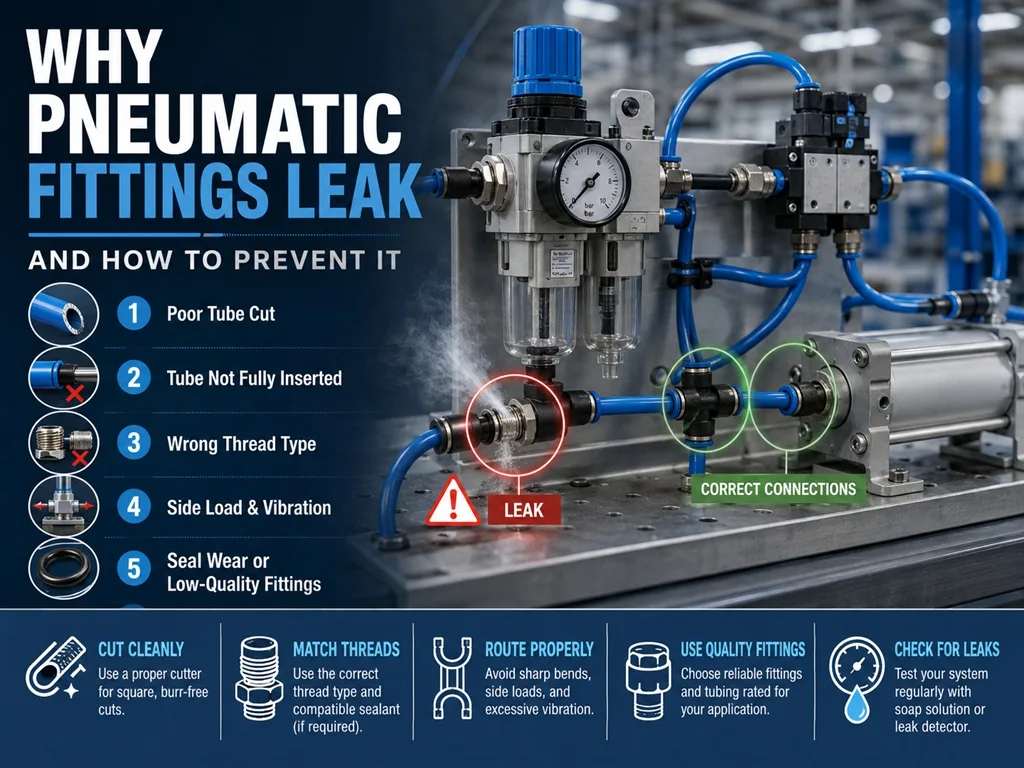
The Tube Was Cut Poorly
One of the most common causes of leakage is a bad tube cut. Push-to-connect fittings need a clean, square tube end. If the tube is cut with scissors, a knife, or a worn tool, the end may be angled, crushed, or rough. When that tube enters the fitting, it may not pass through the seal correctly.
A proper tube cutter is a simple tool, but it makes a major difference. The cut should be flat and clean, with no burrs or deformation. If a tube has already been used and shows scratches near the sealing area, cut off the damaged section before reinserting it.
During maintenance, technicians sometimes remove a tube and push the same end back into the fitting. If the end has tooth marks, dirt, or flattening, it may leak. Trimming a short section is often faster than chasing a leak later.
The Tube Was Not Fully Inserted
A push-in fitting may feel connected before the tube is fully seated. If the tube does not reach the internal stop, the seal may not be compressed correctly and the gripping mechanism may not hold with full strength. The result can be a slow leak or tube pull-out.
For critical assembly work, mark the insertion depth on the tube. This makes it easy to see whether the tube has been pushed in completely. A gentle pull test after insertion is also useful. The tube should stay locked while the collet is not pressed.
This issue is especially common in tight spaces where the installer cannot push the tube straight. If access is poor, consider changing the fitting angle or moving the component slightly to allow proper insertion.
The Tube Size or Material Is Wrong
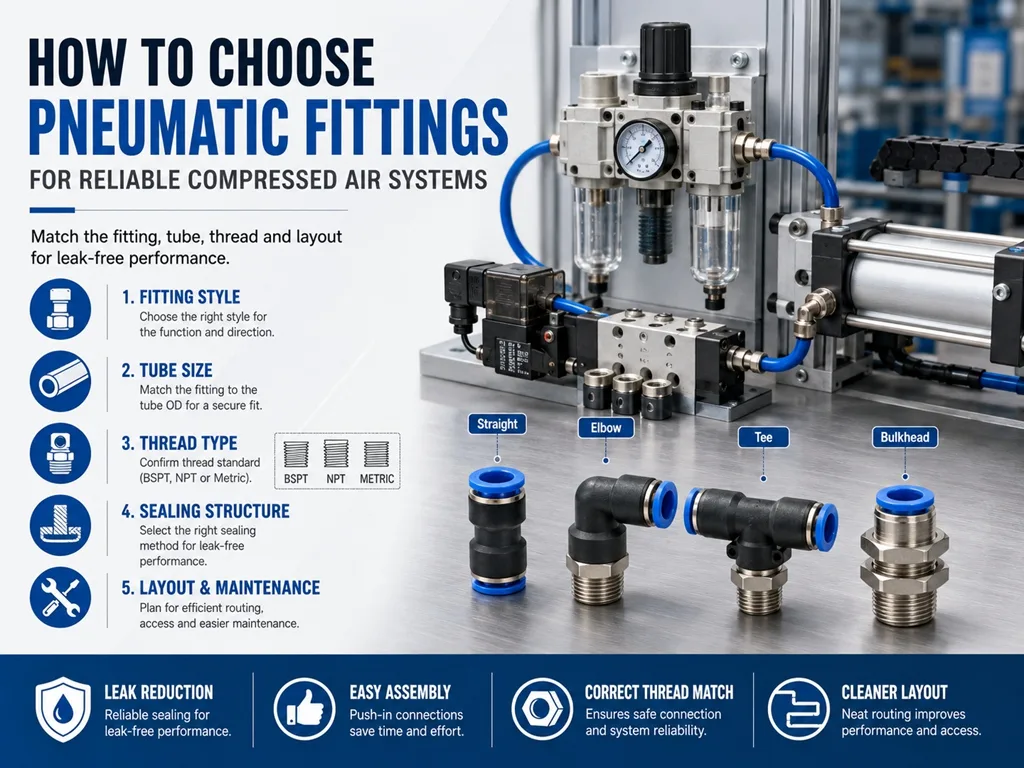
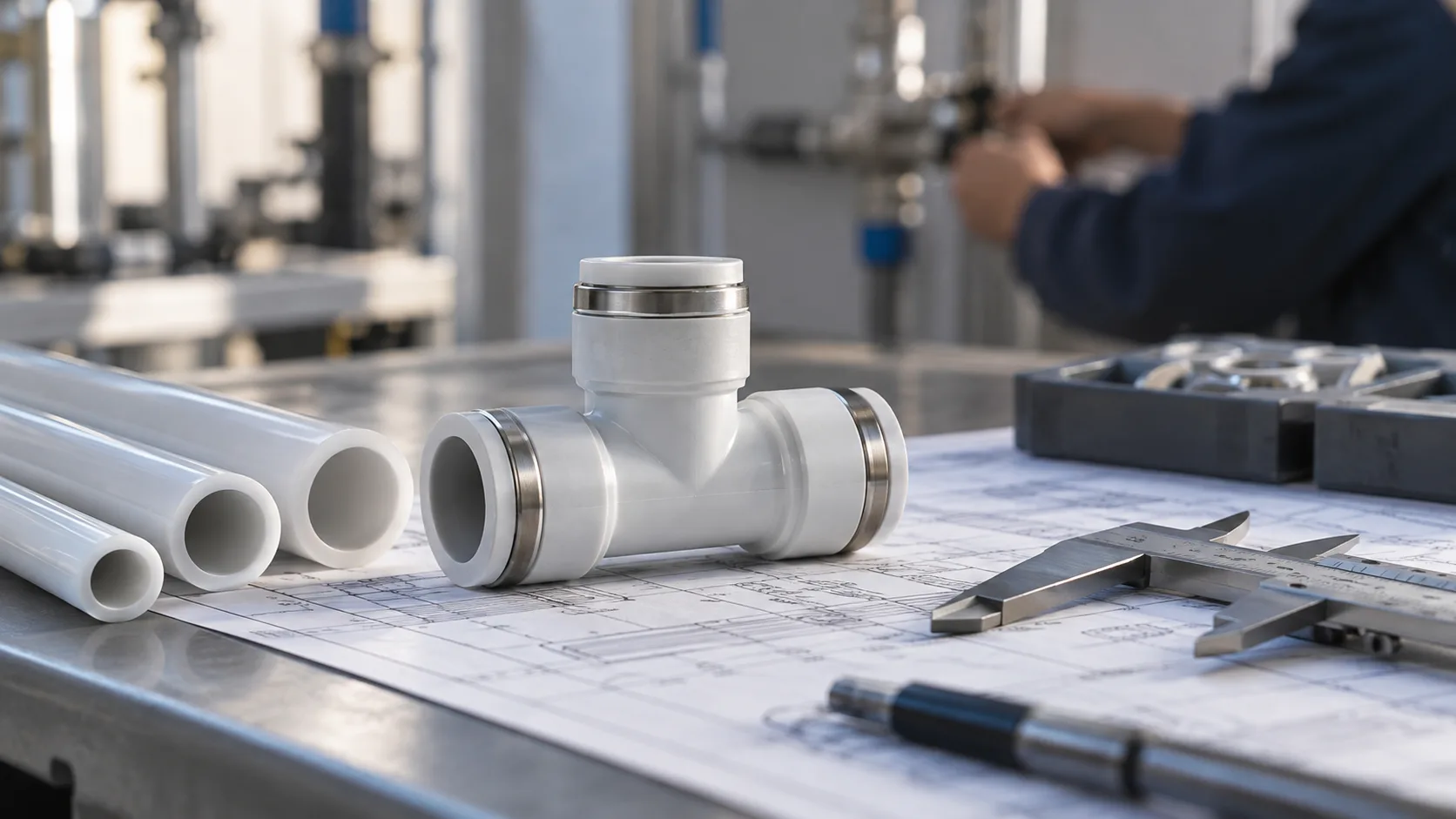
Push-to-connect fittings are designed for specific tube outside diameters. A 6 mm fitting is not suitable for a tube that is slightly undersized or oversized. Even a small dimensional difference can affect the seal. Tubes that are oval, too soft, too hard, or not designed for pneumatic use can create leakage.
The tube material should also match the application. PU tubing is flexible and widely used in automation. Nylon tubing offers strength and stability in many systems. PE tubing may be suitable for lower pressure or specific routing needs. The fitting supplier should be able to recommend compatible tube materials.
If a system leaks repeatedly at different fittings, do not only replace fittings. Inspect the tube batch and measure the outside diameter.
The Thread Type Is Incorrect
Thread leaks are common when fittings are installed into the wrong port type. BSPT, NPT, BSPP, G, and metric threads can be confused if the specification is not clear. A fitting may tighten enough to feel secure but still fail to seal because the thread form does not match.
Taper threads usually need thread sealant or pre-applied coating. Parallel threads usually seal with an O-ring, gasket, or washer. If that sealing element is missing, the connection can leak even when the thread is fully tightened.
When a thread leak appears, check the thread standard before adding more sealant. Over-tightening a mismatched fitting can damage the port and make the problem worse.
There Is Too Much Side Load
A fitting is designed to seal around a tube, not to act as a tube support bracket. If the tube is pulled sideways, bent sharply, or forced into position, the sealing area is stressed. Over time, vibration and movement can turn that stress into a leak.
This often happens when a straight fitting is used where an elbow fitting should be installed. It also happens when tubes are cut too short. A tube should have enough length to reach the fitting naturally without pulling.
Better routing can solve many leaks. Use elbow fittings, swivel fittings, clamps, or cable carriers where needed. A clean layout protects both the tube and the fitting.
Vibration Loosened the Connection
Pneumatic equipment often operates near moving parts, motors, conveyors, and cylinders. Vibration can loosen threaded connections or gradually wear the tube interface. If fittings are installed on vibrating equipment, the design should include proper support and suitable thread sealing.
For high-vibration areas, check whether a metal fitting or a different connector style is more suitable. Also inspect the tube routing. A long unsupported tube can move like a lever and apply force to the fitting.
The Fitting Quality Is Inconsistent
Not all fittings with the same shape perform the same way. Internal seal quality, collet strength, thread accuracy, plating, and body molding all affect reliability. Inconsistent fittings may pass a quick visual inspection but fail in pressure testing or after a few weeks of use.
For OEM production, consistency is critical. A low price can disappear quickly if workers spend extra time checking leaks or replacing fittings. Before placing large orders, test samples from the same production standard that will be used for bulk supply.
When comparing pneumatic fittings, look for clear product series, stable dimensions, and supplier experience with industrial compressed air applications.
The Seal Is Worn or Contaminated
Seals can wear over time, especially if tubes are frequently removed and reinserted. Dust, oil, metal chips, and damaged tube surfaces can also affect sealing. In harsh environments, the fitting should be inspected as part of routine maintenance.
Compressed air quality matters too. Excess water, oil, or particles can shorten the life of pneumatic components. An air source treatment unit with proper filtration and regulation helps protect valves, cylinders, and fittings.
How to Check for Leaks
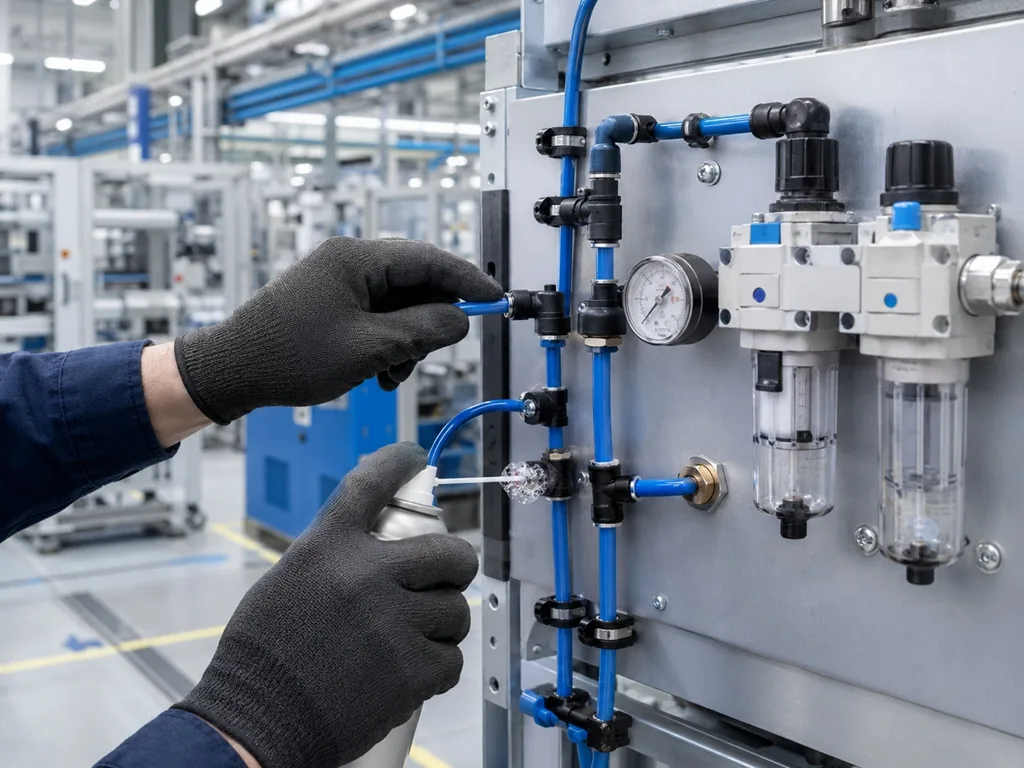
For basic inspection, listen for air noise and feel around the connection without touching moving parts. A soap solution can reveal bubbles at the leak point. In larger facilities, ultrasonic leak detectors are useful because they can identify leaks in noisy environments.
Once the leak is found, repair the cause rather than only tightening the fitting. If the tube end is damaged, trim it. If the thread is wrong, replace the fitting. If the tube is pulling sideways, fix the routing. If the fitting is poor quality, replace the batch.
Final Thoughts
Pneumatic fitting leaks are preventable when the system is designed and assembled correctly. Clean tube cuts, correct insertion, matching thread types, proper tube routing, and consistent fitting quality all matter. A fitting may be small, but in a compressed air system it is one of the key points where reliability is won or lost.