Pneumatic fittings are often installed and forgotten until something leaks. In a factory air system, that approach can become expensive. Small leaks waste compressed air, reduce equipment performance, and increase compressor runtime. Fittings also sit at points where tubing, vibration, movement, moisture, and maintenance handling all meet. Regular inspection helps prevent small issues from becoming production downtime.
This guide is written for maintenance teams, machine operators, and plant engineers who work with pneumatic lines in real equipment. It focuses on practical checks rather than theory.
Build a Simple Inspection Routine
A fitting inspection does not need to be complicated. During scheduled maintenance, walk the machine and look for loose tubing, sharp bends, oil contamination, cracked fitting bodies, worn tube ends, and signs of air leakage. Listen for hissing sounds when the machine is pressurized but idle.
Pay special attention to areas with movement. Tubes near cylinders, sliding tables, indexing units, and moving guards are more likely to experience repeated stress. Also check fittings near heat, cutting oil, vibration, or cleaning areas.
Record recurring leak locations. If the same area leaks repeatedly, the root cause may be tube routing, vibration, wrong fitting style, or poor support rather than a single defective connector.
Use the Right Leak Detection Method
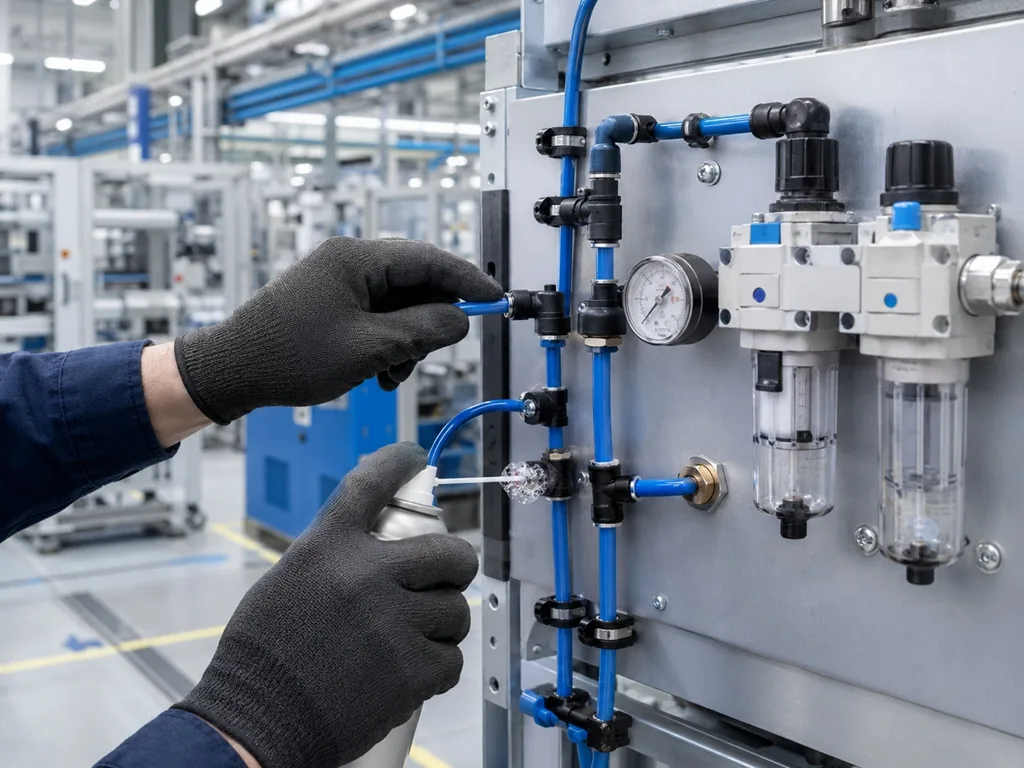
For small systems, listening and using a soap solution may be enough. Apply the solution around the fitting and watch for bubbles. This method is simple and effective, but it should be used carefully around electrical components or sensitive areas.
In larger factories, ultrasonic leak detectors can be useful. They help maintenance teams find leaks in noisy production environments. A leak survey can identify wasted air that operators may not notice during normal machine operation.
Once a leak is found, do not immediately tighten everything. First identify whether the leak comes from the tube side, threaded side, fitting body, or nearby component.
Repair Tube-Side Leaks Correctly
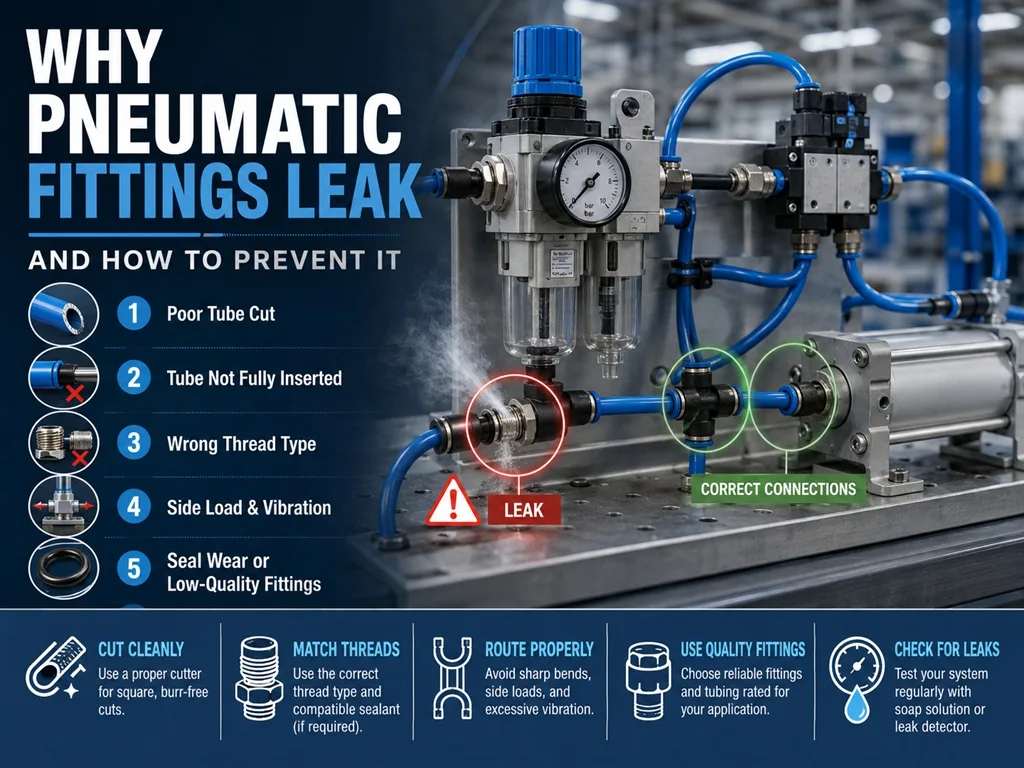
If air leaks where the tube enters the fitting, depressurize the line before working. Press the collet, remove the tube, and inspect the tube end. Look for scratches, tooth marks, flattening, dirt, or angled cuts. If the end is damaged, cut off a short section with a proper tube cutter.
Reinsert the tube fully until it reaches the internal stop. A gentle pull test confirms that the tube is locked. If the fitting still leaks with a clean tube end, the internal seal may be worn or damaged, and the fitting should be replaced.
Do not use tape or glue on the tube side of a push-in fitting. These materials can damage the seal or contaminate the pneumatic circuit.
Repair Thread-Side Leaks Carefully
If air leaks around the threaded connection, check the thread type and sealing method. Taper threads may need sealing tape, paste, or pre-applied sealant. Parallel threads may need an O-ring, gasket, or sealing washer. If the sealing element is missing, tightening the fitting may not solve the leak.
Remove old tape or sealant before reinstalling. Loose pieces can enter the air circuit and affect valves or small passages. Apply new sealant cleanly and avoid blocking the fitting opening.
Be careful with over-tightening. Small ports can crack, especially on compact valves or plastic components. If a fitting requires excessive force to seal, the thread may be damaged or mismatched.
Replace Fittings When Needed
Some fittings can be reused many times, but they are not permanent. Replace a fitting if the body is cracked, the collet is damaged, the tube does not lock securely, the seal leaks after proper tube preparation, or the thread is worn. A fitting is usually less expensive than the downtime caused by repeated leakage.
For critical machines, keep common fitting sizes in stock. Include straight connectors, elbows, tees, reducers, plugs, and hand valves if they are used in the plant. Clear labeling makes maintenance faster.
Improve Tube Routing
Many fitting problems come from poor routing. Tubes should not pull sideways on fittings. They should not be kinked, stretched, or unsupported over long moving distances. If the tube naturally wants to bend away from the fitting, use a different fitting style or reroute the line.
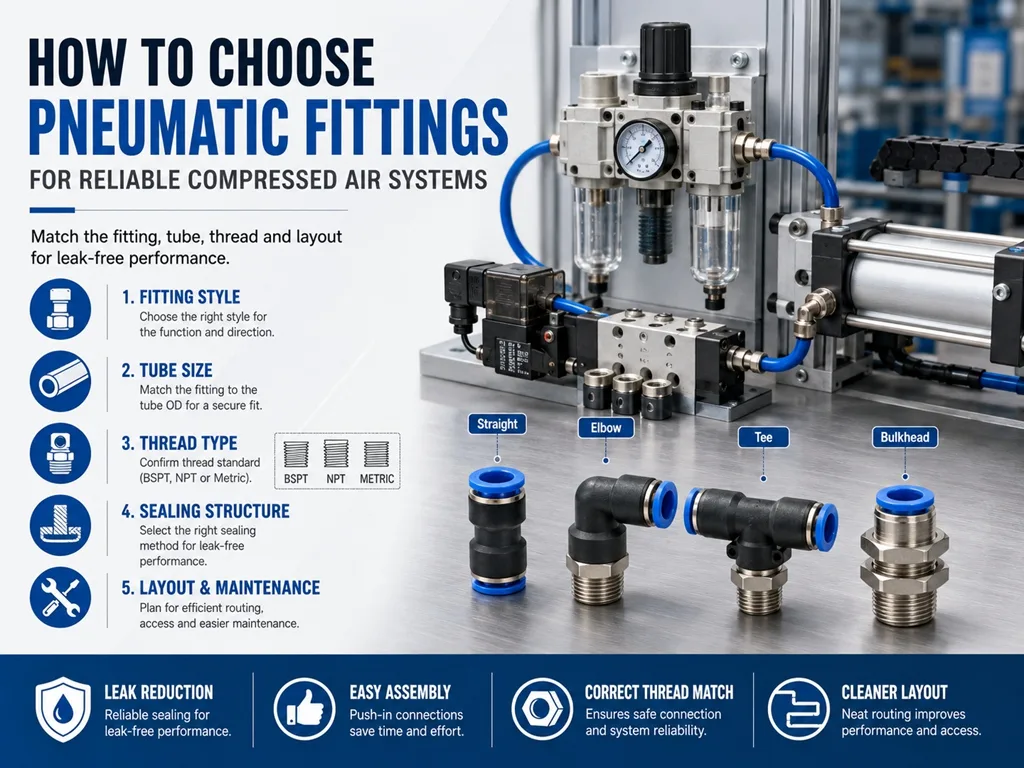
Elbow fittings can reduce stress where tubes need to turn. Bulkhead fittings can stabilize panel pass-throughs. Tube clamps and cable carriers can protect lines on moving sections. Better routing often reduces leaks more effectively than replacing fittings with the same style.
Check Air Quality
Compressed air quality affects fitting and component life. Excess moisture, oil, dust, or particles can cause problems throughout the pneumatic system. Air source treatment units, filters, regulators, and lubricators should be maintained according to the system needs.
If fittings near the same area show contamination, check upstream filtration and drainage. Moisture and oil can also make tubing slippery or attract dirt, which may affect the sealing interface when tubes are reinserted.
Train Operators on Basic Handling
Operators and maintenance staff should know how to release and insert tubes correctly. Pulling a tube without pressing the collet can damage the tube or fitting. Cutting tubes with improper tools can create future leaks. A short training session can prevent many recurring issues.
It also helps to teach staff not to ignore small leaks. A quiet air leak may seem harmless, but it represents wasted energy and possible equipment instability.
Standardize Spare Parts
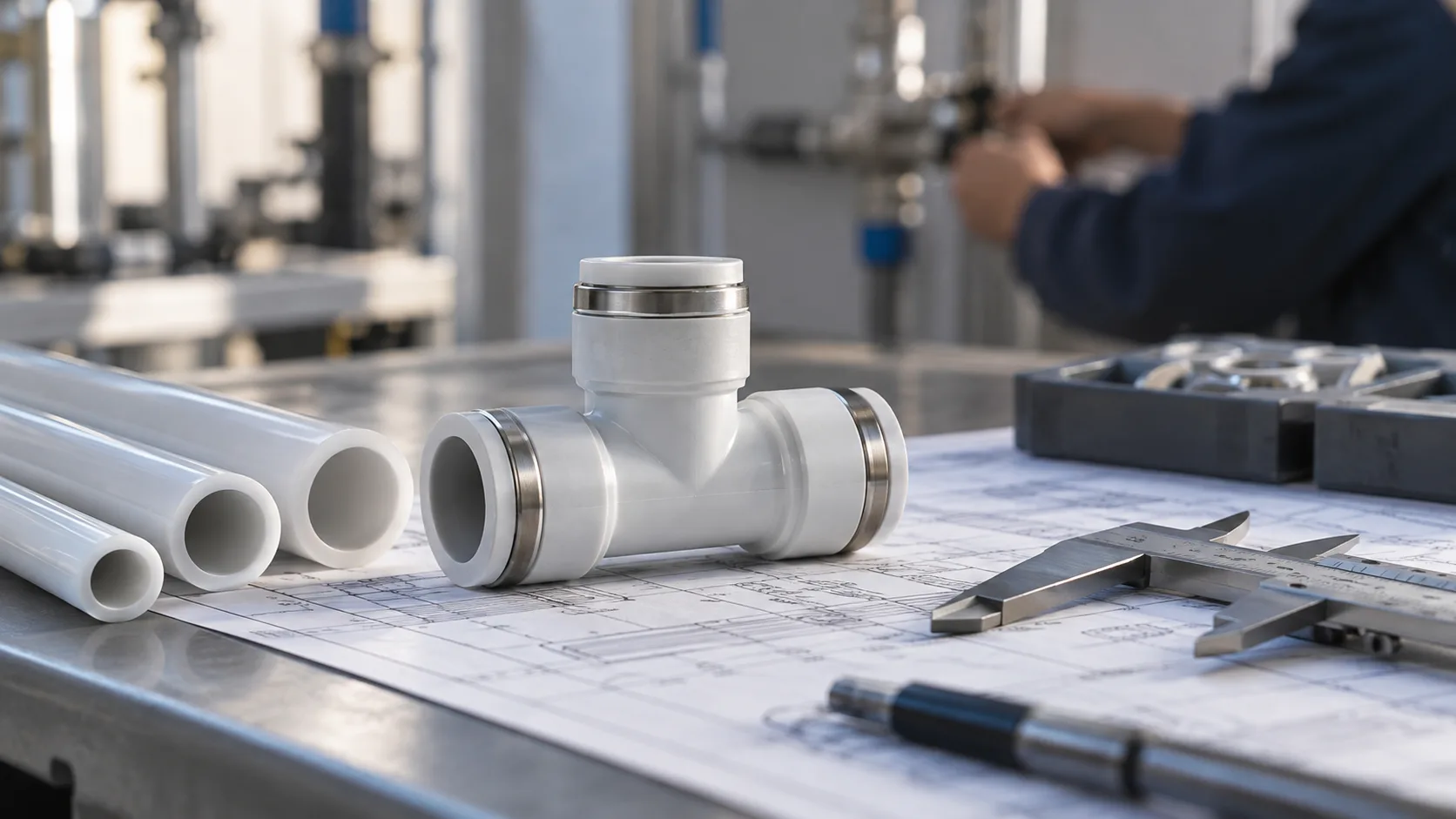
Plants with many machines often accumulate different fitting types over time. Standardizing common tube sizes and thread types can reduce inventory complexity. It also makes repairs faster because technicians know which spare part to use.
When sourcing replacements, use reliable pneumatic fittings that match the original specifications. Do not replace a BSPT fitting with an NPT fitting or a parallel thread fitting unless the port and sealing method are confirmed.
Final Thoughts
Pneumatic fitting maintenance is mostly about small disciplined habits: clean tube cuts, correct insertion, proper thread sealing, good routing, and regular leak checks. These habits reduce air waste and improve machine reliability. In a factory with many compressed air connections, a good fitting maintenance routine can save energy, time, and frustration.