Packaging machinery depends on motion that is fast, repeatable, and easy to maintain. Pneumatic cylinders, grippers, vacuum generators, blow-off nozzles, solenoid valves, and air preparation units all appear in packaging lines. Between these components are the small connectors that keep the air circuit organized: pneumatic fittings.
In a packaging machine, fittings do more than connect tubes. They influence tube routing, panel layout, maintenance speed, leak control, and the overall appearance of the equipment. A well-designed pneumatic layout can make the machine easier to build and easier to service. A poor layout can create tangled tubing, hidden leaks, and frustrating downtime.
Why Packaging Machines Use So Many Pneumatic Connections
Packaging equipment often performs many small movements. It may push cartons, clamp bags, lift products, open gates, control labels, move guides, or blow air across a surface. Each motion may require a cylinder or air line. As the number of actions increases, the number of fittings also increases.
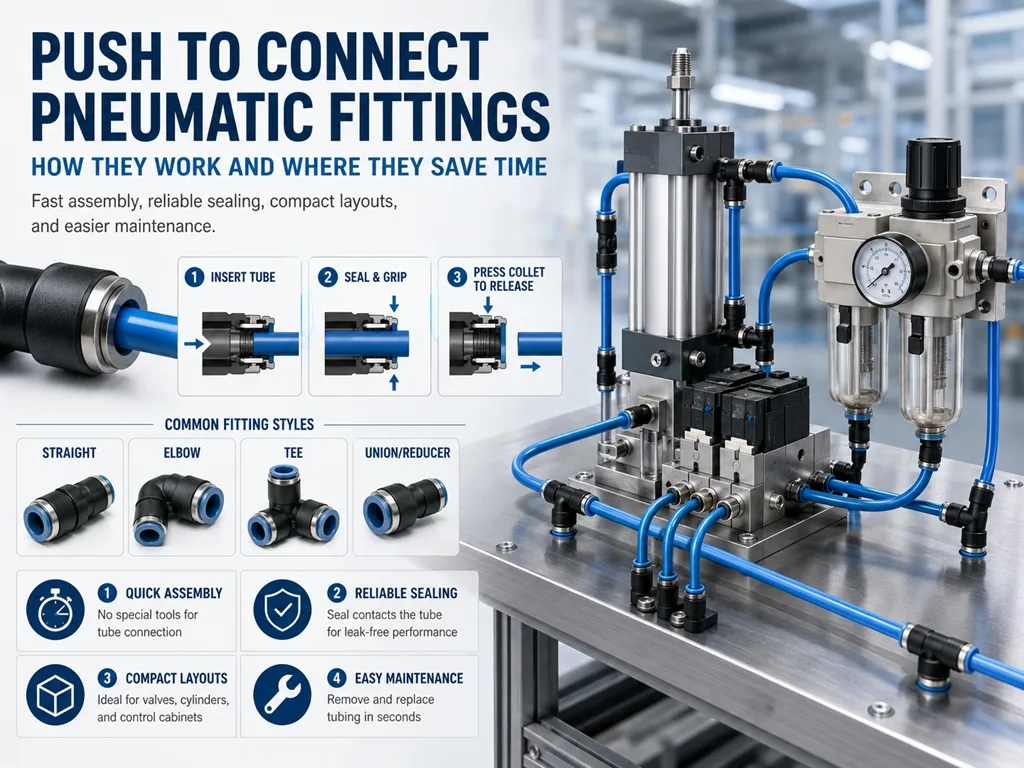
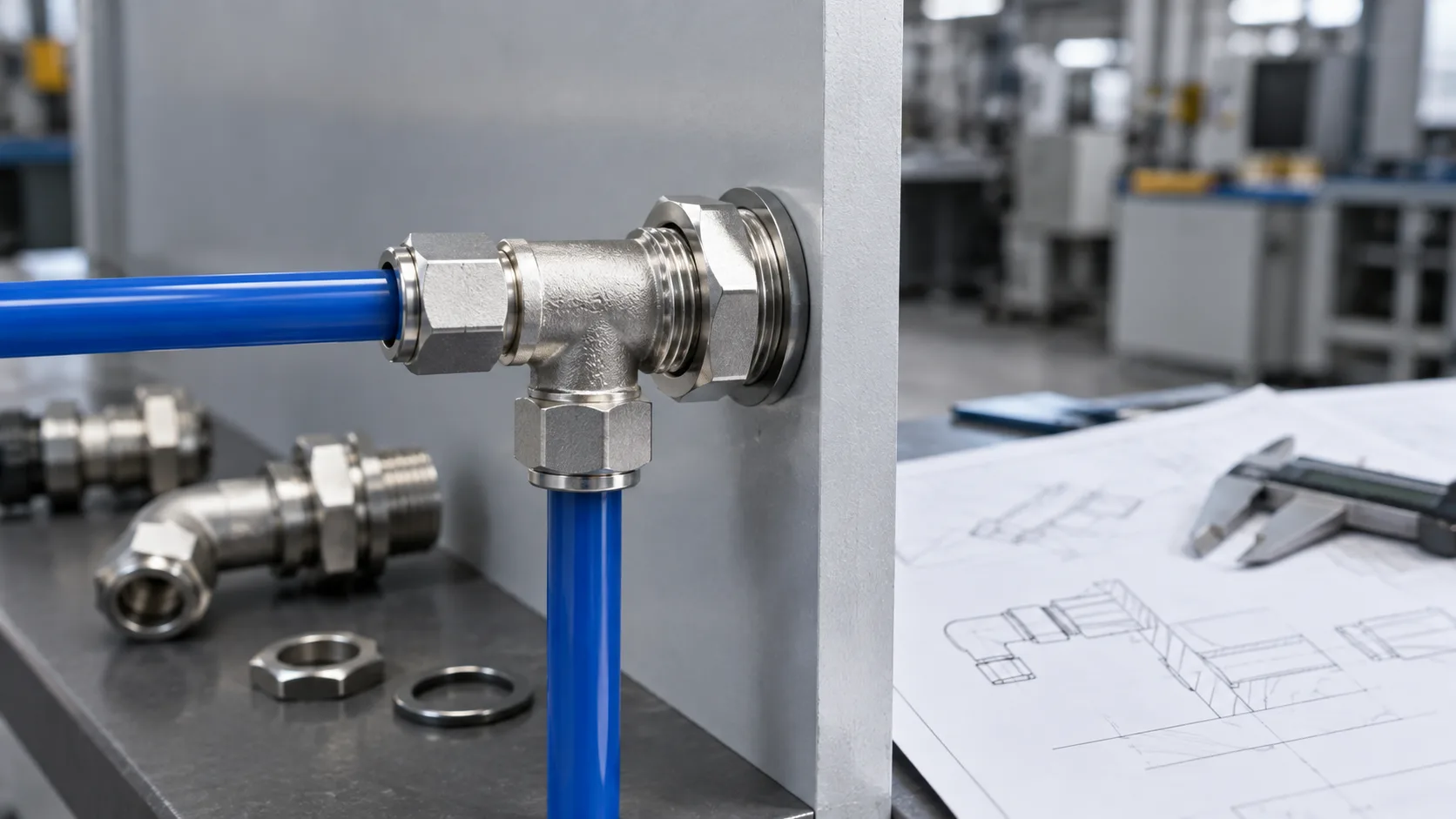
Because packaging machines are often compact, the fittings must help save space. Straight fittings are useful where the tube runs directly from a port. Elbow fittings turn the tube immediately and prevent sharp bends. Tee and Y fittings distribute air to related points. Bulkhead fittings pass lines through panels. Inline valves allow sections of the machine to be isolated during service.
The result is a pneumatic system that can be dense but still organized if the fitting selection is thoughtful.
Cleaner Tube Routing
Tube routing is one of the most visible signs of good pneumatic design. Tubes should not be stretched, twisted, kinked, or forced around corners. They should follow clear paths and leave enough space for maintenance. The right fitting helps make this possible.
A 90 degree elbow fitting can turn a tube cleanly away from a cylinder port. A swivel elbow can help align the tube after installation. A branch tee can reduce unnecessary tube length when two nearby points need air from the same supply. A bulkhead union keeps panel pass-throughs neat and stable.
Cleaner routing also protects the fitting seal. If the tube pulls sideways on the connector, leakage becomes more likely. In packaging machines with vibration and frequent movement, reducing side load is especially important.
Fast Maintenance on Production Lines
Packaging lines often run for long shifts. When a tube is damaged or a fitting leaks, maintenance teams need to fix it quickly. Push-to-connect pneumatic fittings make this easier because the tube can be released by pressing the collet. In many cases, the threaded side of the fitting can stay installed while the tube is trimmed or replaced.
This matters in production. A few minutes saved during a repair can help reduce downtime. For OEM machine builders, using common fitting sizes across a machine also helps customers stock spare parts. If every area uses a different fitting size or thread style without a clear reason, maintenance becomes slower.
Good packaging machine design considers not only how the machine is assembled, but also how it will be serviced after thousands or millions of cycles.
Leak Control and Energy Cost
Compressed air is convenient, but it is not free. Air leaks increase compressor load and operating cost. In a packaging facility with many machines, small leaks at fittings can add up quickly.
Leak prevention starts with correct selection and installation. Tube ends should be cut square. Tubes should be fully inserted. Threads should match the port type. Tube routing should avoid side load. Fittings should be consistent in quality and suitable for the environment.
During machine commissioning, pressure testing should include fitting inspection. A soap solution or ultrasonic leak detector can help identify leaks before the machine ships or enters production.
Food and Clean Packaging Environments
Some packaging equipment operates near food, beverage, pharmaceutical, or personal care products. In these environments, cleanliness and material compatibility become more important. Fittings should be easy to wipe down, and tube routing should avoid areas where dust or product residue can collect.
Depending on the application, special materials may be required. Standard fittings may be suitable for many secondary packaging areas, but direct product zones or washdown environments may need more careful selection. Always consider cleaning chemicals, moisture, temperature, and hygiene requirements.
Vibration and Repeated Motion
Packaging machinery often includes conveyors, indexing tables, sealing jaws, pick-and-place systems, and moving guards. These parts can create vibration or repeated tube movement. If tubes are unsupported, the movement can stress the fitting.
Use proper tube clamps, cable carriers, or flexible routing where needed. In moving areas, leave enough bend radius and avoid sharp turns. If the tube must rotate or follow motion, a swivel or rotary fitting may be more suitable than a fixed connector.
Fittings should be chosen as part of the motion design, not added at the end as generic accessories.
OEM Purchasing Considerations
For packaging machine manufacturers, fittings are often purchased in bulk. The key factors are not only price, but also consistency, availability, packaging, and support for different tube and thread sizes. A supplier should be able to provide stable product quality across repeated orders.
OEM buyers should check sample performance before bulk ordering. Test tube insertion, release force, sealing, thread quality, and appearance. If the fitting will be visible on the machine, color and finish should remain consistent.
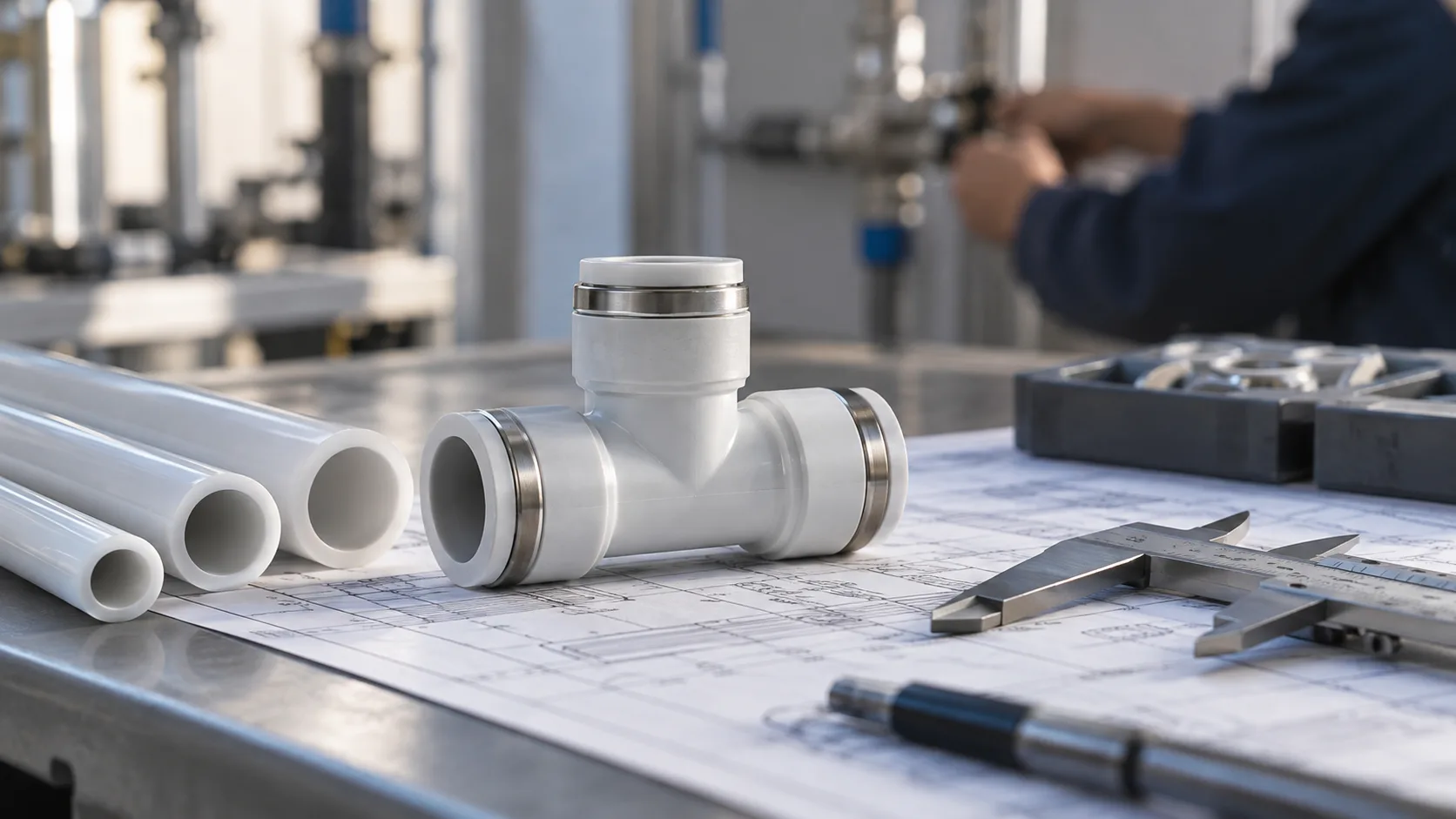
Reviewing a complete pneumatic fittings range helps buyers standardize across straight connectors, elbows, tees, reducers, plugs, hand valves, and bulkhead fittings.
Design Tips for Packaging Machines
Keep pneumatic lines as short and direct as practical, but do not make them so short that they pull on the fitting. Use elbows where a tube must turn. Group related air lines logically. Leave access around fittings that may need service. Label critical lines when the circuit is complex.
For machines exported to different markets, confirm thread standards early. A mismatch between BSPT, NPT, G, or metric threads can delay production and create field service problems.
Final Thoughts
Pneumatic fittings are small parts, but they have a large effect on packaging machinery reliability. The right fittings create cleaner layouts, reduce leakage, speed up maintenance, and make the machine easier to support in the field. For packaging OEMs, treating fittings as part of the machine design rather than a last-minute accessory leads to better equipment and happier customers.