Choosing a pneumatic fitting looks simple until the machine is running, the line is under pressure, and a small leak starts stealing air every minute of the day. In many compressed air systems, the fitting is one of the smallest components in the cabinet, but it decides whether the tube seals cleanly, whether maintenance is fast, and whether the machine can keep stable pressure during repeated cycles.
For engineers, buyers, and machine builders, the best pneumatic fitting is not always the cheapest item on the list. It is the part that matches the tube, the thread, the working environment, and the service expectations of the equipment. A good selection can reduce leakage, shorten assembly time, and make future maintenance much easier. A poor selection can create slow pressure loss, tube pull-out, cracked threads, and unnecessary downtime.
This guide explains how to choose pneumatic fittings in a practical way, especially for industrial automation, packaging equipment, pneumatic cylinders, solenoid valve manifolds, air source treatment units, and general compressed air lines.
Start with the Function of the Connection
Before choosing material or thread, first ask what the fitting must do. Some fittings simply connect a tube to a threaded port. Others change direction, split airflow, reduce tube size, block a port, or add a shut-off point. When the function is clear, the fitting style becomes much easier to narrow down.
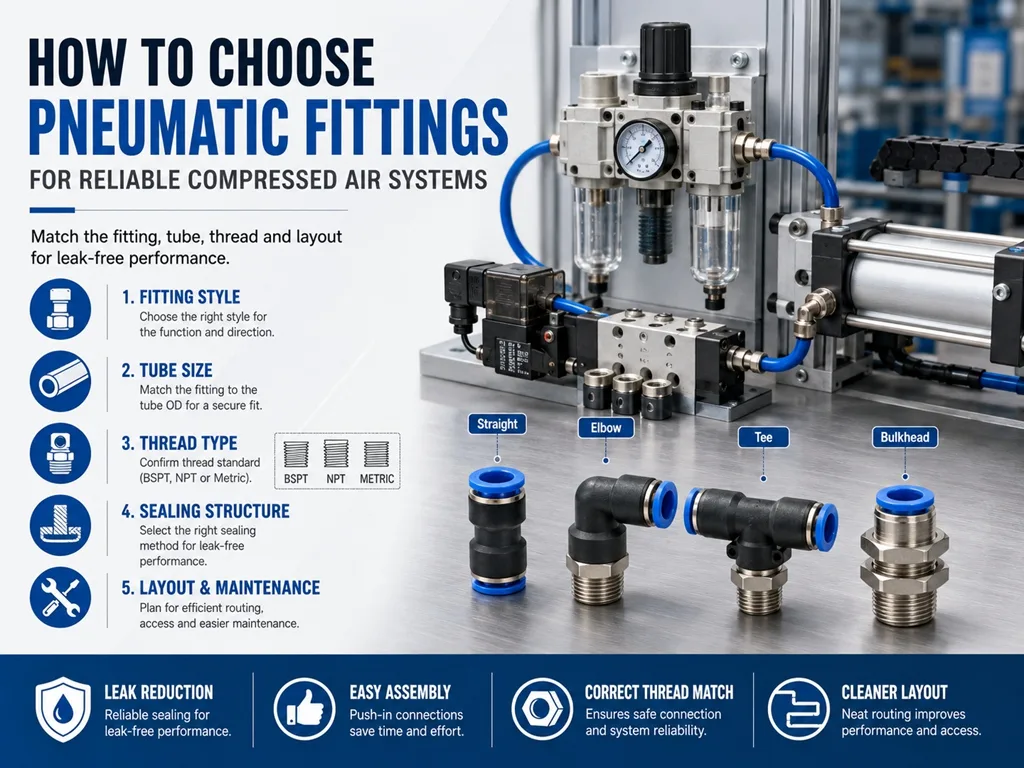
A straight male connector is often used when a tube runs directly from a valve or cylinder port. A 90 degree elbow fitting is better when space is limited or when the tube must turn without bending sharply. Tee and Y fittings divide airflow to multiple branches. Bulkhead fittings pass air through a machine panel. Hand valves and inline valves allow a section of the pneumatic circuit to be isolated during maintenance.
On a real machine, these details matter. If a tube is forced to bend too tightly because a straight fitting was used in a corner, the tube may kink or pull against the collet. Replacing that one connector with an elbow fitting often makes the layout cleaner and more reliable.
Match the Fitting to the Tube Size
Tube size is one of the first specifications buyers check, but it is also a common source of mistakes. Pneumatic push-to-connect fittings are normally selected by the outside diameter of the tube, not the inside diameter. Common metric sizes include 4 mm, 6 mm, 8 mm, 10 mm, 12 mm, and larger options depending on flow demand.
The tube should slide smoothly into the fitting and pass the internal sealing ring before it locks. If the tube outer diameter is not accurate, or if the tube is oval, scratched, or cut at an angle, the fitting may not seal correctly. This is why tube quality and fitting quality should be considered together. A good fitting cannot fully compensate for damaged tubing, and good tubing cannot perform well inside a poorly made fitting.
Flow should also be considered. A small tube and small fitting may be acceptable for a sensor line or light actuator, but high-speed cylinders and larger pneumatic tools may need a larger tube path to avoid pressure drop. If the actuator is slow even when the valve is correctly sized, the tube and fitting size should be checked as part of the whole circuit.
Confirm the Thread Type
Thread selection is another area where many pneumatic systems run into trouble. Pneumatic fittings may use BSPT, BSPP, NPT, metric threads, or other standards depending on the market and equipment design. A fitting may appear to screw into a port, but if the thread type is wrong, it can damage the port or fail to seal under pressure.
Taper threads such as BSPT and NPT seal by thread interference and usually need sealant or pre-applied thread coating. Parallel threads normally seal with an O-ring, gasket, or sealing washer. Mixing these systems is risky. If the thread feels tight after only a few turns, do not force it. Check the port specification and fitting drawing before assembly.
For OEM projects, it is worth standardizing thread types across the machine as much as possible. Standardization reduces purchasing complexity, lowers assembly mistakes, and makes spare parts easier for end users to identify.
Choose a Material for the Working Environment
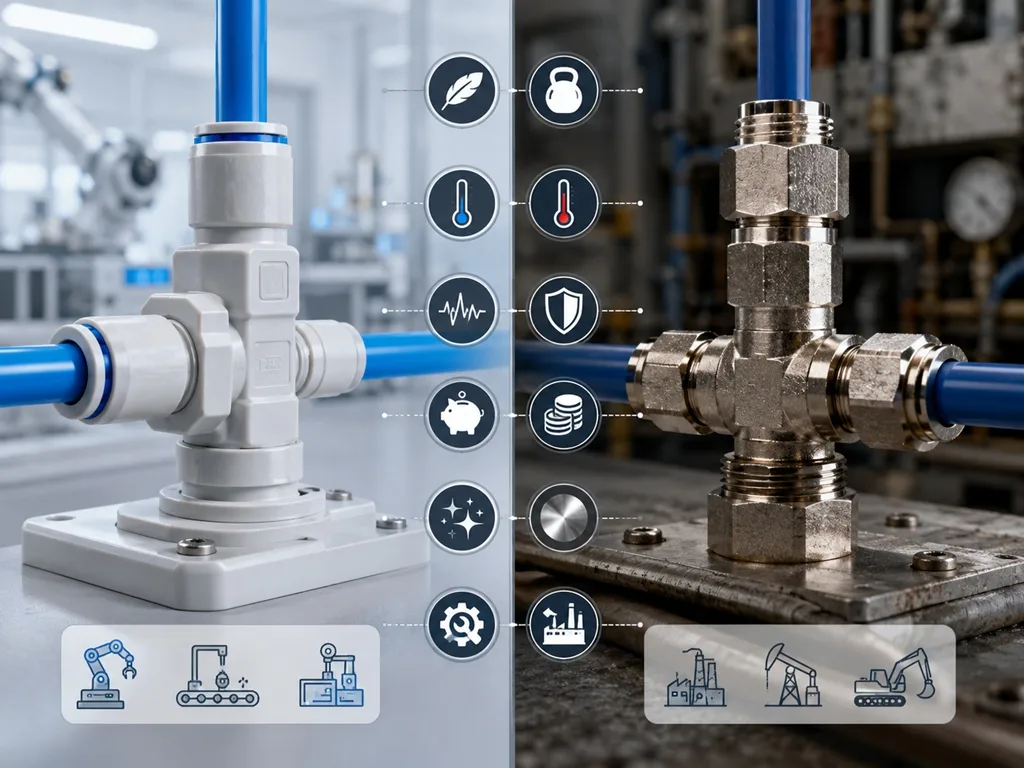
Many pneumatic fittings use engineering plastic bodies with nickel-plated brass threads. This combination is widely used because it is lightweight, fast to install, and cost-effective. It works well in many clean factory environments, especially for automation equipment, packaging lines, assembly machines, and control cabinets.
Brass or metal fittings may be preferred where there is higher mechanical stress, more vibration, higher temperature, or a harsher environment. Stainless steel may be required for certain corrosive or hygienic applications. The correct material depends on the operating conditions, not only the pressure rating printed in a catalog.
Temperature also matters. Some plastics become less flexible in cold environments or soften under heat. If the fitting is close to welding equipment, hot surfaces, cutting oil, cleaning chemicals, or outdoor exposure, ask the supplier for material compatibility rather than assuming a standard fitting will be enough.
Look Beyond Pressure Rating
Pressure rating is important, but it is only one part of the selection. A fitting that meets the pressure requirement may still fail if it is exposed to constant vibration, side load, poor tube support, or aggressive movement. Pneumatic lines on moving arms, sliding tables, and robotic fixtures need enough slack and proper routing so the fitting does not become a stress point.
In many cases, the fitting fails because the tube is pulling sideways. A swivel elbow, rotary fitting, or better tube clamp can solve the issue. When designing a machine, look at the direction of tube movement and the maintenance path. A neat pneumatic layout is not just about appearance; it protects the sealing interface.
Check the Sealing Structure
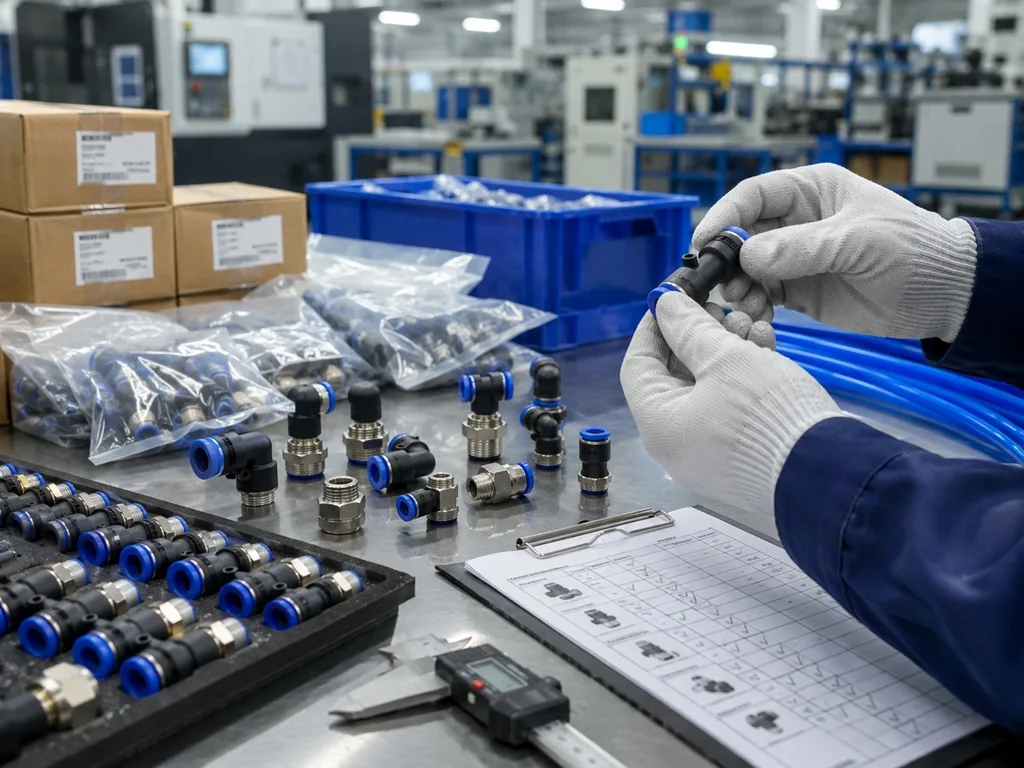
A push-to-connect fitting usually includes a collet, gripping teeth, and an internal seal. The tube must be cut square, pushed fully into the fitting, and released only by pressing the collet correctly. When the internal parts are consistent, assembly is fast and repeatable. When tolerances are poor, one fitting may seal while another leaks in the same application.
For production machines, consistency is more valuable than a slightly lower unit price. A batch of low-cost fittings that creates random leaks can cost far more in inspection time, rework, air consumption, and customer complaints. This is why OEM buyers often evaluate sample consistency before placing bulk orders.
Think About Maintenance
Maintenance teams appreciate fittings that are easy to access, easy to disconnect, and easy to identify. If a fitting is buried behind a panel or installed too close to another component, changing a tube can become a long task. Where possible, leave enough space around the fitting for fingers or a release tool.
Using common sizes across a machine also helps. If every area uses different fittings without a clear reason, the customer must stock more spare parts. Good design reduces part variety without sacrificing function.
Work with a Supplier Who Understands the System
A pneumatic fitting is not an isolated part. It connects air hose, cylinders, valves, FRL units, manifolds, and actuators into one working system. A useful supplier should be able to discuss tube size, thread options, body style, packing, labeling, and OEM requirements. For buyers comparing product lines, the pneumatic fittings category is a good place to review common connector types used in industrial compressed air systems.
When choosing a supplier, ask for stable dimensions, clear product photos, thread information, and packaging options. If the fittings will be used in export machines, consistent labeling and long-term availability can be as important as the fitting itself.
Final Thoughts
The right pneumatic fitting should match the tube, thread, environment, airflow, and maintenance needs of the machine. Good selection reduces leakage and makes the system easier to build, inspect, and service. For engineers and buyers, the best approach is not to treat fittings as generic accessories, but as small precision components that protect the performance of the whole pneumatic circuit.