For OEM machine builders, pneumatic air hose is not a minor accessory. It is part of the machine’s compressed air system, and it affects sealing, airflow, response speed, appearance, service life and after-sales reliability. A machine can use excellent cylinders and valves, but poor tubing can still create leaks, unstable motion and customer complaints.
High-quality pneumatic air hose matters because OEM equipment is built repeatedly. The same tube size, color and material may be used across many machines. If hose quality changes from batch to batch, assembly becomes inconsistent and troubleshooting becomes harder.
Air Hose Quality Affects the Whole Machine
Pneumatic systems rely on pressure stability. If the hose expands too much, kinks, leaks or restricts flow, the connected components cannot perform as designed. Cylinders may move slowly, grippers may lose holding force and air tools may feel weak.
For an OEM, these problems are not only technical issues. They affect customer confidence in the whole machine. Many end users will not separate a small tubing problem from the overall equipment quality.
Stable Sealing Starts with Accurate Dimensions
Most modern pneumatic systems use push-in fittings. These fittings seal on the outside surface of the tube. That means the tube must have accurate outside diameter, good roundness and a smooth surface.
If the OD is inconsistent, one roll may seal well while another roll leaks. If the surface is scratched or uneven, the fitting seal may fail. Good hose quality helps make assembly repeatable, which is essential for machine production.
Airflow and Machine Performance
OEM machines are usually designed for specific cycle times. Pneumatic cylinders, blow nozzles, vacuum generators and grippers all need enough air volume to work correctly. A hose with poor internal consistency, small ID or weak pressure performance can reduce air delivery.
When airflow is restricted, engineers may mistakenly blame the valve or cylinder. In reality, the tube size, fitting bore or hose length may be the limiting factor. Specifying the right hose early prevents expensive debugging later.
Clean Routing Improves Maintenance
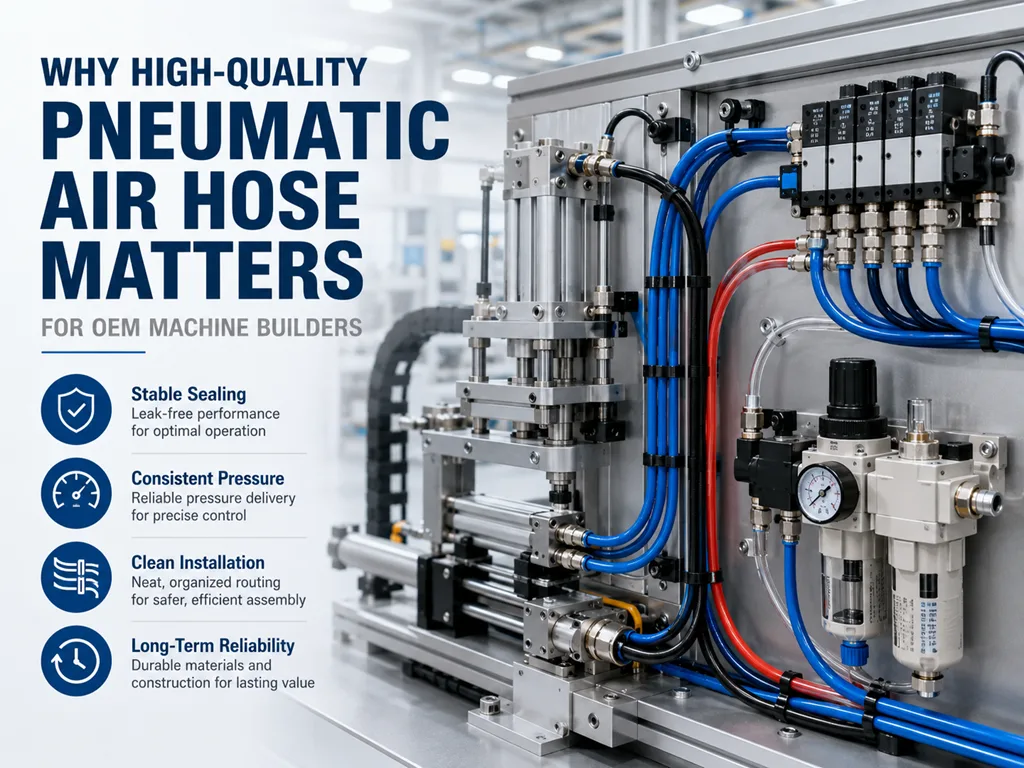
A good pneumatic hose should be easy to cut, insert, route and identify. Clean hose routing improves the machine’s appearance and makes maintenance faster. When tubes are organized by function and color, technicians can follow circuits without wasting time.
For export machines, the inside of the cabinet or machine frame is often inspected by customers. Neatly routed blue, black, transparent or red tubing gives the equipment a more professional impression.
Choosing the Right Hose Material
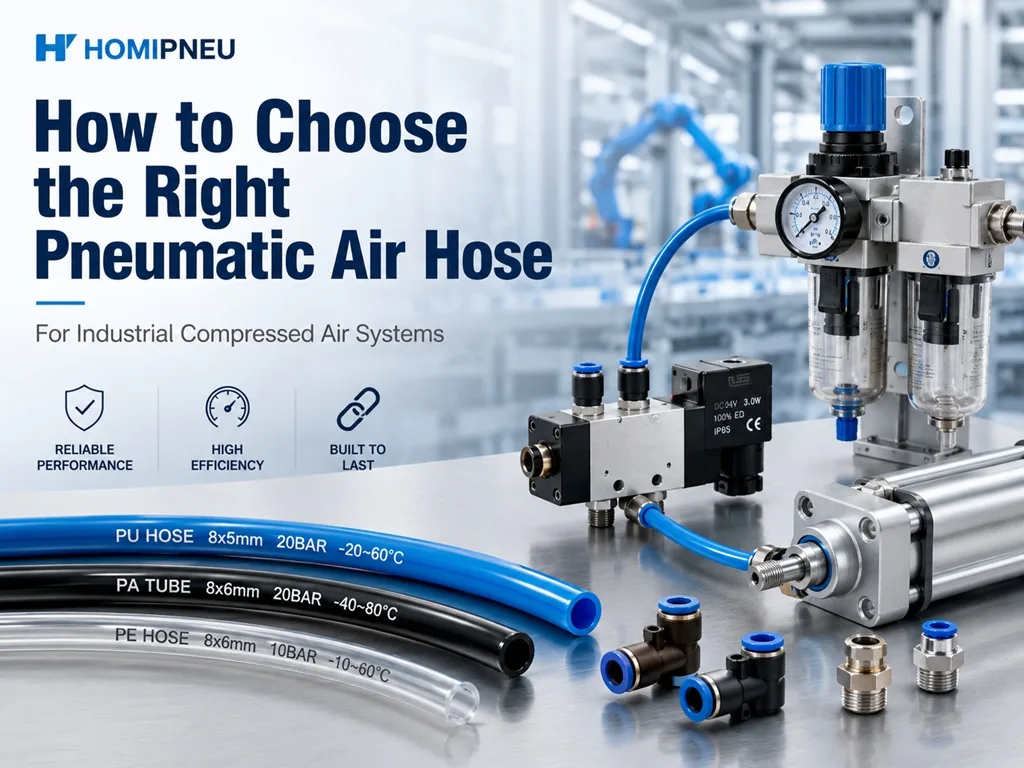
| Hose Type | OEM Use | Why It Matters |
|---|---|---|
| PU tube | Compact automation and moving sections | Flexible, light and easy to route |
| PA nylon tube | Fixed lines and stronger industrial routes | Stable shape and good mechanical strength |
| PE hose | Moderate-duty economical circuits | Useful where cost and simple routing matter |
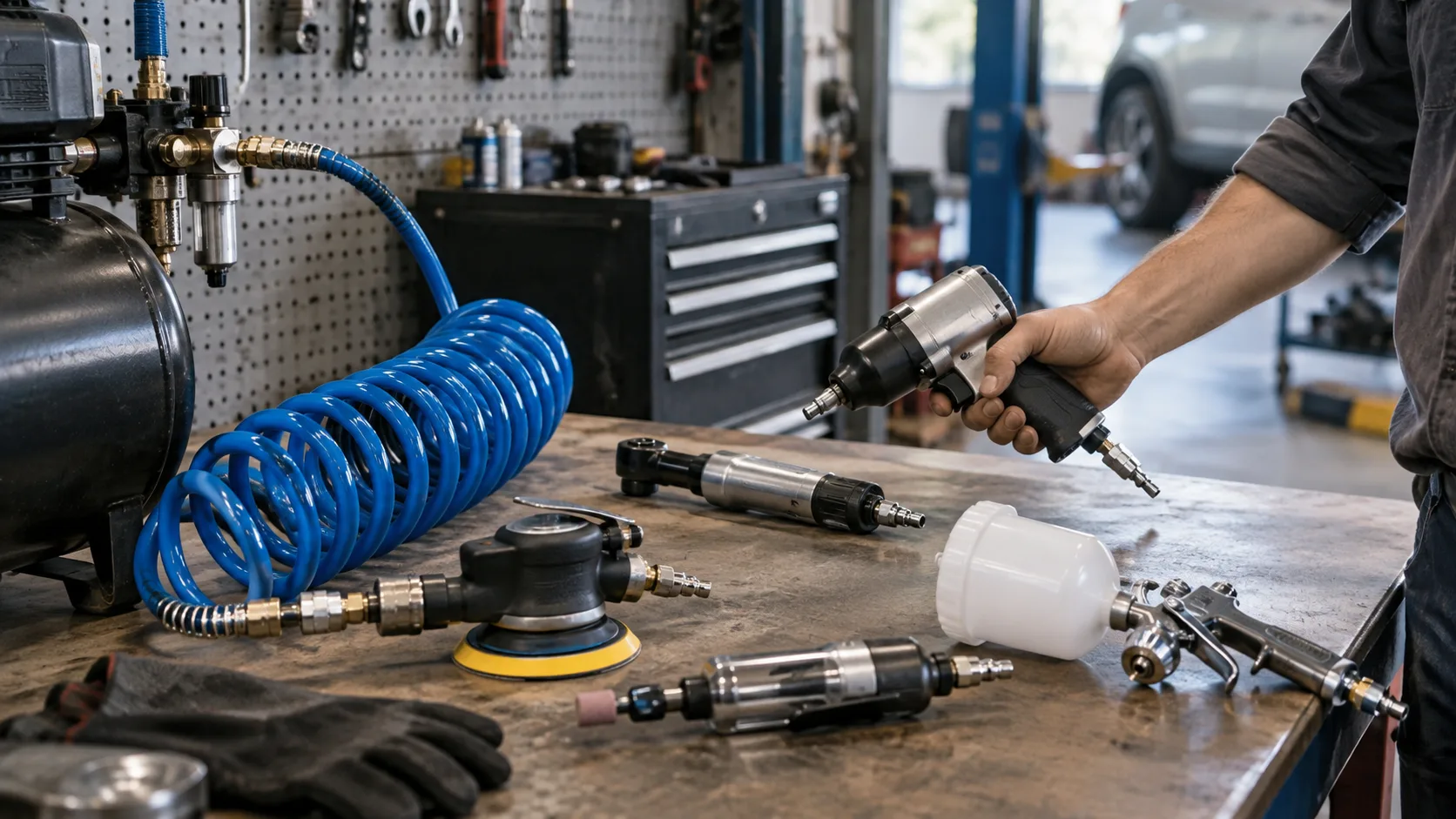
| Spiral PU hose | Workstations and air tools | Saves space and retracts after use |
| Anti-spark hose | Welding and metalworking equipment | Protects air lines from sparks and harsh conditions |
An OEM does not need to use one hose type everywhere. A more reliable design often uses different tubing materials in different areas of the machine.
Batch Consistency Reduces Production Problems
When building machines in batches, consistency is more important than a low sample price. Tube hardness, OD tolerance, color, roll length, wall thickness and packaging should remain stable. If these details change without notice, production teams may face leaks, wrong colors, fitting issues or extra sorting work.
Reliable pneumatic hose helps standardize assembly. It also makes spare parts and after-sales service easier because the same size and color can be reordered.
Color Coding Helps Technicians
Color coding is a simple way to make pneumatic systems easier to understand. A machine builder may use one color for main air supply, another for cylinder extension, another for retraction and another for vacuum or signal air. This reduces wiring mistakes and speeds up troubleshooting.
For distributors and OEMs, stable color options are also useful for branding, machine series standardization and customer documentation.
Cost of Low-Quality Hose
Cheap tubing can become expensive after installation. Small leaks waste compressed air every day. Kinked lines reduce machine speed. Early cracking creates warranty claims. Inconsistent dimensions slow down assembly. These problems cost more than the difference between a low-grade hose and a stable industrial-grade hose.
For OEM machine builders, the correct purchasing question is not only “What is the price per roll?” It should also be “Will this hose help us build the same reliable machine again and again?”
OEM Purchasing Checklist
- Confirm material: PU, PA nylon, PE, spiral or anti-spark.
- Check OD and ID tolerance.
- Test compatibility with your actual pneumatic fittings.
- Confirm working pressure and burst pressure information.
- Check bending performance and surface quality.
- Confirm color, roll length, labeling and packaging.
- Ask whether repeat orders will keep the same specification.
FAQ: Pneumatic Air Hose for OEM Builders
Why does tube OD tolerance matter?
Push-in fittings seal on the tube outside surface. If the OD is too large or too small, the fitting may leak, grip poorly or become hard to assemble.
Should OEM machines use PU or PA nylon tube?
PU is better for flexible and compact sections. PA nylon is better for stronger fixed lines. Many OEM machines use both depending on location.
Is color coding necessary?
It is not always required, but it helps assembly, maintenance and troubleshooting, especially in machines with many pneumatic circuits.
Final Thoughts
High-quality pneumatic air hose helps OEM machine builders create cleaner layouts, more stable air circuits and fewer after-sales problems. It supports reliable sealing, correct airflow, consistent assembly and better machine appearance.
HOMIPNEU supplies PU tube, PA nylon tube, PE hose, spiral polyurethane hose and anti-spark air hose for OEM machinery, distributors and industrial compressed air systems. For machine builders, stable hose quality is a small detail that protects the reliability of the whole product.