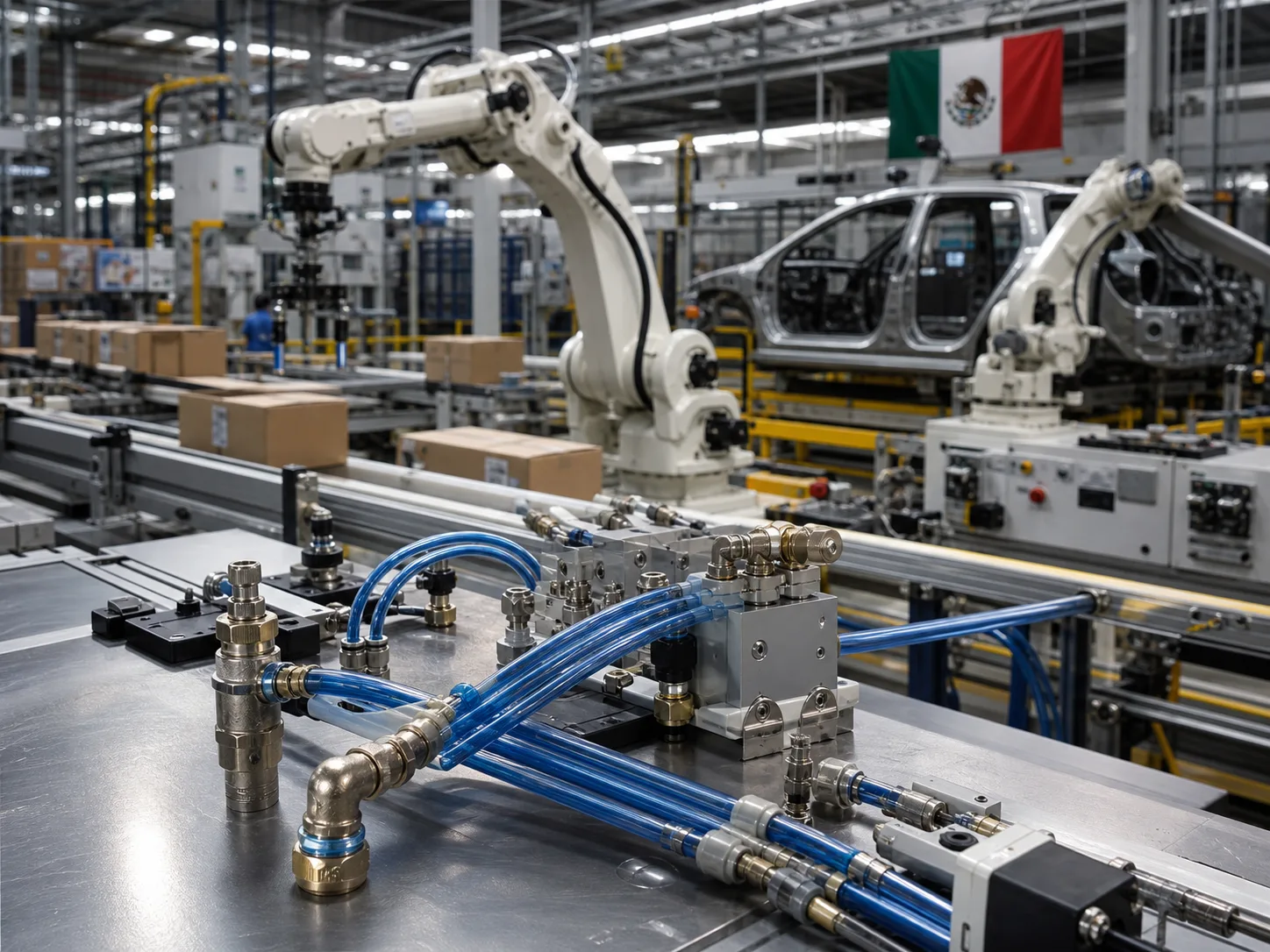
For OEM machine builders, pneumatic fittings are usually purchased in bulk. A single machine may use dozens of connectors, and a production run may require thousands. Because each fitting is small and inexpensive compared with major components, it is easy to treat it as a simple purchasing item. That can be a mistake.
Bulk pneumatic fitting quality affects assembly speed, air leakage, machine appearance, spare part support, and customer satisfaction. A fitting that looks acceptable in a catalog may create problems if dimensions vary, threads are rough, seals are inconsistent, or packaging is confusing. OEM buyers need a practical checklist before committing to a supplier.
Start with a Clear Product List
Before asking for a quote, prepare a clear list of fitting types. Include tube size, thread type, fitting shape, material, color, quantity, and any special requirements. For example, “6 mm tube, R1/8 male straight push-in fitting” is much clearer than “6 mm air fitting.”
Many purchasing mistakes happen because descriptions are too vague. Tube size and thread size describe different parts of the fitting. A 6-01 fitting and a 6-02 fitting may accept the same tube but use different thread sizes. If the thread standard is not specified, suppliers may quote different products.
Clear specifications also make it easier to compare suppliers fairly. Otherwise, one supplier may quote a different material or thread type, making the price comparison misleading.
Request Samples from the Production Standard
Samples should represent the same production quality as bulk goods. If sample fittings are specially selected but bulk fittings come from a different process or material, the evaluation is not useful. Ask the supplier whether the sample is from normal production.
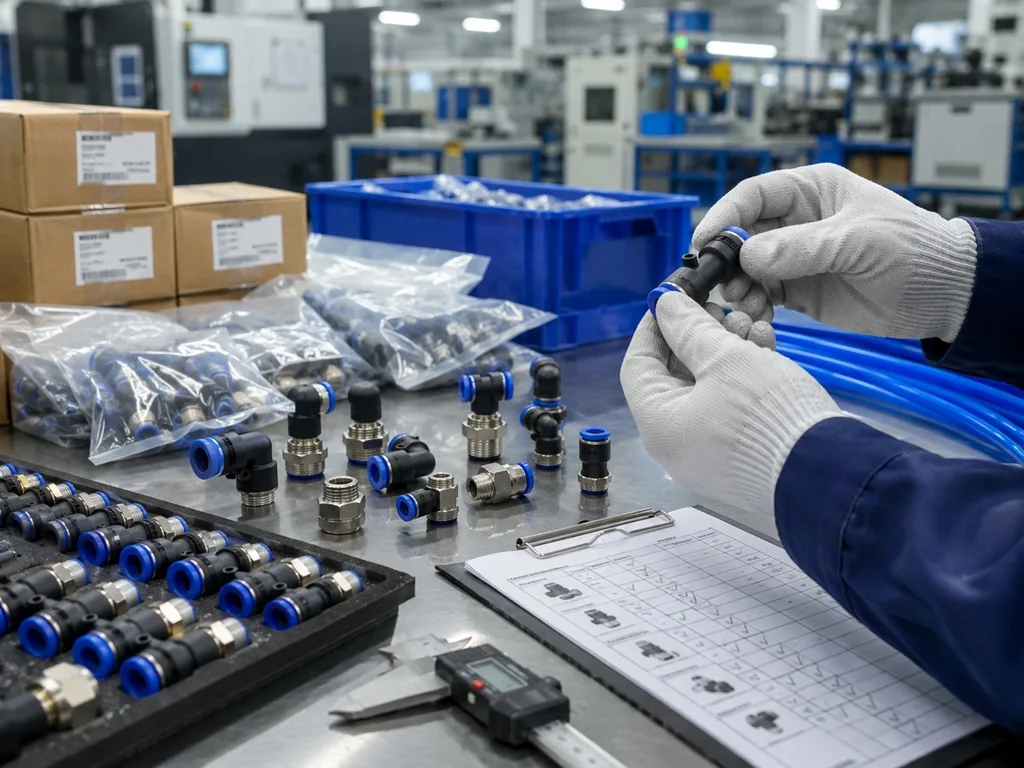
Test samples on real tubes and real ports whenever possible. Check insertion feel, release action, thread engagement, sealing, and appearance. If the fitting will be installed by workers on a production line, let the assembly team handle the sample too. They may notice issues that are not obvious from a desk review.
Pressure testing is important. A sample that looks good should still be tested under working pressure and, if possible, under movement or vibration conditions similar to the final machine.
Check Thread Accuracy
Thread problems can be expensive in bulk orders. A rough or inaccurate thread slows assembly and may damage ports. A wrong thread standard can make the whole batch unusable. Confirm whether the fitting uses BSPT, NPT, G, metric, or another thread type.
For export OEM projects, ask whether the supplier can support multiple thread standards in the same fitting series. This allows the machine builder to adapt to different markets without redesigning the entire pneumatic layout.
If pre-applied thread sealant is needed, confirm the sealant color, coverage, and temperature range. Good pre-coated threads can save assembly time, but inconsistent coating can create leaks or make installation difficult.
Evaluate Dimensional Consistency
In bulk purchasing, consistency matters more than one perfect sample. Tube insertion depth, collet shape, hex size, thread length, and body dimensions should remain stable across batches. If dimensions vary, assembly workers may experience inconsistent tightening or tube connection.
OEM buyers should ask for drawings or dimensional data for critical fittings. For high-volume projects, incoming inspection can check key dimensions from each batch. This does not need to be complicated, but it should focus on dimensions that affect sealing and assembly.
Look at Seal and Collet Quality
The internal seal and collet are what make push-to-connect fittings work. The tube must insert smoothly, lock securely, and release when the collet is pressed. If the collet is weak, the tube may pull out. If the seal is poor, the fitting may leak even with good tubing.
During sample testing, insert and remove the tube several times. Check whether the tube surface is excessively damaged. A fitting must grip the tube, but it should not destroy it during normal use. Also check whether the release action remains smooth after repeated operation.
Consider Packaging and Labeling
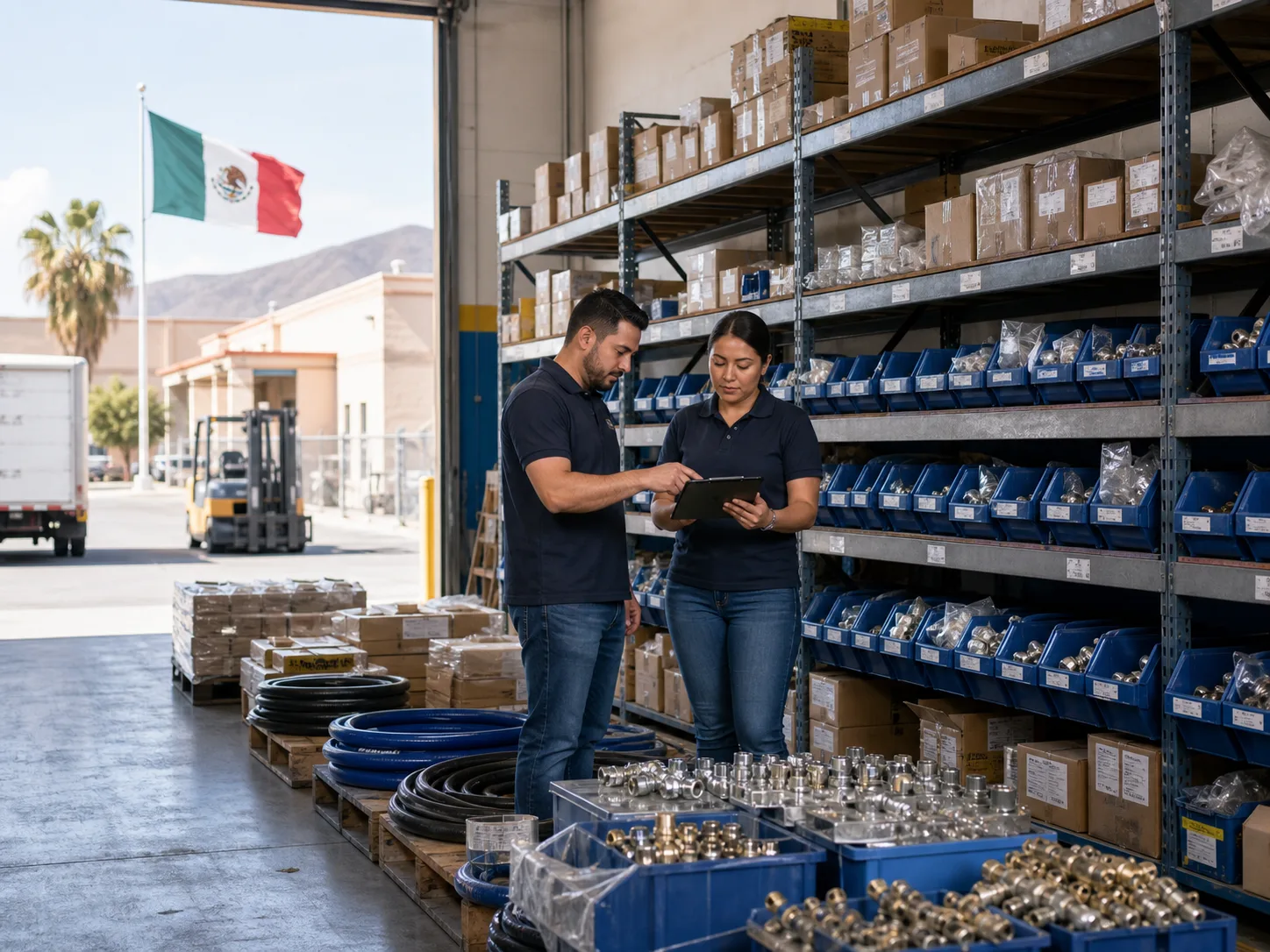
Packaging is not just a shipping detail. For OEM assembly, clear labeling reduces mistakes. Fittings with similar shapes but different thread sizes can be easily mixed if packaging is poor. Bags or boxes should show part number, size, quantity, and batch information.
For large buyers, custom labels or OEM packaging may be useful. If products will be stocked in a warehouse or supplied as spare parts, consistent packaging makes inventory control easier.
Ask About Long-Term Availability
OEM machines often remain in production for years. If a supplier changes the fitting design without notice, the machine builder may face compatibility or appearance issues. Ask whether the product series is stable and whether changes will be communicated in advance.
Long-term availability is especially important for spare parts. Customers may need replacement fittings years after purchasing the machine. A supplier with stable product lines can support after-sales service better than one that frequently changes models.
Compare Total Cost, Not Only Unit Price
The lowest unit price is not always the lowest total cost. If fittings leak, require extra inspection, slow assembly, or create customer complaints, the hidden cost becomes larger than the savings. A reliable fitting reduces labor and risk.
When comparing suppliers, include sample performance, delivery reliability, communication speed, packaging quality, and technical support. A slightly higher unit price may be worthwhile if it improves production stability.
Supplier Communication Matters
A good supplier should understand the difference between tube size and thread size, recommend suitable fitting types, and respond clearly to technical questions. If communication is unclear during quotation, it may become worse during production or after-sales support.
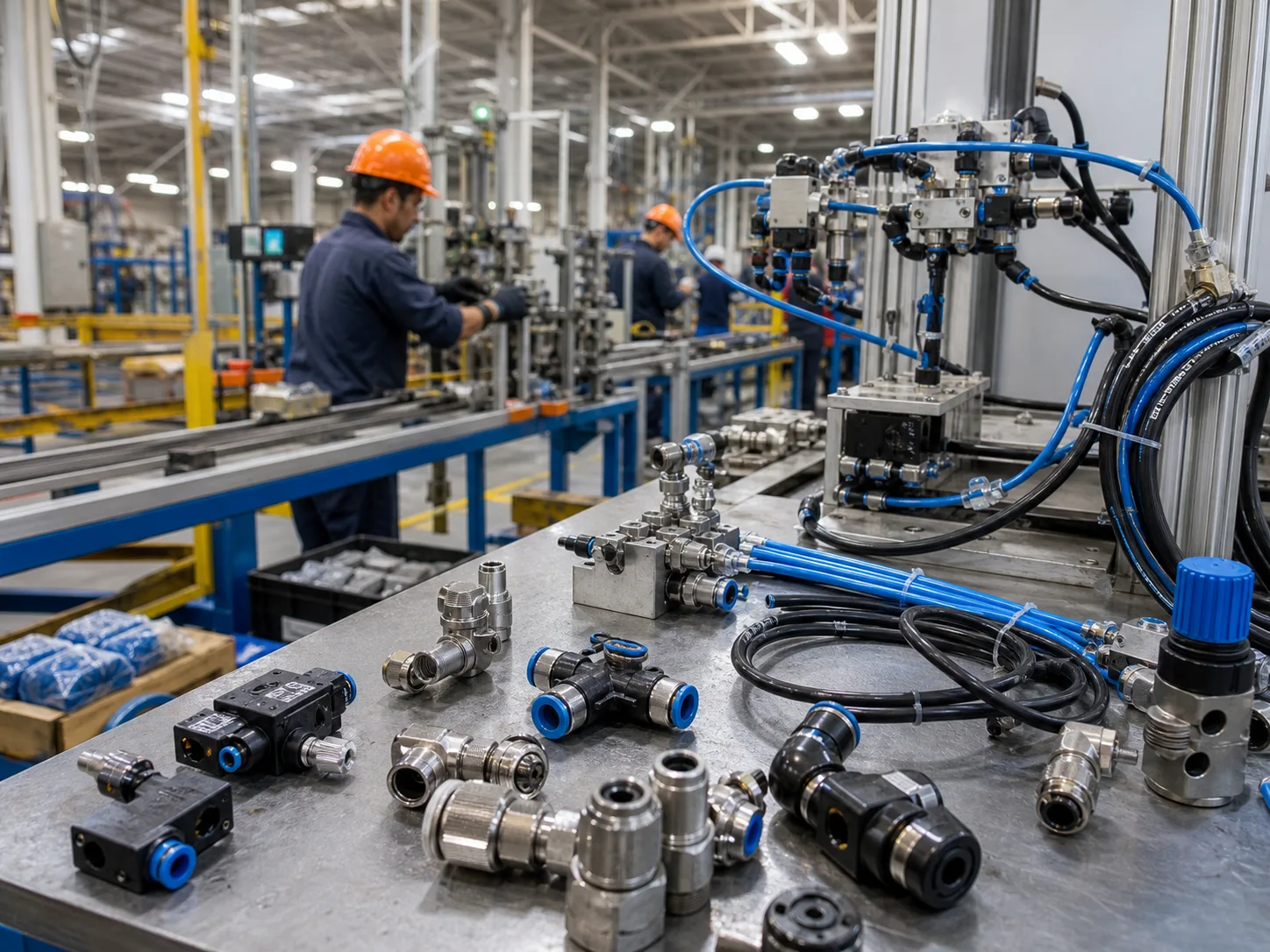
When reviewing a supplier’s pneumatic fittings range, check whether it covers the styles your machine needs: straight connectors, elbows, tees, reducers, plugs, bulkhead fittings, hand valves, and special connectors. A broader product range can simplify purchasing.
Final Thoughts
Bulk buying pneumatic fittings is not only about finding a low price. OEM buyers should check product specifications, samples, thread accuracy, sealing performance, dimensional consistency, packaging, and long-term supply. When these details are managed well, fittings become a stable part of the machine supply chain instead of a recurring source of small but costly problems.