Pneumatic air hose size has a direct effect on compressed air performance. Even when the material and pressure rating are correct, the wrong size can cause pressure drop, slow cylinder movement, weak air tool output or difficult installation. This is why tube size should be selected according to airflow, line length, fittings and the actual component being supplied.
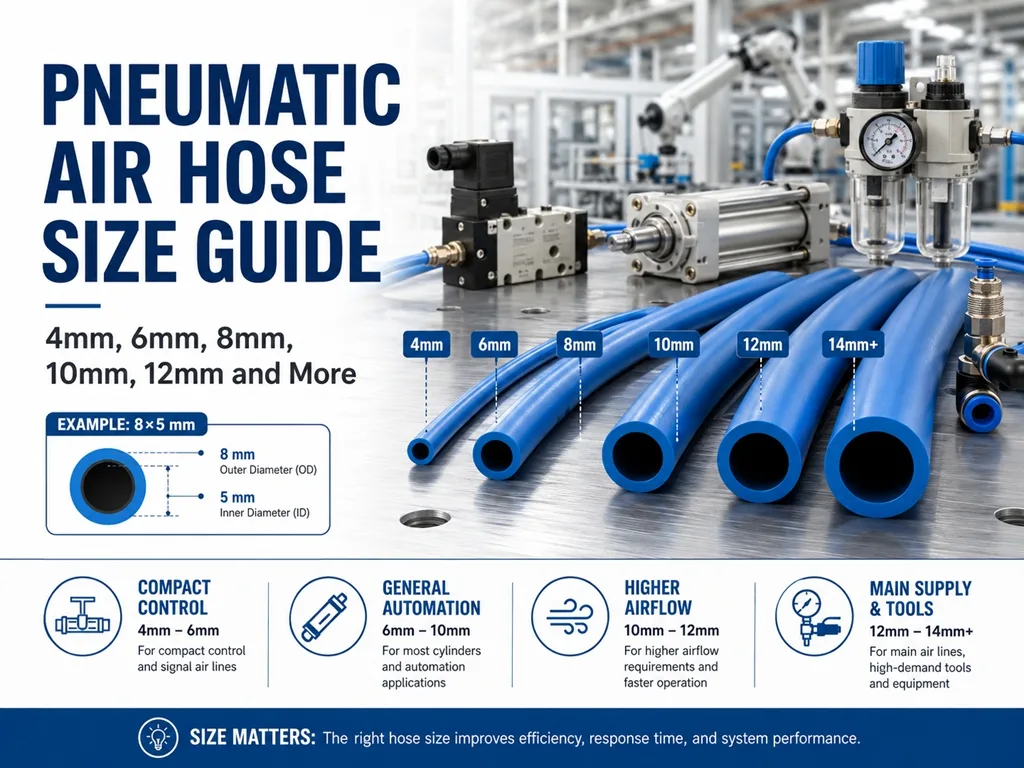
Common pneumatic tubing sizes include 4 mm, 6 mm, 8 mm, 10 mm, 12 mm and larger outside diameters. The outside diameter must match the fitting. The inside diameter controls how much air can flow through the hose.
OD and ID: The First Thing to Understand
Pneumatic tubing is often described by outside diameter and inside diameter, such as 6 x 4 mm or 8 x 5 mm. The first number is the outside diameter. The second number is the inside diameter.
Push-in fittings are normally selected by outside diameter, because the fitting grips and seals on the outer surface of the tube. Airflow is mainly affected by inside diameter. A tube with the same OD can have different ID if the wall thickness changes.
Quick Size Guide
| Tube OD | Typical Application | Selection Note |
|---|---|---|
| 4 mm | Signal lines, small valves, compact controls | Easy to route but limited airflow |
| 6 mm | Small cylinders, valve connections, general automation | Very common balance of size and flow |
| 8 mm | Medium cylinders, machine air lines, faster actuation | More airflow than 6 mm with manageable routing |
| 10 mm | Larger cylinders, short supply lines, pneumatic tools | Useful where flow demand is higher |
| 12 mm | Main machine air supply and higher-flow circuits | Check space, fitting size and bending radius |
| 14 mm and above | Main supply, high-flow tools, special equipment | Higher flow but less compact |
When to Use 4 mm Tubing
4 mm tubing is useful in compact pneumatic control systems. It is often used for signal air lines, small solenoid valves, vacuum controls, pilot circuits and miniature cylinders. It is easy to route through narrow spaces and keeps the machine layout clean.
The limitation is airflow. A 4 mm tube should not be expected to feed large cylinders or air tools over long distances. If response is slow, the tube may simply be too small.
When to Use 6 mm Tubing
6 mm tubing is one of the most common sizes in automation equipment. It works well for small and medium pneumatic cylinders, valve-to-cylinder connections, compact machine circuits and general control lines.
Many push-in fittings, speed controllers and valves are available in 6 mm size, which makes it convenient for machine builders and maintenance teams. It is often the first size considered for standard automation layouts.
When to Use 8 mm Tubing
8 mm tubing is selected when more airflow is required. It can improve cylinder response and reduce pressure drop compared with smaller sizes. It is common for medium cylinders, machine air lines and circuits that supply several components.
If a 6 mm line is causing slow movement or pressure loss, moving to 8 mm may help. The fitting and valve size should also be checked, because the smallest passage in the circuit controls the final flow.
When to Use 10 mm and 12 mm Tubing
10 mm and 12 mm tubing are used for higher air volume applications. They may connect air preparation units, main machine supply points, larger valves, pneumatic tools or multiple actuators.
Larger tubing can reduce pressure loss over longer routes, but it also takes more space and is less flexible. Do not oversize every line. Use larger sizes where the airflow demand justifies it.
Material Also Affects Size Selection
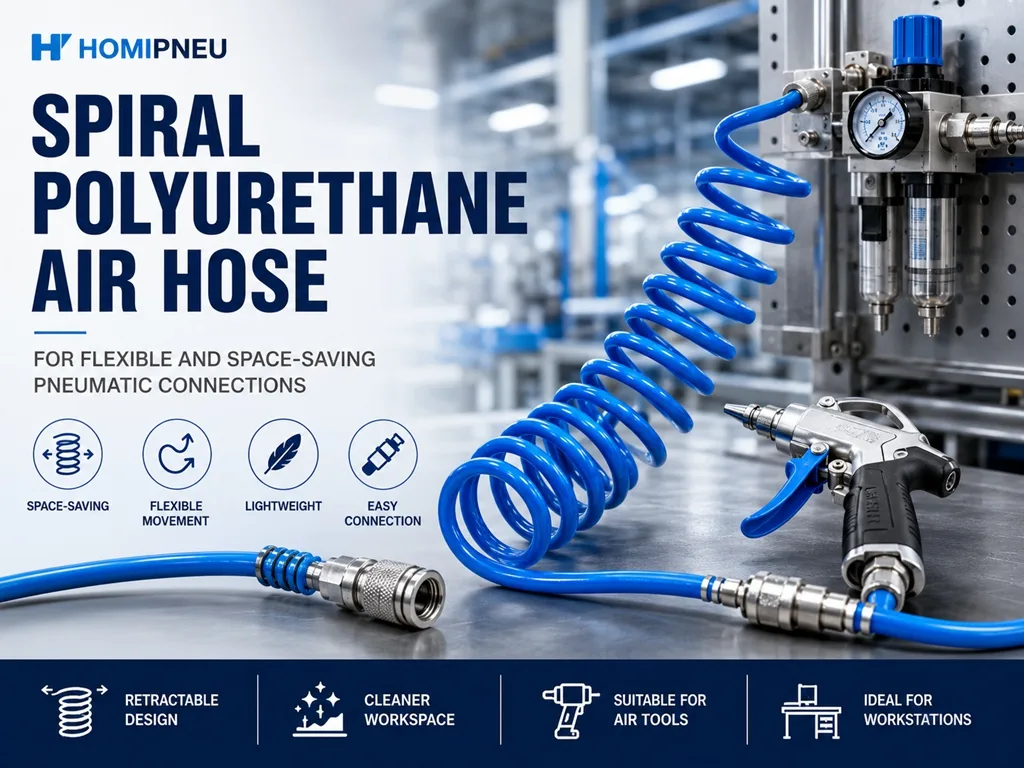
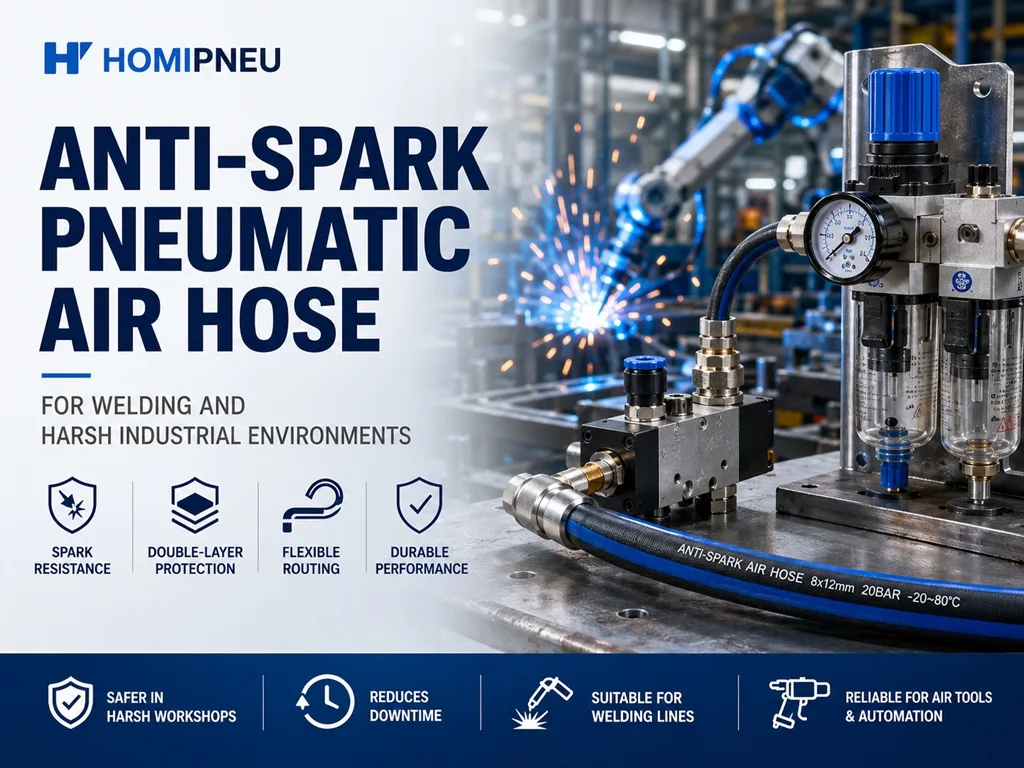
Size is not the only decision. PU tubing is flexible and useful in compact or moving areas. PA nylon tube is stronger and more stable for fixed routes. PE hose may be suitable for moderate-duty lines. Spiral PU hose is useful for workstations, while anti-spark hose is better near welding.
Two tubes with the same OD may behave differently if the material and wall thickness are different. Always check pressure rating, bending radius and application environment.
Pressure Drop and Line Length
The longer the hose, the more pressure loss it may create. A small inside diameter makes that problem worse. If a tool or cylinder is far from the air source, a larger tube may be needed to keep enough air volume at the end of the line.
For short control lines, smaller tubing may be fine. For main supply lines or long routes, larger tubing can improve stability and reduce compressor load.
Fitting Compatibility
The tube OD must match the fitting size. A 6 mm tube should be used with a 6 mm push-in fitting. If the size is wrong, the tube may leak or pull out. Cutting quality also matters: the tube end should be square, clean and free from scratches.
When selecting tubing for a machine, check the complete circuit: hose, pneumatic fittings, valves, speed controllers and cylinders. A larger hose will not help if another component has a small internal passage.
Common Sizing Mistakes
- Choosing tube size only by habit.
- Using 4 mm or 6 mm tubing for long high-flow routes.
- Oversizing small control lines and making the layout bulky.
- Ignoring the inside diameter and looking only at OD.
- Changing tube material without checking pressure rating.
- Using too many fittings and elbows without considering restriction.
FAQ: Pneumatic Air Hose Sizes
What is the most common pneumatic tube size?
6 mm and 8 mm OD tubing are very common in automation equipment. The best size depends on the cylinder, valve, line length and airflow demand.
Does a larger hose always improve performance?
No. A larger hose can reduce pressure drop, but it also takes more space and costs more. Use larger sizes where the airflow demand requires them.
Should I choose by OD or ID?
Choose fittings by OD and evaluate airflow by ID. Both numbers matter in a pneumatic system.
Final Thoughts
The right pneumatic air hose size helps maintain pressure, improve actuator speed and reduce energy waste. Start with the component airflow demand, line length and fitting size, then choose the material and diameter that fit the real application.
HOMIPNEU supplies PU, PA, PE, spiral and anti-spark pneumatic air hose in multiple sizes for industrial compressed air systems, automation equipment and OEM machine builders.