PU pneumatic tube is one of the most widely used air hose materials in modern automation equipment. It is flexible, lightweight, easy to cut and simple to install with push-in pneumatic fittings. For many compressed air systems, PU tubing offers the right balance between movement, durability and assembly speed.
In real machines, air lines rarely run in a perfect straight line. They pass through control cabinets, valve islands, cable chains, sliding tables, grippers, compact frames and service areas. A tube that is too stiff can create stress at the fitting. A tube that is too soft may kink or deform. PU pneumatic tube sits in the middle: flexible enough for tight layouts, but stable enough for many industrial air circuits.
What Is PU Pneumatic Tube?
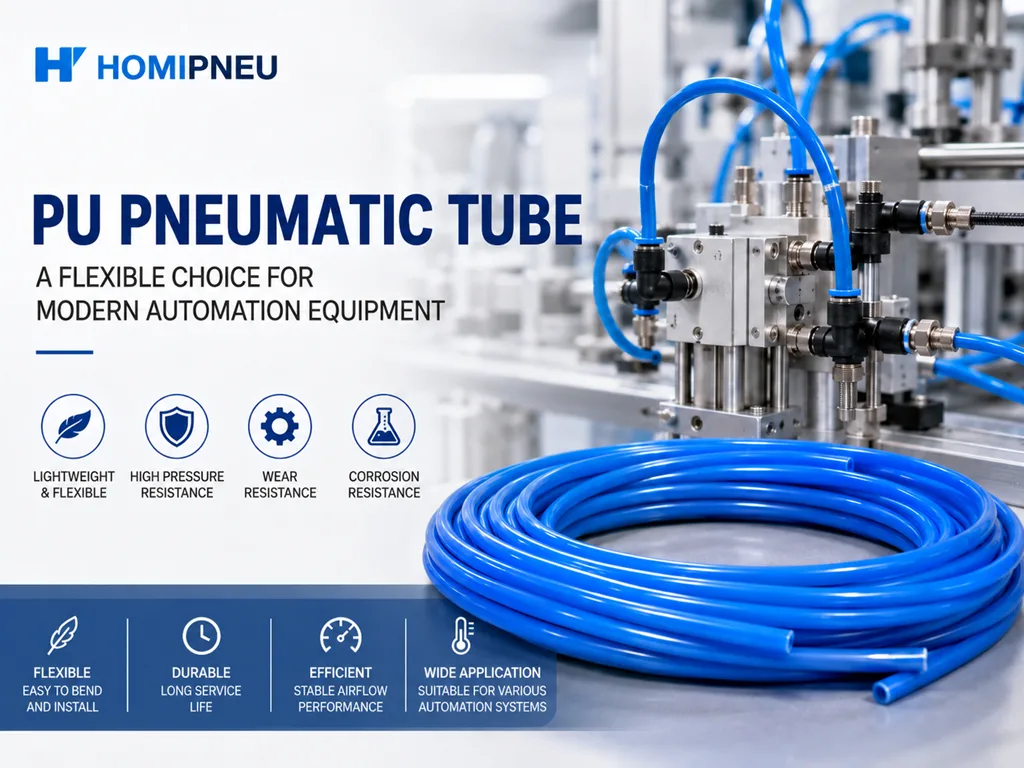
PU pneumatic tube is a polyurethane air tube used to transmit compressed air in pneumatic systems. It is commonly used with solenoid valves, pneumatic cylinders, air grippers, vacuum generators, air source treatment units, air tools and other automation components.
The tube is normally selected by outside diameter and inside diameter. Common outside diameters include 4 mm, 6 mm, 8 mm, 10 mm, 12 mm and 14 mm, depending on the air consumption and layout of the equipment. The outside diameter must match the push-in fitting. The inside diameter affects airflow and response speed.
PU tube is available in different colors and roll lengths, making it practical for machine assembly, maintenance stock and OEM production.
Why PU Tube Is Popular in Automation
The main reason PU tube is popular is flexibility. Compared with harder plastic tubing, polyurethane tubing bends more easily and can return to shape after normal movement. This helps machine builders route air lines through narrow spaces without forcing the tube into sharp bends.
Flexibility is useful in:
- Compact automation machines
- Packaging equipment
- Electronic assembly machines
- Pneumatic grippers and end effectors
- Sliding tables and moving fixtures
- Control cabinets with dense valve layouts
When a tube bends naturally, it reduces side load on the fitting. This can help prevent leakage caused by excessive pulling or poor alignment.
Light Weight Helps Moving Parts
Weight matters in high-speed automation. A heavy or stiff air hose can add resistance to moving components, especially on small cylinders, grippers, robotic end tooling or pick-and-place units. PU pneumatic tube is light enough for many of these applications.
Lower tube weight can reduce drag on moving assemblies and make routing easier inside cable carriers. It can also make maintenance simpler because technicians can handle and replace the tube quickly.
Easy Installation with Push-In Fittings
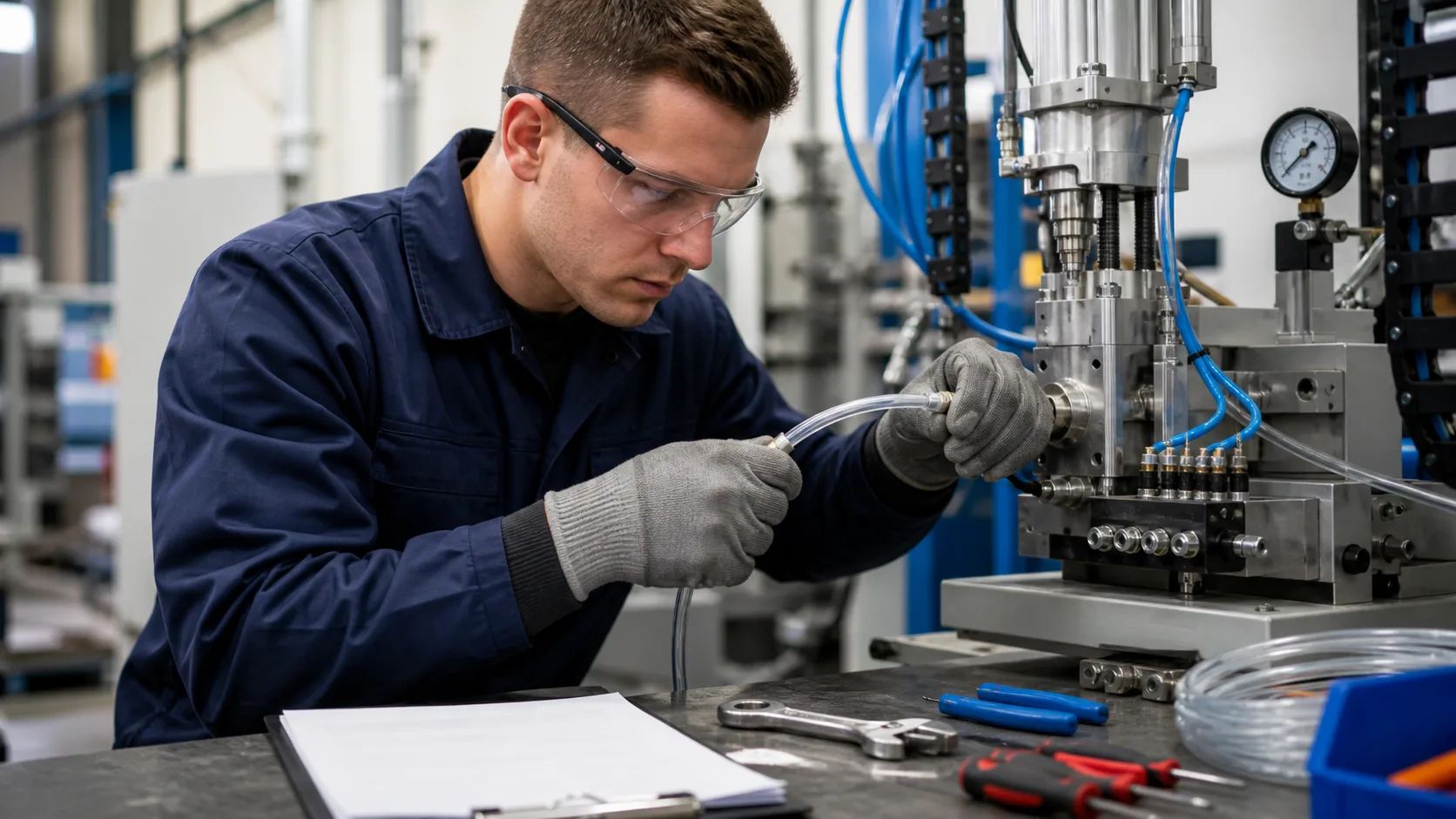
PU tubing works well with standard push-in pneumatic fittings when the tube size and fitting size match correctly. Installation is simple: cut the tube square, push it fully into the fitting and perform a light pull test. No complex tools are required for most connections.
For reliable installation:
- Use a proper tube cutter instead of scissors or pliers.
- Make sure the tube end is clean and square.
- Push the tube all the way into the fitting until it reaches the stop.
- Avoid scratches near the sealing area.
- Do not force the tube into a bend immediately beside the fitting.
If the tube end is angled, crushed or scratched, the fitting may leak even when the connection looks correct. Tube preparation is a small step, but it has a large effect on sealing.
Common PU Pneumatic Tube Sizes
The right size depends on airflow demand, line length and the component being supplied. Smaller tubes are easy to route and are often used for control signals, compact cylinders and short runs. Larger tubes deliver more air and may be better for bigger cylinders, longer runs or tools that need higher flow.
| Tube OD | Typical Use | Selection Note |
|---|---|---|
| 4 mm | Small control lines, compact pneumatic circuits | Easy to route, limited airflow |
| 6 mm | General automation, small cylinders, valve connections | Common size for compact machinery |
| 8 mm | Medium cylinders, air tools, machine air lines | Good balance of flow and flexibility |
| 10 mm and above | Higher air consumption, longer lines, larger actuators | Check space and fitting size carefully |
If a cylinder moves too slowly, do not only check the valve. The tube inner diameter, fitting bore and line length may also be restricting airflow.
Color Coding Makes Pneumatic Systems Easier to Maintain
PU pneumatic tube is available in many colors, such as blue, black, transparent, red and other options. Color coding is useful in machines with multiple air circuits. It helps engineers and maintenance teams identify lines quickly.
For example, a machine builder may use one color for supply air, another for cylinder extension, another for return lines and another for vacuum or signal air. A clear color standard reduces wrong connections and speeds up troubleshooting.
For OEM equipment, consistent tube color also improves machine appearance. A neat pneumatic layout gives customers more confidence in the overall build quality.
Where PU Pneumatic Tube Works Best
PU tube is suitable for many clean and dry compressed air applications. Common uses include:
- General automation equipment
- Pneumatic control cabinets
- Packaging machines
- Printing and labeling equipment
- Textile machinery
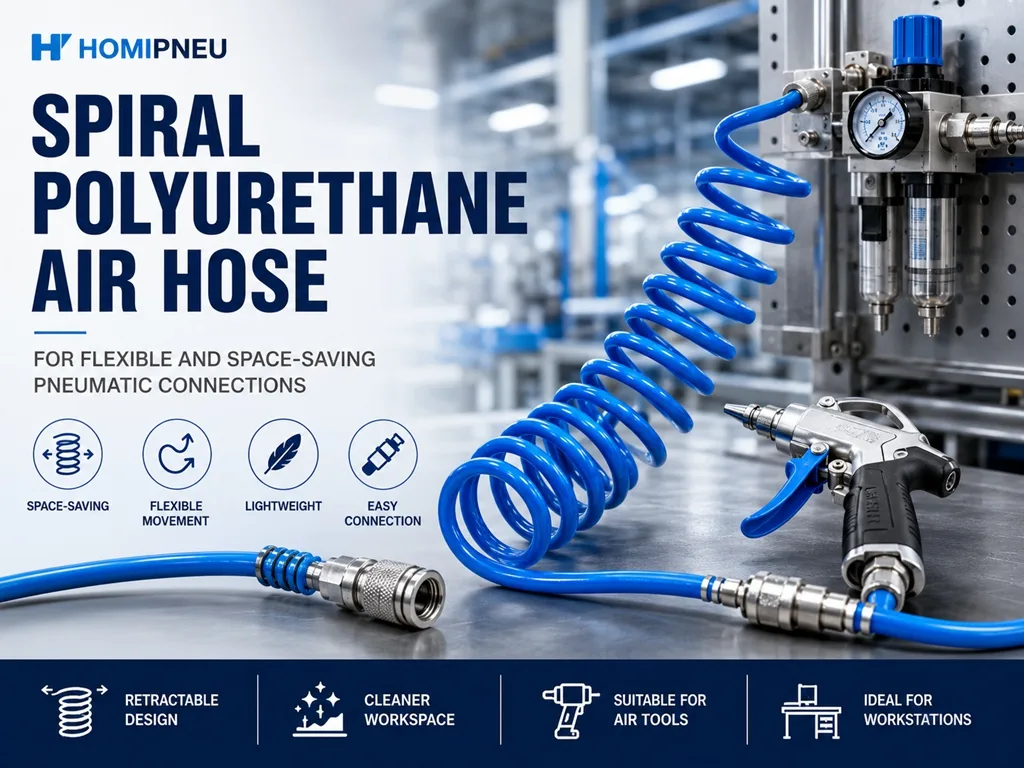
- Small air tools
- Electronic assembly machines
- Food packaging equipment where the air line is outside direct product contact
In these applications, PU tube gives a useful combination of flexibility, easy handling and clean routing.
When PU Tube May Not Be the Best Choice
PU pneumatic tube is versatile, but it is not the best choice for every environment. Standard PU tubing can be damaged by hot sparks, sharp edges, high temperature or aggressive chemicals. If the tube is used near welding equipment, anti-spark PU tube or double-layer protective hose should be considered.
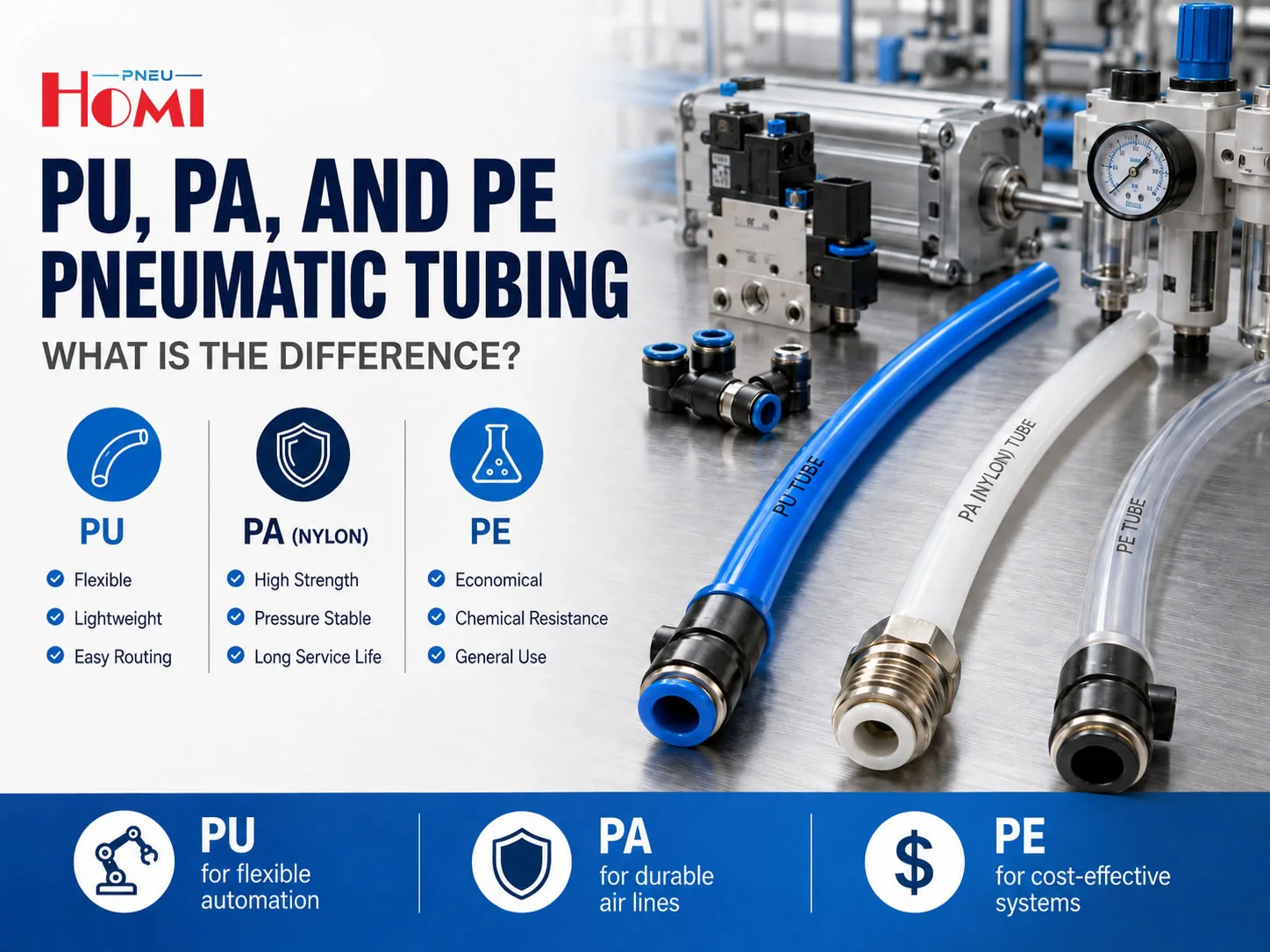
For long fixed air lines where the tube should remain very stable under pressure, PA nylon tubing may be more suitable. For lower-pressure and cost-sensitive applications, PE tube may be considered. The best material depends on the real operating conditions.
PU vs PA Nylon vs PE Tubing
| Material | Strength | Flexibility | Typical Use |
|---|---|---|---|
| PU | Good | High | Automation equipment, moving lines, compact layouts |
| PA nylon | High | Medium | Fixed runs, higher-pressure circuits, industrial machinery |
| PE | Moderate | Medium | Lower-pressure lines and economical air routing |
Many machines use more than one tubing material. PU may be used on moving or compact parts, while PA nylon may be used for longer fixed lines. Matching the material to the location is usually better than forcing one tube type across the whole machine.
How to Check PU Tube Quality
Low-quality PU tubing may look similar at first, but it can create problems during installation or after long use. Buyers should check more than color and price.
Important quality points include:
- Accurate outside diameter
- Consistent wall thickness
- Smooth inner and outer surface
- Good flexibility without easy kinking
- Stable color across batches
- Pressure rating and burst resistance
- Reliable sealing with push-in fittings
- Clean roll packaging and clear labeling
For OEM machine builders, dimensional consistency is especially important. If the outside diameter changes from batch to batch, the same fitting may seal well with one roll of tube and leak with another.
Common Mistakes When Using PU Pneumatic Tube
Most PU tube problems are caused by selection or installation errors rather than the tube material itself. Common mistakes include using a tube that is too small for the airflow demand, bending the tube too sharply, cutting the tube with the wrong tool, or using standard PU tubing in a spark-heavy environment.
Another common issue is side load on the fitting. If the tube is pulled sideways immediately after entering the fitting, the seal is stressed. A better fitting angle, longer tube length or improved routing can solve the problem.
OEM Purchasing Advice
For distributors and machine builders, stable supply is as important as technical performance. PU tube should be available in repeatable sizes, colors and packaging. The supplier should be able to provide consistent quality across batches, not only good-looking samples.
When buying PU pneumatic tube in bulk, confirm the size range, color options, roll length, labeling, pressure rating and compatibility with your existing pneumatic fittings. If the tube will be used in export machines, clear packaging and part identification can make after-sales service easier.
FAQ: PU Pneumatic Tube
Is PU pneumatic tube suitable for compressed air?
Yes. PU pneumatic tube is widely used for compressed air in automation systems, provided it is used within its rated pressure and temperature range.
What is the main advantage of PU tube?
The main advantage is flexibility. PU tube is easy to route through compact spaces and is useful where the air line bends or moves during machine operation.
Can PU tube be used with push-in fittings?
Yes. PU tube is commonly used with push-in pneumatic fittings. The tube outside diameter must match the fitting size, and the tube end should be cut cleanly.
Is PU tube better than nylon tube?
PU is better when flexibility is the priority. Nylon tube is often better when higher strength, stability and pressure resistance are required. The best choice depends on the application.
Final Thoughts
PU pneumatic tube is a practical choice for modern automation equipment because it is flexible, lightweight and easy to install. It helps create clean pneumatic layouts, reduces stress on fittings and supports fast machine assembly. When selected with the correct size, pressure rating and working environment, PU tubing can provide reliable service in many compressed air systems.
HOMIPNEU supplies PU pneumatic tubes for industrial compressed air systems, automation equipment, OEM machinery and air tools. With multiple size and color options, HOMIPNEU PU tubing helps customers build cleaner, more flexible and more reliable pneumatic circuits.