Introduction
Pneumatic cylinders are used in automation because they turn compressed air into simple, repeatable motion. They push, pull, lift, clamp, stop, guide, index, and position parts in machines that need fast movement without a complex electric actuator. A small cylinder may only move a product guide. A larger cylinder may drive a transfer unit, press fixture, or packaging mechanism.
Choosing a pneumatic cylinder looks easy when the catalog only shows bore, stroke, and thread size. In real machines, the decision is wider. Load direction, side force, speed, mounting space, cycle rate, air pressure, sensor needs, guiding accuracy, and maintenance access all affect long-term performance. A cylinder that is oversized wastes air. A cylinder that is undersized may move weakly, wear early, or fail to complete the stroke.
HOMIPNEU’s pneumatic cylinder category includes standard cylinders, compact cylinders, guide cylinders, rodless cylinders, rotary actuators, grippers, stopper cylinders, and clamp cylinders. This guide explains how to choose between these groups in a practical way.
Start with the Work the Cylinder Must Do
Before choosing a model, define the movement clearly. Is the cylinder pushing a product, clamping a part, lifting a fixture, stopping a pallet, rotating a small arm, or guiding a precision slide? The motion tells you which cylinder family makes sense.
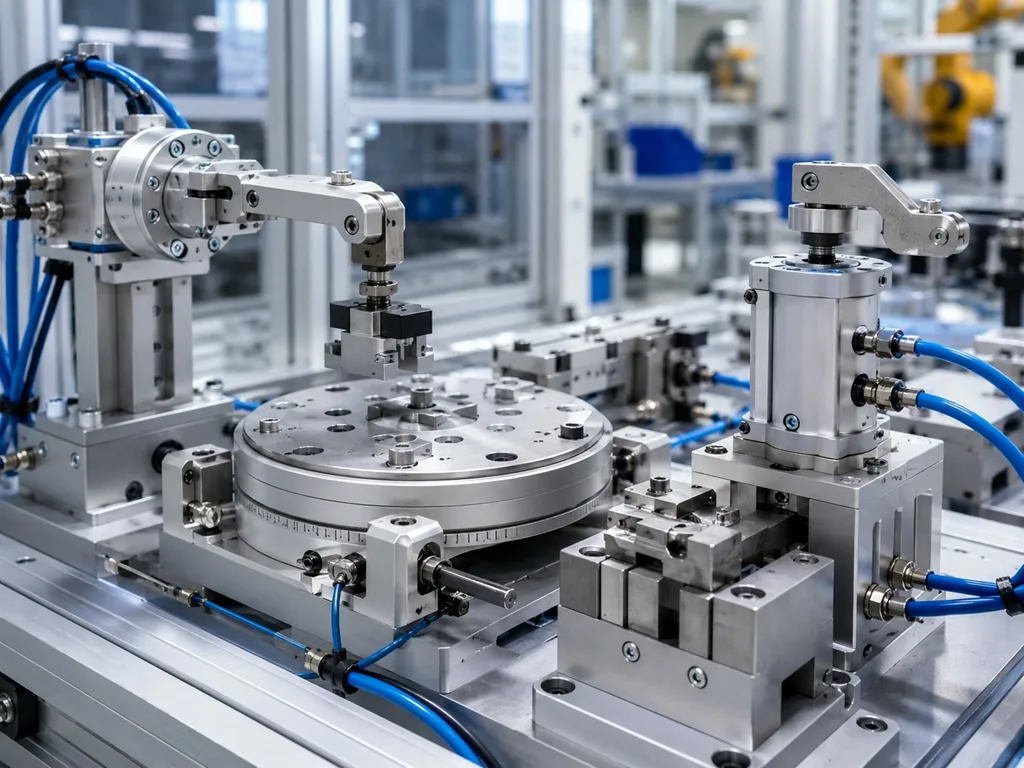
A standard linear cylinder is suitable for general push and pull movement. A compact cylinder is useful when the machine has limited space. A guided cylinder is better when the load needs anti-rotation support. A rodless cylinder is practical for long strokes where a normal piston rod would take too much space. A rotary actuator is used when the motion is angular instead of linear.
For example, a simple transfer pusher may use an SC standard tie rod pneumatic cylinder. A compact stopper in a packaging line may use a small compact cylinder. A precision pick-and-place slide may need an MXQ precision slide table cylinder rather than a plain round cylinder.
Check Bore Size and Output Force
Bore size controls theoretical force. A larger bore gives more force at the same air pressure, but it also consumes more air and takes more space. Buyers sometimes choose a larger bore “to be safe,” but excessive force can damage parts, increase impact, and make speed control harder.
Start by estimating the required load and friction. Then add a reasonable safety factor. The available plant air pressure should be based on the real machine supply, not only the compressor setting. If the machine often runs at 0.5 MPa, do not calculate force only at 0.8 MPa.
Stroke length also matters. A long stroke with a small rod may be more sensitive to bending. If the cylinder pushes a side-loaded object, the guide structure should carry that load instead of forcing the piston rod to act as a guide.
Choose the Right Cylinder Style
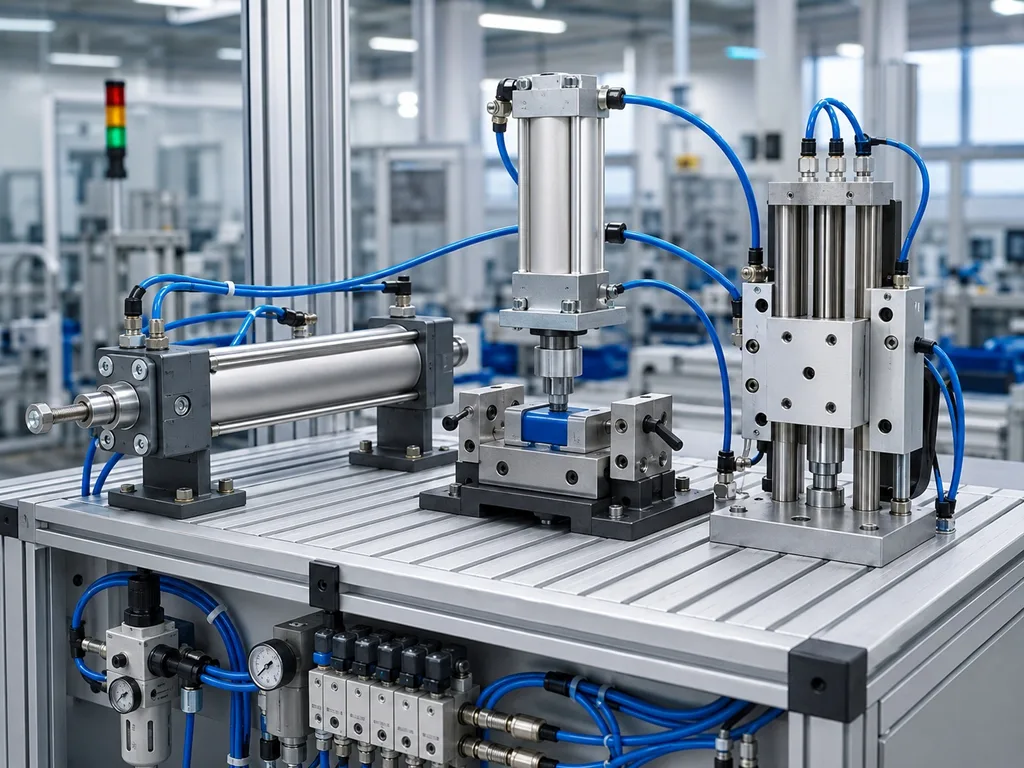
Standard cylinders are common in general automation. Products such as the DNC ISO 15552 standard pneumatic cylinder, SC tie rod cylinders, SU cylinders, and SI cylinders are used where a strong, familiar cylinder body is needed.
Compact cylinders, including SDA compact pneumatic cylinders, CQ2B cylinders, CQSB cylinders, and CDU free mount cylinders, are useful where installation length is limited. They are often used in fixtures, packaging modules, and small machine stations.
Guided cylinders and slide table cylinders combine cylinder motion with built-in guide rails or guide rods. They are useful where load stability and anti-rotation matter. Rodless cylinders are used for longer strokes and space-saving transfer motion.
Think About Mounting and Alignment
Many cylinder problems begin with poor alignment. If the piston rod is forced to push at an angle, seals and bearings wear faster. The cylinder may still work during commissioning, but after repeated cycles it can develop leakage, sticking, or rod wear.
Mounting style should match the movement. Foot mounts, flange mounts, clevis mounts, trunnion mounts, and direct body mounting all support different mechanical layouts. If the driven part has slight misalignment, a floating joint or rod end bearing may help protect the cylinder.
For compact equipment, leave enough space for fittings, sensors, adjustment screws, and maintenance access. A cylinder that fits in CAD but cannot be serviced on the real machine will create problems later.
Speed and Cushioning
Cylinder speed depends on air pressure, valve flow, tube size, fitting size, load, exhaust flow, and flow control settings. If a cylinder is too slow, the issue may not be the cylinder itself. The solenoid valve, tubing, or exhaust silencer may be limiting flow.
Fast cylinders need controlled deceleration. Cushioning reduces impact at the end of stroke and protects the machine frame. Some cylinders include adjustable cushions, while smaller compact cylinders may rely more on external speed control or mechanical stops.
If the machine needs high speed and repeatable stopping position, test the cylinder under real load. Catalog speed ranges cannot replace machine-level testing.
Sensors and Position Feedback
Many automation systems need to confirm cylinder position. Magnetic pistons allow reed switches or solid-state sensors to detect end positions. This is useful for PLC logic, safety interlocks, and fault detection.
When selecting a cylinder, check whether a magnet is included and which sensor slots are available. Sensor mounting should be accessible after installation. If the cylinder is hidden inside a machine frame, adjusting the switch later may be difficult.
For OEM machines, standardizing sensor types across cylinder families helps reduce spare parts and wiring mistakes.
Air Quality and Maintenance
Pneumatic cylinders need clean, stable compressed air. Moisture and particles can damage seals and reduce service life. If several cylinders in the same machine start moving slowly, check the air preparation system before replacing cylinders one by one.
Maintenance teams should inspect tube connections, speed controllers, rod surfaces, mounting bolts, and air leakage. A small leak at a fitting or valve can reduce cylinder force and make the movement inconsistent.
The best cylinder choice is also the one that can be maintained. Leave enough space to replace a fitting, adjust a sensor, or remove the cylinder without dismantling half the machine.
Common Selection Mistakes
One common mistake is choosing a cylinder only by bore and stroke. Those two values are important, but they do not describe mounting, guiding, sensor needs, speed, or load direction. Two cylinders with the same bore and stroke can behave very differently in the same machine if the installation details are different.
Another mistake is ignoring the driven mechanism. If the slide, fixture, or product guide has high friction, the cylinder may need more force than expected. If the load is not guided well, a larger cylinder will not solve the root problem. It may only push harder against a misaligned mechanism and wear out faster.
Buyers should also avoid vague purchasing descriptions. A clear request should include series, bore, stroke, action type, magnetic piston requirement, mounting style, port size, and quantity. For OEM orders, it is also useful to confirm packaging, labeling, and whether replacement seals or sensors are needed.
Related Pneumatic Products
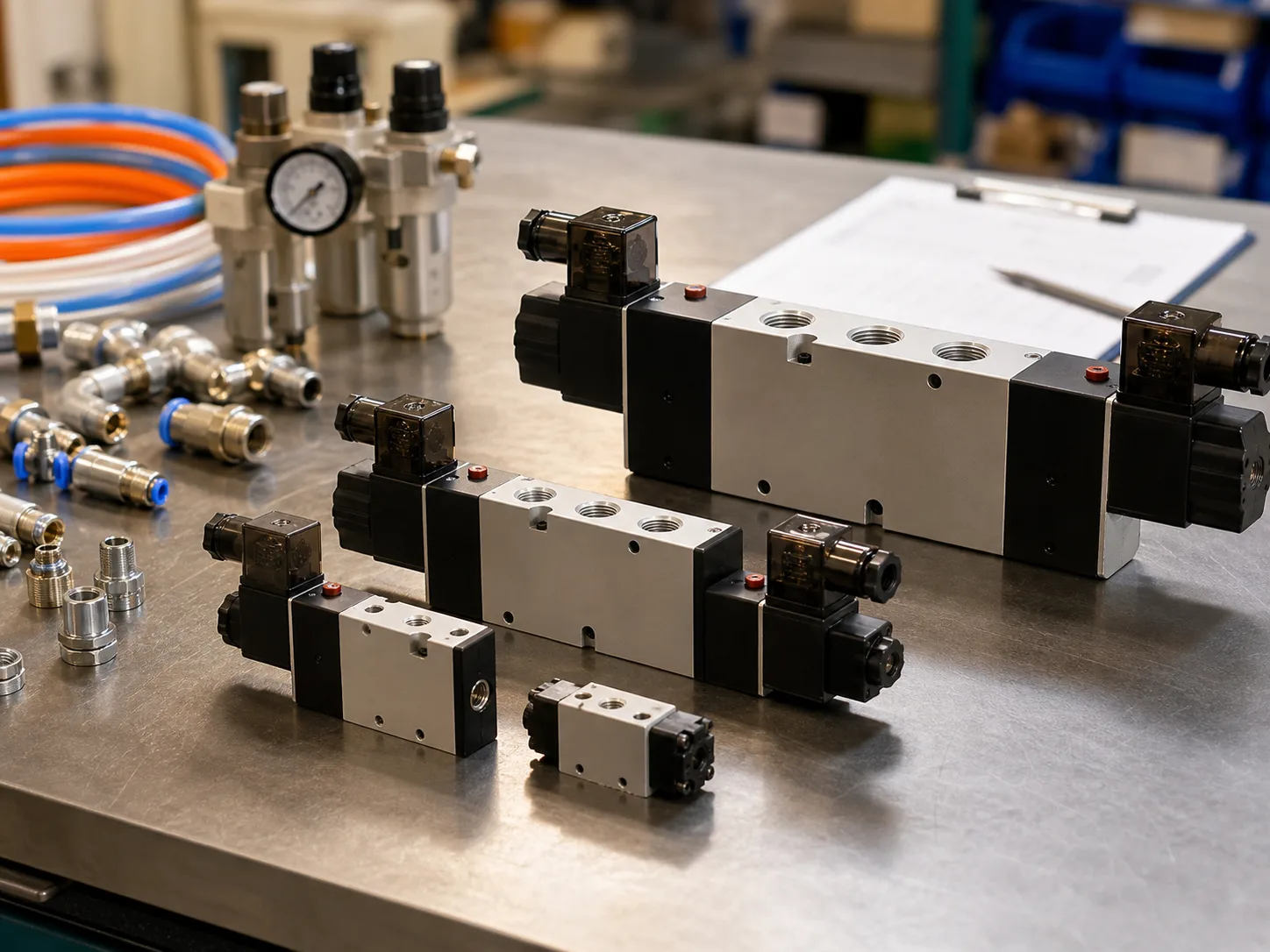
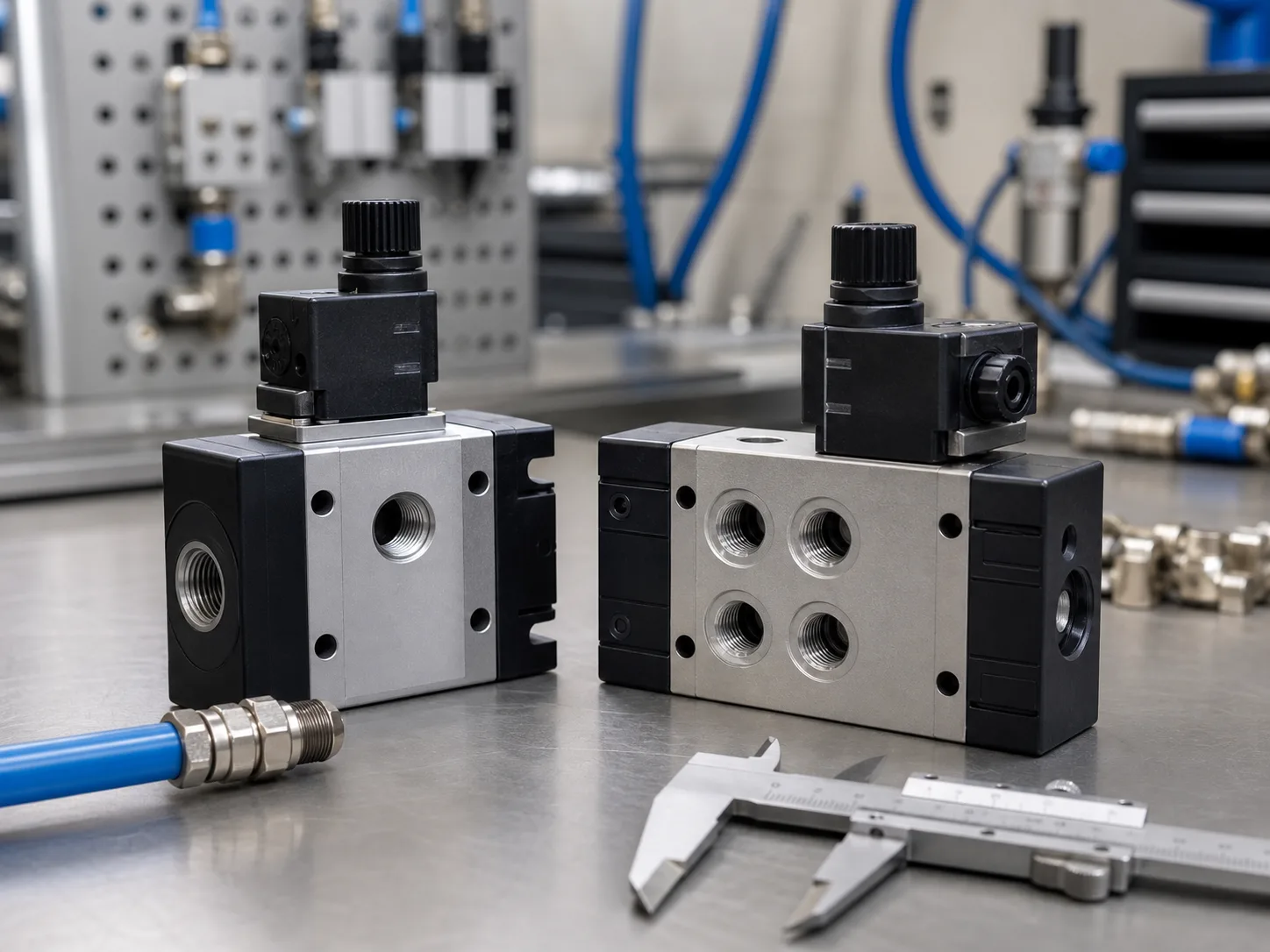
Pneumatic cylinders often work with solenoid valves, pneumatic fittings, PU tubes, speed controllers, silencers, and air source treatment units. A stable cylinder system depends on the whole air circuit.
For general automation, review standard cylinders such as DNC, SC, SU, and SI series. For compact machinery, consider SDA, CQ2B, CQSB, or CDU series. For precision movement, guided cylinders and slide tables may be more suitable.
FAQ
How do I choose a pneumatic cylinder bore size?
Calculate the force needed for the load, then compare it with cylinder force at the real working pressure. Add a safety factor, but avoid oversizing too much.
What is the difference between standard and compact cylinders?
Standard cylinders are suitable for general industrial motion and usually provide more mounting options. Compact cylinders save space and are often used in fixtures and small machine modules.
When should I use a guided cylinder?
Use a guided cylinder when the load needs anti-rotation support, better alignment, or side-load resistance. Do not rely on a plain piston rod to carry side force.
Why does a pneumatic cylinder move slowly?
Common causes include low air pressure, undersized valves, small tubing, restricted exhaust, poor lubrication, seal wear, or excessive load.
Can one cylinder type fit every automation machine?
No. Different machines need different cylinder styles depending on stroke, load, space, guiding accuracy, speed, and control requirements.
Conclusion
Choosing pneumatic cylinders is not only a bore and stroke decision. The best choice matches force, movement, mounting, guiding, speed, air quality, and maintenance needs. When the cylinder family fits the real application, the machine runs more consistently and becomes easier to support over its service life.