Quick-Tight vs Push-to-Connect Pneumatic Fittings Guide

Quick-Tight vs Push-to-Connect Pneumatic Fittings Guide

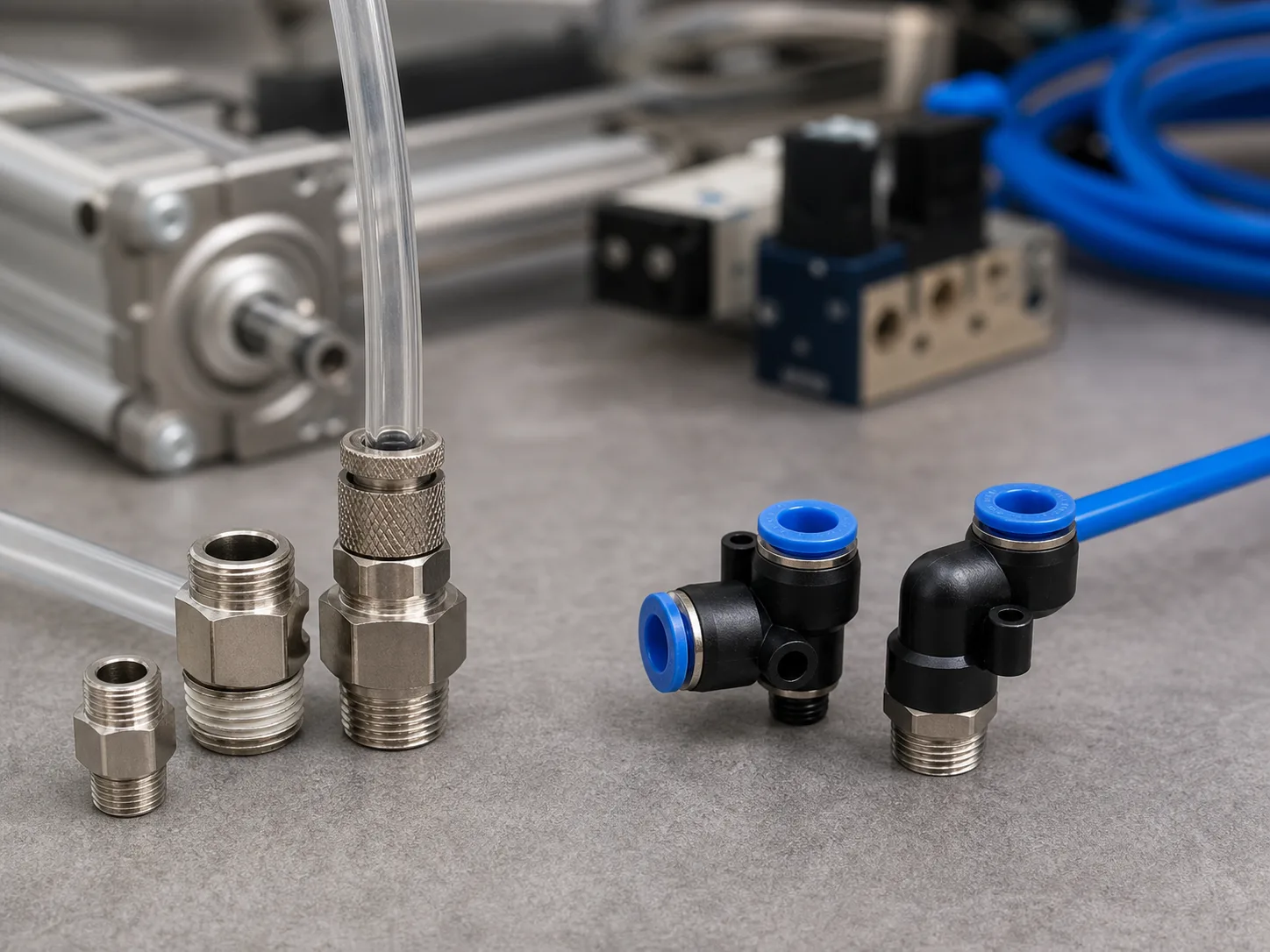
Quick-Tight and push-to-connect fittings can perform many of the same routing jobs, including straight tube connection, threaded port connection, 90-degree direction change, branching, tube-size reduction and panel mounting. Their similar model shapes do not mean that the two families should be mixed without review. Installation structure, body construction, dimensions, thread options and published operating scope must be checked at the product level. This guide compares standard push-to-connect models with the HOMIPNEU KL Quick-Tight range. It does not assume that one connection family is universally better. The correct choice is the one that matches the approved tube, thread, material, drawing, operating conditions, assembly method and maintenance plan. What Push-to-Connect Means A standard push-to-connect fitting accepts a prepared tube through a release collar and holds it with an internal gripping and sealing structure. For example, the PC male straight push-to-connect fitting lists a stainless steel lock claw, O-ring or PTFE sealing, nickel-plated brass, and PU or nylon tubing. The tube can be released after the circuit is depressurized by pressing the collar and pulling the tube straight out. Push-to-connect describes the tube…
Views: 72     2026-07-28
Pneumatic Fitting Shapes: A Machine Layout Selection Guide

Pneumatic Fitting Shapes: A Machine Layout Selection Guide

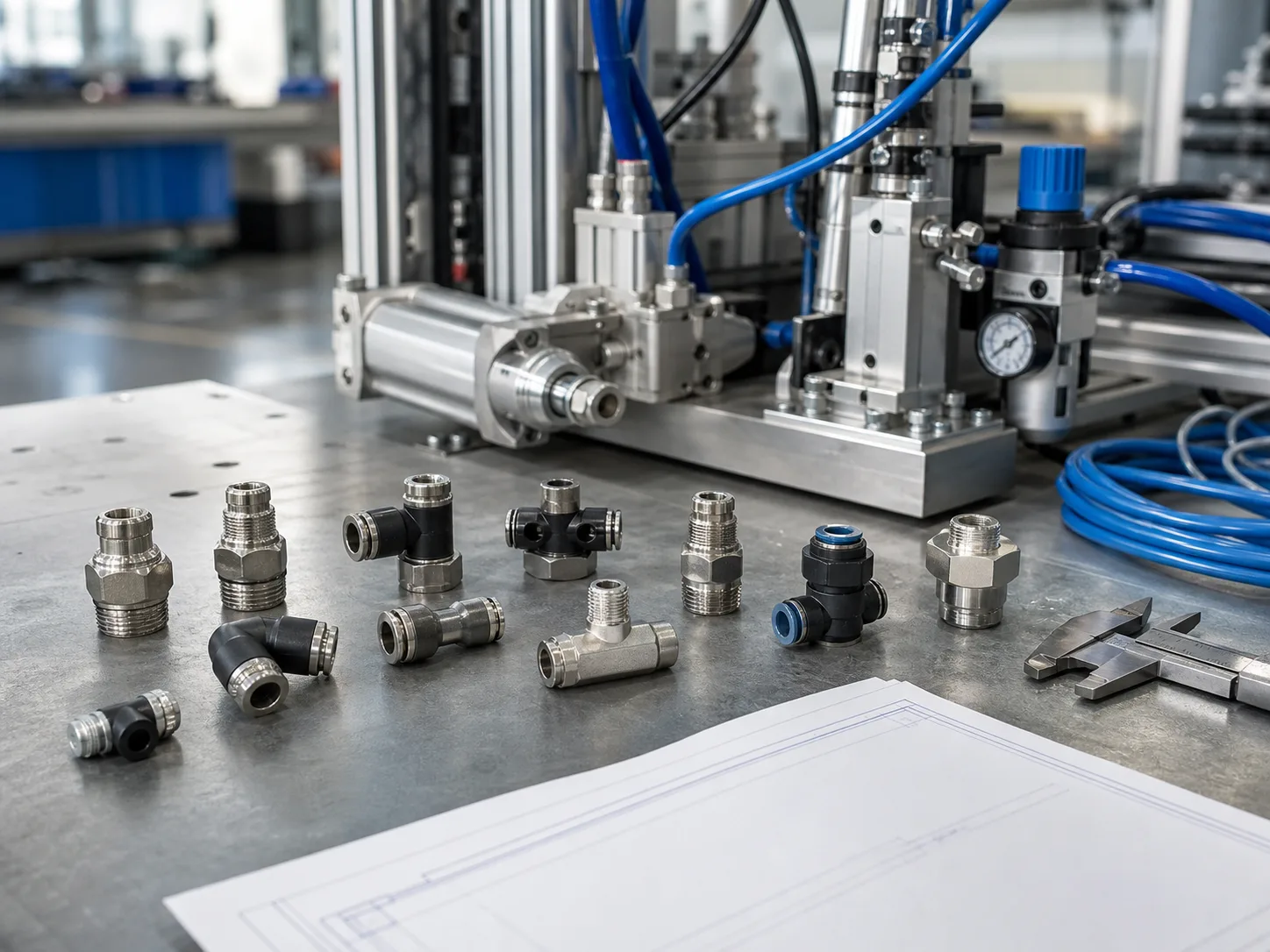
Selecting a pneumatic fitting begins with the route that compressed air must follow. Tube size and thread matter, but the wrong connector shape can still create sharp tube bends, obstruct nearby components, complicate panel access, or add unnecessary joints. A useful layout therefore starts by identifying what each connection must do: enter a port, extend a tube, turn a corner, split a supply, change tube size, cross a panel, isolate a line, or regulate exhaust flow. This guide compares the main fitting shapes available in the HOMIPNEU pneumatic fittings range. It focuses on machine layout and service access rather than treating every connector as an interchangeable air fitting. Start with the Connection Task Layout Task Typical Shape Representative Model Main Check Connect tube to an equipment port Male straight PC Tube OD, thread and installation height Extend a tube run Straight union PU Equal tube outside diameter Change tube size inline Straight reducer PG Both tube sizes and downstream flow Turn from a threaded port Male elbow PL Port clearance and tube direction Clear an obstruction Extended male elbow PLL…

Views: 77     2026-07-28
C Type Quick Fittings Explained: Complete Series Guide

C Type Quick Fittings Explained: Complete Series Guide

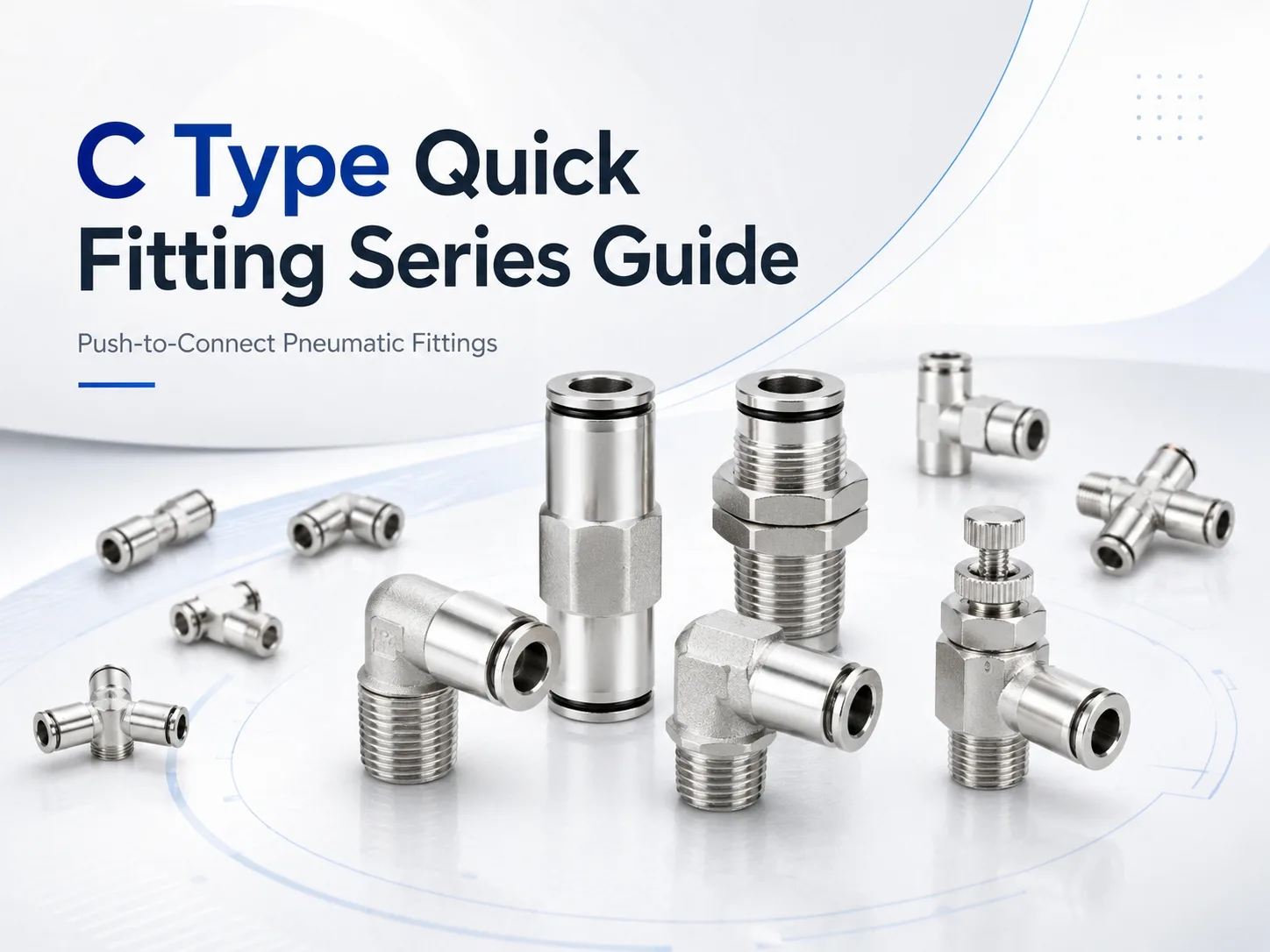
Pneumatic quick fittings are small components, but their connection geometry determines how easily an air circuit can be assembled, routed, serviced, and expanded. A straight union cannot replace a threaded elbow, an equal tee cannot perform the same job as a reducing tee, and a standard connector cannot provide the adjustment function of a throttle valve. This guide compares 17 HOMIPNEU push-to-connect fitting models selected from the current pneumatic fitting range. It covers tube-to-tube connectors, threaded adapters, branch fittings, panel connections, and an adjustable airflow fitting. For a broader overview before comparing specific models, see our guide to pneumatic fitting types. What the C Type Selection Scope Includes The products in this guide share a practical purpose: connecting PU or nylon tube in compressed-air systems with quick installation. Their product pages state air as the operating fluid, a working pressure range of 0 to 1.0 MPa, and a temperature range of 0 to 60 degrees C. Depending on the exact model, the connection may be tube-to-tube, tube-to-thread, or panel mounted. Nine linked pages explicitly identify the product as part of…

Views: 105     2026-07-24
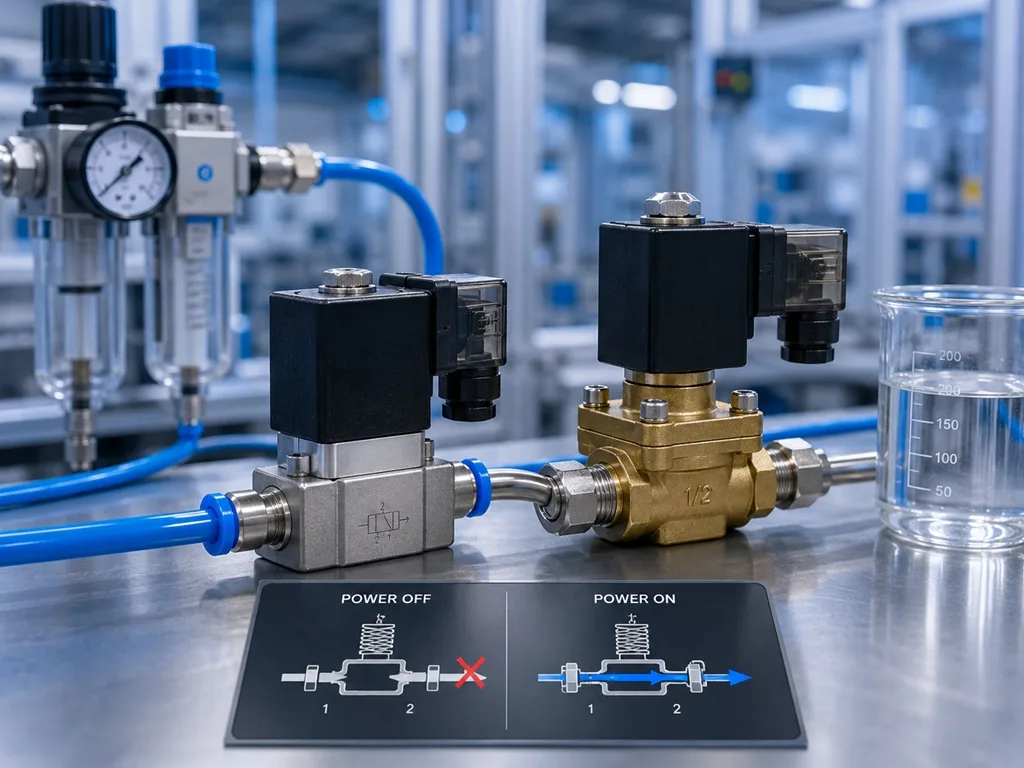
2/2 Way Normally Closed Solenoid Valves Explained

2/2 Way Normally Closed Solenoid Valves Explained

Understand how 2/2 way normally closed solenoid valves work, where they are used, and how to choose the right model for air, water, oil, and automation systems.

Views: 121     2026-06-20