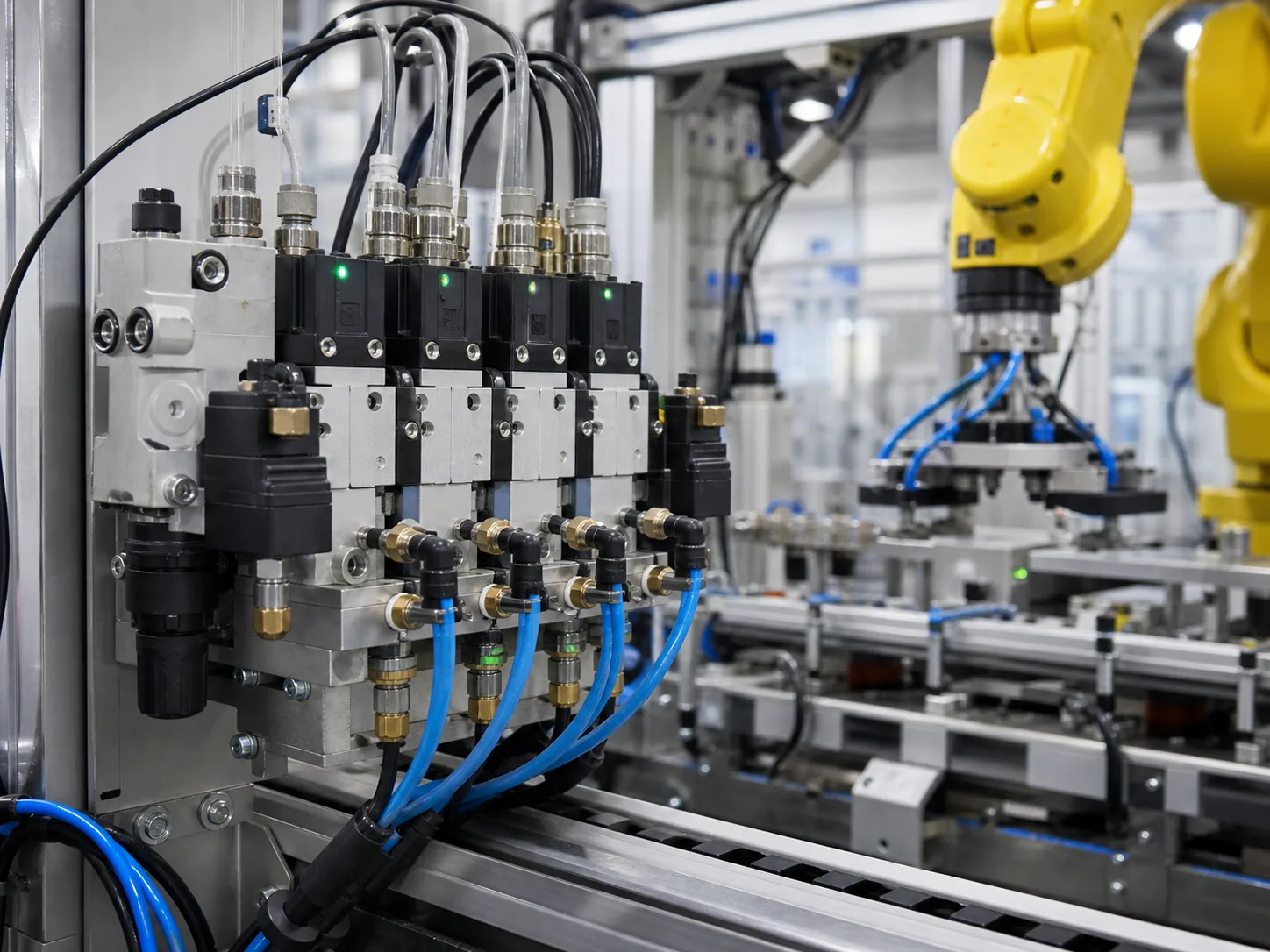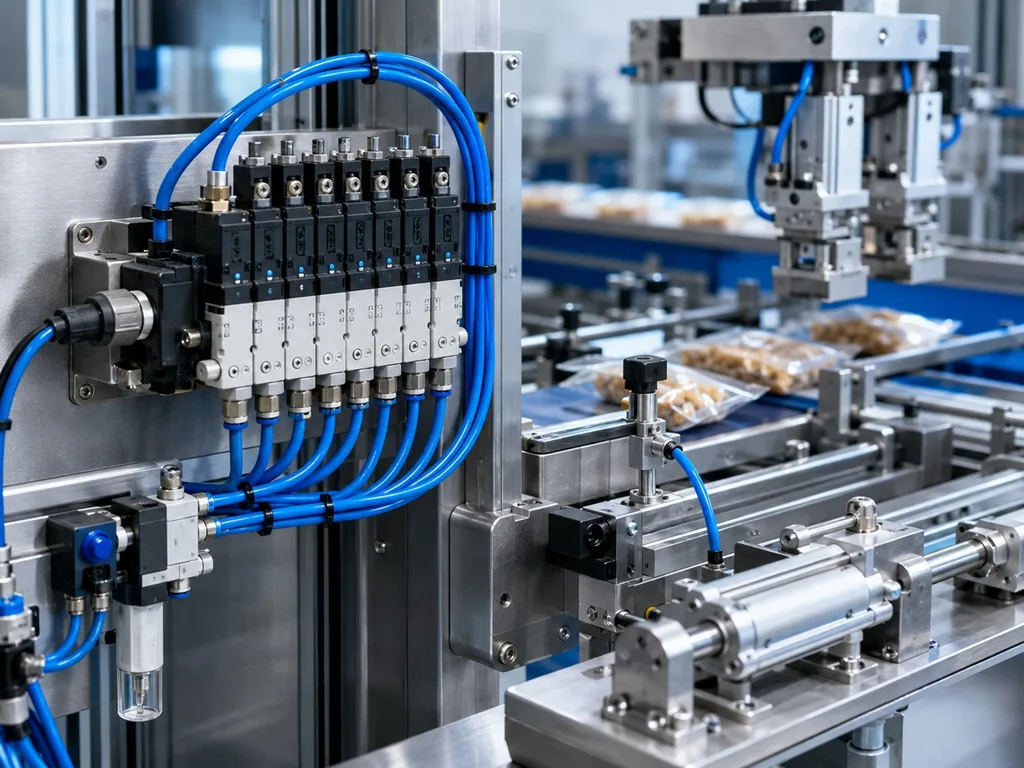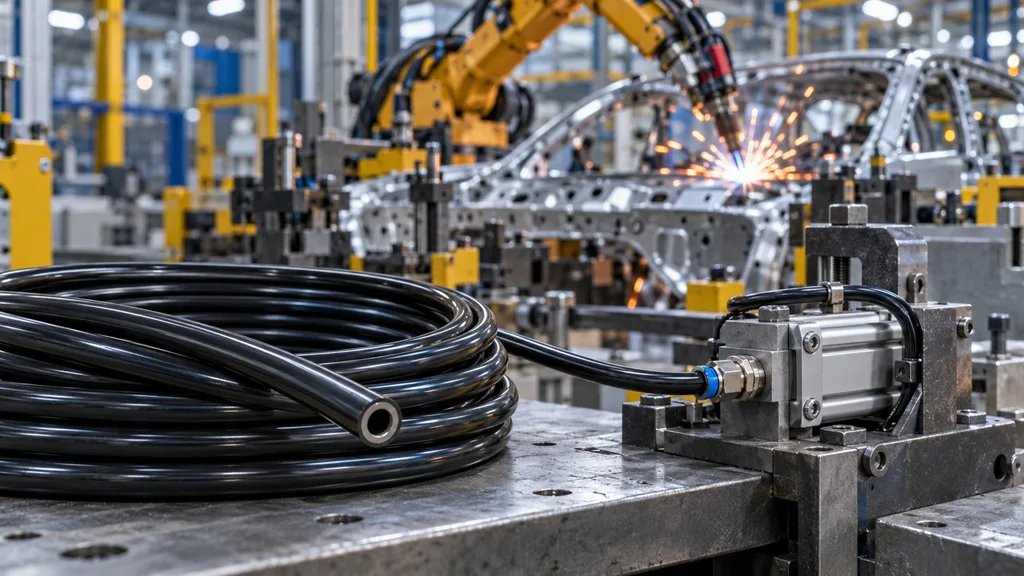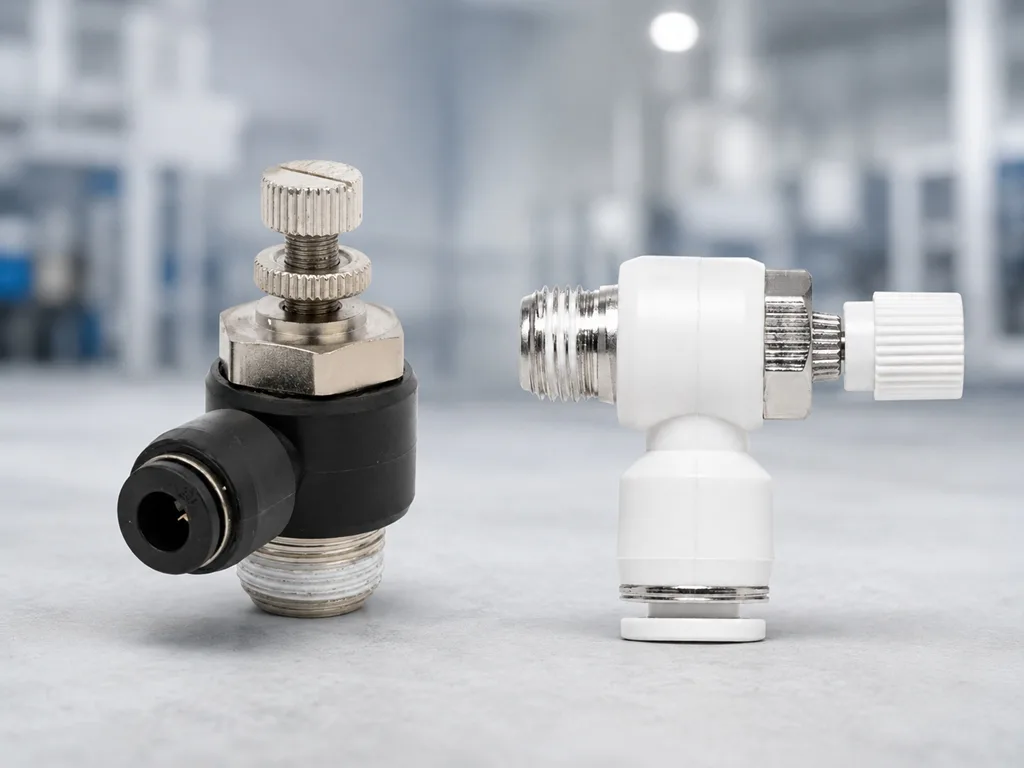
In pneumatic automation systems, throttle valves and speed control valves are common but important components. They are widely used with pneumatic cylinders, grippers, slides, lifting units, pushing mechanisms, and many other pneumatic actuators. Their main function is to regulate airflow and control the operating speed of pneumatic motion.
From the basic structure and operation, a pneumatic speed control valve is not complicated. In most applications, the operator adjusts airflow by turning the control knob. Increasing or reducing airflow changes the movement speed of the pneumatic cylinder or actuator. After the desired speed is set, the position must be locked to keep the flow setting stable.
The process sounds simple: adjust the speed, lock the setting, and let the machine run. In real factory conditions, however, many problems do not appear during the first adjustment. They often appear only after the machine has been running for some time.
Why Stability Matters After Adjustment
In continuous automation systems, pneumatic cylinders move repeatedly, machines generate vibration, and air pressure may fluctuate during operation. Under these conditions, a traditional locking structure may gradually become loose.
Once the locking structure becomes loose, the adjusted valve position may shift slightly. Even a small change in valve position can affect airflow. When airflow changes, the movement speed of the cylinder or actuator also changes. This can lead to unstable pneumatic performance.
In the beginning, this kind of change may not be easy to notice. Over time, it can cause visible problems. A cylinder that was originally adjusted to extend and retract smoothly may start moving faster or slower than expected. A pneumatic gripper may lose its consistent gripping rhythm. In packaging machines, pushing, pressing, positioning, or clamping actions may become unstable. As a result, the whole machine cycle may be affected.
For simple applications, this may only require another manual adjustment. For automation equipment that requires stable cycle time, repeatable motion, and long-term reliability, unstable speed control can become a real production problem.
Common Problems Caused by Unstable Locking
In actual use, unstable locking may lead to several issues:
- Cylinder speed fluctuation during operation
- Changed machine cycle time after long-term running
- Unstable airflow and pressure performance
- Repeated readjustment by maintenance workers
- Reduced consistency in automated production
- Higher maintenance frequency and longer downtime
When these problems happen, users may first check the air source, cylinder wear, pipe leakage, or machine vibration. These are all important factors. However, the locking stability of the speed control valve is also a detail that should not be ignored.
Limitations of Traditional Locking Designs
Traditional speed control valves often use a nut, knob, or simple mechanical locking design to hold the adjusted position. These designs can work well in normal applications. But when the valve is used on machines with frequent vibration, repeated actuator movement, or continuous operation, the locked position may gradually become unstable.
This is especially important in packaging machinery, assembly equipment, testing machines, conveyor systems, and custom automation equipment. In these applications, the valve is not adjusted once and forgotten. It must hold the same flow setting through long hours of repeated motion.
Improving Locking Stability in Speed Control Valves
Based on these practical problems, our company has developed a new quick automatic locking structure for pneumatic throttle and speed control valves. The purpose of this design is not simply to change the appearance of the valve, and it is not intended to make operation more complicated. The goal is to make the adjusted position easier to lock and more stable during long-term operation.
With this quick automatic locking structure, after the airflow is adjusted, the setting position can be locked more reliably. It helps reduce the risk of loosening caused by vibration, external touch, airflow impact, or long-term machine operation. As a result, the valve can better maintain the original flow setting, and the pneumatic actuator can keep a more stable movement speed.
From the user’s point of view, a good speed control valve should not only be easy to adjust. More importantly, it should stay stable after adjustment. If the control knob is adjusted accurately at the beginning, but the locking structure slowly loosens during operation, the final performance of the machine will still be affected.
Small Changes Can Affect the Whole Machine
In continuous production environments, small changes can gradually become bigger problems. A slight airflow change may affect cylinder speed. A small speed change may affect the machine cycle. A change in machine cycle may affect production consistency. This is why the locking structure of a speed control valve is more important than it may appear.
When designing or selecting a pneumatic speed control valve, users should not only consider flow adjustment range, tube connection, sealing performance, material, and installation convenience. The long-term stability of the locking structure should also be considered.
In pneumatic systems, many problems are not caused by sudden component failure. They are often caused by small changes that happen slowly during long-term use. A loose locking structure in a speed control valve is one of these small but important issues.
What to Check When Selecting a Speed Control Valve
When selecting a speed control valve, users usually pay attention to tube size, thread type, working pressure, body material, and connection method. These are necessary. But for equipment with obvious vibration, high operating frequency, or long continuous running time, the locking method is also worth checking carefully.
In simple terms, a pneumatic speed control valve should be easy to adjust and reliable after adjustment. The control knob is used to regulate airflow. The locking structure is used to keep the setting fixed. If the locking structure is not stable, the speed control will not stay stable for long. If the locking structure is reliable, the pneumatic system can run more smoothly.
The new quick automatic locking structure helps improve speed control stability during long-term machine operation. For pneumatic cylinders, grippers, slides, and other actuators that repeat the same motion many times, this stability can reduce the need for repeated readjustment, improve machine reliability, and help lower maintenance costs.
This is the reason why we developed the new quick automatic locking structure. It may seem like a small structural improvement, but it solves a real problem in long-term pneumatic applications. In automation equipment, many improvements in stability often come from small design details like this.
Related product: SL Pneumatic Elbow Speed Control Valve with Conventional Locking Mechanism.