Russia’s manufacturing sector entered mid-2026 with buyers paying closer attention to reliability, delivery certainty and practical replacement options for factory automation components. For pneumatic systems, that has brought a familiar component back into procurement discussions: the solenoid valve.
Recent manufacturing indicators show a market that is not expanding smoothly, but is still investing selectively. S&P Global’s Russia Manufacturing PMI stood at 48.8 in May 2026, up from 48.1 in April but still below the 50.0 no-change mark. For plant managers, this points to a cautious operating environment rather than a full stop in automation demand. Many factories are delaying large system upgrades while continuing to replace valves, coils, fittings and control elements that directly affect uptime.
This is where pneumatic solenoid valves remain important. A single valve failure can stop a packaging line, cutting station, actuator bank or air dryer. Russian buyers in 2026 are therefore focusing less on experimental automation and more on components that can be specified quickly, installed without redesign and stocked by maintenance teams.
Replacement demand is becoming more practical
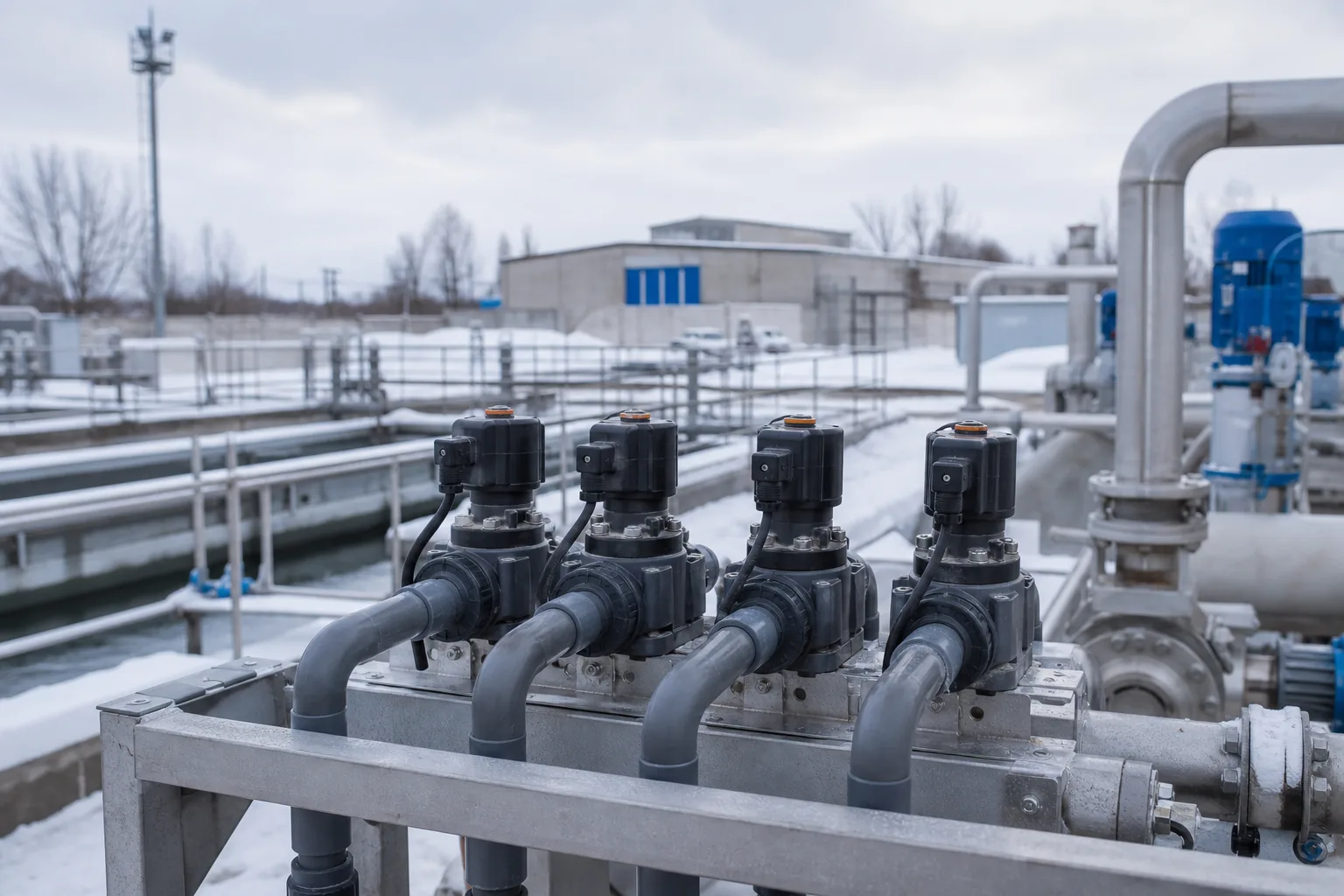
Within the solenoid valve category, demand is spreading across compact air valves, brass fluid valves, manual backup valves and explosion-proof actuator control valves. The product mix reflects the way Russian factories are managing risk: keep core pneumatic lines running, maintain basic fluid control, and ensure that critical process equipment has dependable on-off or directional control.
| 2026 procurement focus | Likely valve requirement | Typical application |
|---|---|---|
| Production uptime | 3/2 and 5/2 pneumatic solenoid valves | Cylinders, fixtures, sorting equipment |
| Utility systems | 2/2 brass or stainless steel valves | Water, air, hot water and steam lines |
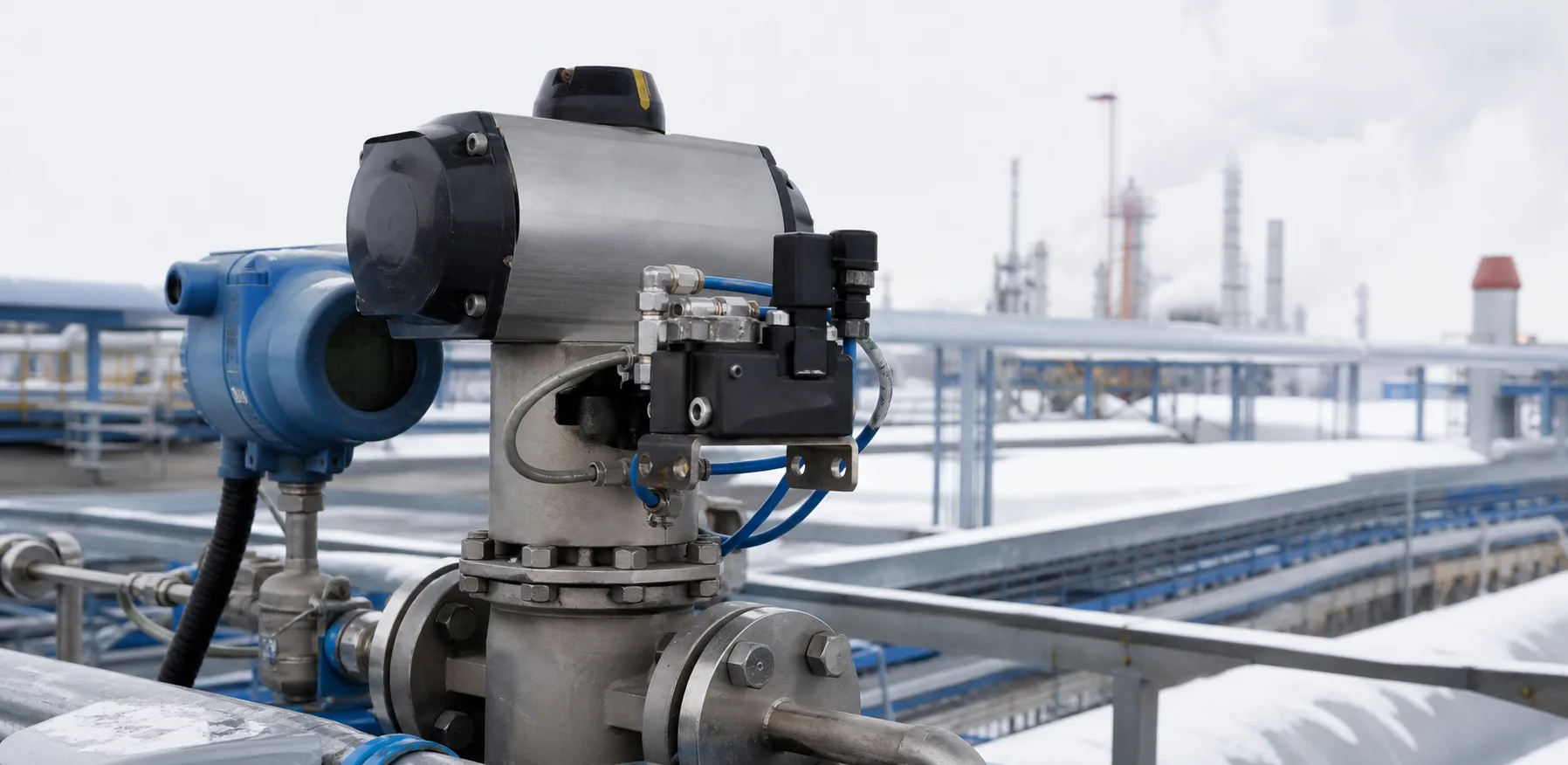
| Hazardous areas | Explosion-proof NAMUR valves | Process actuators and valve automation |
| Maintenance flexibility | Manual hand valves and standard coils | Backup operation and fast field service |
For Homipneu’s solenoid valve portfolio, this trend connects directly with models such as the 2V025 and 3V1 air solenoid valves, 4V series directional valves, 2W brass valves, 2S stainless steel valves and PL5310 explosion-proof NAMUR valves. The common thread is not only price, but the ability to match port size, voltage, seal material and working pressure to existing Russian equipment.
For readers comparing actual products, Homipneu groups these options in its Solenoid Valve product category. Common choices for Russian maintenance and retrofit projects include the 2V025-06 air solenoid valve, the 3V1 3/2 way normally closed solenoid valve and the 4H series manual pneumatic valve for backup or operator control.
Local buyers are asking more detailed technical questions
Instead of simply asking for a generic pneumatic valve, Russian distributors and OEMs are increasingly asking whether the valve can support 12V DC, 24V DC, 110V AC or 220V AC coils, whether it is normally closed or normally open, and whether the body material is suitable for air, water, steam or mildly aggressive media. This more technical buying style is consistent with a market where engineers want to reduce installation surprises.
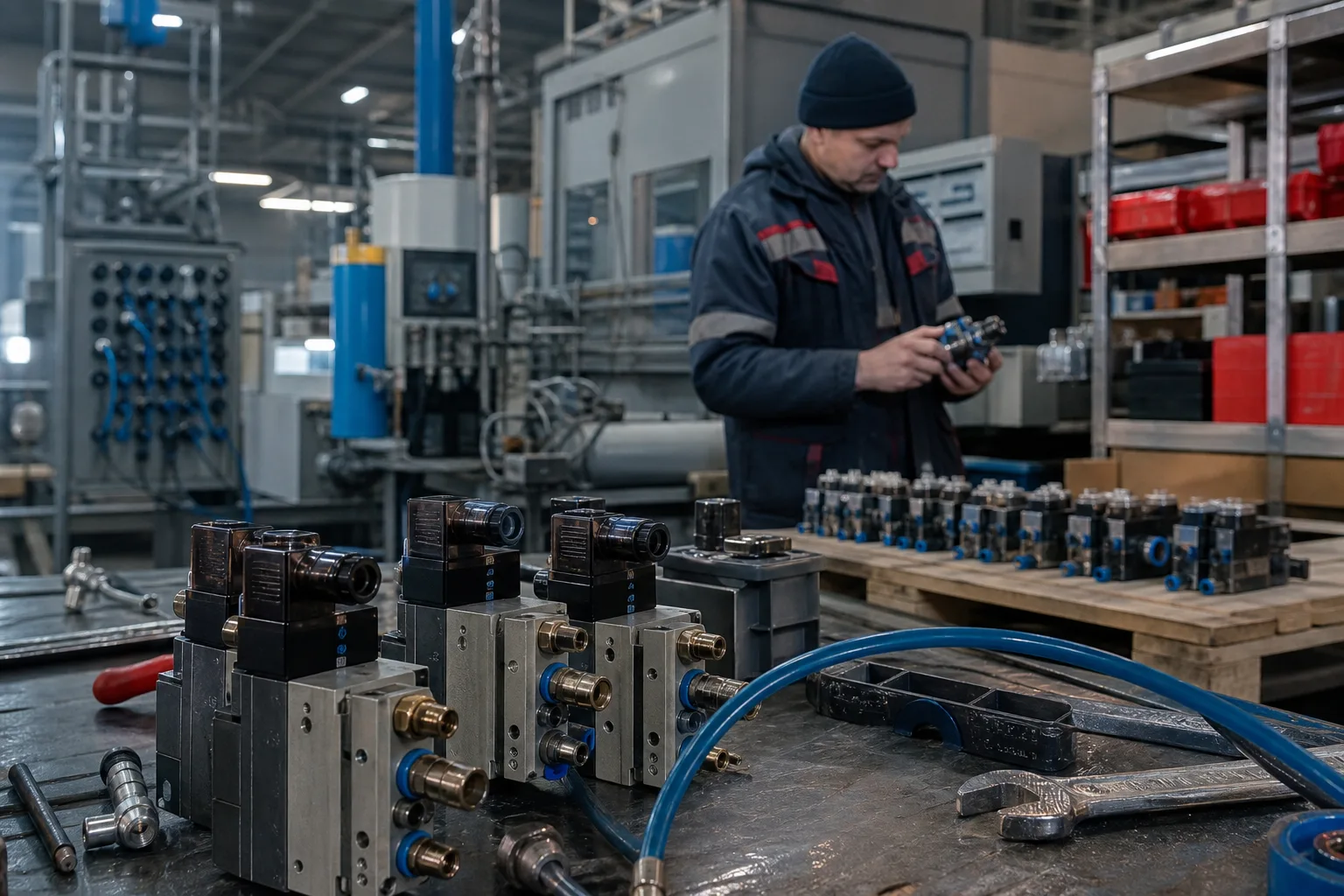
The same shift can be seen in compact automation. Small 2V025 and 3V1 valves are attractive for equipment builders that need reliable cylinder control without expanding cabinet space. Larger 4V series valves remain relevant where 5/2 or 5/3 directional control is needed for standard pneumatic actuators.
Outlook for the second half of 2026
The Russian market is likely to remain selective through the second half of 2026. Weak new-order conditions may limit broad capital spending, but maintenance, retrofit and import-substitution projects should continue to create opportunities for standard pneumatic components. For solenoid valve suppliers, the strongest position will come from clear specifications, stable quality and the ability to support multiple product families rather than a single model.
In this environment, the most competitive products are not necessarily the most complex. They are the valves that help factories keep compressed air systems, water lines and actuator controls working with fewer changes to the existing machine layout.