Industry Update
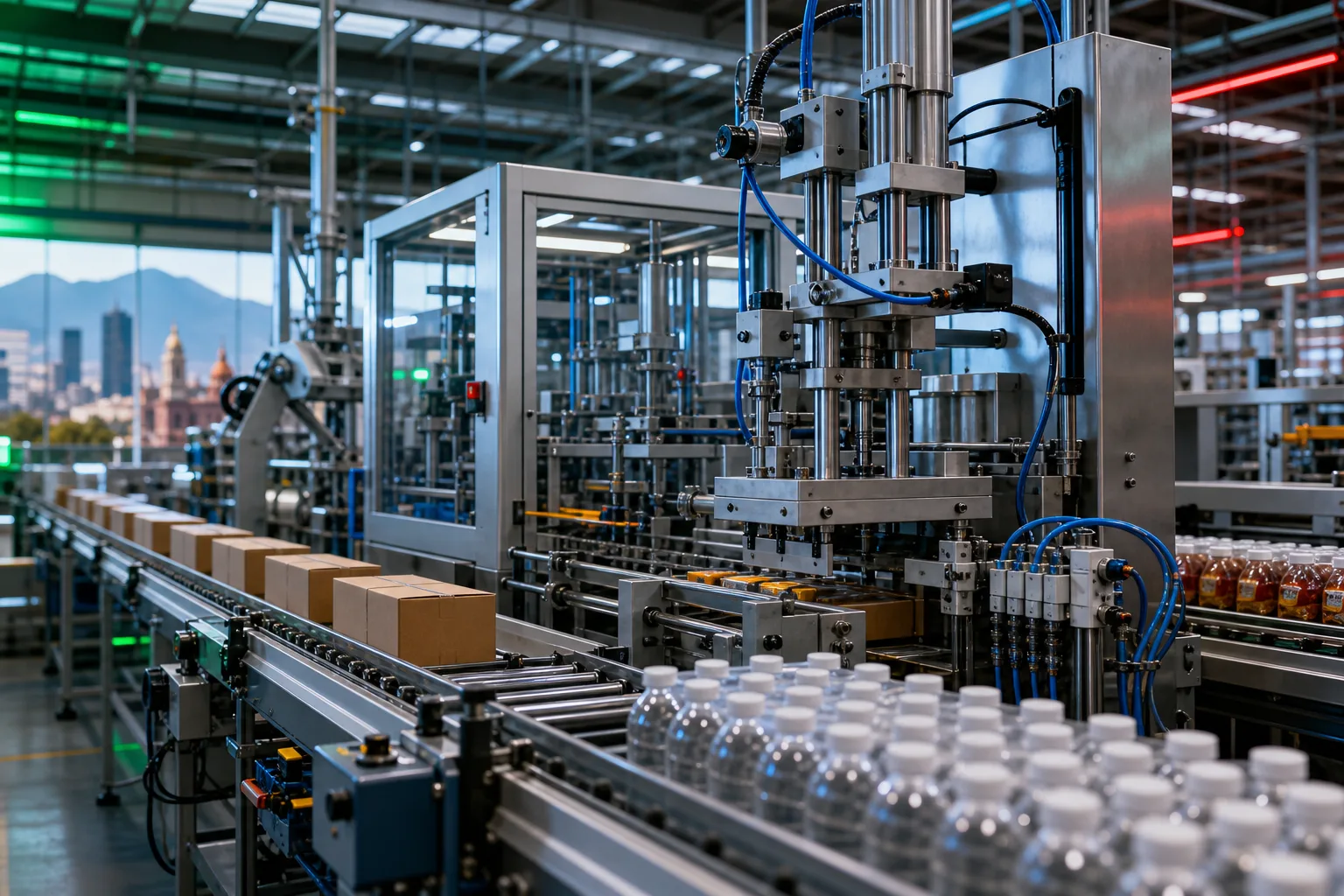
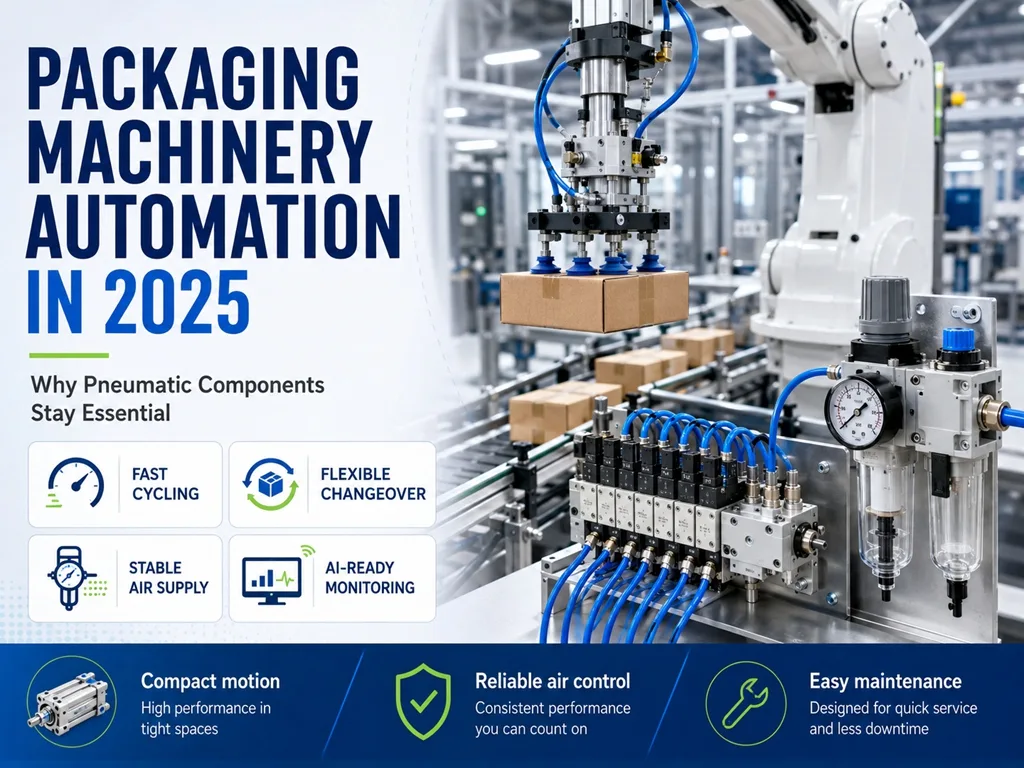
Packaging machinery remains one of the most important application areas for pneumatic components. PMMI’s State of the Industry 2025 report focuses on U.S. and Canadian packaging machinery statistics, estimates, and market analysis. PMMI also lists industry intelligence on AI adoption in packaging equipment, including workforce enablement, machine performance, data governance, and operational resilience.
This shows that packaging equipment is not only becoming faster. It is becoming more connected, more flexible, and more dependent on reliable automation components. Pneumatic cylinders, solenoid valves, fittings, tubing, grippers, air preparation units, mufflers, and vacuum products continue to play important roles in these machines.
Source references: PMMI State of the Industry 2025 and PMMI industry reports.
Why Packaging Machinery Uses So Many Pneumatic Components
Packaging machines perform many repeated motions: pushing, lifting, sealing, clamping, stopping, ejecting, gripping, indexing, opening, closing, and sorting. Pneumatic components are well suited for many of these tasks because they are fast, compact, and relatively simple to maintain.
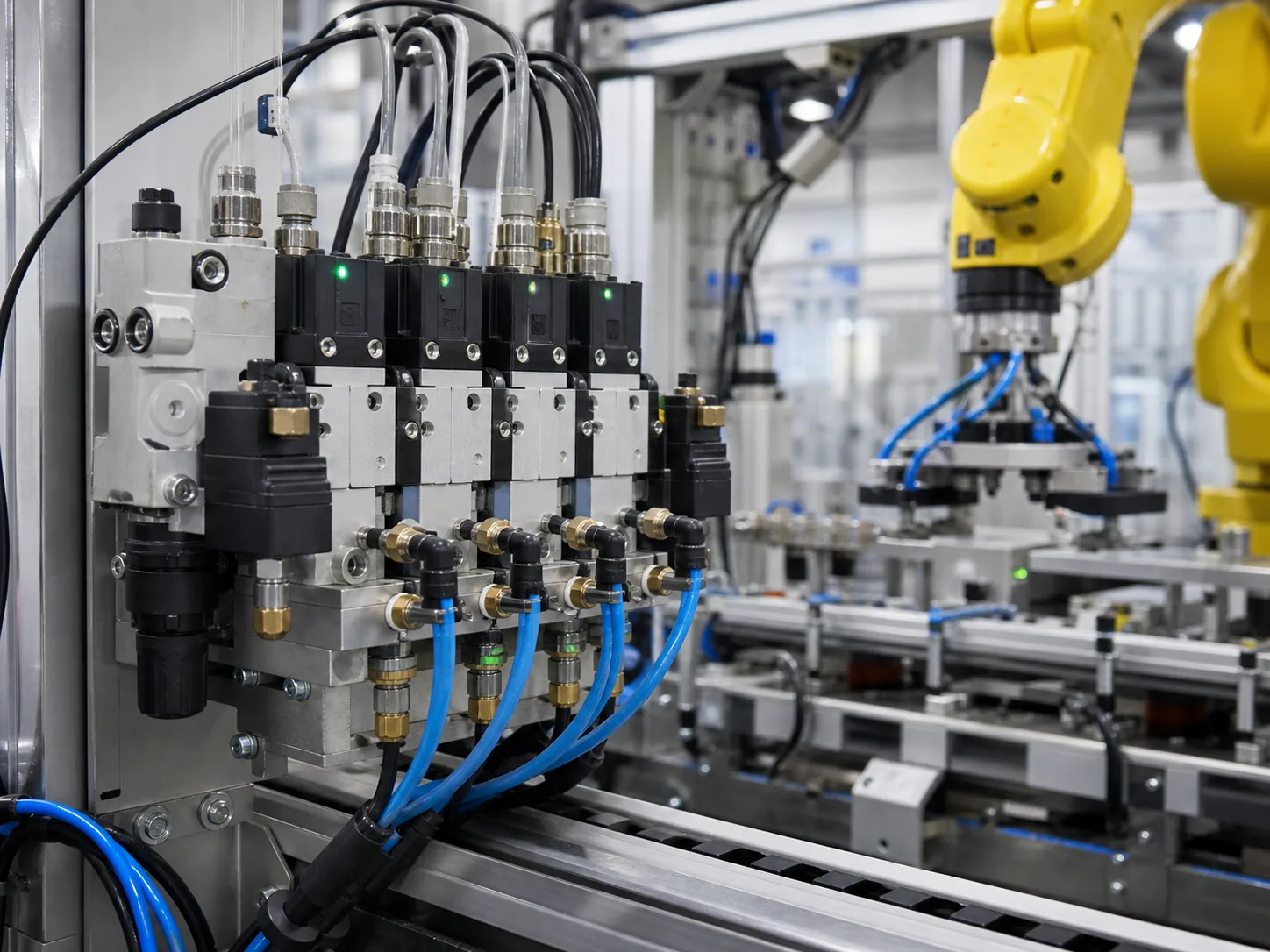
A packaging line may use compact cylinders to move guide rails, standard cylinders to push cartons, stopper cylinders to control product flow, guided cylinders to support pressing motion, rotary actuators to turn parts, pneumatic grippers to handle products, and solenoid valves to control each movement. Air fittings and tubes connect the circuit, while air source treatment units help keep pressure and air quality stable.
Even when a packaging machine uses servo drives for precise motion, pneumatics are still often used for auxiliary functions. These supporting motions may look small, but they affect line uptime and product quality.
Flexible Packaging Increases Component Requirements
Many factories now need to handle more product variations. Package sizes, materials, labels, shapes, and batch quantities can change often. This creates pressure on packaging machines to support faster changeovers and more adjustable layouts.
Pneumatic components must fit this need. Push-in fittings help technicians adjust tube connections quickly. Compact cylinders save space when guide rails or reject devices must be placed close to conveyors. Solenoid valves allow PLC-controlled timing changes. Grippers and clamp cylinders help handle products during sorting, loading, and case packing.
For machine builders, the goal is not only to make a machine run fast. It must also be easy to adjust, easy to clean, and easy to maintain. A packaging machine that takes too long to change over may reduce the benefit of automation.
Air Quality Affects Packaging Line Stability
Packaging equipment often runs for long shifts. Small pneumatic issues can create repeated stops. Water in the air line may affect valves. Dirty filters may reduce flow. A leaking fitting may slow cylinder movement. Too much exhaust noise may make the work area uncomfortable. Poor tube routing may cause tubes to be pulled during machine operation.
Air source treatment is therefore important in packaging automation. Filters, regulators, and lubricators where needed help maintain stable compressed air. Correct pressure settings help avoid weak movement or unnecessary air consumption. Mufflers and speed controllers can improve machine behavior and workplace conditions.
HOMIPNEU’s air source treatment category, pneumatic muffler series, and related air control products are relevant to packaging line reliability.
AI and Digital Monitoring Need Reliable Hardware
PMMI’s industry reports point to AI adoption and machine performance as important topics for packaging equipment. AI can help analyze downtime, improve scheduling, support maintenance, and identify performance patterns. But digital monitoring depends on consistent machine behavior.
If a pneumatic system has frequent leaks, unstable pressure, or worn actuators, the data may show symptoms without clear causes. A cylinder may move slowly because of air pressure, valve contamination, tube restriction, mechanical friction, or product jam. Reliable pneumatic hardware makes digital monitoring more useful because it reduces random variation.
This is why modern packaging equipment still needs good pneumatic design. Sensors and software can help detect problems, but the physical air circuit must be built correctly from the start.
Common Pneumatic Points in Packaging Machines
Packaging machinery buyers should pay attention to these areas:
- Cylinder bore and stroke for pushing or lifting
- Compact actuator size in crowded machine frames
- Valve response time for high-speed cycling
- Tube diameter for adequate air flow
- Fitting access for cleaning and maintenance
- Air pressure stability at the machine
- Exhaust noise near operators
- Gripper structure for product shape and weight
- Air preparation before valve manifolds
These details affect real production. A packaging machine may lose speed if a cylinder cannot retract quickly. It may reject good products if a clamp is unstable. It may need more maintenance if tubes bend sharply near moving parts.
Supplier Range Matters for Packaging OEMs
Packaging machine manufacturers often need many pneumatic parts from one supplier. A single line may require cylinders, valves, fittings, tubing, air treatment, speed controllers, mufflers, vacuum suction pads, and other pneumatic tools. A broad product range can simplify purchasing and spare parts planning.
For distributors, packaging automation is a strong application area because the same product families can serve food, beverage, cosmetics, medical, electronics, household goods, and logistics packaging. Demand may vary by industry, but the pneumatic functions are often similar.
HOMIPNEU supports packaging equipment with pneumatic cylinders, solenoid valves, pneumatic fittings, air hose, air source treatment, mufflers, vacuum suction pads, and related pneumatic accessories.
What to Watch in 2026
Packaging automation will likely continue moving toward flexible, data-supported, and more efficient machine designs. Pneumatic components that are compact, easy to replace, and stable over long cycles will remain important. Buyers should look for products that support clean installation, stable air flow, and practical maintenance.
For OEMs, the strongest designs will combine digital control with reliable pneumatic basics. The machine can be smart, but it still needs clean air, correct pressure, good fittings, suitable valves, and the right actuator for each motion.
Related Pneumatic Products
For packaging machinery and automated production lines, HOMIPNEU supplies pneumatic cylinders, compact cylinders, solenoid valves, push-in pneumatic fittings, air hose, air source treatment units, mufflers, vacuum suction pads, and pneumatic tools for reliable machine operation.