Industry Update
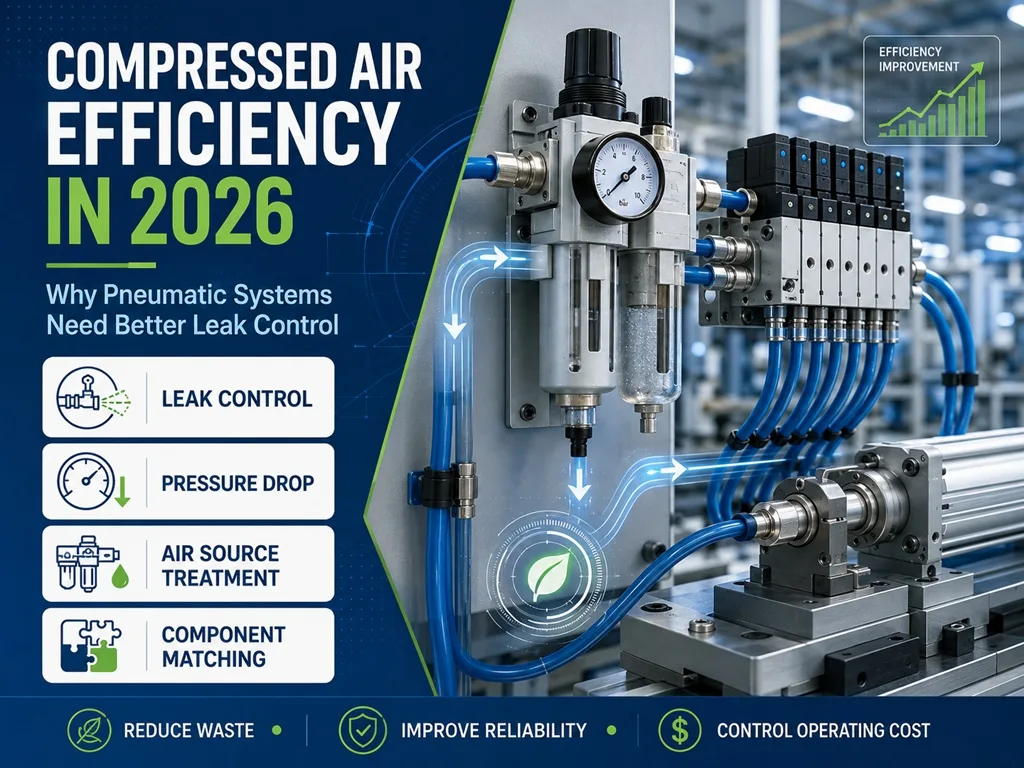
Compressed air remains one of the most common power sources in factories, but it is also one of the easiest systems to waste. In 2026, energy efficiency is still a major manufacturing topic because plants are trying to control operating cost while keeping equipment productive. The U.S. Department of Energy continues to highlight compressed air systems as an area where best energy management practices and efficient equipment can create significant savings.
Compressed Air Challenge also provides training and resources focused on improving compressed air performance. Its materials emphasize practical issues such as leaks, pressure drop, system assessment, and maintenance practices. For pneumatic equipment users, this means the air circuit is no longer just a utility. It is part of machine reliability, energy cost, and production stability.
Source references: U.S. Department of Energy compressed air systems and Compressed Air Challenge library.
Why Compressed Air Efficiency Matters for Pneumatic Components
Pneumatic components depend on stable compressed air. A cylinder cannot deliver expected force if pressure drops. A solenoid valve cannot perform consistently if the supply is dirty or unstable. A fitting cannot keep a system efficient if tube ends are damaged or installed incorrectly.
When factories focus on compressed air efficiency, they often start with compressors. That is important, but the machine-level circuit also deserves attention. Leaks and pressure losses often occur near fittings, tubes, valves, manifolds, cylinder ports, regulators, and quick connections. These small points are repeated across many machines, so the total effect can be large.
For OEM machine builders, better pneumatic design can help customers reduce operating cost. For maintenance teams, better fittings, tube routing, and air preparation can reduce daily problems. For distributors, efficiency trends create demand for reliable air line products rather than only low-price components.
Leaks Are Still a Practical Factory Problem
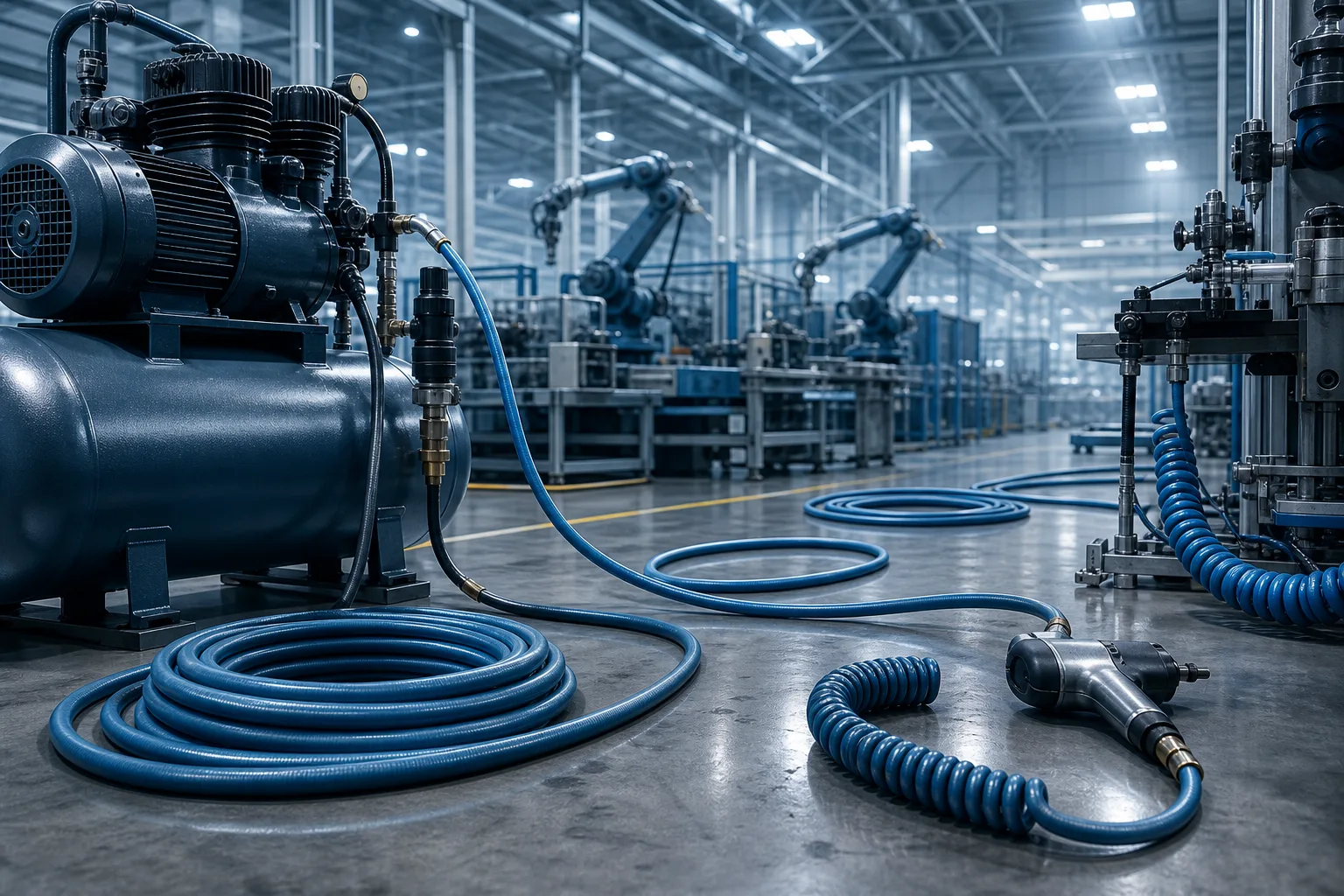
Compressed air leaks are common because pneumatic systems include many connection points. A factory may have hundreds or thousands of fittings, tubes, valves, cylinders, blow guns, manifolds, and flexible hoses. Even a small leak can continue for months if it is not inspected.
Leaks can cause more than energy waste. They may also create unstable machine pressure, slower actuator movement, extra compressor runtime, and more maintenance calls. In automated equipment, this may appear as weak clamping, inconsistent cylinder speed, unreliable part transfer, or poor repeatability.
Common leak locations include:
- Poorly cut tube ends
- Reused or scratched PU tubes
- Incorrect tube outside diameter
- Over-tightened threaded fittings
- Damaged seals in fittings or valves
- Loose push-in connections
- Cracked hoses near moving machine parts
- Old cylinder seals
Using suitable pneumatic fittings and air hose is a basic step in reducing leakage risk. The tube should be cut square, inserted fully, and routed without excessive bending or pulling force.
Pressure Drop Can Hide in the Circuit
Factories sometimes increase compressor pressure to solve weak actuator movement. This may hide the symptom but does not fix the cause. A pneumatic system may lose pressure because of undersized tube, long pipe runs, restricted fittings, clogged filters, small valve flow, or poorly selected silencers.
Pressure drop affects pneumatic cylinders directly. If the pressure at the cylinder port is lower than expected, output force drops. In high-speed equipment, insufficient flow can also slow extension and retraction. The result may be missed timing, unstable product handling, or longer cycle time.
Better design starts at the machine level. Match tube diameter, fitting size, valve flow, and cylinder bore to the required movement. Avoid using very small tubing for large cylinders or fast cycles. Keep tube runs short where possible. Use proper solenoid valves and exhaust components for the actuator size.
Air Source Treatment Protects the System
Energy efficiency is not only about leaks. Air quality also affects performance. Water, dust, oil carryover, and pressure fluctuation can shorten the service life of valves and cylinders. In some factories, poor air quality causes sticky valve spools, slow cylinder movement, or seal damage.
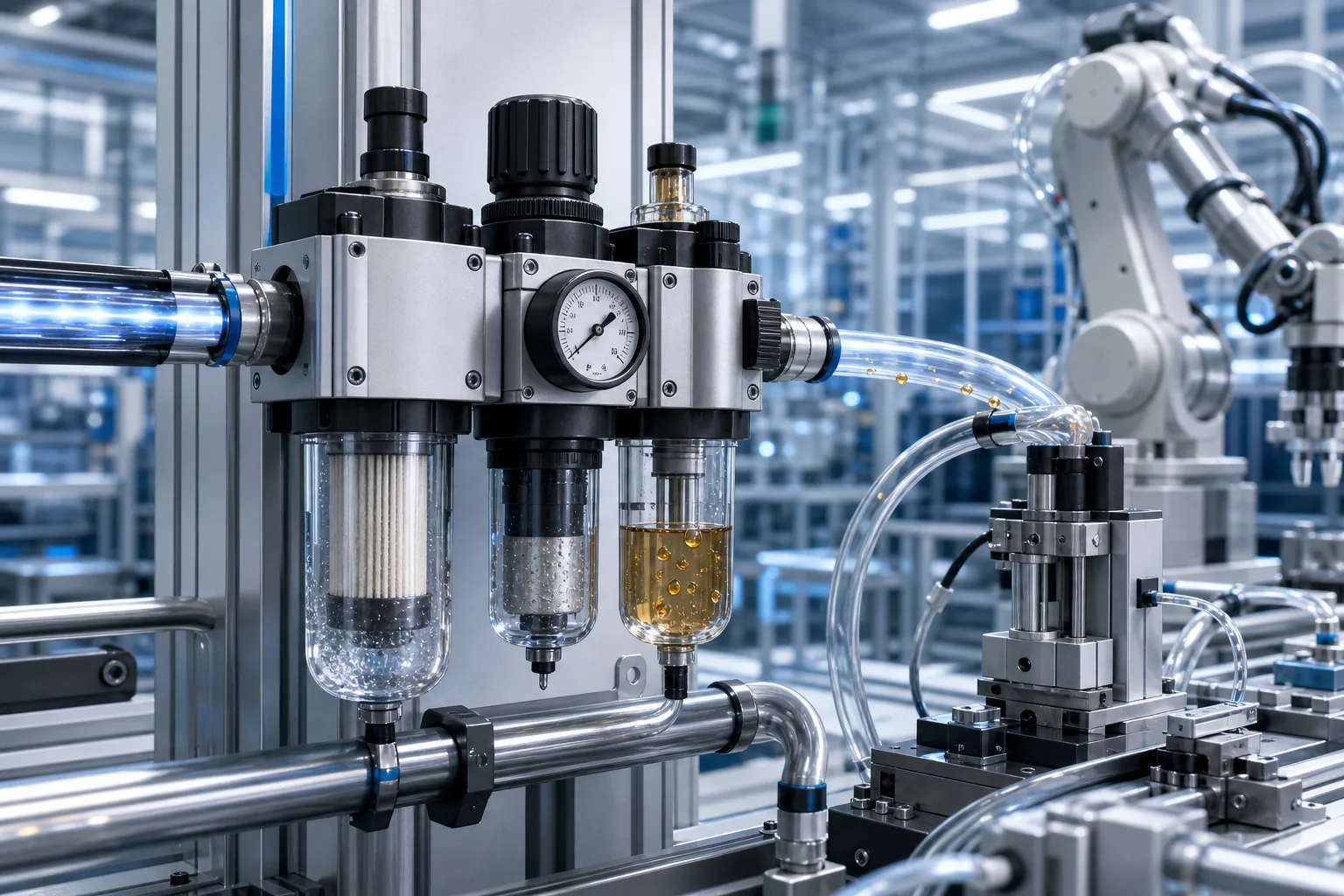
Air source treatment units help prepare compressed air before it enters machine circuits. Filters remove particles and moisture. Regulators control pressure. Lubricators may be used where the system requires oil mist, though many modern components are designed for non-lubricated operation.
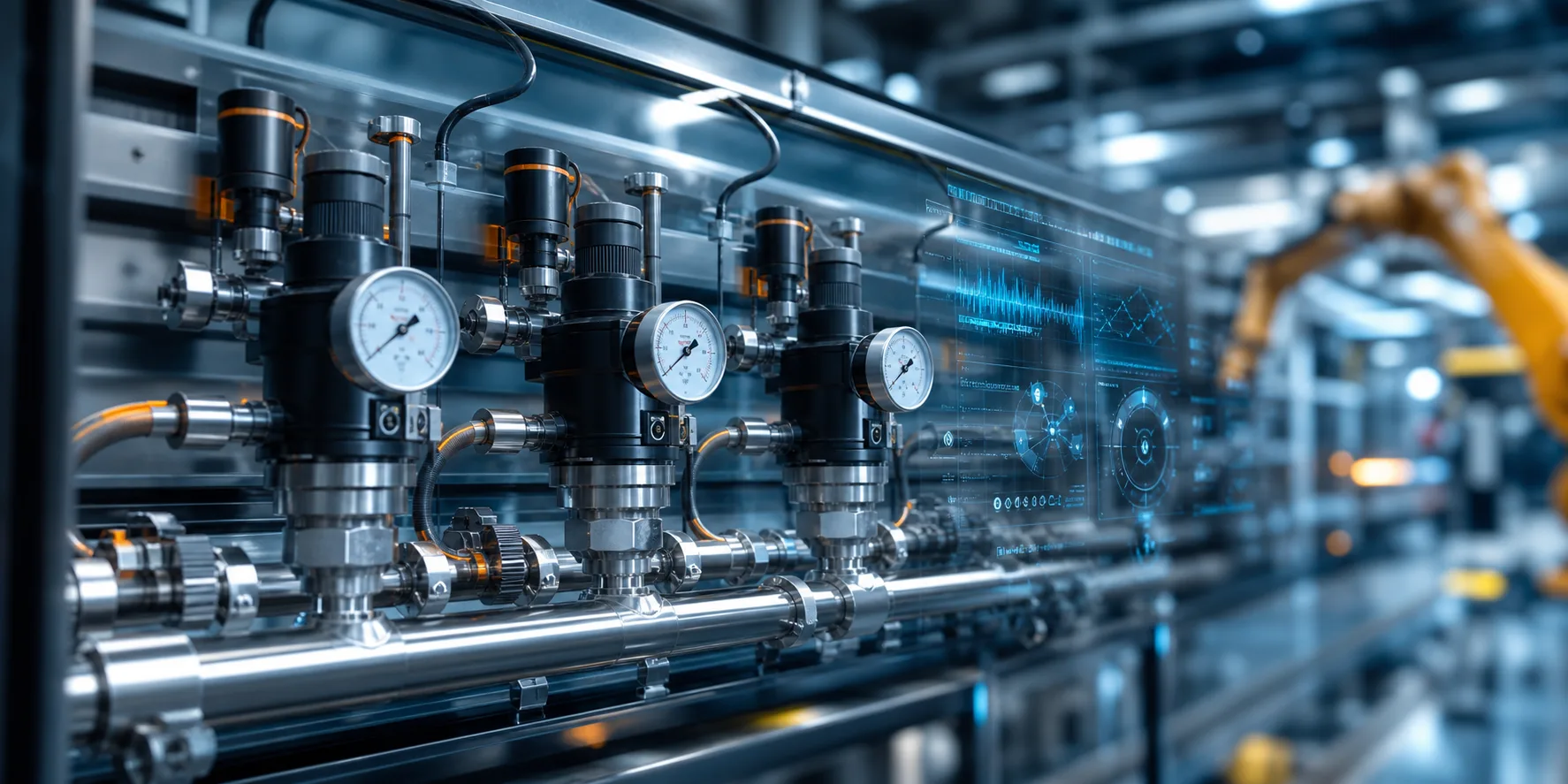
Correct pressure setting is also important. Running all equipment at unnecessarily high pressure increases air consumption and can stress components. A stable regulator near the machine can help match pressure to the actual application.
HOMIPNEU’s air source treatment products are relevant for factories that want cleaner, more stable pneumatic systems.
Energy Saving Starts with Component Matching
Many pneumatic energy problems come from mismatch. A cylinder may be oversized because the load was not calculated. A valve may be too large because the buyer selected a common port size without checking speed requirements. A tube may be too long because the machine layout was not planned for maintenance. A regulator may be set high to compensate for leaks.
Better component matching can reduce unnecessary air use. Buyers should consider:
- Required force and cylinder bore
- Stroke length and cycle frequency
- Working pressure at the actuator
- Tube diameter and length
- Valve flow rate
- Exhaust speed control
- Fitting structure and seal quality
- Air quality and filtration needs
This does not always mean choosing the smallest component. It means choosing the correct component for stable performance at the lowest practical air consumption.
What Buyers Should Do in 2026
In 2026, factories are likely to keep looking for practical ways to reduce energy cost without rebuilding entire production lines. Pneumatic system inspection is a realistic place to start. Check leaks, pressure settings, tube routes, regulator condition, valve sizing, and cylinder movement. Many improvements can be made during normal maintenance or machine upgrades.
For new machines, buyers should ask OEM suppliers how the pneumatic circuit is designed. A clean air circuit with correct fittings, tubes, valves, cylinders, and air source treatment can support both energy efficiency and reliability.
Related Pneumatic Products
HOMIPNEU supplies pneumatic fittings, air hose, solenoid valves, pneumatic cylinders, mufflers, and air source treatment units for factory air lines and industrial automation systems.