Industry Update
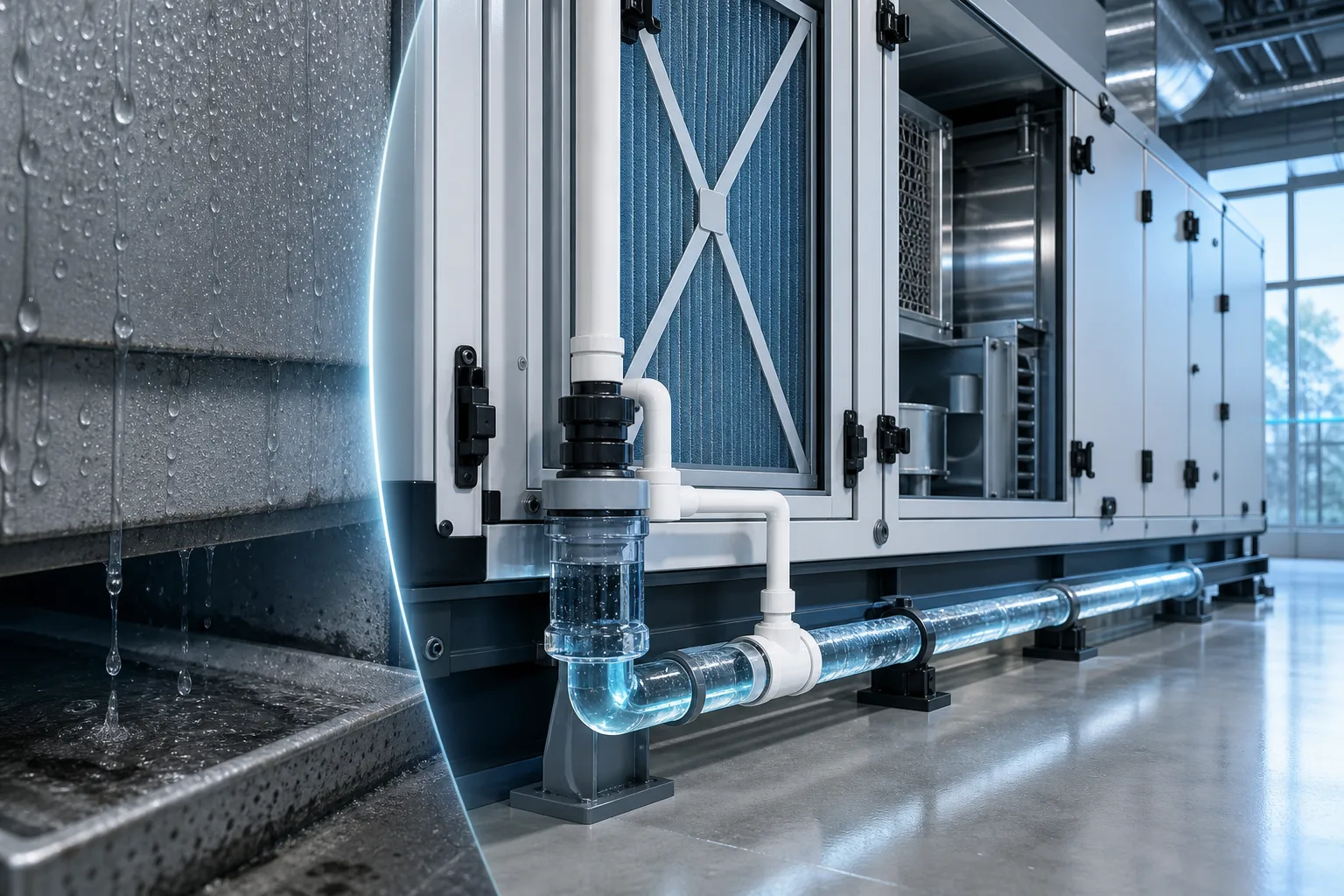
Condensate management remains one of the most practical compressed air topics in 2026. The U.S. Department of Energy includes compressed air resources that address condensate removal, system maintenance, and air quality improvement. The core issue is simple: water must be removed from the system, but poorly managed drainage can waste compressed air and create maintenance issues.
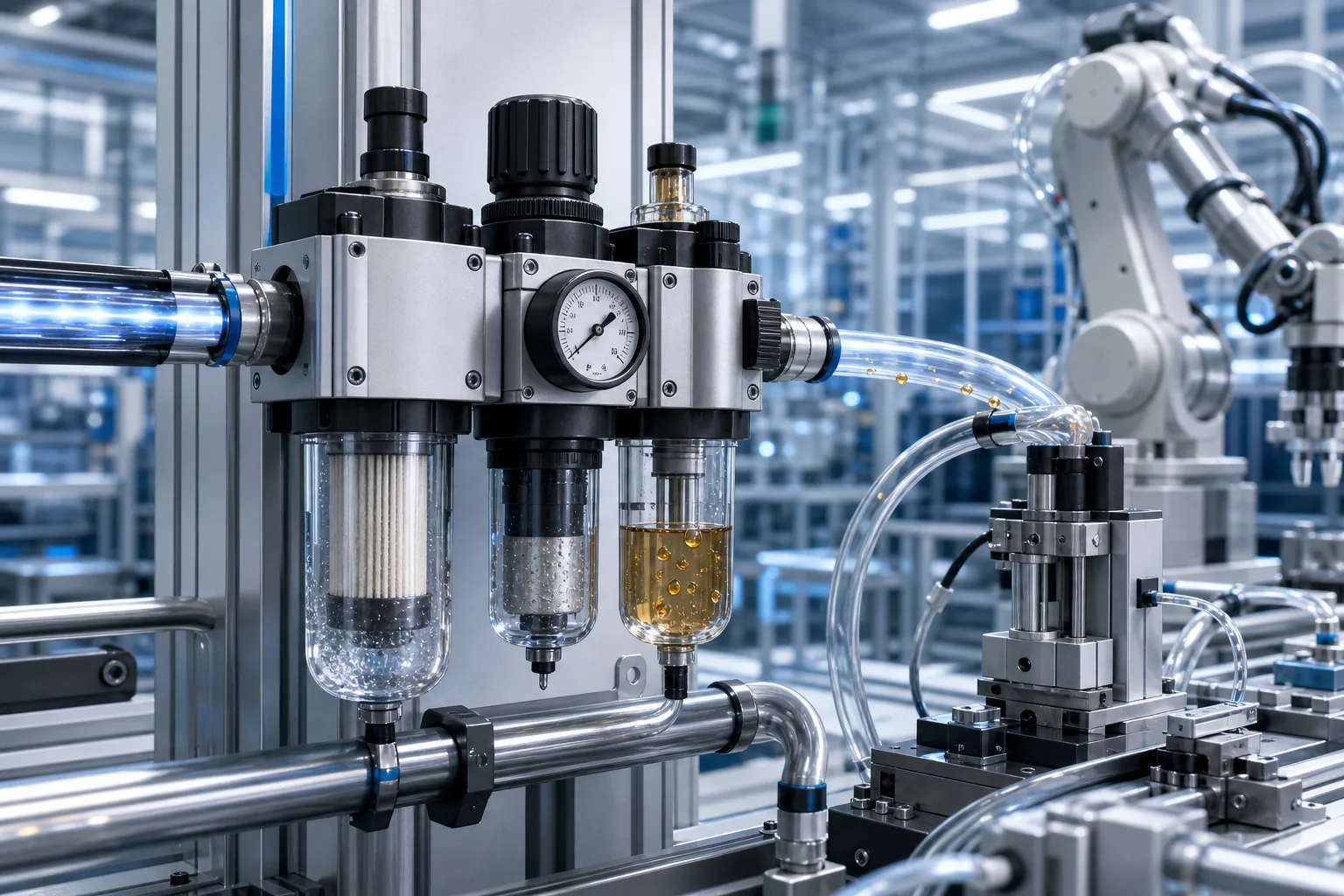
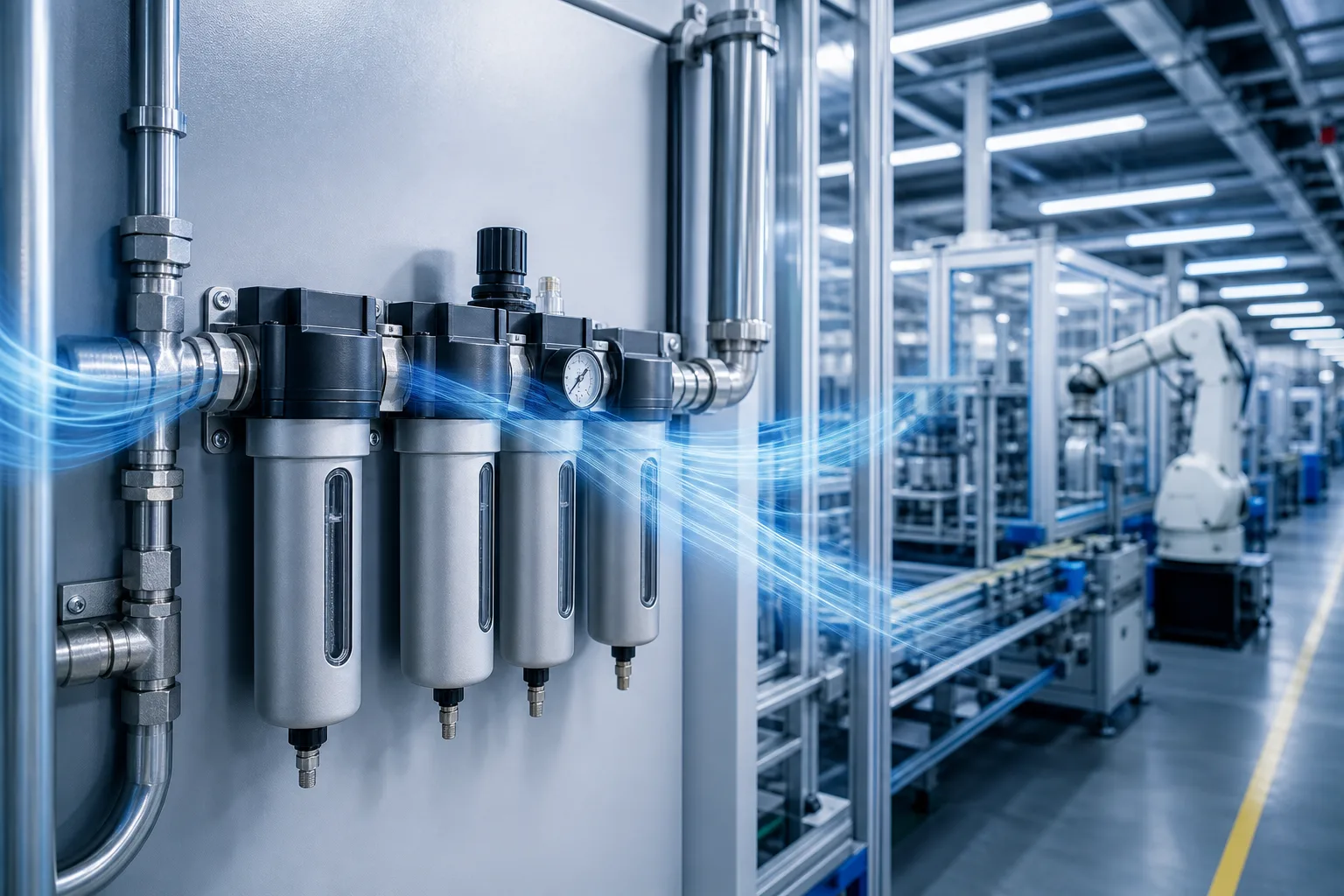
For air source treatment products, condensate control is central. Filters, drain bowls, oil-water separators, and FRL units all help manage moisture before it reaches valves, cylinders, and tools.
Source reference: U.S. Department of Energy compressed air systems.
Why Condensate Is a Problem
Compressed air naturally carries moisture. As air cools in piping, tanks, filters, and machine lines, water can condense. If this water reaches pneumatic components, it can cause corrosion, seal damage, slow valve response, or unstable cylinder movement.
The issue becomes worse in humid environments, long piping networks, or systems with insufficient drying and filtration. A machine may run well in one season and become unstable in another because the moisture load changes.
This is why air treatment should be selected for the real site conditions, not only for catalog pressure ratings.
Drain Control Matters
A filter bowl without proper draining can become a problem itself. If water collects and is not removed, it can pass downstream. If the drain leaks or wastes air, the system becomes less efficient.
Manual drains can work if maintenance teams inspect them regularly. Automatic drains can reduce labor, but they must be suitable for the application and maintained correctly. Oil-water separators may be needed where condensate contains oil and must be handled responsibly.
Impact on Pneumatic Components
Moisture can affect many parts of a pneumatic system:
- Solenoid valves may stick or wear faster
- Cylinders may lose seal life
- Regulators may become unstable
- Pneumatic tools may corrode internally
- Fittings and tubing may collect contamination
These problems often appear gradually. A machine may begin with occasional slow response and later develop frequent stoppages.
HOMIPNEU’s air source treatment products include filters, regulators, lubricators, FRL combinations, and oil-water separator options for different compressed air systems.
What Buyers Should Watch
Factories should review drain performance as part of routine maintenance. Check whether bowls are filling too quickly, whether drains are leaking, and whether downstream equipment shows signs of moisture contamination.
For new machines, OEMs should leave enough space for operators to see and service the air treatment unit. A filter that cannot be reached will not be maintained well.
Related Pneumatic Products
HOMIPNEU supplies oil-water separators, filter regulators, FRL units, pressure regulators, air hose, pneumatic fittings, and solenoid valves for cleaner and more reliable compressed air circuits.