Industry Update
The IFR’s World Robotics 2025 presentation highlights Physical AI as one of the top technological trends shaping robotics. The presentation also notes that generative AI is opening new applications, while sustainability, energy consumption, and new customer segments beyond manufacturing are becoming more important.
That is a real signal for the automation market. Robots are becoming more flexible and more capable, but they still need reliable hardware at the point where they touch the product. This is where pneumatic end effectors, grippers, cylinders, and valve control remain valuable.
Source reference: IFR World Robotics 2025 presentation.
What Physical AI Changes
Physical AI is a useful term because it points to the connection between software intelligence and physical action. A robot may use AI to decide how to move, but the final grasp, clamp, lift, or release still has to happen in the real world.
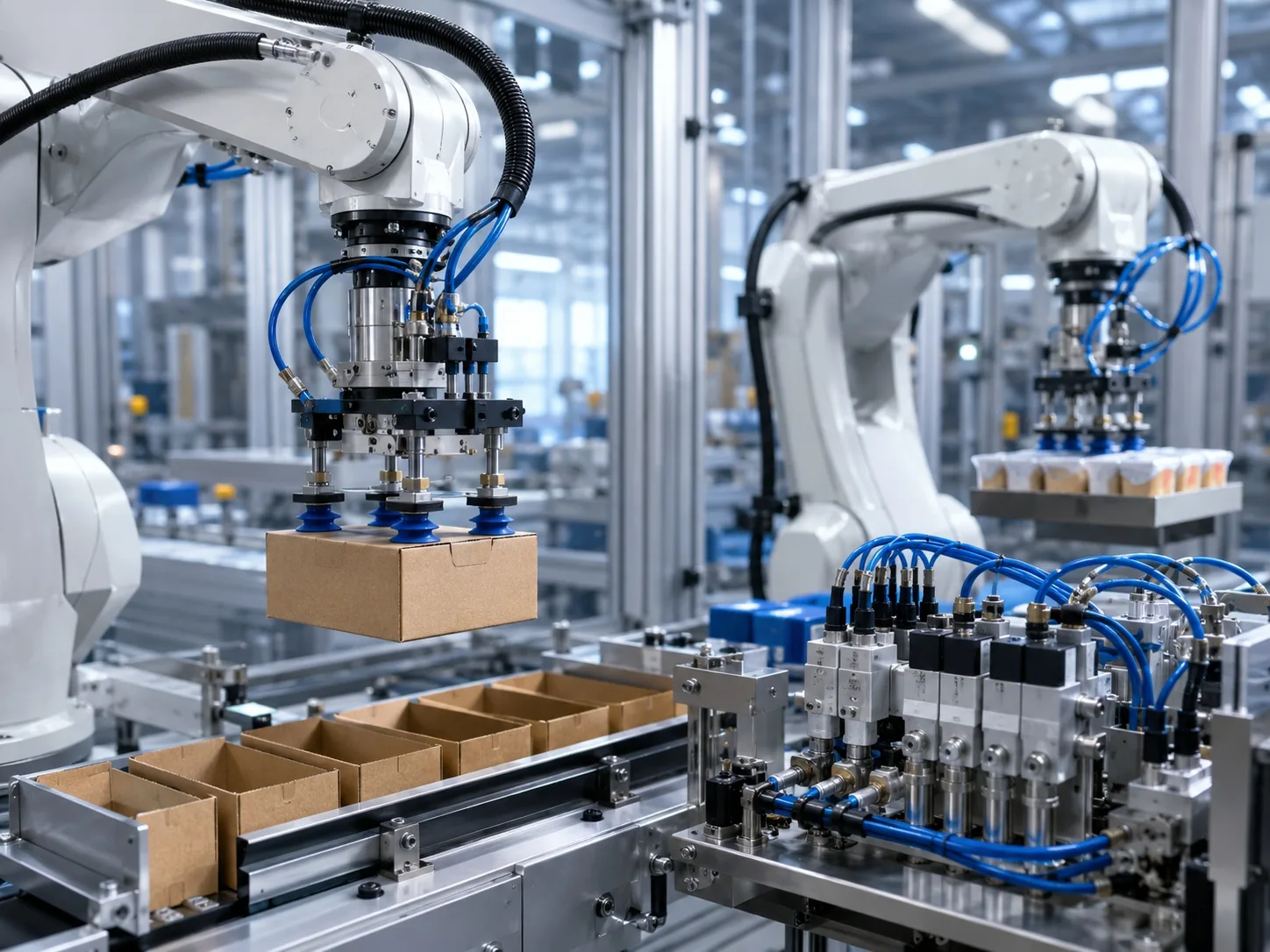
For many applications, pneumatic hardware is still the simplest way to execute that physical action. Pneumatic grippers offer fast response and compact structure. Vacuum suction pads are useful when surface handling is better than mechanical clamping. Compact cylinders can position tools or actuate helper stations around the robot cell.
As robots become more adaptable, the toolset around them must also become more adaptable. That is good news for modular pneumatic components.
End Effectors Are the Last Mile of the Robot
The last step in any robot task is the one that touches the product. If the end effector is too heavy, too slow, or too complex, the whole application becomes harder to maintain. Pneumatic devices help solve this because they are lightweight, quick, and easy to integrate.
In collaborative and compact robotic systems, this matters even more. The robot may need a small gripper for mixed parts, a suction unit for cartons or trays, or a clamp cylinder for fixture operations. A simple pneumatic tool often gives the best balance of speed, size, and cost.
The more AI helps robots switch between tasks, the more important it becomes to have end effectors that can also switch quickly.
Better Flexibility Means Better Pneumatic Design
Physical AI and multipurpose robotics create new requirements for the surrounding hardware. The pneumatic circuit should be easy to modify, easy to diagnose, and easy to service. That means:
- Standard fittings instead of improvised connections
- Short, clean tube routing
- Valve response matched to the cycle time
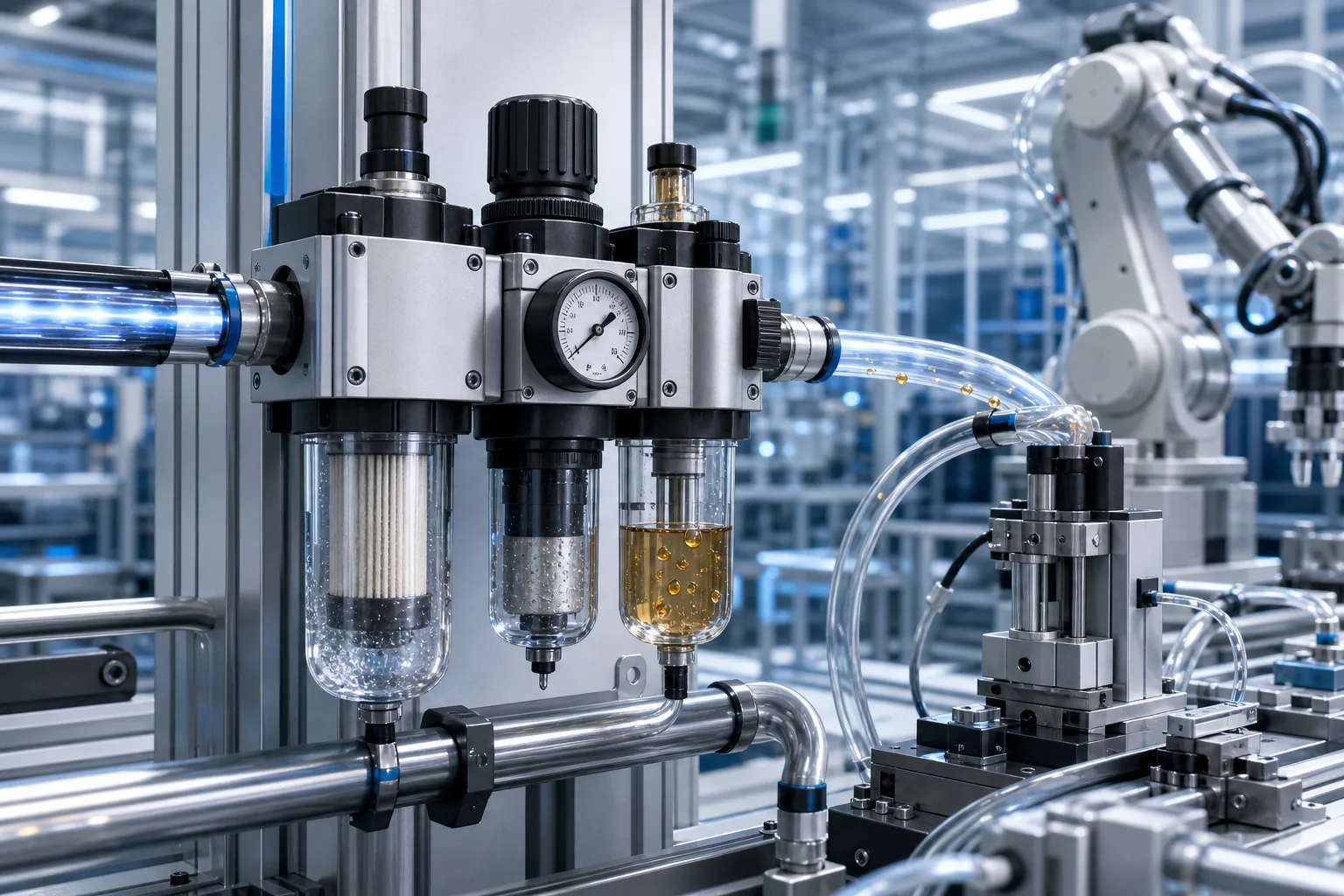
- Appropriate air preparation
- Simple mounting for end effectors
- Enough space for maintenance access
These are small details, but they decide whether a robot cell is practical in daily production. A robot that is easy to configure but hard to service will still create downtime.
Why Pneumatics Keep Their Place
Some automation buyers assume AI will replace every traditional motion technology. In reality, AI changes how systems are controlled, not how every motion must be executed. Pneumatics remain attractive because they are:
- Compact
- Fast
- Economical
- Easy to standardize
- Simple to maintain
That makes them a good fit for many robot peripherals, especially when the application requires short strokes, repeatable gripping, or light handling. Pneumatic products are likely to stay common wherever robots need quick physical interaction without overengineering the motion system.
Related Pneumatic Products
HOMIPNEU supplies pneumatic cylinders, pneumatic fittings, solenoid valves, vacuum suction pads, air hose, and air source treatment units for robotics, end effectors, and smart manufacturing systems.