Industry Update
Compressed air quality is becoming a more visible topic across factories, packaging lines, electronics assembly, food processing, and general automation. The U.S. Department of Energy includes compressed air resources that cover system air quality, maintenance, pressure stability, and performance improvement. Compressed Air Challenge also maintains a library of manuals, tip sheets, case studies, and guidelines for compressed air system improvement.
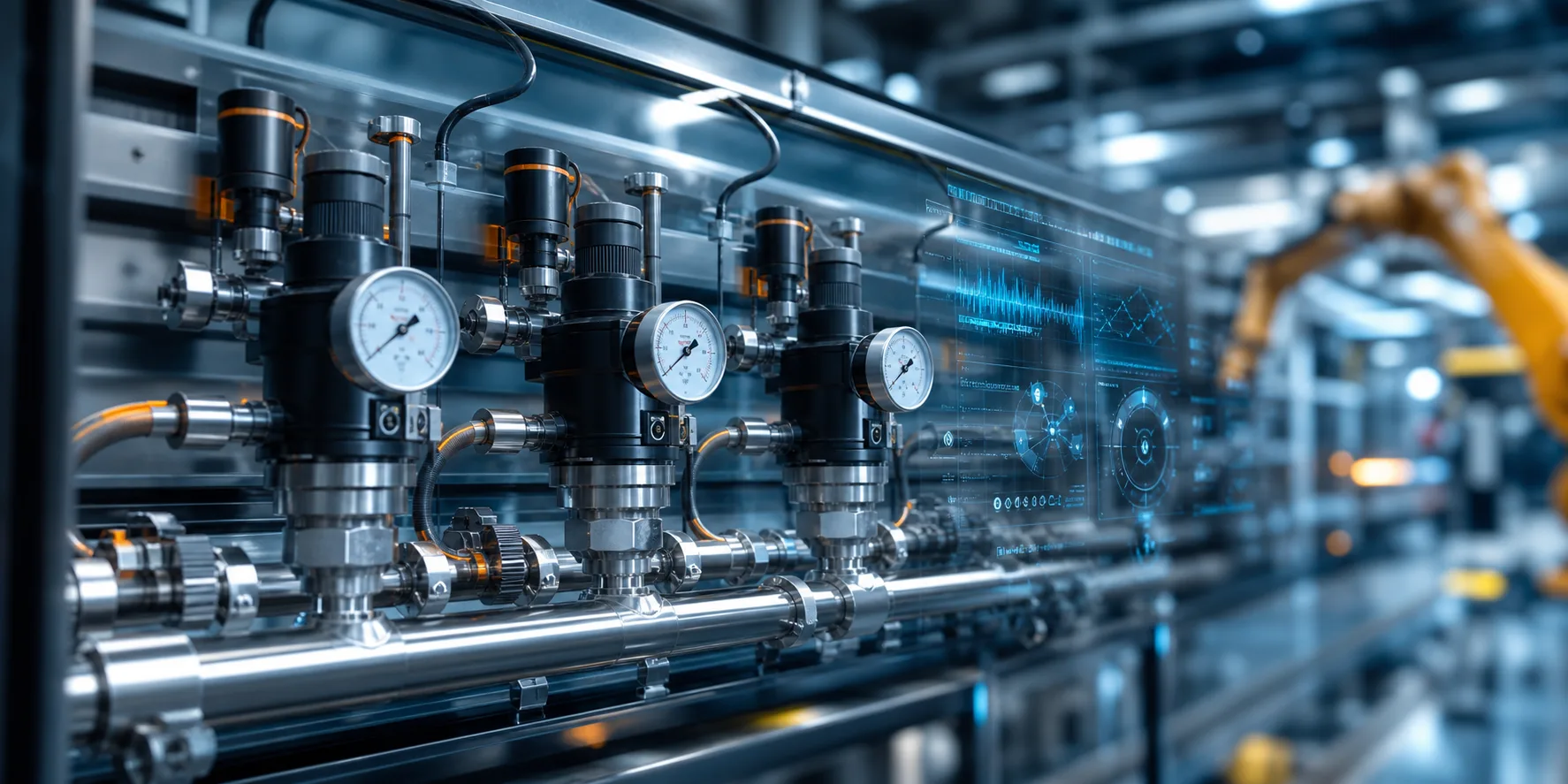
This trend matters because pneumatic equipment is sensitive to dirty or wet air. Solenoid valves, cylinders, regulators, and pneumatic tools can all suffer when particles, water, or oil carryover enter the circuit.
Source references: U.S. Department of Energy compressed air systems and Compressed Air Challenge library.
Why Filters Are Getting More Attention
In older pneumatic systems, filters were sometimes treated as low-priority accessories. That approach is changing. Modern production lines often use faster valves, compact cylinders, smaller tubing, and more sensors. These systems have less tolerance for contamination.
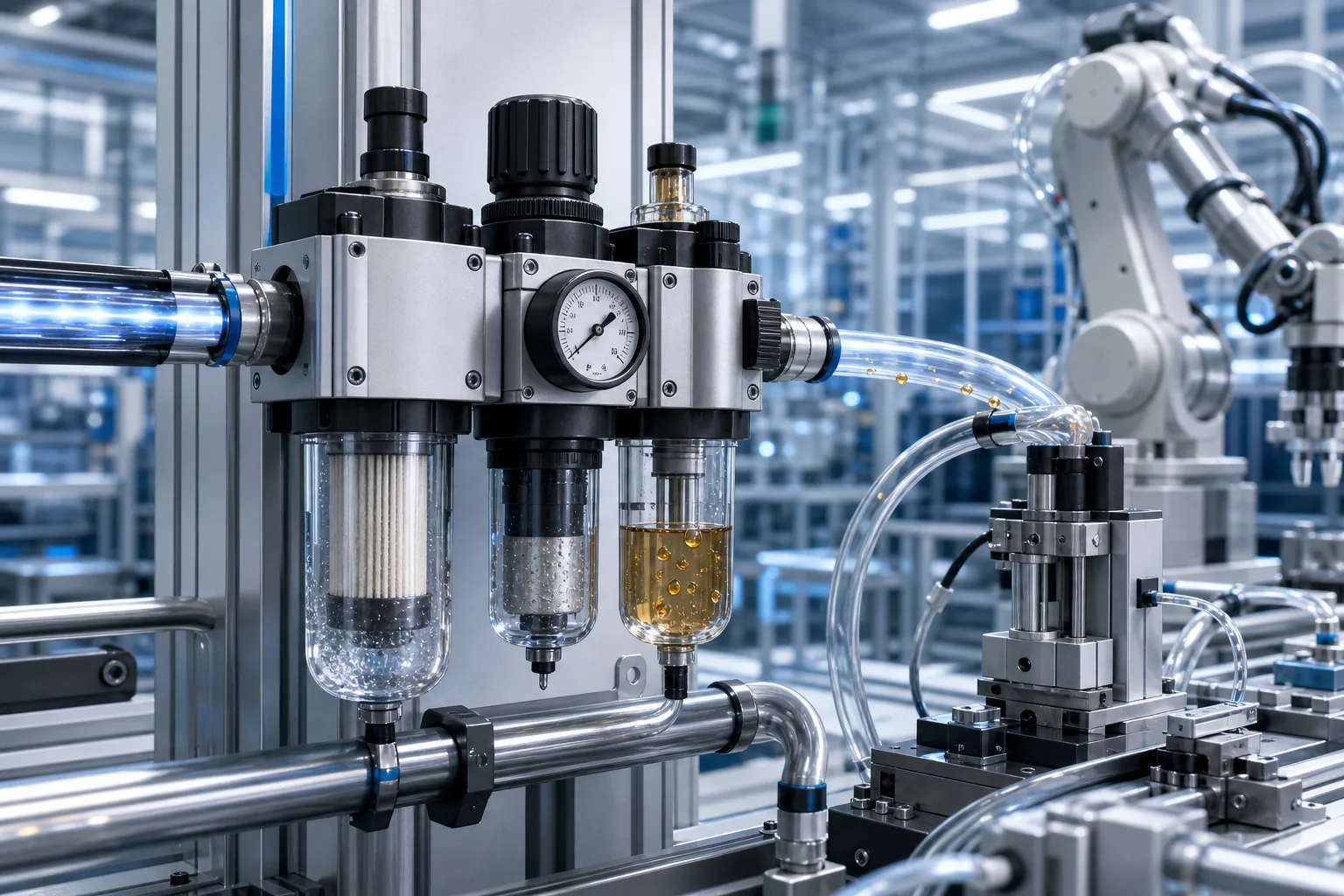
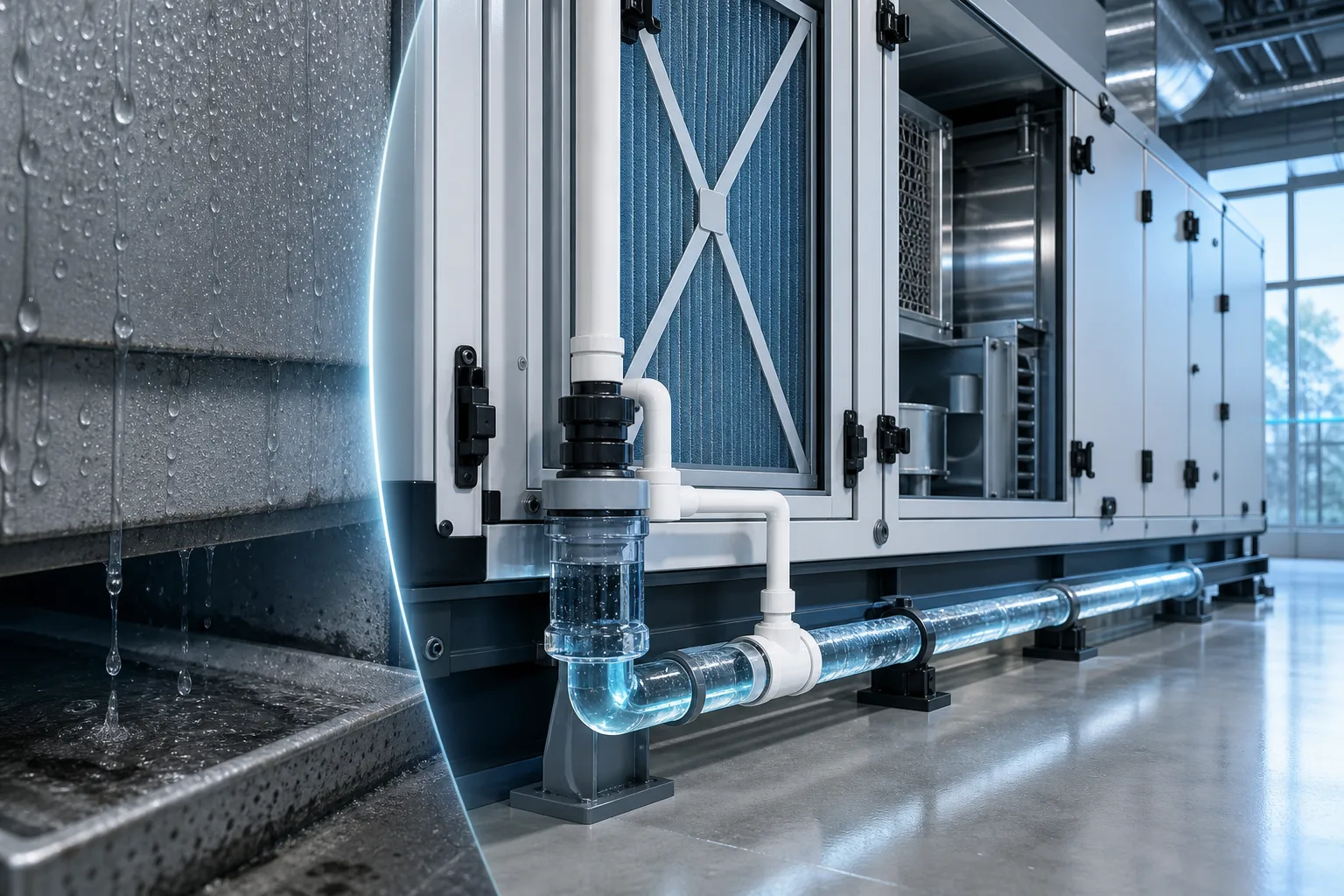
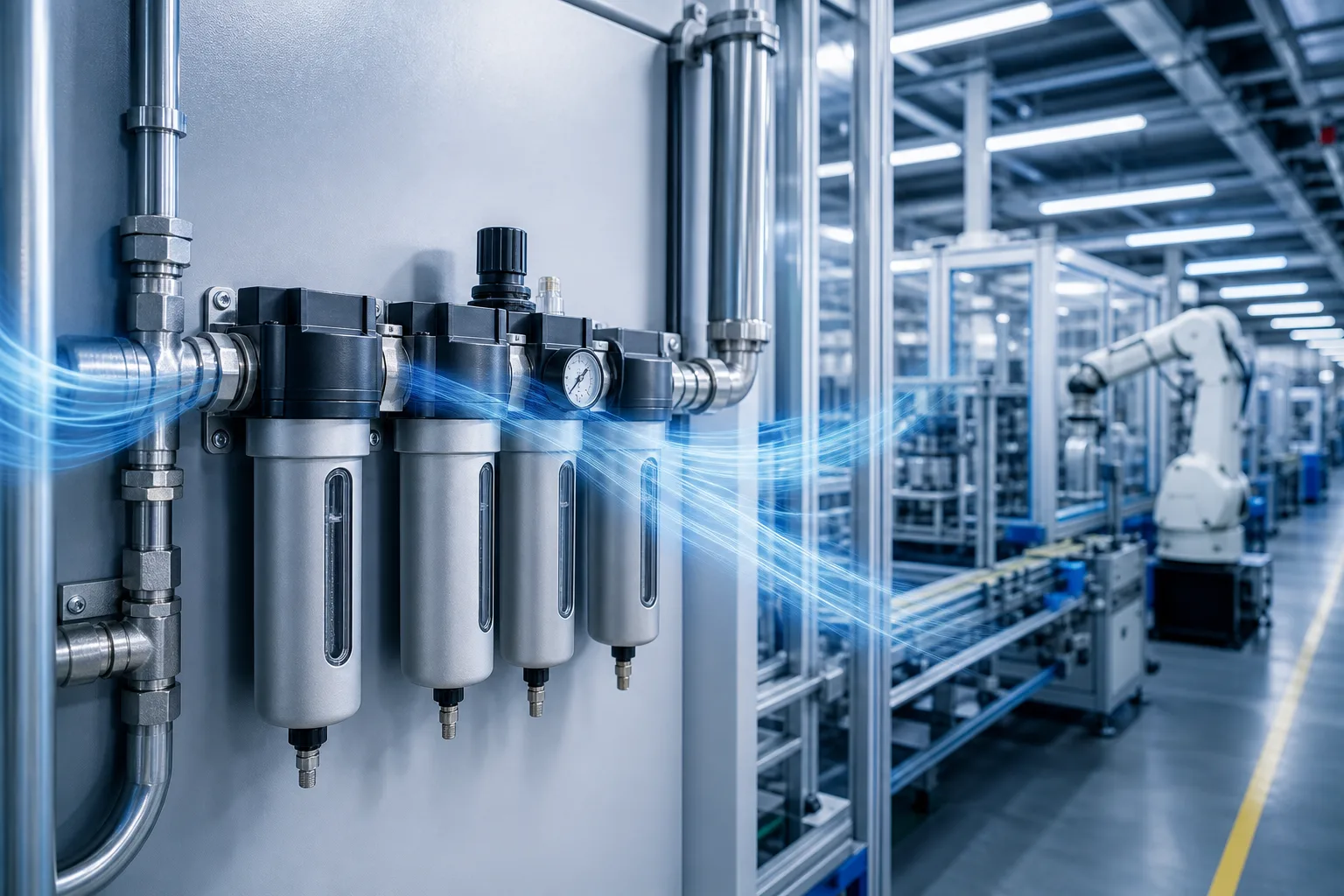
A pneumatic filter helps remove particles and moisture before air reaches the downstream circuit. In many machines, a filter regulator combines filtration and pressure control in one unit. Oil-water separators are also used where moisture and oil mist must be controlled more carefully.
When air quality is poor, the symptoms can appear in many ways: sticky valve spools, slow cylinder movement, damaged seals, unstable tool power, or frequent drain problems.
Air Quality Depends on the Application
Not every machine needs the same air quality. A simple workshop tool may have different requirements from an electronics assembly station or a packaging line. The correct air source treatment setup depends on the application, working environment, and downstream components.
For example, a packaging line may need stable filtration to protect valves and cylinders during long shifts. A precision regulator may be needed where pressure variation affects product handling. A lubricator may be useful for some air tools, while many modern automated systems prefer clean, dry, non-lubricated air.
Better Filters Reduce Maintenance Noise
Poor air quality creates confusing maintenance signals. If a valve fails early, the valve may be blamed even when the real cause is upstream contamination. If a cylinder moves slowly, the issue may be moisture, clogged filtration, or pressure drop rather than the cylinder itself.
Better filtration helps reduce this kind of troubleshooting noise. A clean air supply makes it easier to diagnose real mechanical or electrical problems.
HOMIPNEU’s air source treatment range includes filter regulators, FRL units, oil-water separators, pressure regulators, and lubricators for different compressed air layouts.
What Buyers Should Watch
In 2026, buyers should look for air treatment products that are easy to inspect and maintain. Clear bowls, pressure gauges, drain options, common port sizes, and standard replacement practices all matter in real factory use.
The best system is not the most complicated one. It is the one that delivers the right air quality for the application and can be maintained consistently.
Related Pneumatic Products
HOMIPNEU supplies pneumatic air filters, filter regulators, FRL units, oil-water separators, precision regulators, air hose, pneumatic fittings, and solenoid valves for industrial compressed air systems.