Why Quick Locking Matters in Pneumatic Speed Control Valves

Why Quick Locking Matters in Pneumatic Speed Control Valves

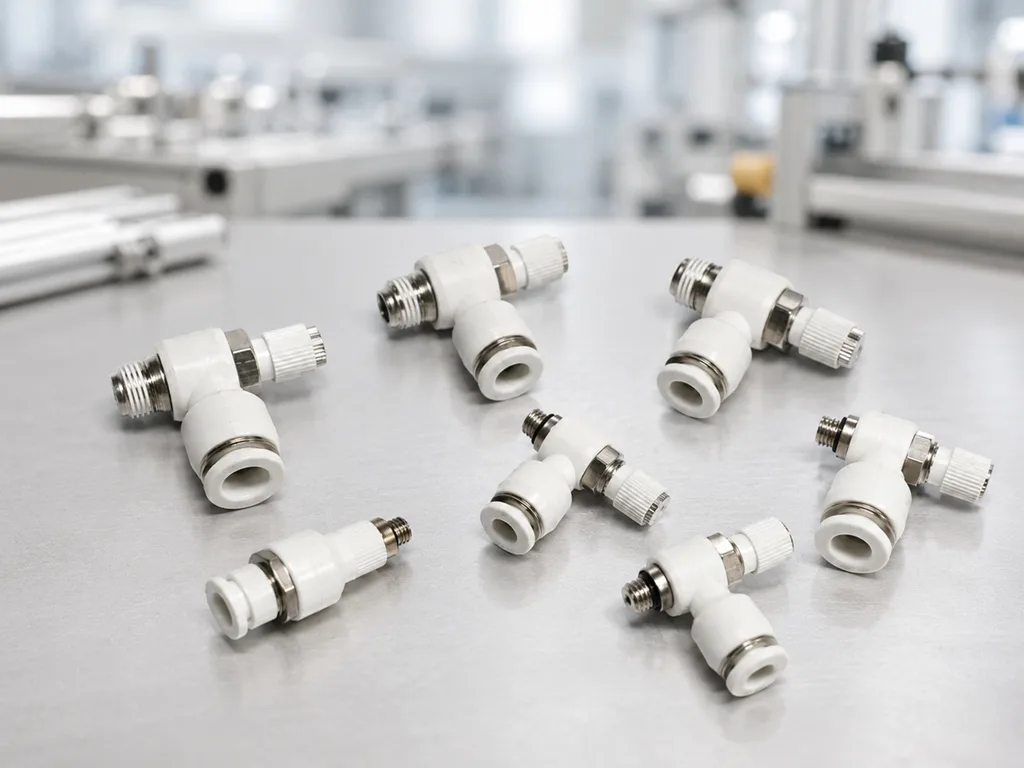
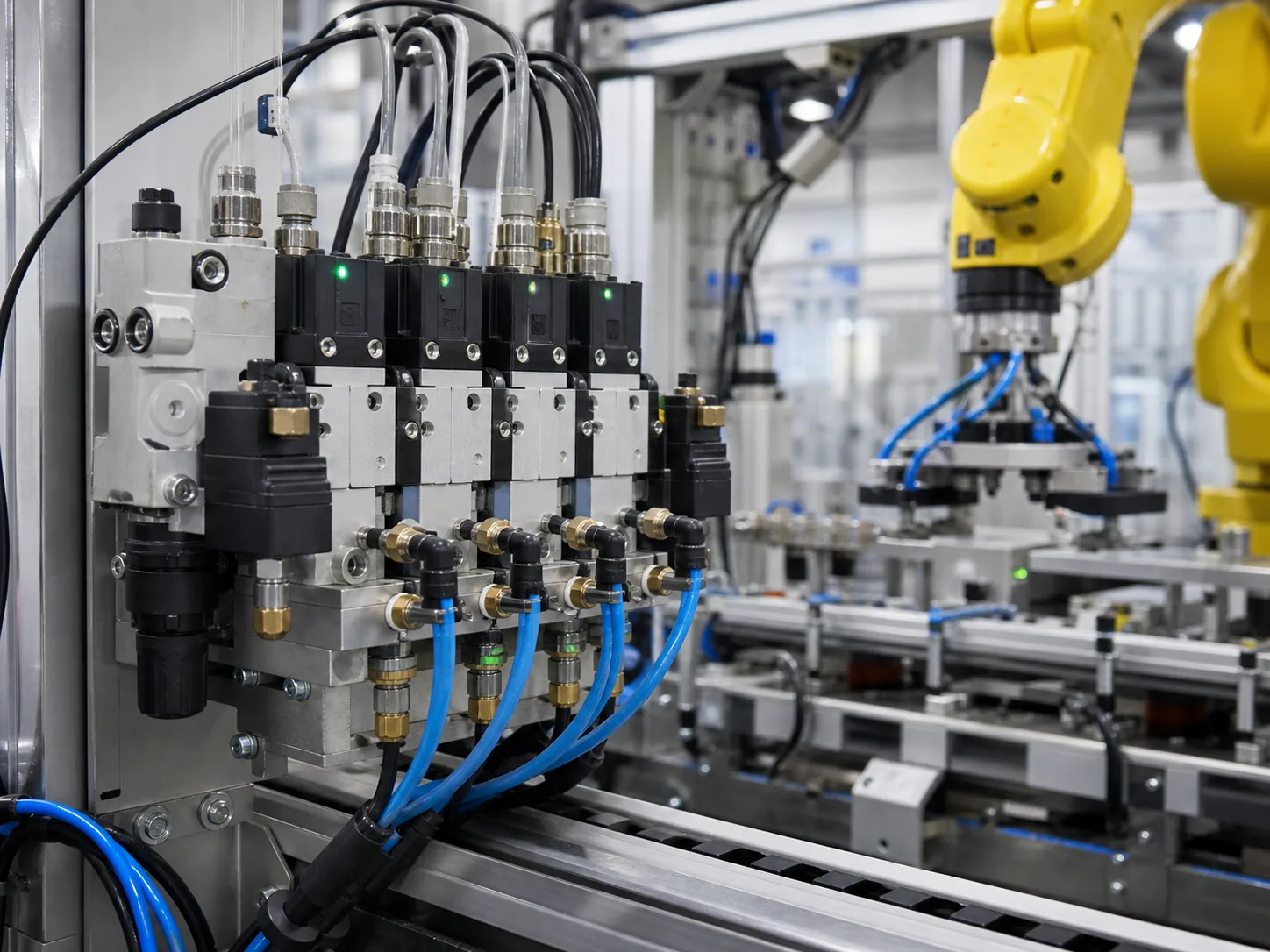
In pneumatic automation, speed control valves are small components, but they have a direct influence on machine movement. A cylinder may extend too fast, retract too slowly, or lose smooth motion if the airflow setting is not stable. That is why the locking structure of a speed control valve is more important than many users first realize. A standard pneumatic speed control valve usually works in a simple way. The operator adjusts the airflow by rotating the control knob. After the required speed is reached, the setting needs to stay fixed during machine operation. If the valve position changes after adjustment, the airflow also changes. As a result, the cylinder speed may become unstable. The HOMIPNEU SL Pneumatic Elbow Speed Control Valve with New Quick Automatic Locking Structure is developed to solve this practical problem. Its upgraded quick-locking mechanism helps secure the adjusted flow position more firmly after setup, especially in machines that run continuously or experience vibration. The Real Problem: Speed Changes After Adjustment Many pneumatic speed control problems do not appear immediately after installation. At first, the cylinder…

Views: 110     2026-06-28
New Product Release: SL Pneumatic Elbow Speed Control Valve with New Quick Automatic Locking Structure

New Product Release: SL Pneumatic Elbow Speed Control Valve with New Quick Automatic Locking Structure

In pneumatic automation systems, throttle valves and speed control valves are small components, but they play an important role in machine stability. Pneumatic cylinders, grippers, slides, lifting units, pushing mechanisms, and many other pneumatic actuators rely on speed control valves to regulate airflow and control movement speed. For many automation applications, speed control is not only about adjusting airflow. It is also about keeping the adjusted setting stable during long-term operation. To support more stable pneumatic speed control, HOMIPNEU is introducing the SL Pneumatic Elbow Speed Control Valve with new quick automatic locking structure. This new design is developed to help reduce the loosening problems commonly seen in traditional locking structures and provide more reliable speed control for pneumatic systems. Why Speed Control Stability Matters From the basic structure and operation, a pneumatic speed control valve is not complicated. In most applications, the operator manually adjusts the airflow by turning the control knob. By increasing or reducing the airflow, the valve controls the movement speed of the pneumatic cylinder or actuator. After the desired speed is set, the adjusted position…

Views: 301     2026-06-27
A Practical Discussion About Stability in Pneumatic Speed Control Valves

A Practical Discussion About Stability in Pneumatic Speed Control Valves

In pneumatic automation systems, throttle valves and speed control valves are common but important components. They are widely used with pneumatic cylinders, grippers, slides, lifting units, pushing mechanisms, and many other pneumatic actuators. Their main function is to regulate airflow and control the operating speed of pneumatic motion. From the basic structure and operation, a pneumatic speed control valve is not complicated. In most applications, the operator adjusts airflow by turning the control knob. Increasing or reducing airflow changes the movement speed of the pneumatic cylinder or actuator. After the desired speed is set, the position must be locked to keep the flow setting stable. The process sounds simple: adjust the speed, lock the setting, and let the machine run. In real factory conditions, however, many problems do not appear during the first adjustment. They often appear only after the machine has been running for some time. Why Stability Matters After Adjustment In continuous automation systems, pneumatic cylinders move repeatedly, machines generate vibration, and air pressure may fluctuate during operation. Under these conditions, a traditional locking structure may gradually become…

Views: 171     2026-06-27
Russia’s 2026 Factory Reset Puts Pneumatic Solenoid Valves Back in the Procurement Spotlight

Russia’s 2026 Factory Reset Puts Pneumatic Solenoid Valves Back in the Procurement Spotlight

Russian manufacturers are taking a cautious but practical approach to automation in 2026, keeping pneumatic solenoid valves in focus for maintenance, retrofit and uptime-driven procurement.

Views: 145     2026-06-25
Russian OEMs Look to Compact 3/2 and 5/2 Solenoid Valves as Automation Budgets Tighten in 2026

Russian OEMs Look to Compact 3/2 and 5/2 Solenoid Valves as Automation Budgets Tighten in 2026

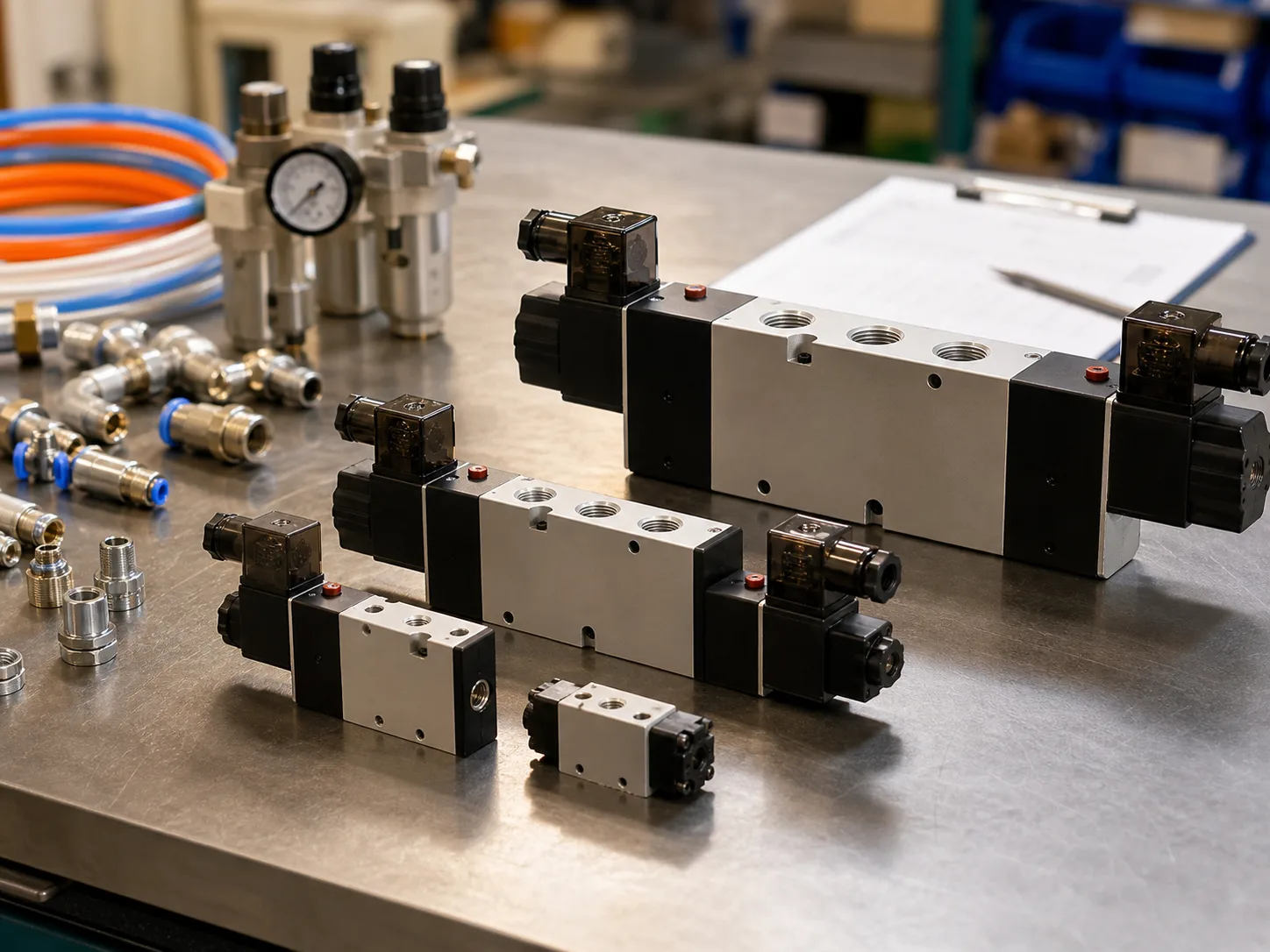
Russian OEMs are favoring compact 3/2, 5/2 and 5/3 solenoid valves in 2026 as they protect automation functions while keeping machine costs and redesign work under control.

Views: 138     2026-06-25
Fluid Control Demand in Russia Lifts Interest in Brass and Stainless Steel Solenoid Valves

Fluid Control Demand in Russia Lifts Interest in Brass and Stainless Steel Solenoid Valves

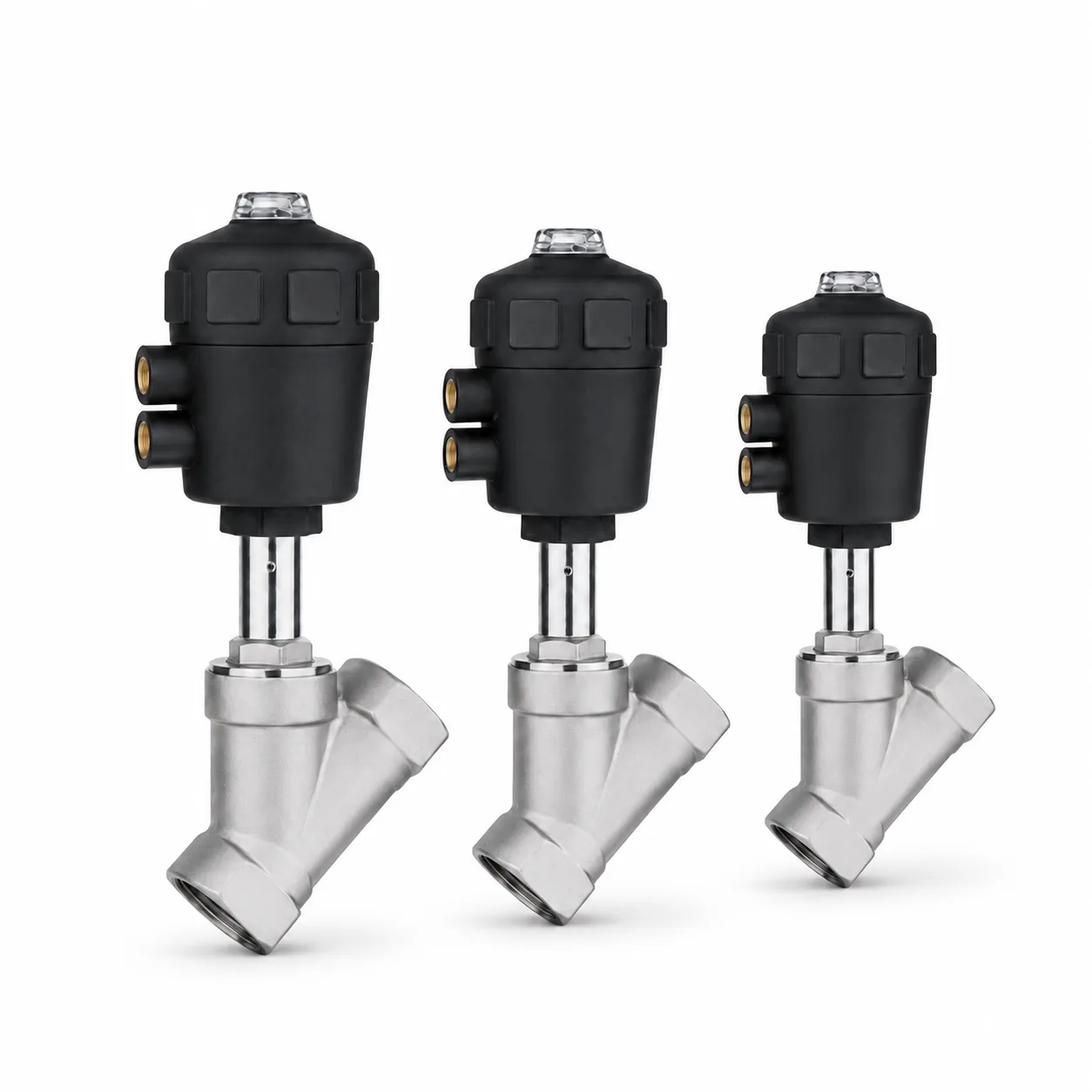
Russian fluid-control buyers are comparing brass, stainless steel and plastic solenoid valves more carefully in 2026 as maintenance and retrofit projects continue across utilities and factories.

Views: 128     2026-06-25
Explosion-Proof NAMUR Solenoid Valves Gain Attention in Russia’s Process Industries

Explosion-Proof NAMUR Solenoid Valves Gain Attention in Russia’s Process Industries

Russia’s process industries are paying closer attention to explosion-proof NAMUR solenoid valves in 2026 as plants extend actuator life and focus on safe, reliable pneumatic control.

Views: 129     2026-06-25
Water Treatment and Utility Projects Keep Plastic Solenoid Valves on Russia’s 2026 Buying List

Water Treatment and Utility Projects Keep Plastic Solenoid Valves on Russia’s 2026 Buying List

Plastic solenoid valves remain relevant for Russia’s 2026 water treatment and utility-control projects, especially where compact size, cost control and simple replacement matter.

Views: 124     2026-06-25
Lubrication Strategy Is Changing: How FRL Units Fit Modern Pneumatic Systems

Lubrication Strategy Is Changing: How FRL Units Fit Modern Pneumatic Systems

Modern pneumatic systems do not always need added lubrication. Learn how FRL units, lubricators, and clean air strategies are changing in factory automation.

Views: 111     2026-06-25
Pressure Stability Is Becoming a Bigger Automation Issue: Precision Regulators Gain Attention

Pressure Stability Is Becoming a Bigger Automation Issue: Precision Regulators Gain Attention

Automation systems need stable compressed air pressure for repeatable motion. Learn why precision regulators and filter regulators are gaining attention in pneumatic equipment.

Views: 111     2026-06-25
Condensate Management in 2026: Why Air Treatment Units Need Better Drain Control

Condensate Management in 2026: Why Air Treatment Units Need Better Drain Control

Condensate control is a practical issue in compressed air systems. Learn why drains, filters, oil-water separators, and FRL units matter for pneumatic reliability.

Views: 109     2026-06-25
Air Quality Requirements Are Raising Demand for Better Pneumatic Filters

Air Quality Requirements Are Raising Demand for Better Pneumatic Filters

Factories are paying closer attention to compressed air quality. See why pneumatic filters, oil-water separators, and filter regulators are becoming more important.

Views: 98     2026-06-25
Compressed Air Energy Savings in 2026: Why Air Source Treatment Matters

Compressed Air Energy Savings in 2026: Why Air Source Treatment Matters

Compressed air efficiency remains a major factory issue in 2026. Learn why filters, regulators, FRL units, and stable pressure control are central to air source treatment.

Views: 118     2026-06-25
Air Hose Troubleshooting: Leaks, Pressure Loss, and Slow Response

Air Hose Troubleshooting: Leaks, Pressure Loss, and Slow Response

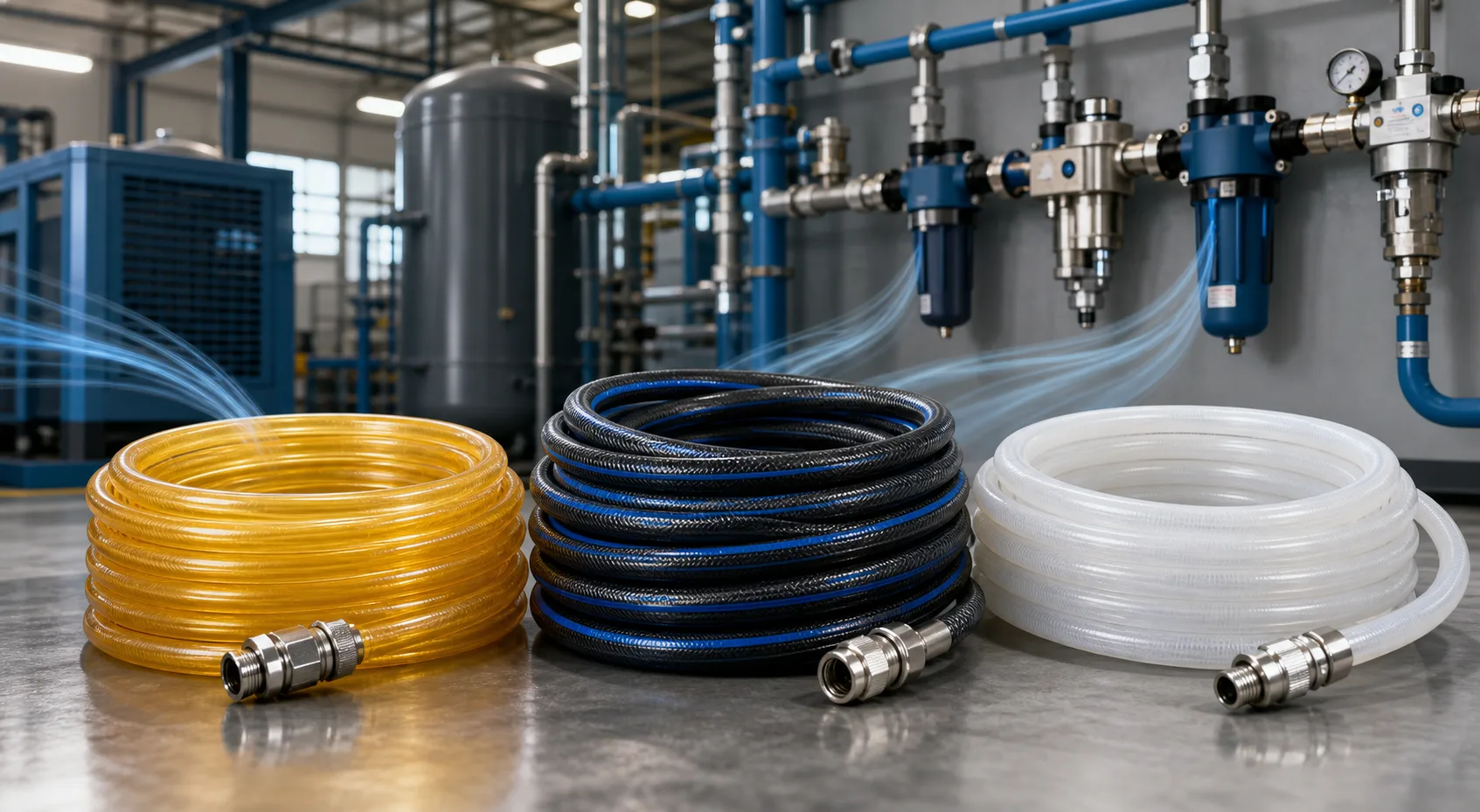
Troubleshoot common air hose problems such as leaks, pressure loss, and slow response. Learn how hose condition, fittings, and routing affect pneumatic performance.

Views: 175     2026-06-24
Double Layer Anti-Spark Air Hose for Harsh Industrial Areas

Double Layer Anti-Spark Air Hose for Harsh Industrial Areas

Double layer anti-spark air hose is designed for harsher industrial environments. Compare its structure, advantages, and selection points for welding and high-risk areas.

Views: 134     2026-06-24
Spiral PU Air Hose for Pneumatic Tools and Workstations

Spiral PU Air Hose for Pneumatic Tools and Workstations

Spiral PU air hose helps keep tool stations organized and flexible. Learn where it works best, how it compares with straight tubing, and what to check before buying.

Views: 138     2026-06-24