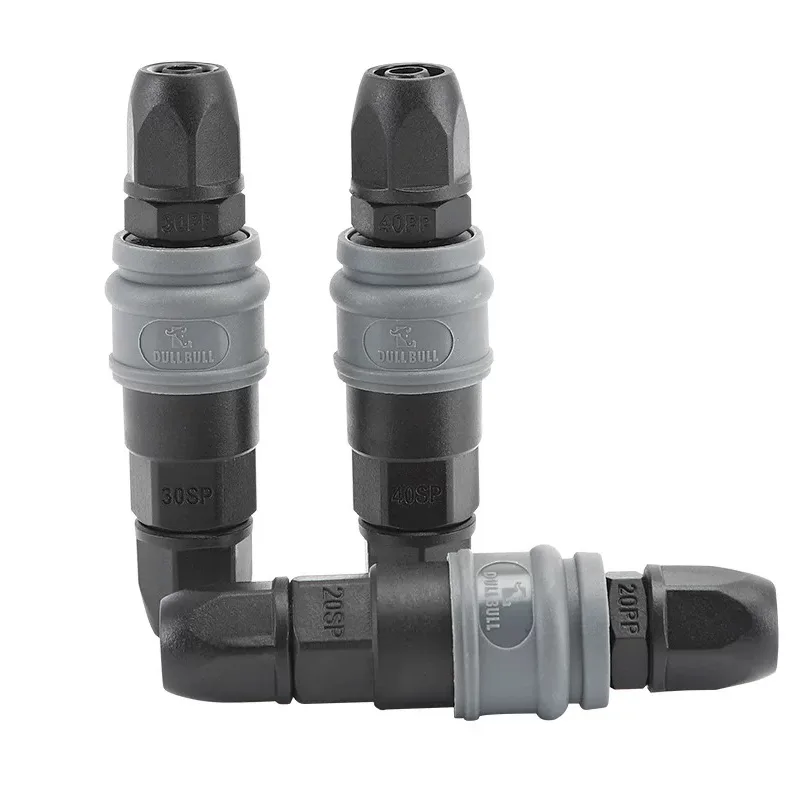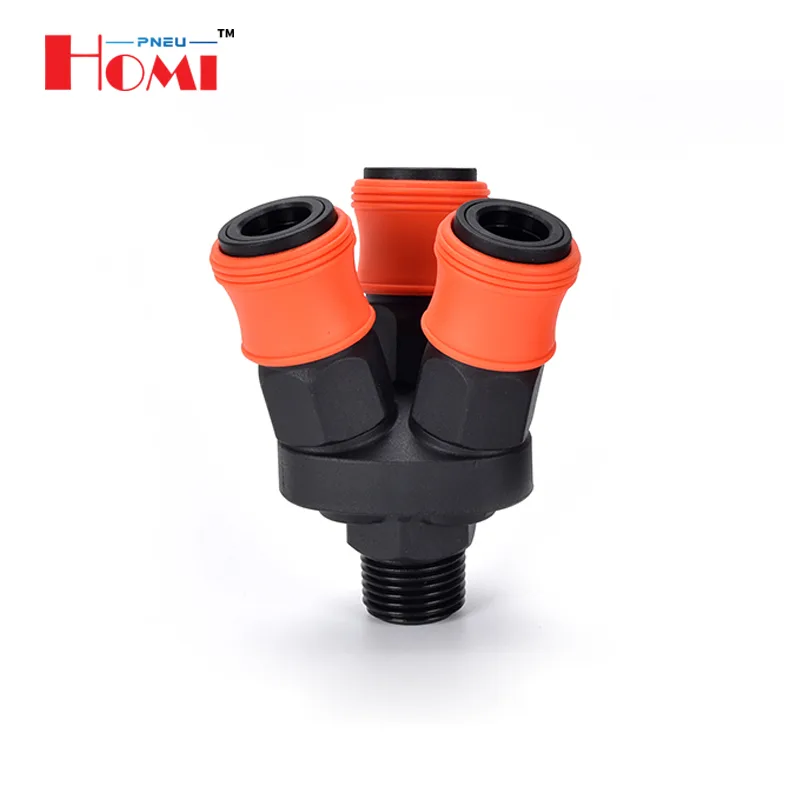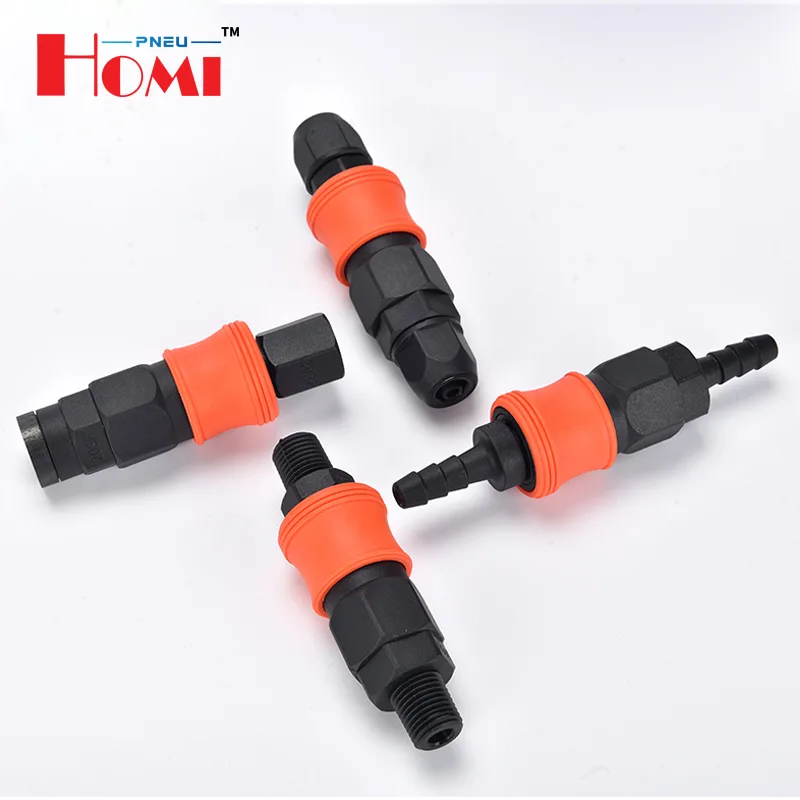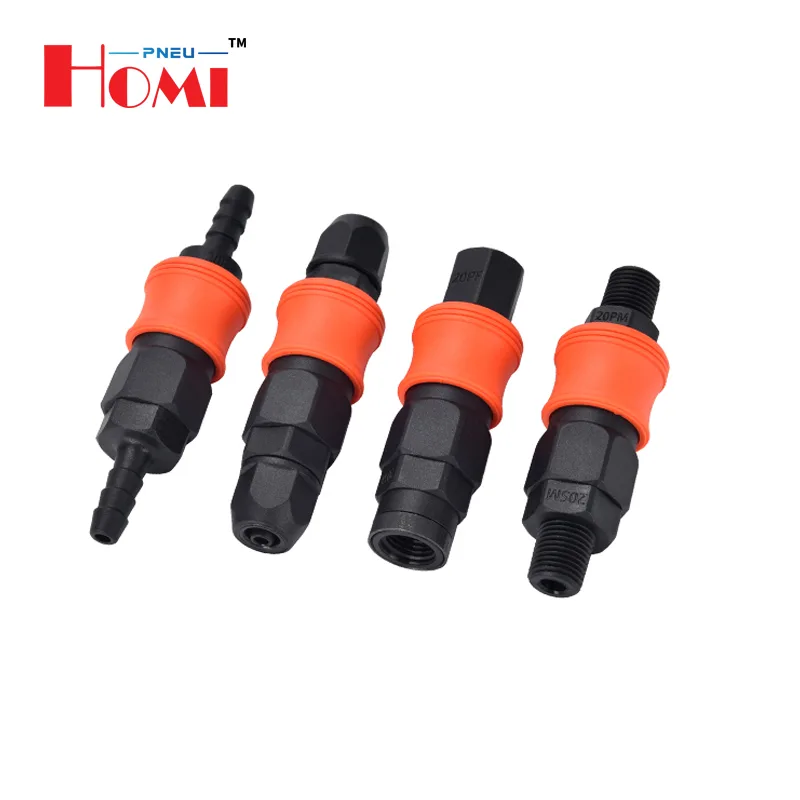
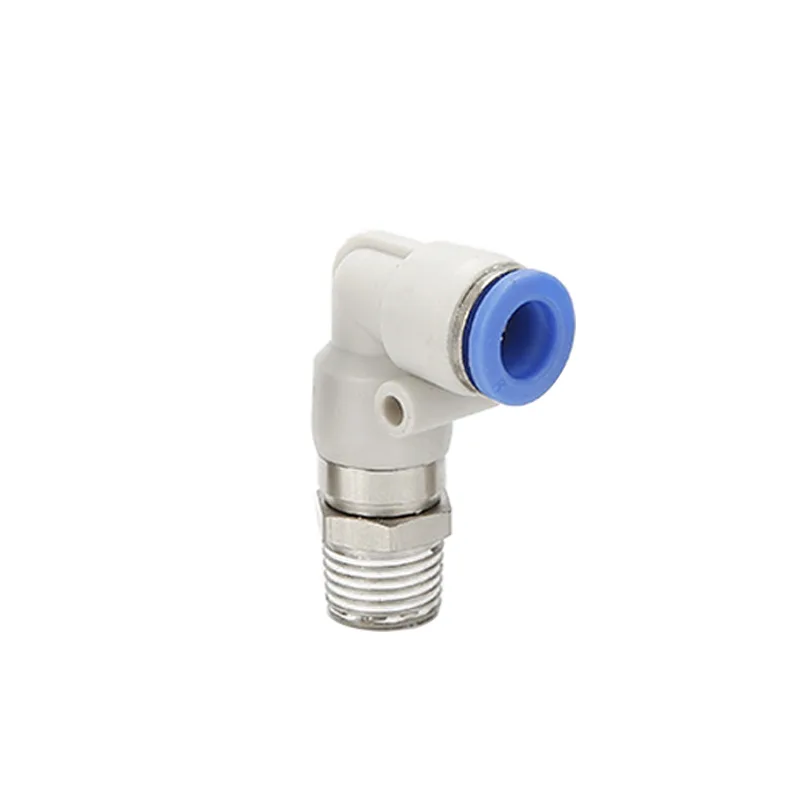
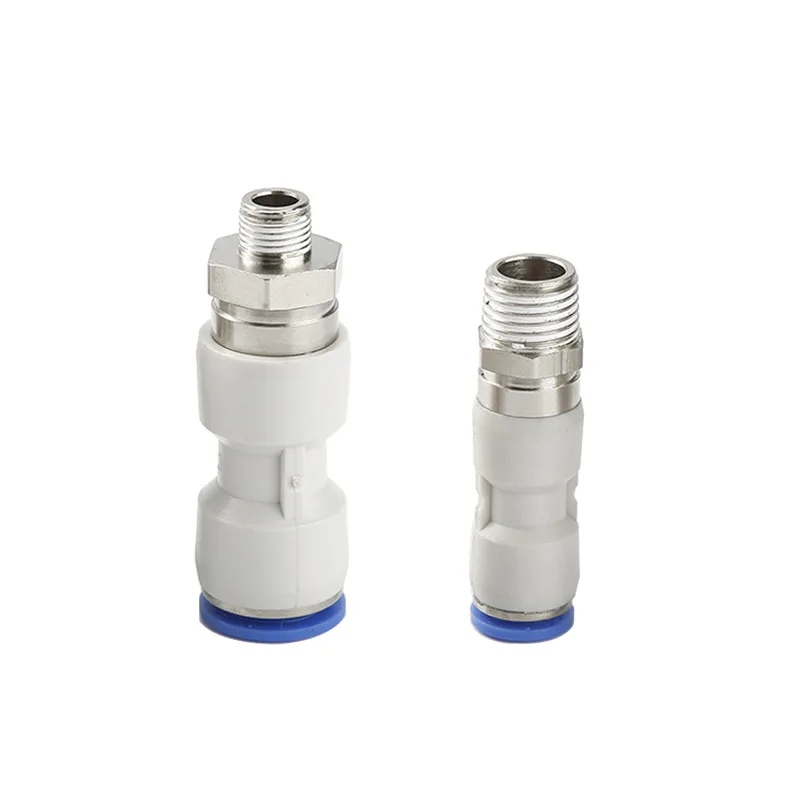
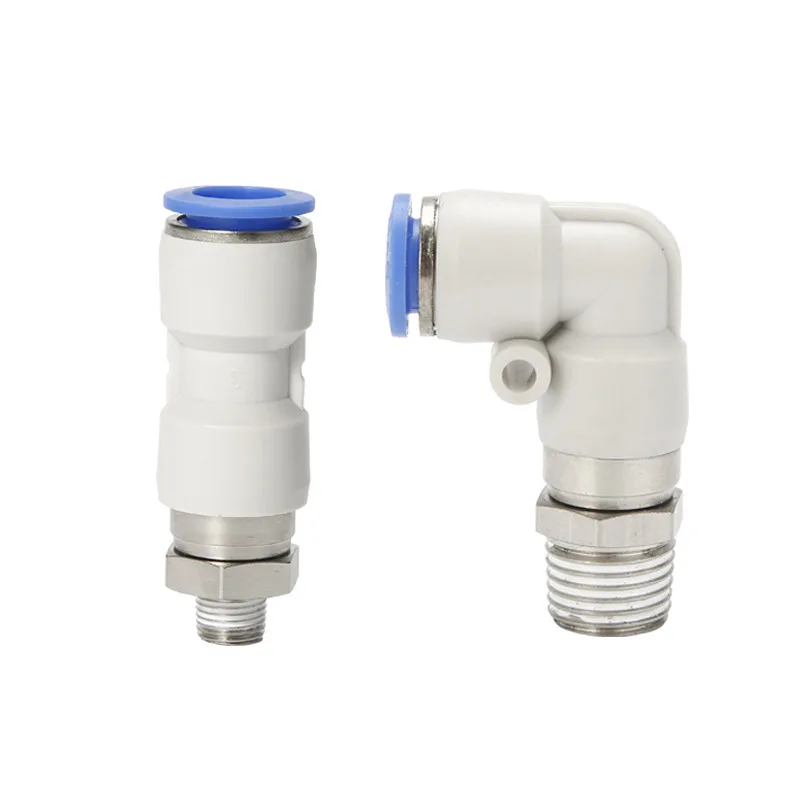
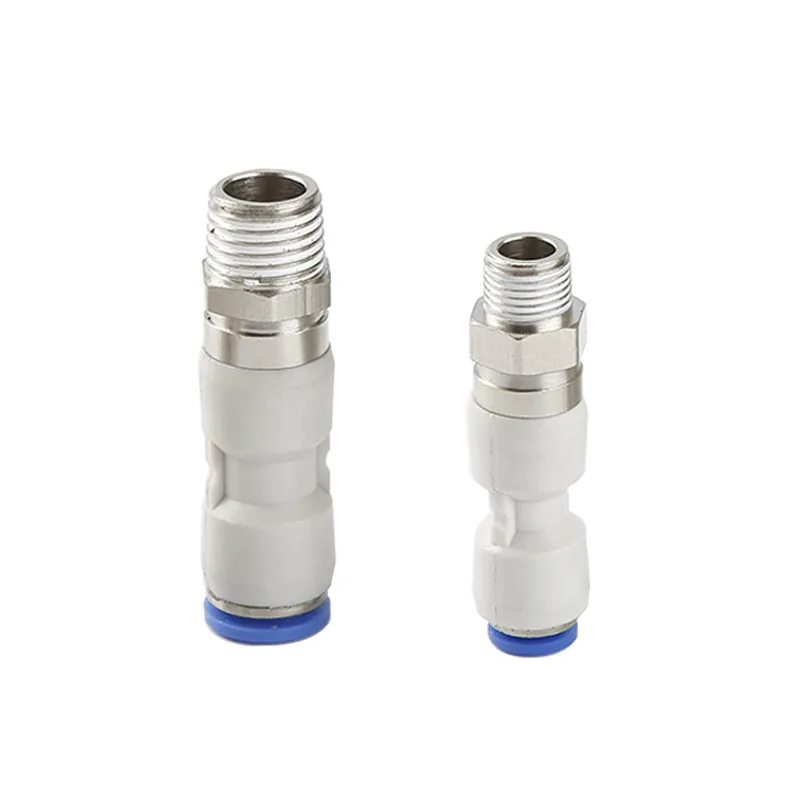
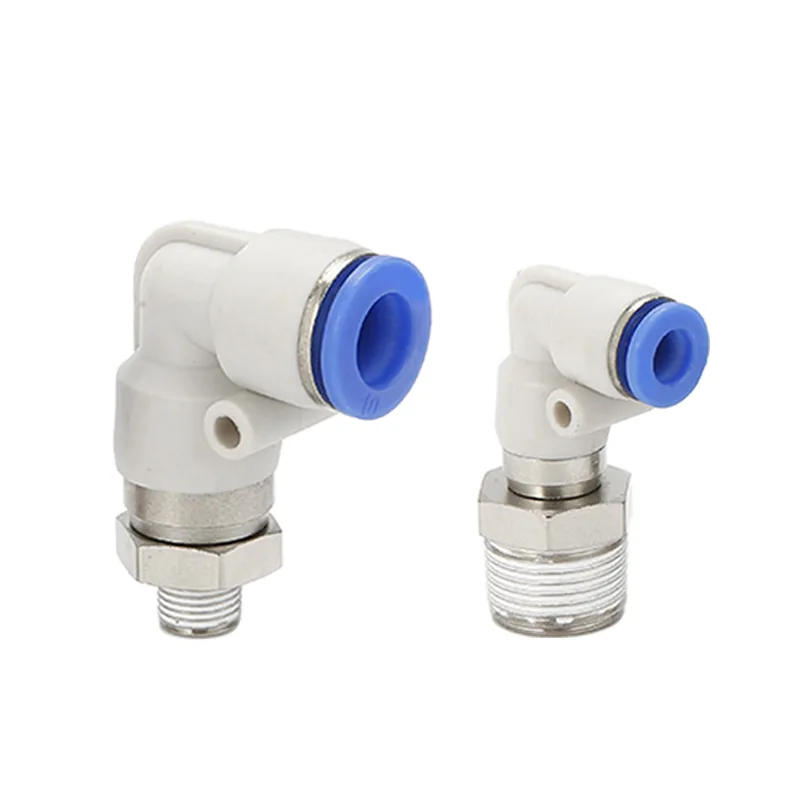
The HRC pneumatic joint high-speed rotary joint is used in compressed air systems where the connection point needs to rotate or move during operation. Unlike a fixed connector, a rotary joint helps reduce hose twisting and bending stress when the air line is connected to a moving tool, rotating fixture or automation component.
In pneumatic equipment, hose movement is a common cause of leakage and premature wear. If a fixed connector is forced to rotate with the hose, the thread, tube or fitting seal may become stressed. The HRC high-speed rotary joint provides a more flexible connection method for these working conditions.
What Is an HRC Pneumatic Rotary Joint?
An HRC pneumatic rotary joint is a rotating air connector used to transfer compressed air between a fixed air line and a moving or rotating part. It allows the connected hose or component to rotate more freely while maintaining an air passage through the joint.
This type of fitting is useful when standard straight fittings or quick joints would be pulled, twisted or bent during operation. By reducing torsion on the hose, the rotary joint helps improve connection reliability and service life.
Main Product Features
- Rotary connection: helps reduce hose twisting during machine movement.
- High-speed application support: suitable for pneumatic systems with frequent motion.
- Tube size range: available for 4 mm to 12 mm pneumatic tubes.
- Clean air use: designed for compressed air pneumatic circuits.
- PU and nylon hose compatibility: suitable for common pneumatic tubing materials.
Typical Applications
HRC pneumatic rotary joints are used in systems where the air line must move naturally without forcing the hose to twist. Typical applications include:
- Rotating pneumatic fixtures
- Automation equipment with moving arms
- Pneumatic tools and tool stations
- Packaging and assembly machinery
- Robotic end tooling and gripper circuits
- Air lines that need frequent directional movement
- Compact pneumatic layouts with limited hose space
For best results, the rotary joint should be selected together with the correct tube size, hose material and related pneumatic fittings.
Product Specifications
| Item | Description |
|---|---|
| Product name | HRC pneumatic joint high-speed rotary joint |
| Type | HRC type rotary pneumatic joint |
| Tube size | 4 mm to 12 mm |
| Fluid | Clean air |
| Used hose | PU hose or nylon hose |
| Working pressure | 0 to 1.0 MPa |
| Working temperature | 0°C to 60°C |
Why Use a Rotary Joint Instead of a Fixed Fitting?
A fixed fitting is suitable when the hose does not rotate or move much. However, when the connected part moves repeatedly, the hose can twist around the fitting. This may create side load, restrict airflow, damage the tube wall or loosen the thread over time.
A rotary joint helps solve this problem by allowing movement at the connection point. It is especially useful in compact machines where the air hose cannot be routed with a large free loop.
How to Choose the Right HRC Rotary Joint
Selection should start with tube size and working conditions. The joint must match the outside diameter of the pneumatic tube, and the hose material should be suitable for the movement and pressure of the system.
- Confirm tube OD, such as 4 mm, 6 mm, 8 mm, 10 mm or 12 mm.
- Choose PU hose for flexible movement or nylon hose for stronger fixed sections.
- Check that system pressure does not exceed the rated range.
- Confirm that the medium is clean compressed air.
- Review the rotation direction and available installation space.
Installation Notes
Before installation, check the joint body, thread and tube connection area. The tube end should be cut squarely and inserted fully. If the hose is scratched, crushed or pulled sideways, leakage may occur even with a good fitting.
- Do not install the joint where it will carry heavy mechanical load.
- Avoid sharp bending immediately after the tube outlet.
- Keep dust, thread chips and sealing tape fragments out of the air line.
- Check rotation after installation before running the machine at normal speed.
- Inspect the joint regularly in high-cycle applications.
Common Problems and Prevention
Common problems include air leakage, rough rotation, tube pull-out or premature hose damage. These issues are usually caused by wrong tube size, poor tube cutting, excessive side load, contamination or using the joint outside its rated pressure and temperature range.
To prevent problems, choose the correct size, keep the air clean, avoid over-tightening and provide enough hose length for natural movement. In high-speed or high-cycle equipment, regular inspection is recommended.
FAQ: HRC Pneumatic Rotary Joint
What is the HRC rotary joint used for?
It is used to transfer compressed air through a connection point that needs to rotate or move, helping reduce hose twisting and fitting stress.
What tube sizes are available?
The HRC type is used with pneumatic tube sizes from 4 mm to 12 mm, depending on the selected model.
Can it be used with PU and nylon hose?
Yes. It is suitable for PU hose and nylon hose when the tube size and working conditions match the product specification.
What medium can be used?
This rotary joint is designed for clean compressed air. It should not be used with flammable, explosive or corrosive media unless the product is specifically rated for that use.
HOMIPNEU Pneumatic Rotary Joint Supply
HOMIPNEU supplies HRC pneumatic rotary joints, quick connectors, air fittings and pneumatic tubing for industrial compressed air systems. For OEM orders or distributor supply, provide the tube size, pressure, hose material and working movement so the correct fitting can be selected.