A pneumatic tube can fit the port and still be wrong for the job. If its inside diameter is too small, an air tool may lose torque and a cylinder may slow during peak demand. If the wall is too thin for the operating conditions, the pressure margin may be inadequate. If the material is too flexible or too rigid for the route, installation and service life can suffer.
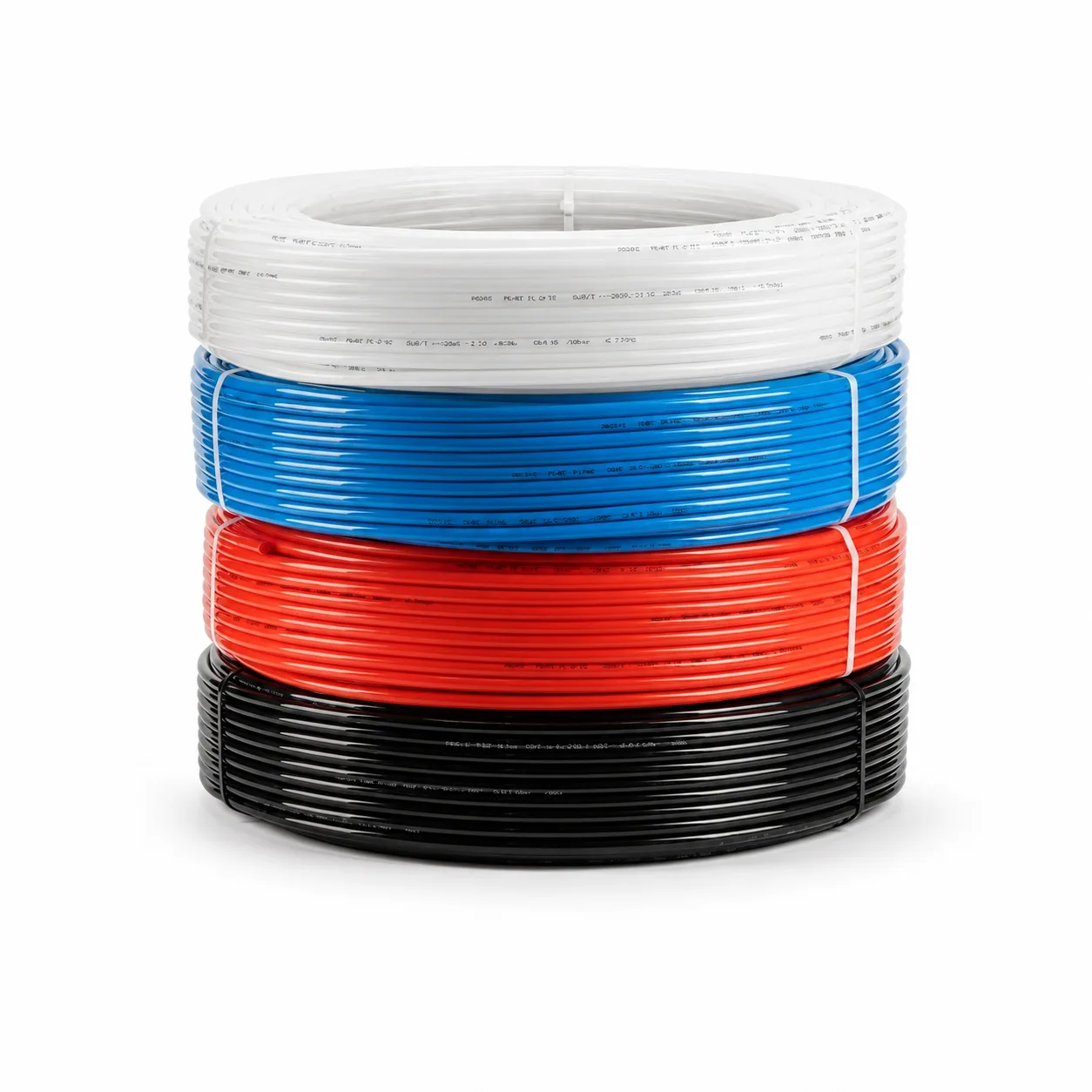
The HOMIPNEU PA Nylon Pneumatic Tube for Air Systems and Tools is a semi-rigid polyamide air line for valves, cylinders, manifolds, machine panels, pneumatic tools and automation equipment. Published metric sizes cover 4 mm through 16 mm outside diameter, giving designers several flow and routing options for compact control circuits and larger machine branches.
This guide explains how to choose PA nylon pneumatic tubing by outside diameter, inside diameter, airflow, pressure, temperature, bend radius and fitting compatibility. The objective is not simply to select the largest tube. It is to deliver the required air at the point of use while keeping the route practical, safe and economical.
What Is PA Nylon Pneumatic Tube?
PA nylon pneumatic tube is a semi-rigid compressed-air line made from polyamide. Compared with standard flexible PU tubing, nylon generally has a firmer profile and better shape retention. Those characteristics make it useful for fixed routing inside machine frames, control panels and production equipment.
The product page identifies PA nylon/polyamide as the material and recommends PA12, subject to final material confirmation. That qualification matters. PA6, PA11, PA12 and other polyamide grades do not have identical moisture absorption, flexibility, temperature behavior or pressure performance. Confirm the actual material grade when a project specification calls for PA12.
Why PA Nylon Is Used in Compressed-Air Systems
- Firm routing: the tube holds a cleaner path across panels and machine frames than very soft tubing.
- Dimensional stability: consistent outside diameter supports reliable engagement with correctly selected push-in fittings.
- Practical pressure resistance: the material suits many industrial pneumatic circuits when pressure and temperature are within the confirmed rating.
- Abrasion resistance: nylon can tolerate normal industrial handling, although sharp edges and continuous rubbing still require protection.
- Compact metric sizes: outside diameters from 4 to 16 mm serve pilot circuits, actuators, manifolds, machine branches and suitable air tools.
- Moisture resistance: PA tubing is practical in many factory environments, but the exact grade and exposure still need review.
Published Models and Dimensions
| Model | Outside Diameter | Inside Diameter | Wall Thickness | Typical Selection Focus |
|---|---|---|---|---|
| PA0425 | 4 mm | 2.5 mm | 0.75 mm | Compact pilot lines; check pressure drop carefully |
| PA0403 | 4 mm | 3 mm | 0.50 mm | More flow area at 4 mm OD; confirm pressure rating |
| PA0604 | 6 mm | 4 mm | 1.00 mm | Small cylinders and machine control circuits |
| PA0645 | 6 mm | 4.5 mm | 0.75 mm | More flow area at 6 mm OD; verify pressure margin |
| PA0806 | 8 mm | 6 mm | 1.00 mm | Actuator branches and moderate-flow equipment |
| PA1075 | 10 mm | 7.5 mm | 1.25 mm | Larger branches, longer routes and tools |
| PA1209 | 12 mm | 9 mm | 1.50 mm | Machine supply branches and higher demand |
| PA1613 | 16 mm | 13 mm | 1.50 mm | Higher-flow distribution within the approved rating |
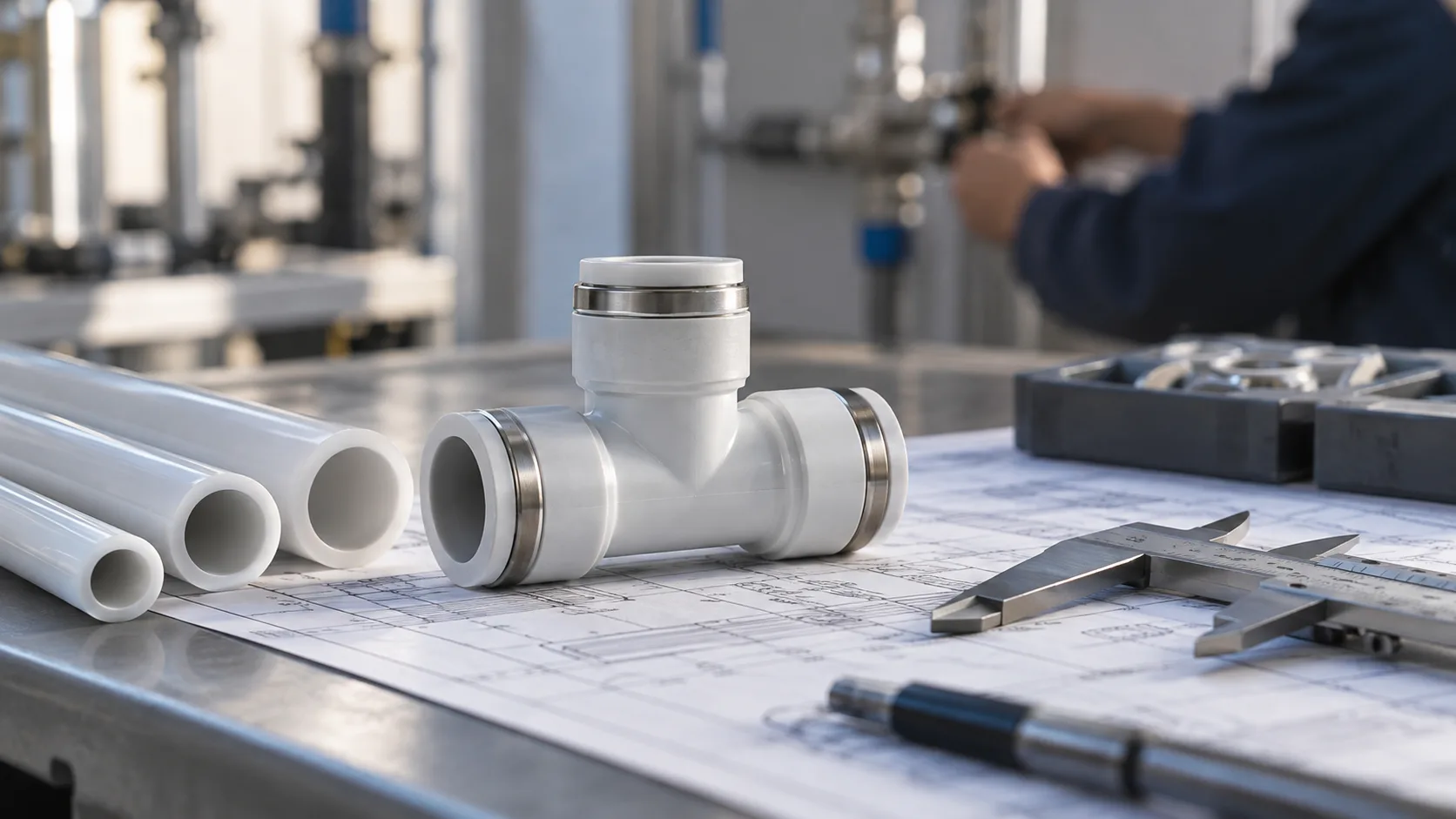
Outside diameter determines fitting compatibility. Inside diameter determines flow area. Wall thickness influences mechanical strength and the allowable pressure for a particular material and temperature. Never order only “6 mm nylon tube” when two 6 mm OD options have different bores and wall thicknesses.
OD and ID: The Two Dimensions That Matter
Pneumatic push-in fittings are normally selected by tube outside diameter. A 6 mm fitting accepts a compatible 6 mm OD tube, but it does not identify the bore. The PA0604 and PA0645 models both have a 6 mm outside diameter, yet their inside diameters are 4 and 4.5 mm.
The 4.5 mm bore has more flow area, while the 4 mm bore has a thicker wall. That does not automatically make one better. The correct choice depends on required flow, operating pressure, temperature, fitting retention and the confirmed rating for the exact model.
For more dimensional context, review the pneumatic air hose size guide.
How Tube Size Affects Airflow
Compressed air loses pressure as it passes through tubing. Friction increases with line length and becomes more important as the bore gets smaller or the flow gets higher. Elbows, valves, quick couplers, silencers and regulators add further restriction.
An undersized tube may appear acceptable when equipment is idle. During a cylinder stroke or tool start, however, the point-of-use pressure can drop sharply. The result may be slow actuator movement, reduced clamp force, weak tool torque, incomplete cycles or unstable process timing.
When selecting a size, collect:
- Required normal and peak airflow
- Supply pressure and minimum point-of-use pressure
- Total tube length, including moving sections
- Number and type of fittings, valves and restrictions
- Actuator bore, stroke and required cycle time
- Air tool consumption and duty cycle
- Number of devices operating simultaneously
Use a manufacturer sizing chart, pneumatic calculation tool or representative flow test. Measure dynamic pressure close to the device while the circuit operates at maximum demand; a static gauge reading alone does not prove adequate flow.
Selecting Nylon Tube for Pneumatic Tools
Blow guns, pneumatic screwdrivers, staplers and other air tools can have short but substantial flow peaks. Tool performance depends on pressure at the inlet, not only at the compressor or wall outlet. A long small-bore nylon line may starve the tool even when the supply gauge reads correctly.
Compare the tool manufacturer’s stated air consumption and minimum inlet pressure with the full air path. Include the regulator, filter, coupler, fitting port, tube ID and line length. For tools that are moved frequently by the operator, also decide whether semi-rigid nylon is sufficiently flexible. A flexible PU or recoil hose may be more comfortable for a handheld moving section, while nylon can remain appropriate for the fixed supply route.
Selecting Tube for Pneumatic Cylinders
A cylinder consumes air according to its bore, stroke, pressure and cycling rate. Fast extension or retraction creates a peak flow that can be much higher than the average consumption. Small tubing may slow the cylinder even if the valve and cylinder ports are large.
Size the valve, fittings, tube and exhaust path as one circuit. A large tube cannot compensate for an undersized valve or blocked silencer. Conversely, a large valve provides little benefit if a long narrow tube limits flow downstream.
For safety-related clamps or vertical loads, tube selection is only one element. Use the required load-holding, pressure monitoring and machine-safety design rather than relying on trapped air.
Published Pressure and Temperature Reference
The product page lists a maximum working pressure reference of 1.0 MPa or 10 bar at 20°C and a working-temperature reference of −20°C to +80°C. It also states that allowable pressure decreases as temperature increases.
These values should not be treated as one universal rating for every model, batch, material grade and installation. The product FAQ describes 1.0 MPa at 20°C as a conservative proposed rating that requires confirmation according to tube size, wall thickness, material grade and factory testing. Obtain written confirmation for the selected model and application.
Specify normal pressure, maximum regulator setting, surge conditions, ambient temperature and air temperature. Then apply the required engineering safety factor and local rules. Do not operate a circuit solely from the burst pressure, and never assume the 20°C working pressure remains unchanged at 80°C.
Why Pressure Must Be Derated at Higher Temperature
Polymer strength and stiffness change with temperature. As nylon warms, its allowable working pressure may decrease. A tube routed near a motor, oven, compressor discharge, heater or enclosed cabinet can be hotter than the surrounding room.
Measure the worst-case temperature at the actual route after the machine reaches steady operation. Ask for the pressure-temperature relationship for the chosen tube. If the verified working pressure at that temperature is below the circuit requirement, select another size or material rather than relying on room-temperature data.
Low-Temperature Considerations
The published lower temperature reference is −20°C, but cold service also affects flexibility, impact resistance, fitting seals, lubricants and condensate. A tube used at the low end of its range should be evaluated for whether it remains fixed or bends and moves while cold.
Dry the compressed air and drain low points. Ice can restrict valves and lines even when the tube material remains intact. Confirm the complete assembly, including fittings and seals, for the required minimum temperature.
PA Nylon vs PU Pneumatic Tubing
| Selection Point | PA Nylon Tubing | Standard PU Tubing |
|---|---|---|
| Flexibility | Firmer and semi-rigid | Normally softer and easier to bend |
| Routing | Useful for neat fixed machine routes | Useful in tight layouts and moving sections |
| Shape retention | Generally stronger | Generally lower |
| Repeated movement | Depends on grade and bend design | Often preferred, subject to cycle approval |
| Pressure capability | Can be practical for industrial circuits | Varies by formulation and temperature |
| Selection method | Verify exact grade, dimensions and rating | Verify exact formulation, dimensions and rating |
Material names alone do not determine performance. Compare the datasheets for the exact nylon and PU products at the required pressure, temperature and bend radius. A machine can use both materials: nylon for fixed distribution and PU for short moving branches.
For a broader material comparison, see PU, PA and PE pneumatic tubing differences.
Applications in Machine Panels
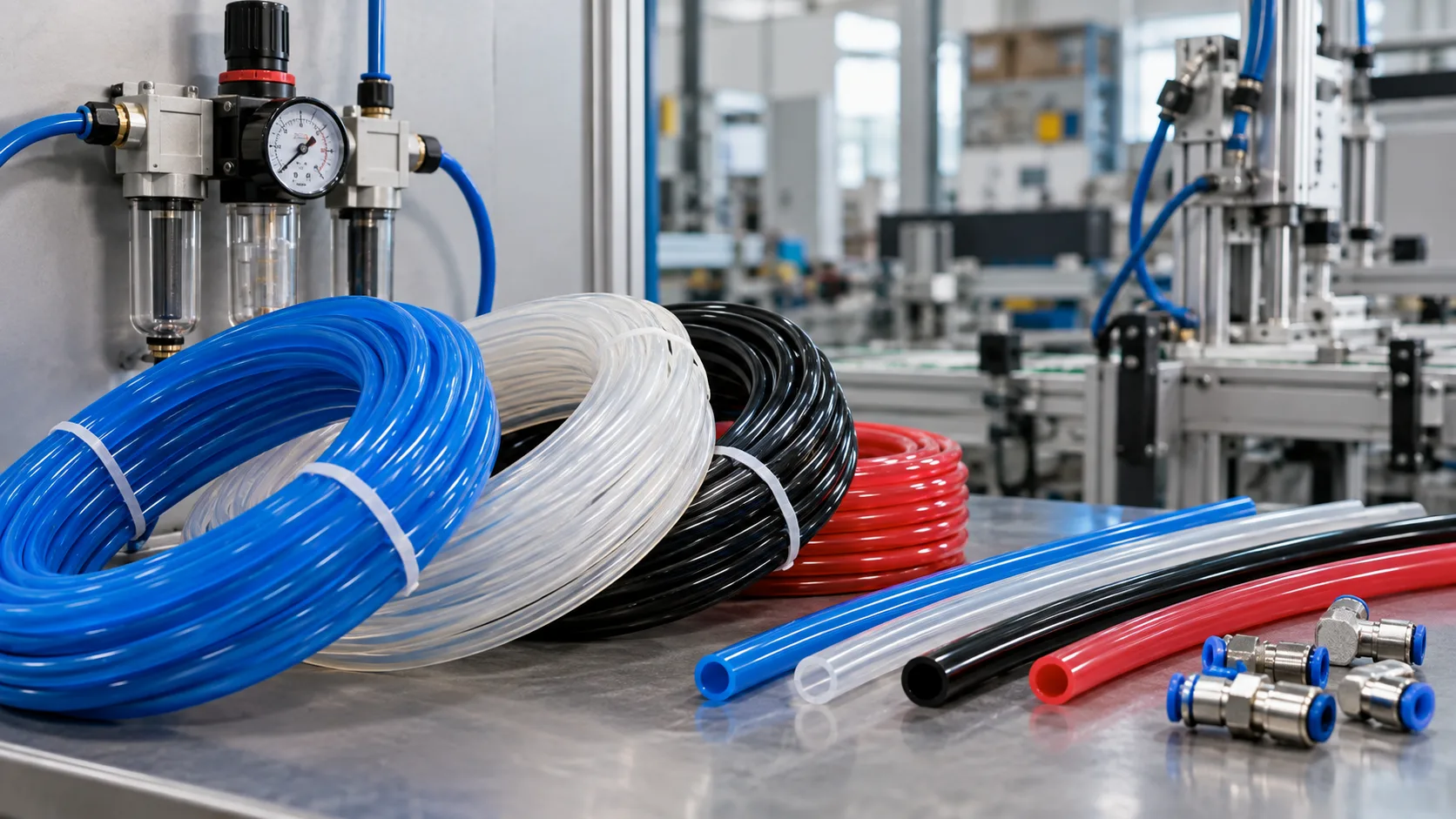
Semi-rigid nylon tube is well suited to orderly fixed routes between filters, regulators, manifolds, solenoid valves and bulkhead fittings. Its firmer profile helps maintain parallel tube runs and clear service paths inside control panels.
Allow sufficient length for component removal and do not force the tube sideways into a fitting. Keep routes away from sharp sheet-metal edges and hot electrical devices. Use panel glands or bulkhead fittings where tubing passes through an enclosure wall.
Applications in Automation Equipment
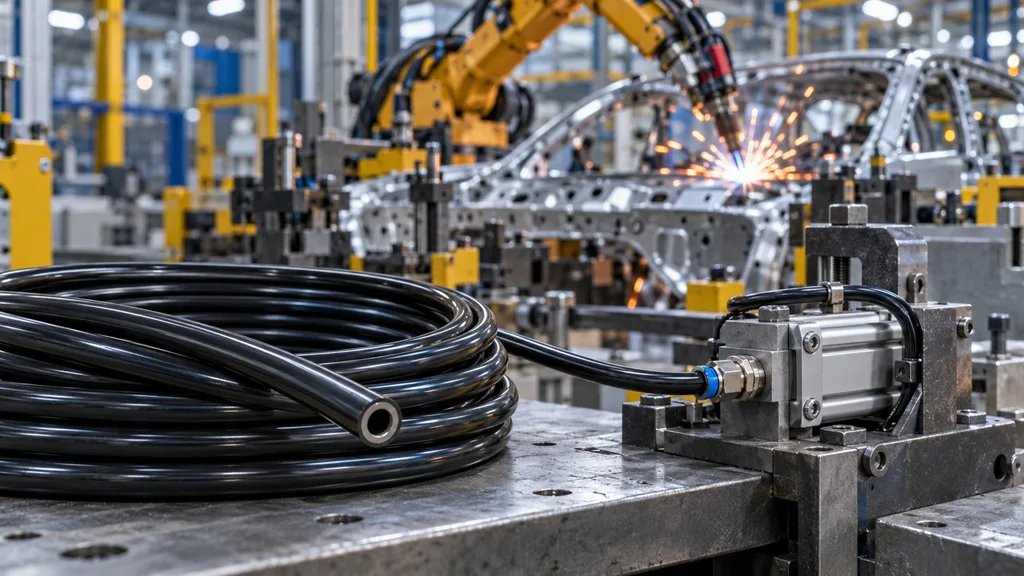
Assembly machines, packaging lines, feeders, clamps, slides and pick-and-place systems use tubing to connect control valves with actuators. PA nylon can be a strong option for fixed sections on the machine frame. Where a robot, slide or door moves repeatedly, check minimum bend radius, flex life and torsion before choosing nylon for that segment.
Design moving loops with enough length to avoid tension. Prevent the tube from rubbing against cables or machine guards, and use a guide or cable carrier when appropriate.
Applications in Workshops and Maintenance
Maintenance teams can use PA tube to replace damaged fixed air lines or extend a correctly engineered compressed-air branch. Match the original OD, ID, material, pressure and temperature rating instead of replacing by color alone.
For temporary handheld tool extensions, consider ergonomics and movement. Semi-rigid tubing may be less convenient than a flexible hose. Nylon remains useful between the fixed distribution point, regulator, manifold and tool station when the route is protected.
Push-In Fitting Compatibility
The product is intended for correctly sized pneumatic push-in fittings and suitable insert fittings. Compatibility involves more than nominal OD. Tube tolerance, hardness, surface finish, wall thickness and cut quality affect sealing and retention.
- Choose a fitting for the exact metric outside diameter.
- Confirm the fitting manufacturer accepts PA nylon tubing.
- Cut the tube square with a sharp tube cutter.
- Remove scratched, oval or crushed sections.
- Push the tube fully through the collet and seal to the internal stop.
- Perform a controlled pull check and leak test.
- Keep the first bend outside the fitting’s required straight length.
Browse the pneumatic fittings category for connection shapes, then verify the selected fitting, thread, seal and tube as an assembly.
Bend Radius and Routing
Semi-rigid tube cannot follow the same tight route as soft hose. Bending below the approved radius can flatten the bore, increase pressure loss and load the fitting. A sharp bend also creates a stress concentration that can shorten service life.
Ask for the minimum bend radius for the exact size and installation condition. Use elbows where a controlled direction change is better than forcing the tube around a corner. Support long runs without clamping so tightly that the tube is crushed.
Moisture, Water and Chemical Compatibility
The primary working media are compressed air and compatible non-corrosive gases. Some PA12 tubing can carry water, but that does not create universal approval. Confirm material grade, hydrolysis performance, temperature, pressure and sanitary requirements before liquid service.
For chemicals, oils, cleaning agents or aggressive vapors, request an application-specific compatibility review. Consider both the internal medium and external exposure. A tube carrying dry air can still be damaged by solvent spray or hot lubricant on its outer surface.
Color and Identification
Published options include black, natural and additional colors subject to availability. Color can help identify circuits, machine functions or pressure zones, but it does not prove material grade or pressure rating.
Use printed markings, labels and maintenance documentation where incorrect substitution would create risk. Confirm color and roll length before ordering, especially for OEM or distributor programs that need repeatable packaging and identification.
Common Selection Mistakes
- Choosing by OD only: the fitting may match while the bore is too small or the wall differs from the approved model.
- Using static pressure: idle pressure can hide a large drop during tool or actuator operation.
- Ignoring temperature derating: a 20°C pressure value may not apply near hot machinery.
- Assuming every nylon is PA12: the exact material grade must be confirmed.
- Substituting by color: visually similar tubing can have different dimensions and performance.
- Forcing tight bends: flattened tubing restricts flow and stresses connections.
- Using nylon for continuous motion without testing: fixed-routing advantages do not guarantee flex life.
- Mixing metric and inch sizes: close-looking dimensions can leak or pull out.
Installation Checklist
- Confirm the model, OD, ID and wall thickness.
- Verify material grade when PA12 is required.
- Obtain the working-pressure rating at the maximum operating temperature.
- Calculate airflow and pressure loss at peak demand.
- Select compatible tube fittings and seals.
- Inspect the route for heat, abrasion, chemicals and moving parts.
- Cut square and insert the tube fully.
- Respect the minimum bend radius and provide support.
- Pressurize gradually, leak-test and inspect fitting retention.
- Run the machine at maximum simultaneous demand and measure point-of-use pressure.
Inspection and Replacement
Inspect nylon air lines for cuts, abrasion, flattening, kinks, discoloration, hardening, softening, swelling, cracks, fitting movement and air leakage. Pay special attention to enclosure edges, hot zones and locations exposed to cleaning chemicals.
Replace damaged tubing with the approved model. After any replacement, repeat leak and operational testing. If a recurring failure occurs at the same point, correct the routing, support, temperature or chemical exposure instead of repeatedly installing new tube in the same condition.
Ordering Checklist
- Required model or OD x ID
- Material grade, including whether PA12 is mandatory
- Normal and maximum working pressure
- Minimum and maximum air and ambient temperature
- Required airflow and acceptable pressure drop
- Total line length and number of restrictions
- Fitting type, brand and tube-acceptance specification
- Fixed or moving installation
- Minimum bend radius and available routing space
- Internal medium and external chemical exposure
- Color, printed marking and roll length
- Quantity, packaging and documentation requirements
Frequently Asked Questions
What is PA nylon pneumatic tubing used for?
It routes compressed air between preparation units, valves, manifolds, cylinders, tools and automation equipment. Its semi-rigid profile is particularly useful for fixed machine and panel routes.
What sizes are available?
Published sizes are 4 x 2.5, 4 x 3, 6 x 4, 6 x 4.5, 8 x 6, 10 x 7.5, 12 x 9 and 16 x 13 mm.
What is the working pressure?
The published reference is a maximum of 1.0 MPa or 10 bar at 20°C. Final allowable pressure must be confirmed for the exact size, wall thickness, material grade, temperature and factory test data.
What is the working temperature?
The published reference range is −20°C to +80°C. Pressure must be derated as temperature increases, and the complete tube-and-fitting assembly must be confirmed.
Is nylon tubing better than PU tubing?
Neither is universally better. Nylon is firmer and useful for stable fixed routing. PU is normally more flexible and may be preferable in tight or moving sections. Compare exact products and operating conditions.
Can PA nylon tube be used with push-in fittings?
Yes, when the fitting is approved for the tube’s exact outside diameter, material and tolerance. Cut the tube square, insert it fully and test the assembly.
Can it supply pneumatic tools?
Yes, if the selected bore, length, fittings and supply pressure deliver the tool’s required dynamic airflow. For frequently moved handheld tools, also assess whether a more flexible hose is preferable.
Can it carry water?
Some confirmed PA12 tubes may be suitable for water, but pressure, temperature, hydrolysis resistance and application approvals must be reviewed before use.
Why does a pneumatic line lose pressure?
Common causes include a small bore, long line, high flow, restrictive fittings, undersized valves, clogged filters or silencers, leakage and simultaneous demand from several devices.
Choose the Tube as Part of the Complete Air Circuit
PA nylon pneumatic tubing offers firm routing, multiple metric sizes and practical compressed-air performance for machine panels, automation systems and suitable tools. Reliable selection requires more than matching the fitting: OD, ID, wall thickness, flow, pressure, temperature, material grade and route all interact.
Review the PA Nylon Pneumatic Tube models and specifications, then provide the required airflow, pressure, temperature, line length, fitting and installation details for confirmation. You can also compare other materials in the HOMIPNEU air hose range.