In pneumatic automation, speed control valves are small components, but they have a direct influence on machine movement. A cylinder may extend too fast, retract too slowly, or lose smooth motion if the airflow setting is not stable. That is why the locking structure of a speed control valve is more important than many users first realize.
A standard pneumatic speed control valve usually works in a simple way. The operator adjusts the airflow by rotating the control knob. After the required speed is reached, the setting needs to stay fixed during machine operation. If the valve position changes after adjustment, the airflow also changes. As a result, the cylinder speed may become unstable.
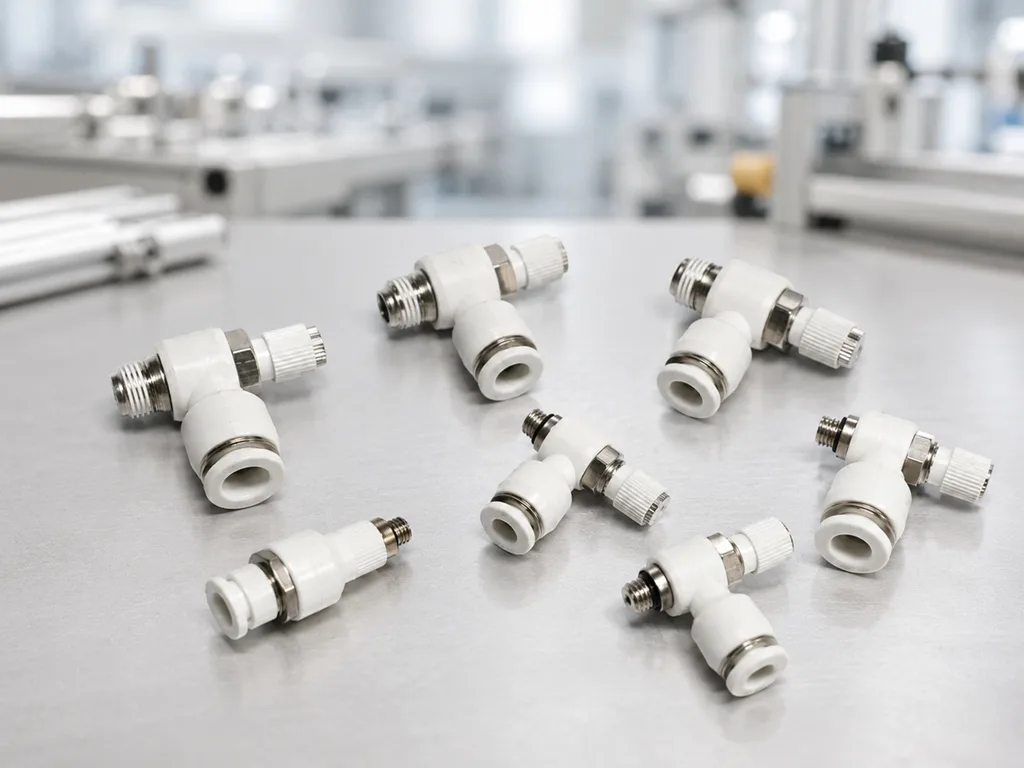
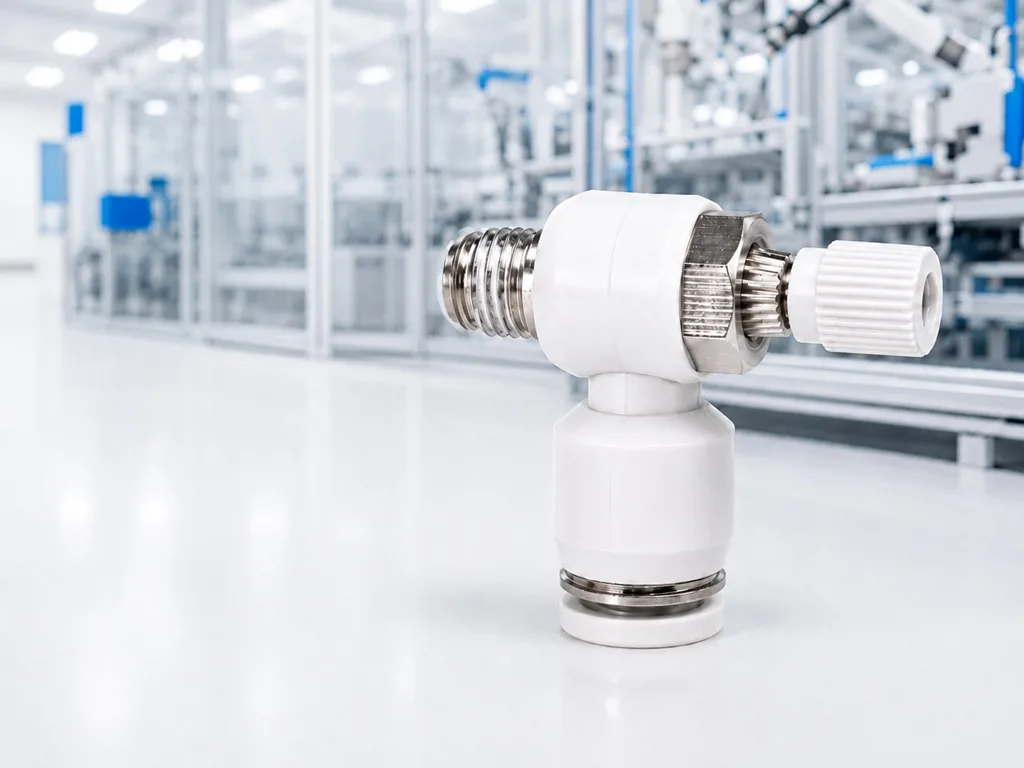
The HOMIPNEU SL Pneumatic Elbow Speed Control Valve with New Quick Automatic Locking Structure is developed to solve this practical problem. Its upgraded quick-locking mechanism helps secure the adjusted flow position more firmly after setup, especially in machines that run continuously or experience vibration.
The Real Problem: Speed Changes After Adjustment
Many pneumatic speed control problems do not appear immediately after installation. At first, the cylinder may move smoothly. The operator adjusts the valve, locks the position, and the machine starts running normally.
However, after long-term operation, vibration, repeated cylinder movement, airflow impact, and external touch may cause the locked position to shift slightly. Even a small position change can affect airflow. Once airflow changes, the actuator speed changes too.
This can lead to several problems:
| Problem in Operation | Possible Result |
|---|---|
| Valve setting becomes loose | Airflow changes after adjustment |
| Cylinder speed fluctuates | Machine motion becomes inconsistent |
| Cycle time changes | Production rhythm becomes unstable |
| Frequent readjustment needed | More maintenance work |
| Unstable actuator movement | Lower production consistency |
For equipment builders and maintenance teams, this is not only a component issue. It can affect the whole machine cycle.
Why the Quick-Locking Structure Is Useful
The quick-locking structure is designed to make the adjusted position easier to secure. After the operator sets the required airflow, the locking structure helps keep the position stable. This reduces the chance of loosening caused by vibration or long-term machine movement.
Compared with a traditional locking method, the advantage is not only faster operation. The bigger value is long-term stability.
| Feature | Conventional Locking Structure | New Quick-Locking Structure |
| Adjustment method | Manual airflow adjustment | Manual airflow adjustment |
| Locking action | Usually depends on nut or standard lock | Quick automatic locking support |
| Anti-loosening performance | May loosen under vibration | Better resistance to setting shift |
| Maintenance frequency | May require repeated adjustment | Helps reduce readjustment |
| Best use case | General pneumatic systems | Continuous automation and vibrating equipment |
More Stable Airflow, More Stable Cylinder Speed
A pneumatic cylinder depends on controlled airflow. If airflow is consistent, the cylinder movement is easier to control. If airflow changes, the speed changes.
The SL Pneumatic Elbow Speed Control Valve helps operators regulate the air intake or exhaust flow, depending on the system layout. With the upgraded locking design, the set flow position can remain more stable after adjustment. This helps the actuator keep a more consistent operating speed.
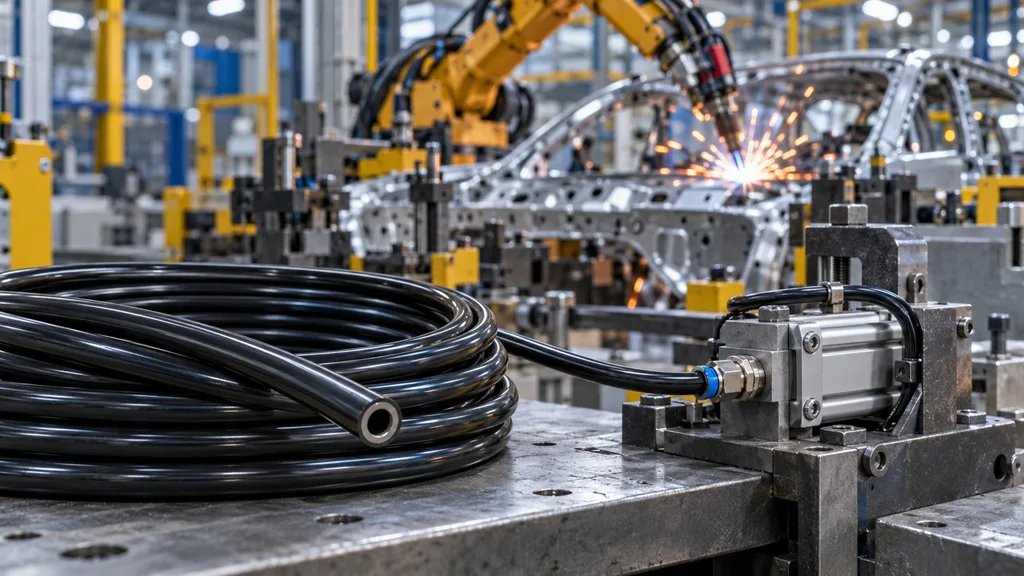
For machines that require repeatable motion, this matters. Packaging machinery, assembly lines, pick-and-place systems, conveyor equipment, and clamping devices all depend on stable pneumatic movement.
Compact 90 Degree Elbow Design
Besides the locking structure, the 90 degree elbow design is also practical. Many pneumatic components are installed in limited spaces around cylinders, slides, grippers, and machine frames. A straight valve may not always be convenient for tubing layout.
The elbow structure allows the tube direction to turn cleanly, helping make the pneumatic line layout more compact and organized.
One-Touch Tube Connection Saves Assembly Time
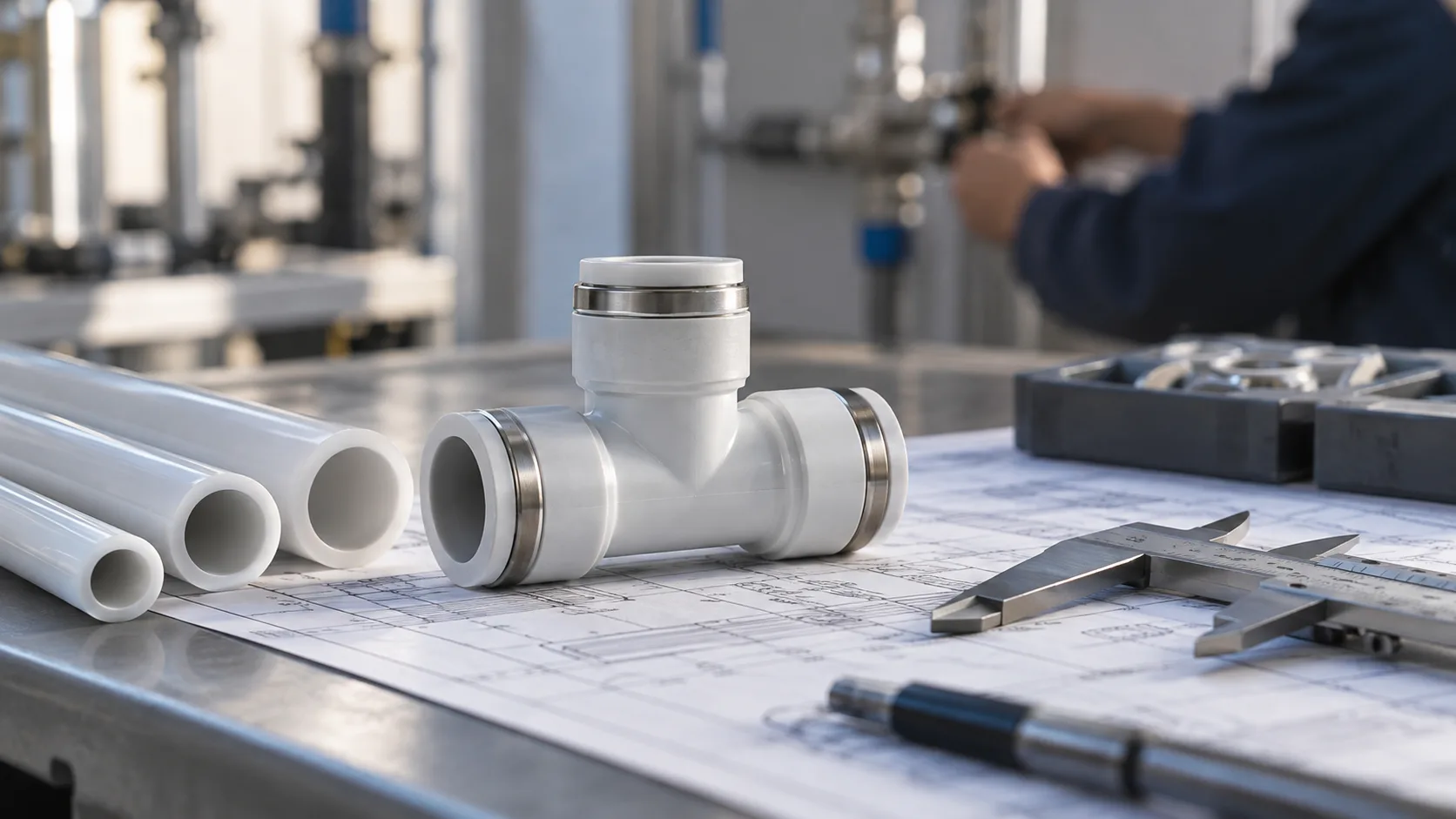
The product also uses a one-touch tube fitting design. This makes installation and tube replacement easier. For OEM equipment builders, faster assembly can reduce production time. For maintenance teams, easier tube handling can reduce downtime during inspection or replacement.
Where This Product Fits Best
This valve is suitable for applications where airflow adjustment and locking stability are both important.
Recommended applications include:
- Pneumatic cylinder speed control
- Packaging machinery
- Automated production lines
- Assembly equipment
- Pneumatic clamping systems
- Conveyor systems
- Material handling equipment
- OEM pneumatic equipment
Conclusion
A pneumatic speed control valve should not only be easy to adjust. It should also stay stable after adjustment.
The HOMIPNEU SL Pneumatic Elbow Speed Control Valve with New Quick Automatic Locking Structure is designed for users who need more reliable airflow control and more consistent cylinder speed. With its upgraded quick-locking mechanism, compact elbow structure, and one-touch tube connection, it is a practical solution for modern pneumatic automation systems.
Learn more about the product here:
https://homipneu.com/sl-pneumatic-elbow-speed-control-valve-with-quick-locking-mechanism.html